
Safety
General information, not medical advice
Your prescriber and the leaflet in your pack know your situation. This page does not.
- Follow your prescriber and the leaflet
- Don't start, stop, or change a dose on your own
- Doses and warnings differ by country and product
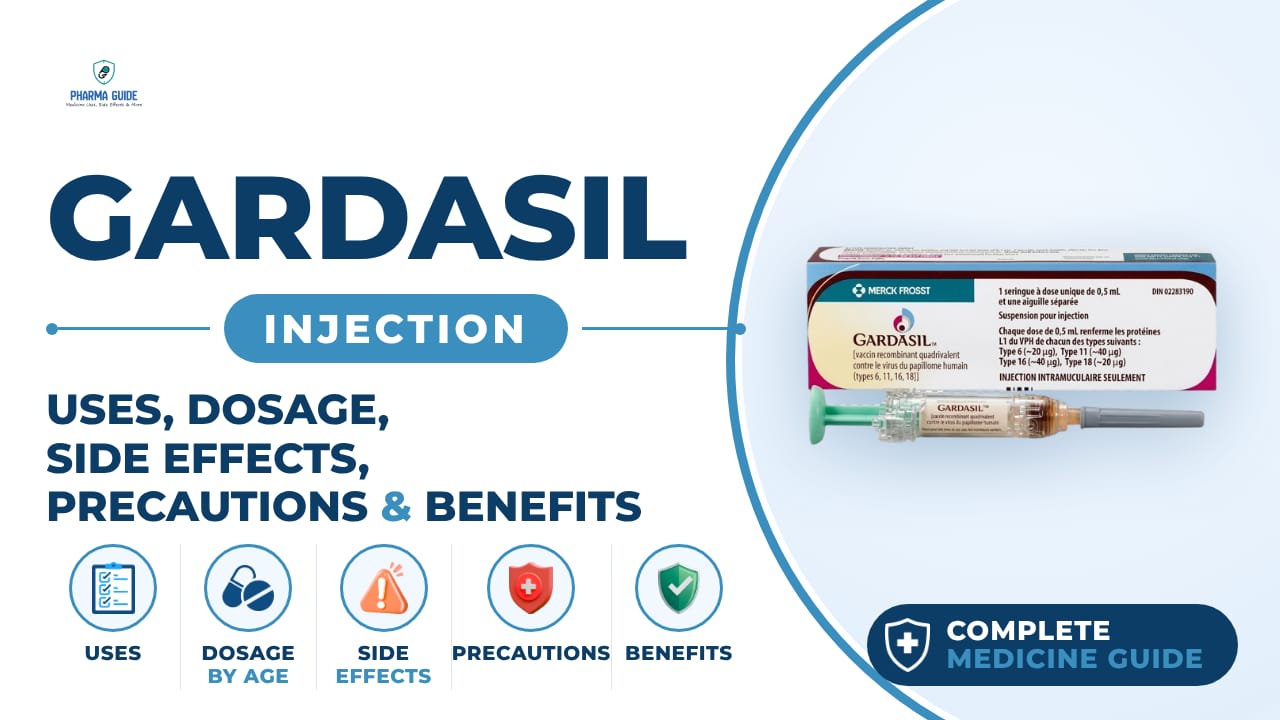
Gardasil Injection: Uses, Dosage, Side Effects, Precautions and Alternates
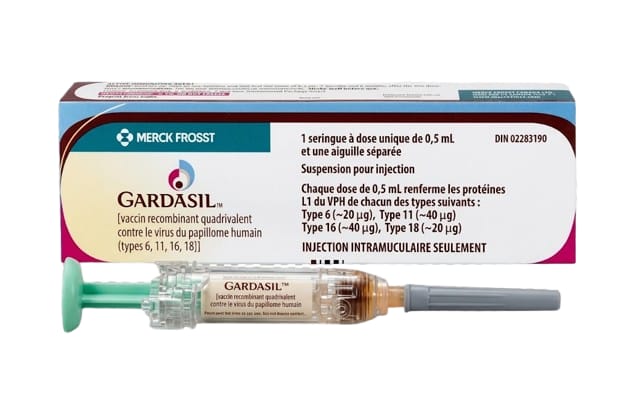
| Generic name | Human papillomavirus 9-valent vaccine (recombinant) |
|---|---|
| Drug class | Vaccine (biologic) |
| Forms | Injectable solution (vial) |
Quick overview
Gardasil Injection (human papillomavirus 9-valent vaccine, recombinant) is a biologic vaccine given to help prevent certain cancers, precancers, and genital warts caused by HPV. It is approved for people ages 9 through 45 and is given as a series of injections into the muscle. Common reactions include injection-site pain and headache, while serious reactions such as severe allergic reactions are rare but require immediate medical attention.
What is Gardasil Injection
Gardasil 9 is a vaccine that helps prevent certain diseases caused by human papillomavirus (HPV), including some cancers and genital warts. It is given as an injection and is approved for people ages 9 through 45.
Gardasil Injection uses
- Prevents cervical, vulvar, vaginal, and anal precancer or cancer caused by HPV in females
- Prevents certain head and neck cancers caused by HPV in males and females
- Prevents anal precancer or cancer in males
- Prevents genital warts caused by HPV in males and females
- Prevents HPV infection with the 9 types covered by the vaccine
Benefits of Gardasil Injection
- Can prevent over 90% of cancers caused by HPV
- Was found to be more than 96% effective at preventing certain abnormal cell changes or cancer in clinical trials
- Protects against the largest number of HPV types of any available vaccine
- Can protect both men and women from HPV-related diseases
How Gardasil Injection works
Gardasil 9 contains proteins that look like parts of the HPV virus but cannot cause infection. These proteins trigger your immune system to make antibodies, so if you are later exposed to one of the nine HPV types in the vaccine, your body already knows how to fight it off.
Gardasil Injection dosage
Gardasil Injection is given as an injection into the muscle, usually in the upper arm, though sometimes the leg in children. It is given as a series of two or three doses over 6 to 12 months, depending on age. Children ages 9 to 14 may get a two-dose or three-dose series, while those 15 to 17 and adults need the three-dose series. All doses in the series should ideally be completed within about a year.
If you faint during a dose, tell your doctor before your next dose so they can have you lie down and raise your feet. If a dose is missed, contact your doctor to schedule it as soon as possible; the series does not need to be restarted.
| Age group | Dose |
|---|---|
| Under 15 years | 0.5 mL, once/day |
| 15–26 years | 0.5 mL, once/day |
| 27–45 years | 0.5 mL, once/day |
Available forms and strengths
- Injectable solution (vial)
Side effects of Gardasil Injection
Common
- Pain, swelling, redness, itching, or bruising at the injection site
- Headache
- Fever
- Nausea
- Dizziness
- Fatigue
- Diarrhea
- Sore throat
- Abdominal pain
- Lump at the injection site
Serious
- Severe allergic reaction (swelling of face, lips, tongue, or throat; trouble breathing; hives; rash)
- Fainting, sometimes with seizure-like movements
- Guillain-Barre syndrome (muscle weakness, abnormal sensations, tingling)
- Skin infection at the injection site
- Bleeding or bruising more easily than normal
- Swollen glands in the neck, armpit, or groin
Warnings and precautions
- Do not get this vaccine if you have had an allergic reaction to a previous dose of Gardasil or Gardasil 9, or if you have a severe allergy to yeast, since the vaccine contains yeast protein.
- If you have a history of fainting after past vaccinations, tell your doctor, as you may be asked to lie down and raise your feet while getting the vaccine to help prevent injury from fainting.
- Tell your doctor if you have a bleeding disorder, a fever above 37.8°C, a weakened immune system, or are taking medicines that affect your immune system, as these may affect whether or when you should get the vaccine.
- Getting the vaccine while taking medicines or treatments that weaken the immune system, such as certain cancer treatments or high-dose corticosteroids, may make the vaccine less effective.
- It is not known if Gardasil 9 is safe during pregnancy. If you are pregnant or planning to become pregnant, vaccination is usually postponed until after pregnancy; talk with your doctor about timing.
- It is not known if Gardasil 9 passes into breast milk or if it is safe during breastfeeding, though it may still be given to breastfeeding women in some cases. Talk with your doctor about the best timing.
- There are no known interactions between Gardasil 9 and alcohol.
Storage
- Keep this vaccine in the refrigerator between 2°C and 8°C (36°F to 46°F)
- Do not freeze this vaccine
- Protect it from light by keeping it in the original pack until it is time to be given
- The vaccine should be given as soon as possible after being removed from refrigeration and should not be out of the refrigerator for longer than 72 hours
- Keep it where young children cannot reach it
- If you no longer need the vaccine or it is out of date, take it to any pharmacy for safe disposal
When to see a doctor
- Get medical help right away if you notice signs of a severe allergic reaction, such as swelling of the face, lips, tongue, or throat, difficulty breathing or wheezing, a fast heartbeat, dizziness, weakness, or hives.
- If you feel dizzy or faint after getting the vaccine, tell your doctor or nurse right away so they can help you lie down and raise your feet to prevent injury.
Alternatives
- HPV Vaccine (Quadrivalent)
- Cervarix
- Gardasil 9
Watch the video
FAQs
Who can get the Gardasil Injection?
Gardasil 9 is approved for people ages 9 through 45 to help prevent certain diseases caused by HPV, including some cancers and genital warts.
How many doses of Gardasil Injection are needed?
It is given as a series of two or three doses over 6 to 12 months depending on age. Children ages 9 to 14 may get a two-dose or three-dose series, while those 15 to 17 and adults need the three-dose series.
What are the common side effects of Gardasil Injection?
Common side effects include pain, swelling, redness, itching, or bruising at the injection site, headache, fever, nausea, dizziness, fatigue, diarrhea, sore throat, abdominal pain, and a lump at the injection site.
What should I do if I miss a dose of Gardasil Injection?
If a dose is missed, contact your doctor to schedule it as soon as possible; the series does not need to be restarted.
Who should not get the Gardasil Injection?
You should not get this vaccine if you have had an allergic reaction to a previous dose of Gardasil or Gardasil 9, or if you have a severe allergy to yeast, since the vaccine contains yeast protein.
General information, not medical advice
Your prescriber and the leaflet in your pack know your situation. This page does not.
- Follow your prescriber and the leaflet
- Don't start, stop, or change a dose on your own
- Doses and warnings differ by country and product
Sources
Video
Related medicines

Injectafer Injection: Uses, Dosage, Side Effects, Precautions and Alternates
Iron products
Injectafer (ferric carboxymaltose) treats iron deficiency anemia and heart failure-related iron deficiency via IV. Learn uses, dosage, side effects, and

Gliclazide Tablet: Uses, Dosage, Side Effects, Precautions and Alternates
Sulfonylurea (hypoglycemic/antidiabetic agent)
Gliclazide Tablet is a sulfonylurea for type 2 diabetes that boosts insulin release. Learn about dosage, side effects, warnings, and precautions.