
Safety
General information, not medical advice
Your prescriber and the leaflet in your pack know your situation. This page does not.
- Follow your prescriber and the leaflet
- Don't start, stop, or change a dose on your own
- Doses and warnings differ by country and product
Gaviscon Suspension: Uses, Dosage, Side Effects, Precautions and Alternates
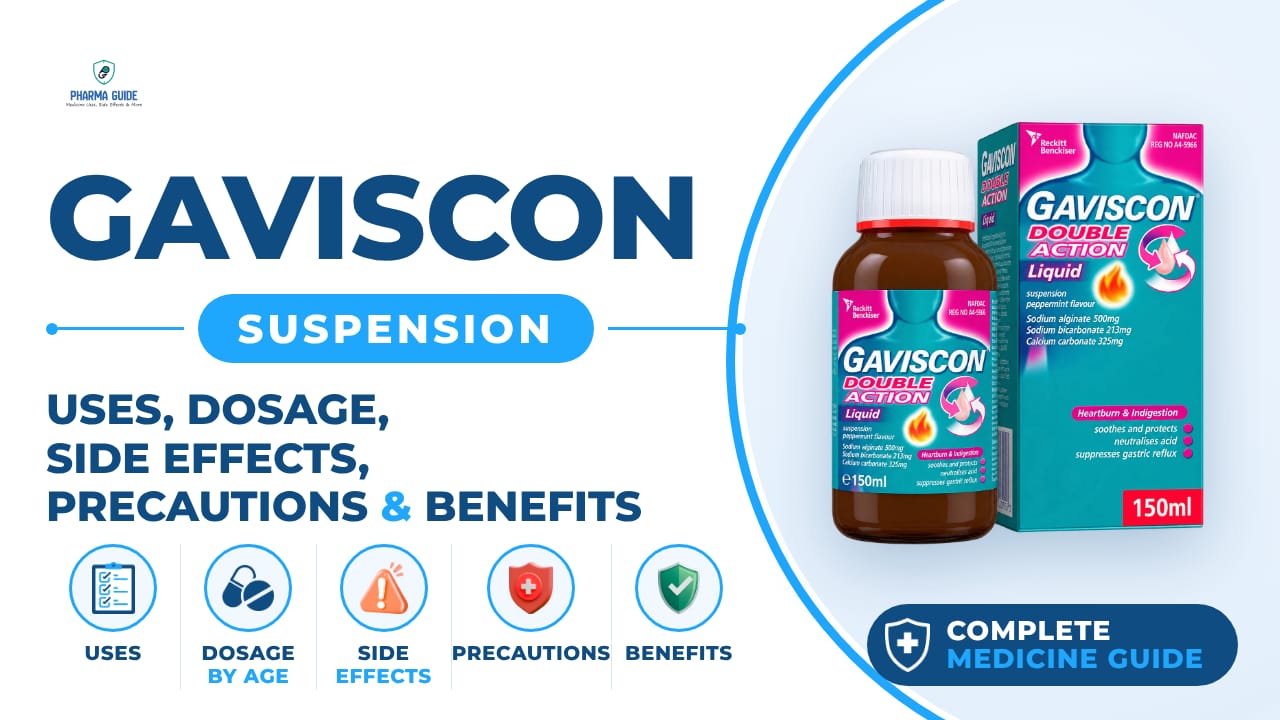
| Generic name | aluminum hydroxide and magnesium trisilicate |
|---|---|
| Drug class | Antacids |
| Forms | Chewable tablet, Oral liquid suspension |
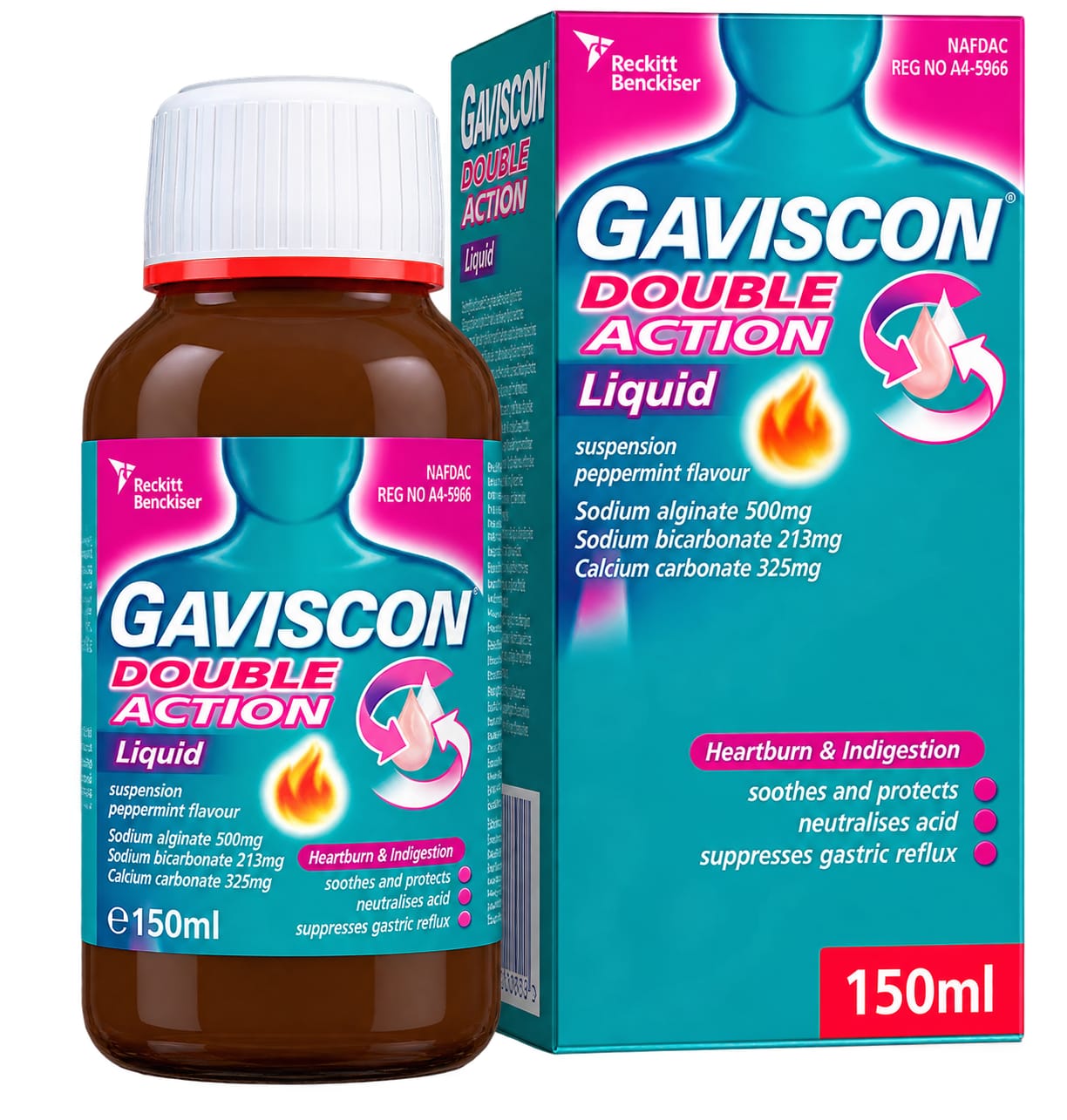
Quick overview
Gaviscon Suspension contains aluminum hydroxide and magnesium trisilicate, combination antacid ingredients that lower the acidity of stomach acid. It is used to treat heartburn, acid indigestion, sour stomach, or upset stomach, and to provide temporary relief from symptoms caused by acid reflux. It works directly in the stomach rather than being absorbed into the body.
What is Gaviscon Suspension
Gaviscon is a combination medicine that lowers the acidity of stomach acid. It is used to treat heartburn, acid indigestion, sour stomach, or upset stomach.
Gaviscon Suspension uses
- Treat heartburn, acid indigestion, sour stomach, or upset stomach
- Provide temporary relief from heartburn and acid indigestion caused by acid reflux
Benefits of Gaviscon Suspension
- Provides relief from heartburn and burning in the chest
- Helps control acid reflux by forming a protective barrier over stomach contents
- Relieves acid indigestion and related discomfort
- Helps prevent stomach acid from flowing back into the food pipe (esophagus)
- Its antacid ingredients help neutralize excess stomach acid
- Usually begins working soon after taking a dose
How Gaviscon Suspension works
Gaviscon works in the stomach itself rather than being absorbed into the body. A form containing alginate can form a layer that settles near where stomach acid pools after eating, helping to displace or neutralize that acid so less of it reaches the esophagus.
Gaviscon Suspension dosage
Use exactly as directed on the label, or as prescribed by your doctor. If using a chewable tablet form, chew it before swallowing, then drink water or other liquid afterward. Call your doctor if your symptoms do not improve, or if you have acid indigestion more than 2 times per week. Do not take this medicine for longer than 2 weeks unless your doctor tells you to.
Since Gaviscon is used when needed, you may not be on a regular dosing schedule. Skip a missed dose if it is almost time for your next dose, and do not take two doses at once.
| Age group | Dose |
|---|---|
| Under 6 years | Use only on medical advice |
| 6–11 years | Usually 5–10 mL after meals and at bedtime, where the specific product permits pediatric use |
| 12–17 years | Usually 10–20 mL after meals and at bedtime |
| 18–64 years | Usually 10–20 mL after meals and at bedtime |
| 65+ years | Usually the same adult dose; consider sodium load and kidney/heart conditions |
Available forms and strengths
- Chewable tablet
- Oral liquid suspension
Side effects of Gaviscon Suspension
Common
- Diarrhea
Serious
- Allergic reaction: hives; difficult breathing; swelling of your face, lips, tongue, or throat
Warnings and precautions
- Ask a doctor before using this medicine if you are pregnant.
- Ask a doctor before using this medicine if you are breastfeeding.
- Ask a doctor or pharmacist if it is safe to use this medicine if you have kidney disease.
- Ask a doctor or pharmacist if Gaviscon is safe to use if you have a peptic ulcer, trouble swallowing, kidney disease, or are on a low-salt diet.
- Do not take more than the maximum number of tablets allowed in a 24-hour period.
- Gaviscon can make it harder for your body to absorb other medicines you take by mouth, so ask a doctor or pharmacist before taking it if you take other medicines regularly.
Storage
- Store below 30°C (86°F).
- Keep in a cool, dry place.
- Do not refrigerate or freeze.
- Keep the bottle tightly closed.
- Keep out of reach of children.
When to see a doctor
- Get emergency medical help if you have signs of an allergic reaction such as hives, difficulty breathing, or swelling of your face, lips, tongue, or throat.
- Seek emergency medical attention or contact your local poison control center if you think you have taken too much of this medicine.
- Call your doctor if your symptoms do not improve, or if you have acid indigestion more than twice a week.
Alternatives
- Pantoprazole
- Omeprazole
- Famotidine
- Calcium Carbonate
- Aluminum/Magnesium Hydroxide Antacid
Watch the video
FAQs
What is Gaviscon Suspension used for?
It is used to treat heartburn, acid indigestion, sour stomach, or upset stomach, and to provide temporary relief from symptoms caused by acid reflux.
How does Gaviscon Suspension work?
It works in the stomach itself rather than being absorbed into the body. A form containing alginate can form a layer that settles near where stomach acid pools after eating, helping to displace or neutralize that acid so less of it reaches the esophagus.
What is the dosage for Gaviscon Suspension?
Use exactly as directed on the label or as prescribed by your doctor. Adults and children 12-17 years usually take 10-20 mL after meals and at bedtime, while children 6-11 years usually take 5-10 mL after meals and at bedtime, where the specific product permits pediatric use. Do not take it for longer than 2 weeks unless your doctor tells you to.
What are the side effects of Gaviscon Suspension?
A common side effect is diarrhea. A serious but rare side effect is an allergic reaction with hives, difficult breathing, or swelling of the face, lips, tongue, or throat.
Can I take Gaviscon Suspension with other medicines?
Gaviscon can make it harder for your body to absorb other medicines you take by mouth, so ask a doctor or pharmacist before taking it if you take other medicines regularly.
General information, not medical advice
Your prescriber and the leaflet in your pack know your situation. This page does not.
- Follow your prescriber and the leaflet
- Don't start, stop, or change a dose on your own
- Doses and warnings differ by country and product
Sources
Video
Related medicines
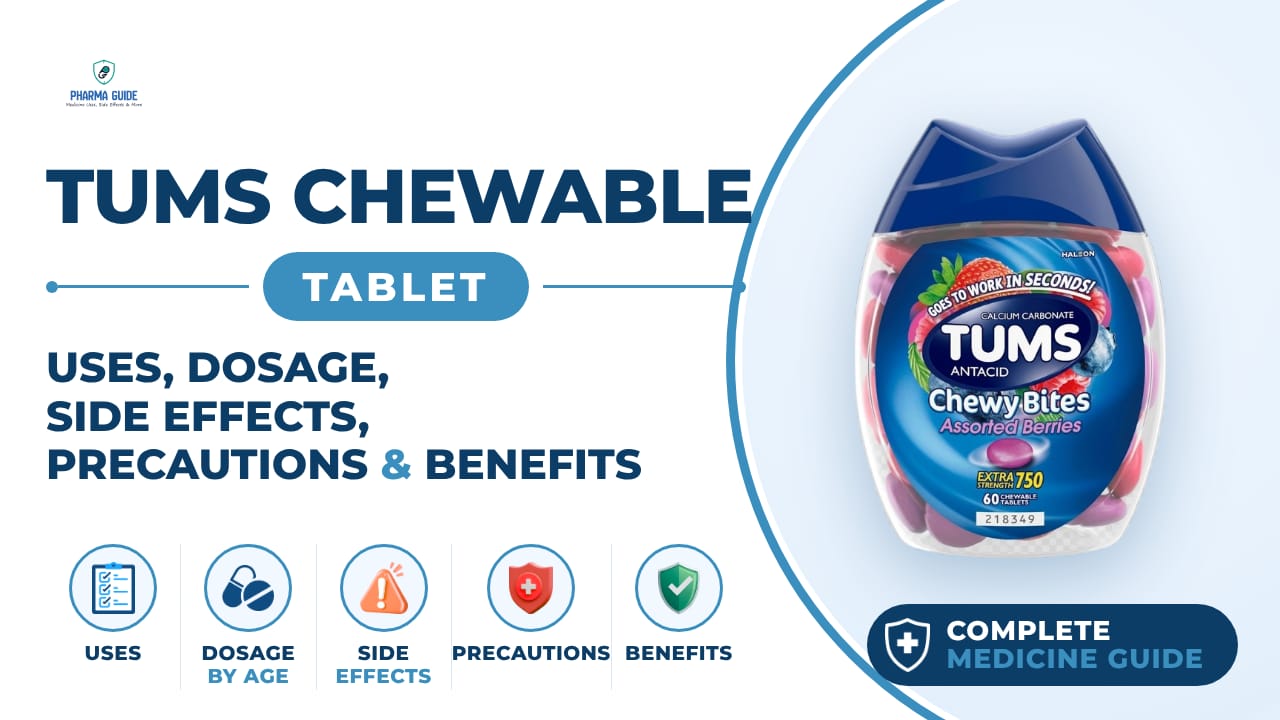
TUMS Chewable Tablet: Uses, Dosage, Side Effects, Precautions and Alternates
Antacids
TUMS Chewable Tablet uses calcium carbonate to relieve heartburn, acid indigestion, and upset stomach while supplying calcium. Learn dosage, side effects, and
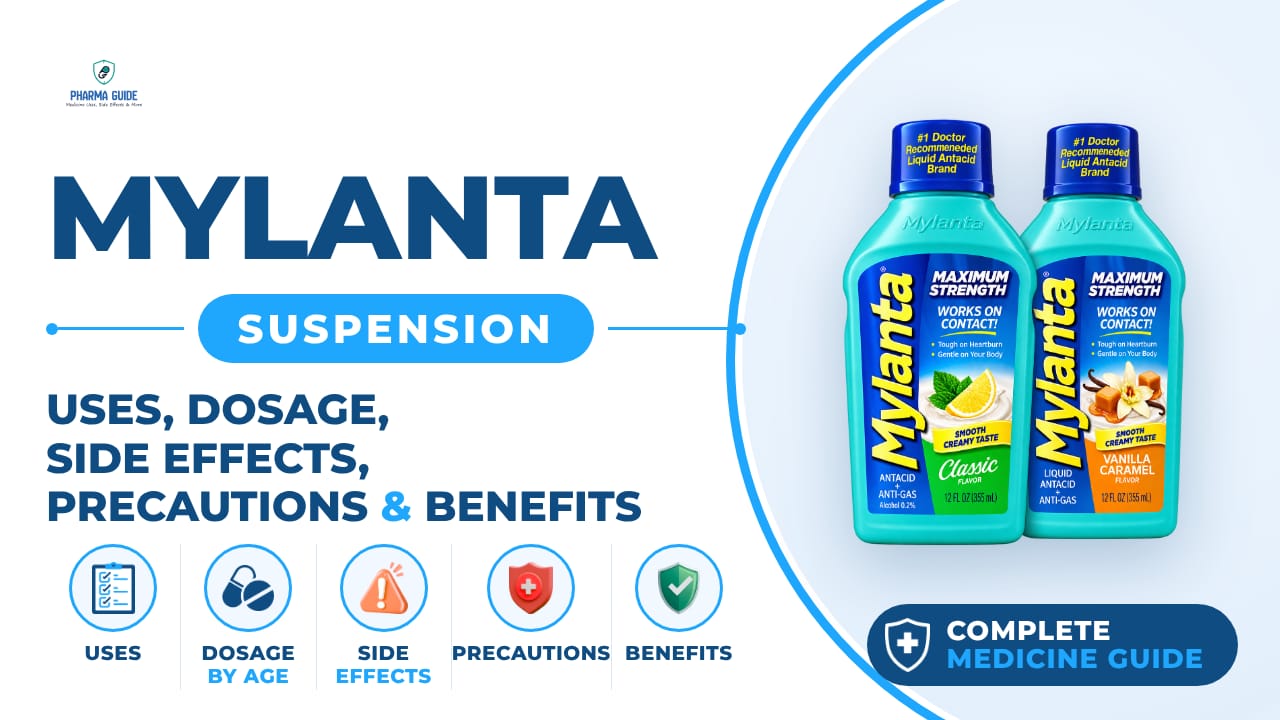
Mylanta Suspension: Uses, Dosage, Side Effects, Precautions and Alternates
Antacids
Mylanta Suspension combines aluminum hydroxide, magnesium hydroxide, and simethicone to relieve heartburn, acid indigestion, and gas. Learn dosage, side