
Safety
General information, not medical advice
Your prescriber and the leaflet in your pack know your situation. This page does not.
- Follow your prescriber and the leaflet
- Don't start, stop, or change a dose on your own
- Doses and warnings differ by country and product
Mylanta Suspension: Uses, Dosage, Side Effects, Precautions and Alternates
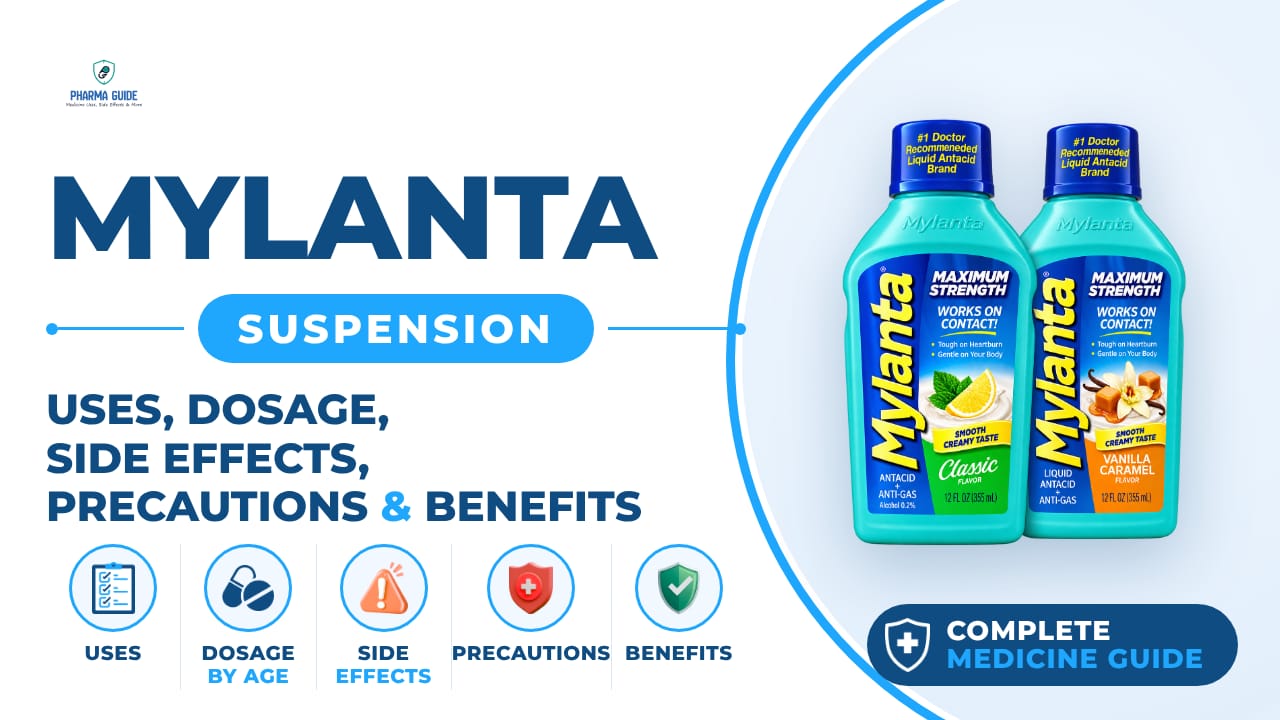
| Generic name | Aluminum Hydroxide, Magnesium Hydroxide, and Simethicone |
|---|---|
| Drug class | Antacids |
| Forms | Suspension (liquid), Chewable tablets, Gelcaps |
Quick overview
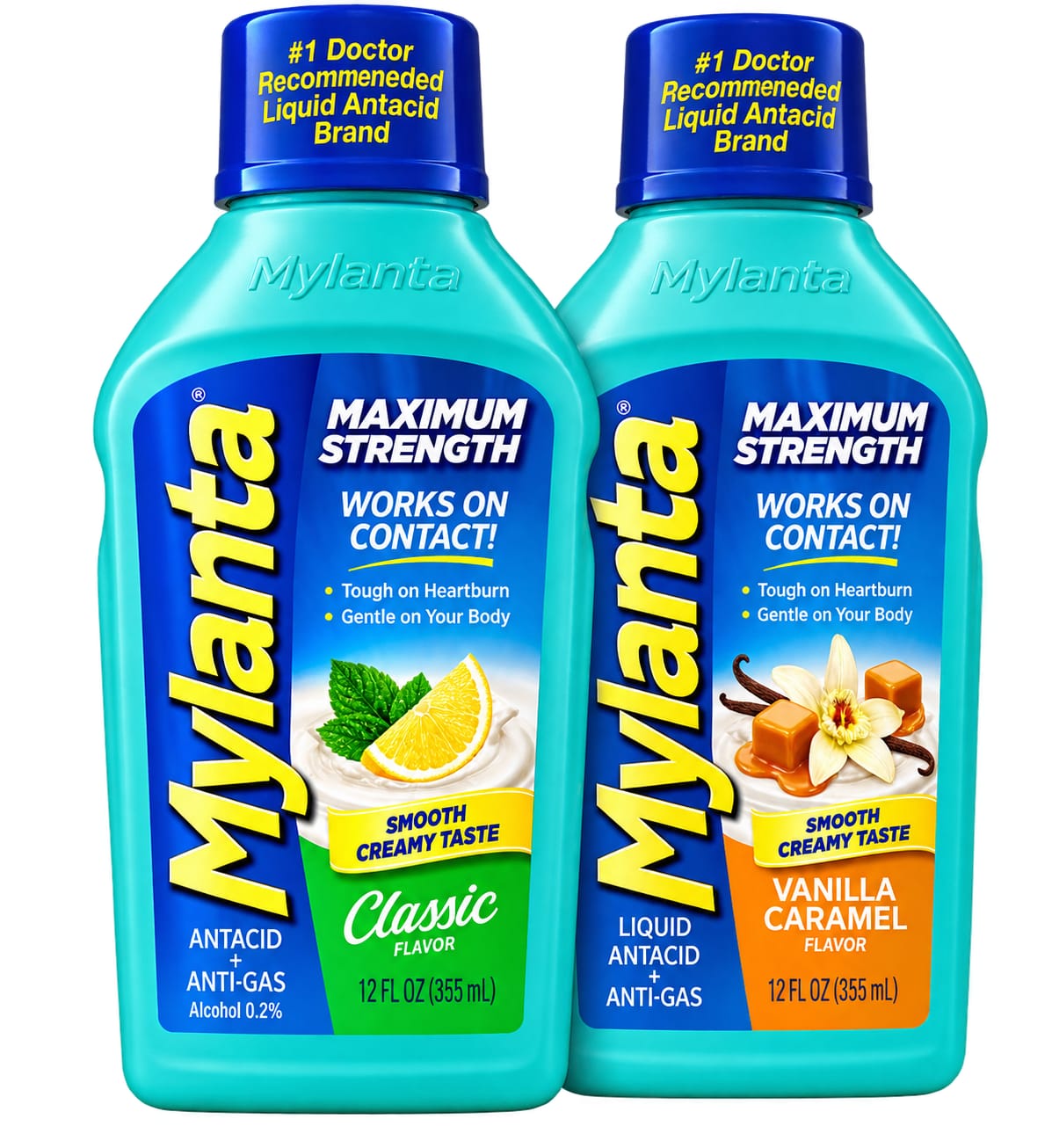
Mylanta Suspension is a liquid antacid that combines aluminum hydroxide and magnesium hydroxide with simethicone. It is used to relieve stomach upset, heartburn, acid indigestion, and symptoms of excess gas such as belching, bloating, and pressure or discomfort in the stomach or gut. The aluminum and magnesium ingredients neutralize stomach acid quickly, while simethicone helps break up gas bubbles. It is available as a suspension, chewable tablets, and gelcaps.
What is Mylanta Suspension
Mylanta is an antacid liquid that combines aluminum hydroxide and magnesium hydroxide to lower stomach acid, plus simethicone to relieve extra gas. It belongs to the antacids drug class.
Mylanta Suspension uses
- Treats symptoms of too much stomach acid, such as stomach upset, heartburn, and acid indigestion
- Relieves symptoms of extra gas such as belching, bloating, and feelings of pressure or discomfort in the stomach or gut
- Eases too much gas in the stomach
- Treats heartburn and upset stomach
Benefits of Mylanta Suspension
- Aluminum and magnesium antacids work quickly to lower the acid in the stomach
- Liquid antacids usually work faster or better than tablets or capsules
- Simethicone helps break up gas bubbles in the gut
How Mylanta Suspension works
Aluminum and magnesium neutralize existing stomach acid quickly, while simethicone breaks up gas bubbles in the gut so gas can be passed more easily. It does not stop the stomach from making more acid.
Mylanta Suspension dosage
Take this medication by mouth, usually after meals and at bedtime as needed, or as directed by your doctor. Shake the bottle well before pouring each dose. Measure the dose carefully using a medication spoon or cup; do not use a household spoon.
The liquid works best if taken without other fluids, though you can mix your dose with a little water if needed. This product may reduce how well other medicines taken by mouth are absorbed, so ask your doctor or pharmacist about timing other medications around this one.
If your acid problems last or get worse after using this product for a week, or if you think you have a serious medical problem, get medical help right away. If you use this medication regularly every day for more than 2 weeks, ask your doctor whether this is the right medicine for you.
If you miss a dose taken on a regular schedule, take it as soon as you remember; if it is close to the time of your next dose, skip the missed dose and go back to your normal schedule; do not double the dose.
| Age group | Dose |
|---|---|
| Under 6 years | Use only on medical advice |
| 6–11 years | Product-specific; use under doctor/pharmacist guidance |
| 12–17 years | Commonly 10–20 mL per dose, depending on formulation |
| 18–64 years | Commonly 10–20 mL per dose, according to product directions |
| 65+ years | Usually adult dosing; use cautiously with kidney impairment |
Available forms and strengths
- Suspension (liquid)
- Chewable tablets
- Gelcaps
Side effects of Mylanta Suspension
Common
- Abdominal pain with cramps
- Constipation
- Diarrhea
- Dysgeusia (altered taste)
- Nausea
- Vomiting
Serious
- Fecal impaction
- Hypercalcemia (high calcium levels)
- Hypermagnesemia (high magnesium levels)
- Hypophosphatemia (low phosphate levels)
- Signs of an allergic reaction, like rash, hives, itching, red, swollen, blistered, or peeling skin with or without fever, wheezing, tightness in the chest or throat, trouble breathing, swallowing, or talking, unusual hoarseness, or swelling of the mouth, face, lips, tongue, or throat
Warnings and precautions
- Do not take this medicine for longer than your doctor told you to.
- This medicine can prevent other oral drugs from being fully absorbed, so you may need to take them at a different time from this medicine; talk with your doctor.
- If you are on a low-magnesium diet, talk with your doctor before using this product.
- If you have phenylketonuria (PKU), talk with your doctor, since some products contain phenylalanine.
- In elderly patients, this medicine may cause diarrhea and requires caution in kidney impairment; it may also cause constipation, and overuse may affect bone mineralization.
- In children, there is a rare risk of bone softening (osteomalacia) with high-dose therapy, and safety data are limited; adequate fluid intake should be maintained. It is FDA approved as an antacid for ages 12 and older.
- Tell your doctor if you are pregnant or plan to become pregnant. High doses of aluminum-containing products should be avoided during pregnancy, and you should discuss the benefits and risks with your doctor.
- Tell your doctor if you are breastfeeding. You will need to talk about any risks to your baby, though the ingredients are poorly absorbed and not thought to pose a known risk.
- Tell your doctor if you have kidney problems before taking this medicine, since it needs caution in people with reduced kidney function.
Storage
- Store at controlled room temperature, typically 20–25°C (68–77°F).
- Protect from excessive heat and moisture.
- Keep the bottle tightly closed.
- Do not freeze.
- Keep out of reach of children.
When to see a doctor
- Get medical help right away if you have signs of an allergic reaction, such as rash, hives, itching, red or swollen or blistered or peeling skin with or without fever, wheezing, tightness in the chest or throat, trouble breathing, swallowing, or talking, unusual hoarseness, or swelling of the mouth, face, lips, tongue, or throat.
- Get medical help right away if your acid problems last or get worse after a week of use, or if you think you have a serious medical problem.
- If you think there has been an overdose, get medical care right away or contact your local poison control center. Be ready to describe what was taken, how much, and when.
Alternatives
- Omeprazole
- Famotidine
- Magnesium Hydroxide
- Calcium Carbonate
- Gaviscon Suspension
Watch the video
FAQs
What is Mylanta Suspension used for?
It treats symptoms of too much stomach acid like stomach upset, heartburn, and acid indigestion, and relieves extra gas symptoms such as belching, bloating, and pressure or discomfort in the stomach or gut.
How does Mylanta Suspension work?
Aluminum and magnesium neutralize existing stomach acid quickly, while simethicone breaks up gas bubbles in the gut so gas can be passed more easily. It does not stop the stomach from making more acid.
How should I take Mylanta Suspension?
Take it by mouth, usually after meals and at bedtime as needed, or as directed by your doctor. Shake the bottle well before pouring each dose and measure carefully using a medication spoon or cup rather than a household spoon.
What are the common side effects of Mylanta Suspension?
Common side effects include abdominal pain with cramps, constipation, diarrhea, altered taste, nausea, and vomiting.
When should I see a doctor while using Mylanta Suspension?
Get medical help right away if your acid problems last or get worse after a week of use, if you think you have a serious medical problem, or if you experience signs of an allergic reaction.
General information, not medical advice
Your prescriber and the leaflet in your pack know your situation. This page does not.
- Follow your prescriber and the leaflet
- Don't start, stop, or change a dose on your own
- Doses and warnings differ by country and product
Sources
Video
Related medicines
TUMS Chewable Tablet: Uses, Dosage, Side Effects, Precautions and Alternates
Antacids
TUMS Chewable Tablet uses calcium carbonate to relieve heartburn, acid indigestion, and upset stomach while supplying calcium. Learn dosage, side effects, and
Gaviscon Suspension: Uses, Dosage, Side Effects, Precautions and Alternates
Antacids
Gaviscon Suspension relieves heartburn, acid indigestion, and sour stomach by neutralizing stomach acid. Learn dosage, uses, side effects, and precautions.