
Safety
General information, not medical advice
Your prescriber and the leaflet in your pack know your situation. This page does not.
- Follow your prescriber and the leaflet
- Don't start, stop, or change a dose on your own
- Doses and warnings differ by country and product
TUMS Chewable Tablet: Uses, Dosage, Side Effects, Precautions and Alternates
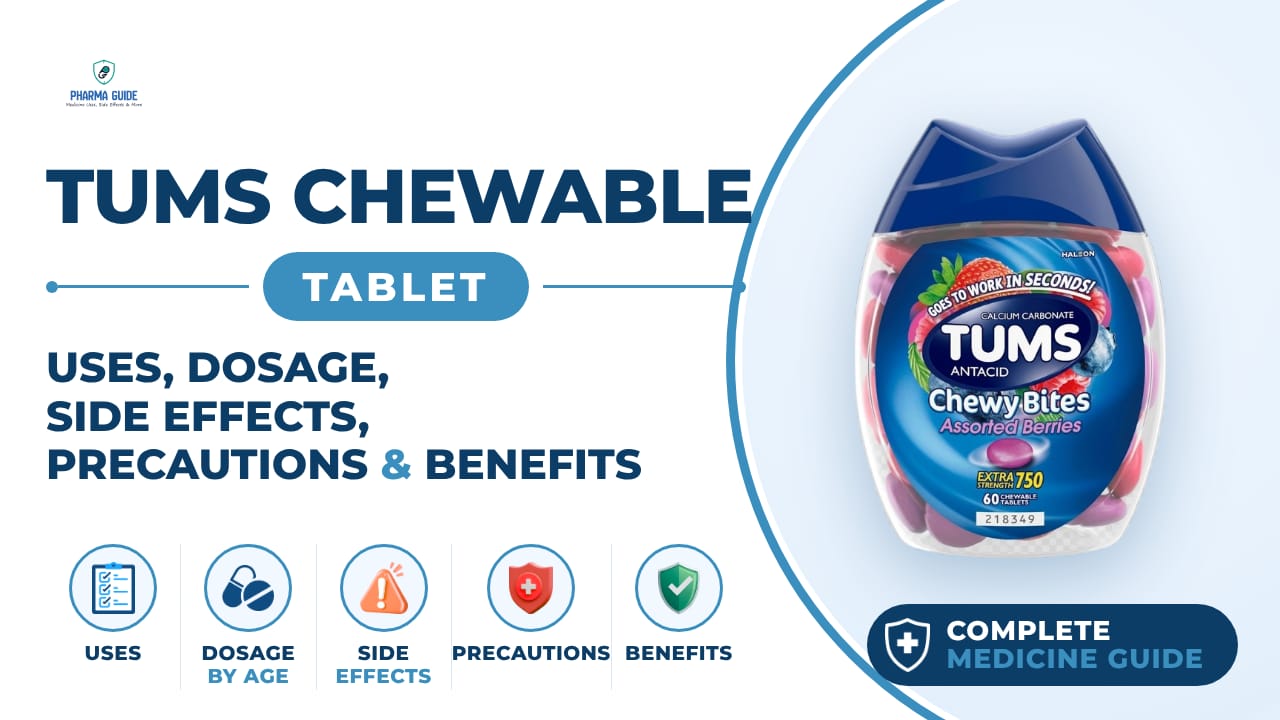
| Generic name | Calcium carbonate |
|---|---|
| Drug class | Antacids |
| Forms | Chewable tablet, Regular tablet, Oral suspension (liquid), Powder, Gummy |
Quick overview
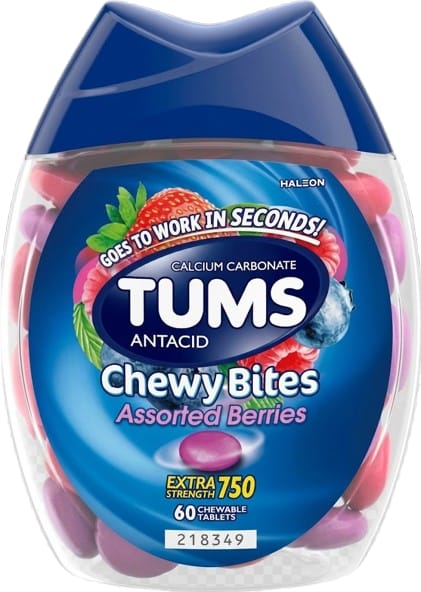
TUMS Chewable Tablet contains calcium carbonate and belongs to the antacid drug class. It is an over-the-counter medicine used to relieve heartburn, acid indigestion, and upset stomach, and it also provides calcium that the body needs for bones and other functions. It works by lowering the amount of acid in the stomach and can also be used to prevent or treat low calcium levels.
What is TUMS Chewable Tablet
TUMS is an over-the-counter medicine used to relieve heartburn, acid indigestion, and upset stomach. It also contains calcium, which the body needs for bones and other functions.
TUMS Chewable Tablet uses
- Heartburn
- Acid indigestion
- Sour stomach
- Upset stomach associated with these symptoms
- Preventing or treating low calcium levels (calcium deficiency)
Benefits of TUMS Chewable Tablet
- Starts working within seconds to neutralize stomach acid
- Provides fast relief from heartburn, acid indigestion, sour stomach, and upset stomach
- Available in many flavors and forms for convenient use at home or on the go
How TUMS Chewable Tablet works
TUMS works by lowering the amount of acid in your stomach, which relieves heartburn, indigestion, and upset stomach.
TUMS Chewable Tablet dosage
Take exactly as directed on the label, and do not use more or for longer than recommended. Check the product label to see if it should be taken with or without food. Chew the chewable tablet completely before swallowing it; do not swallow it whole. Drink a full glass of water after taking the tablet.
Antacids are usually taken after meals and at bedtime, or as directed by your healthcare provider. If you take other medicines, take them at least 2 hours before or several hours after taking this medicine, since calcium can make it harder for your body to absorb some medicines. Do not use this medicine for stomach problems for more than 2 weeks without talking to your healthcare provider.
If you miss a dose, take it as soon as you remember, but skip it if it is almost time for your next dose; do not double up.
| Age group | Dose |
|---|---|
| Under 12 years | Not recommended |
| 12–60 years | 500–1,000 mg, once/day |
| 60+ years | 500–1,000 mg, once/day |
Available forms and strengths
- Chewable tablet
- Regular tablet
- Oral suspension (liquid)
- Powder
- Gummy
Side effects of TUMS Chewable Tablet
Common
- Constipation
- Nausea and vomiting
- Abdominal pain
- Gas
- Decreased appetite
- Headaches
- Dry mouth
- Upset stomach
- Burping
Serious
- High blood calcium levels (hypercalcemia) - symptoms include nausea, vomiting, constipation, increased thirst or urination, muscle weakness, bone pain, confusion, or feeling very tired
- Low phosphate levels (hypophosphatemia) - may cause weakness, confusion, or numbness
- Milk-alkali syndrome
- Kidney problems, including kidney stones or sudden kidney failure
- Acid rebound if used for a long time
- Little or no urinating
- Swelling or rapid weight gain
- Allergic reaction - hives, difficulty breathing, swelling of face, lips, tongue, or throat
Warnings and precautions
- Tell your healthcare providers about all your medical conditions and allergies, and all medicines you use, before taking this medicine.
- Check with a doctor or pharmacist before taking TUMS if you have had kidney disease, kidney stones, cancer, a parathyroid gland disorder, or high blood calcium levels.
- Ask a doctor or pharmacist before taking any multivitamins, mineral supplements, or other antacids while using TUMS.
- Calcium can reduce how well your body absorbs certain other medicines, so take other medicines at least 2 hours before or several hours after TUMS.
- Do not use this medicine for stomach problems for more than 2 weeks, and do not switch to a different antacid without talking to your care team.
- Ask a doctor before using TUMS if you are pregnant, since your dose needs may be different during pregnancy.
- Ask a doctor before using TUMS if you are breastfeeding, since your dose needs may be different while nursing.
- Ask a doctor or pharmacist before taking TUMS if you have kidney disease or a history of kidney stones.
- It is better to keep a 2 to 4 hour gap before or after taking other medicines, since calcium can affect their absorption.
- Long-term or excessive use may lead to constipation and high calcium levels.
- Do not use TUMS if you are allergic to calcium carbonate.
Storage
- Store at room temperature away from moisture and heat
- Do not freeze
- Keep out of the reach of children and pets
- Store at room temperature between 15 and 30 degrees C (59 and 86 degrees F)
- Throw away any unused medication after the expiration date
When to see a doctor
- Get emergency medical help right away if you have signs of an allergic reaction, such as hives, trouble breathing, or swelling of your face, lips, tongue, or throat.
- Call your doctor right away if you are urinating little or not at all, have sudden swelling or rapid weight gain, or show signs of high blood calcium such as nausea, vomiting, constipation, increased thirst or urination, muscle weakness, bone pain, confusion, or tiredness.
- Contact your healthcare professional right away if you feel unusual weakness, which could be a sign of low phosphate levels.
- Contact your healthcare professional immediately if you notice you are urinating less or see blood in your urine, and seek emergency care if symptoms feel severe.
- See your care team if you have black, tarry stools, rectal bleeding, or feel unusually tired while taking this medicine.
Alternatives
- Alka-Seltzer
- Rolaids
- Gaviscon
Watch the video
FAQs
What is TUMS Chewable Tablet used for?
TUMS is used to relieve heartburn, acid indigestion, sour stomach, and upset stomach, and it can also help prevent or treat low calcium levels.
How does TUMS work?
TUMS works by lowering the amount of acid in your stomach, which relieves heartburn, indigestion, and upset stomach.
How should TUMS Chewable Tablet be taken?
Chew the tablet completely before swallowing, then drink a full glass of water. Antacids are usually taken after meals and at bedtime, and should not be used for stomach problems for more than 2 weeks without talking to a healthcare provider.
What is the dosage of TUMS for adults?
For people aged 12 to 60 years and those over 60, the typical dose is 500–1,000 mg once a day; it is not recommended for children under 12.
What are the serious side effects of TUMS?
Serious side effects include high blood calcium levels (hypercalcemia), low phosphate levels, milk-alkali syndrome, kidney problems including kidney stones or kidney failure, and allergic reactions such as hives or swelling of the face, lips, tongue, or throat.
General information, not medical advice
Your prescriber and the leaflet in your pack know your situation. This page does not.
- Follow your prescriber and the leaflet
- Don't start, stop, or change a dose on your own
- Doses and warnings differ by country and product
Sources
Video
Related medicines
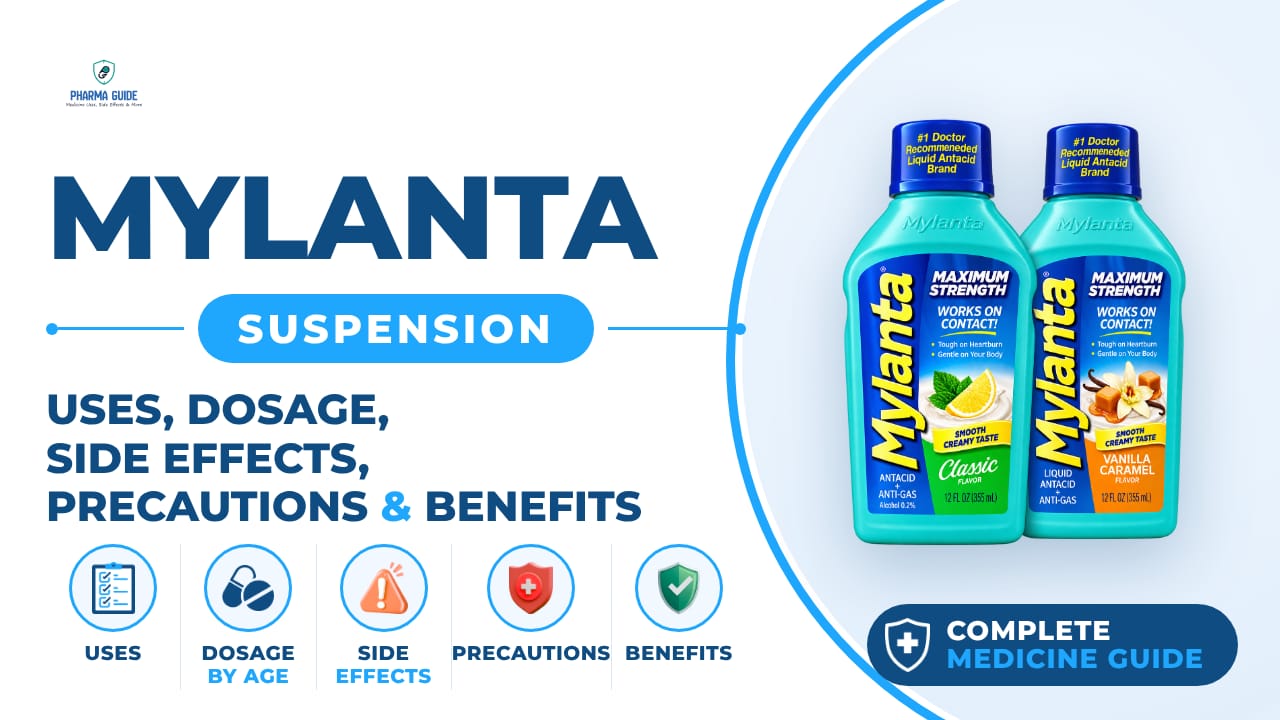
Mylanta Suspension: Uses, Dosage, Side Effects, Precautions and Alternates
Antacids
Mylanta Suspension combines aluminum hydroxide, magnesium hydroxide, and simethicone to relieve heartburn, acid indigestion, and gas. Learn dosage, side
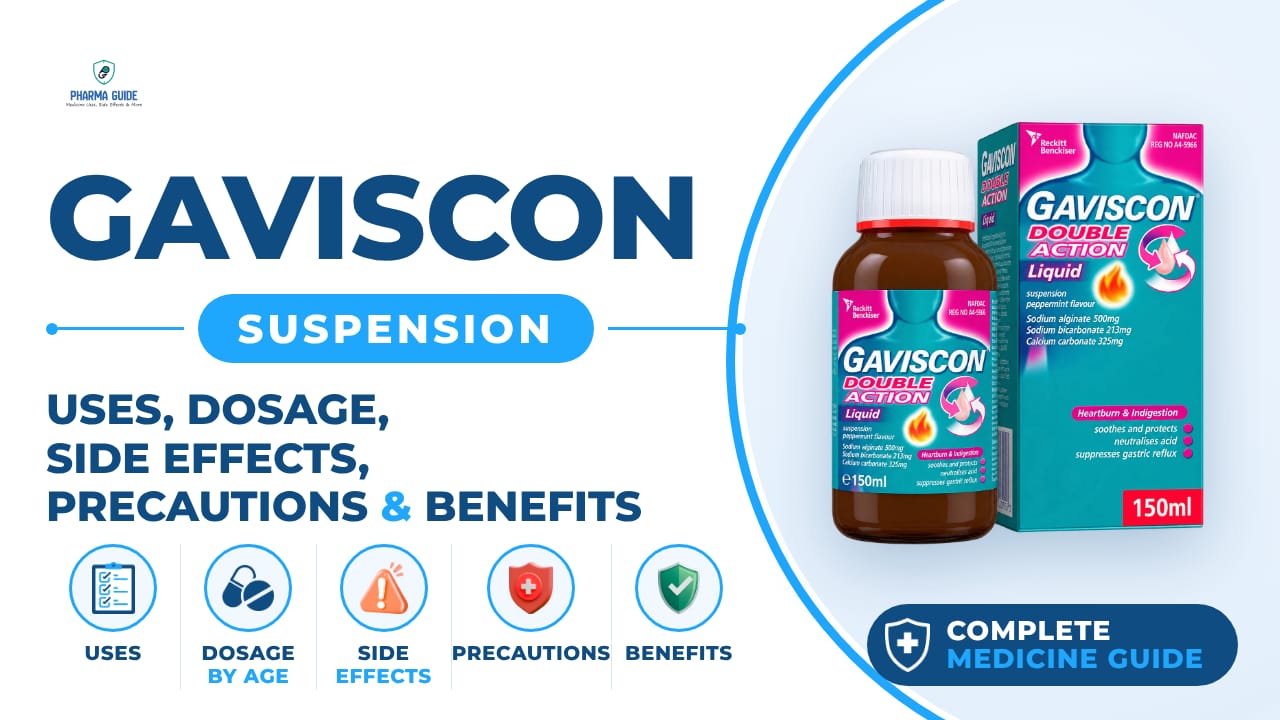
Gaviscon Suspension: Uses, Dosage, Side Effects, Precautions and Alternates
Antacids
Gaviscon Suspension relieves heartburn, acid indigestion, and sour stomach by neutralizing stomach acid. Learn dosage, uses, side effects, and precautions.