
Safety
General information, not medical advice
Your prescriber and the leaflet in your pack know your situation. This page does not.
- Follow your prescriber and the leaflet
- Don't start, stop, or change a dose on your own
- Doses and warnings differ by country and product
Gemcitabine Injection: Uses, Dosage, Side Effects, Precautions and Alternates
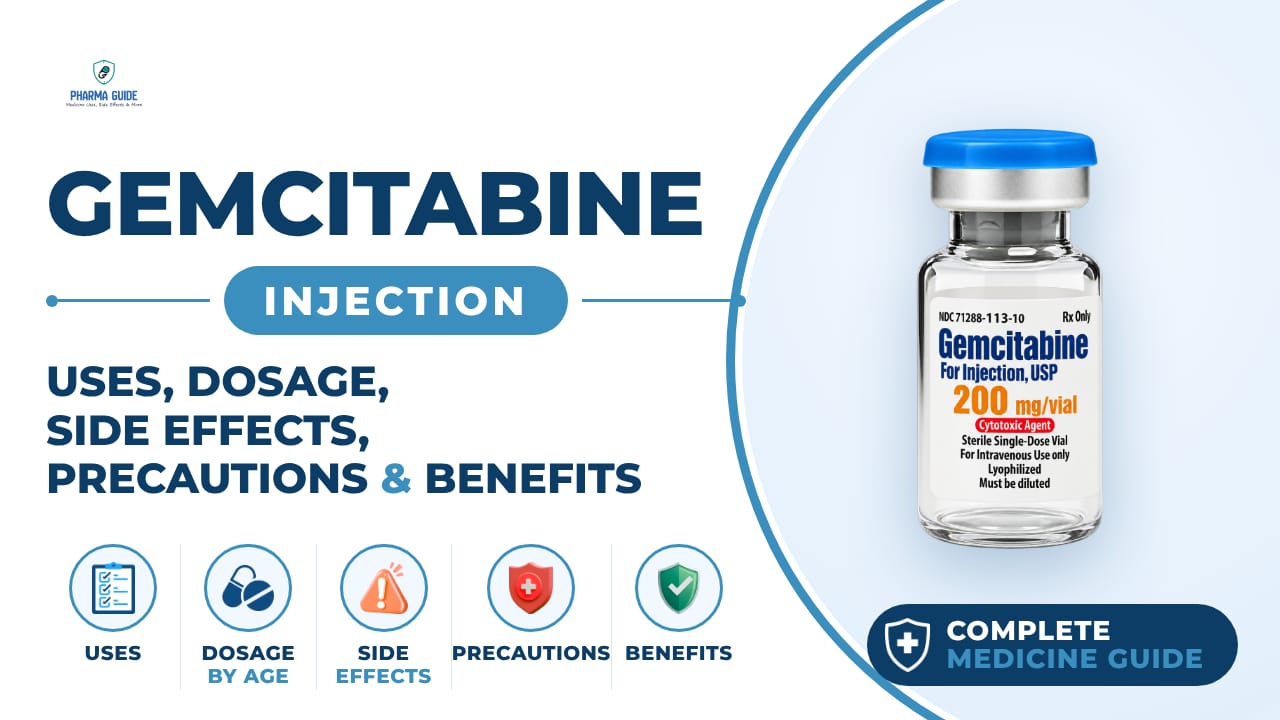
| Generic name | Gemcitabine hydrochloride |
|---|---|
| Drug class | Nucleoside metabolic inhibitor (antineoplastic/cytotoxic chemotherapy medicine) |
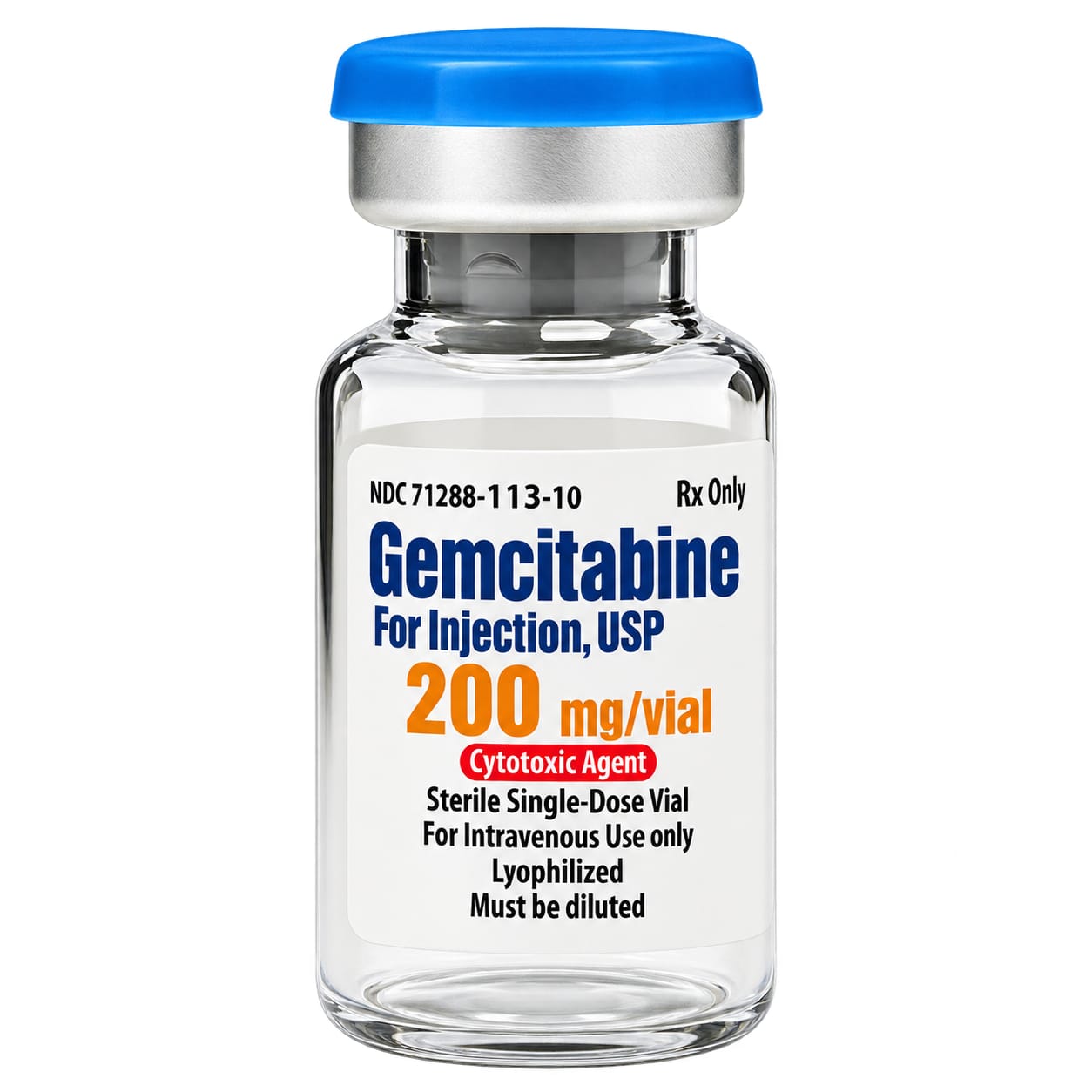
| Forms | Lyophilized (freeze-dried) powder for solution for intravenous infusion, in single-use vials (200 mg, 1 g, 2 g), Ready-to-use liquid injection (100 mg/mL) in multiple-dose vials (200 mg/2 mL, 1 g/10 mL, 1.5 g/15 mL, 2 g/20 mL) |
Quick overview
Gemcitabine Injection (gemcitabine hydrochloride) is a nucleoside metabolic inhibitor used in chemotherapy. It is given by injection into a vein to treat several types of cancer, either alone or combined with other cancer medicines. It works by stopping cancer cells from copying their DNA, blocking their growth and eventually causing them to die. Treatment is monitored closely with blood tests, and doses are given according to specific cycles and schedules.
What is Gemcitabine Injection
Gemcitabine is a chemotherapy medicine given by injection into a vein. It is used to treat several types of cancer, either alone or combined with other cancer medicines.
Gemcitabine Injection uses
- Advanced ovarian cancer that has come back at least 6 months after platinum-based treatment, used together with carboplatin
- Metastatic breast cancer, used together with paclitaxel, after prior anthracycline treatment has failed or is not suitable
- Non-small cell lung cancer (locally advanced or metastatic), used together with cisplatin
- Pancreatic cancer, used alone, including in patients already treated with fluorouracil
- Also used to treat bladder cancer (per consumer source)
Benefits of Gemcitabine Injection
- Treats certain pancreatic cancers
- Used for certain non-small-cell lung cancers
- Treats selected bladder cancers
- Used in some breast and ovarian cancer regimens
- Interferes with DNA synthesis in rapidly dividing cancer cells
How Gemcitabine Injection works
Gemcitabine works by stopping cancer cells from copying their DNA, which blocks them from growing and dividing, and eventually causes the cancer cells to die.
Gemcitabine Injection dosage
Gemcitabine is given only into a vein by a doctor or nurse, as a slow infusion lasting about 30 minutes. It may be given alone or combined with other cancer medicines depending on the type of cancer being treated. Your doctor will check your blood counts before each dose to make sure it is safe to continue treatment.
Treatment schedules vary by cancer type, with doses given on specific days of each treatment cycle followed by rest periods. Several courses of treatment may be needed depending on how you respond, and your next dose may be delayed if your blood cell counts have not recovered enough. Clearance of this medicine is reduced in women and in older adults, so they may process it more slowly.
| Age group | Dose |
|---|---|
| 18–39 years | Common regimens use 1,000–1,250 mg/m² IV on specified treatment days, depending on the cancer type and combination regimen |
| 40–64 years | Commonly 1,000–1,250 mg/m² IV according to the prescribed oncology cycle |
Available forms and strengths
- Lyophilized (freeze-dried) powder for solution for intravenous infusion, in single-use vials (200 mg, 1 g, 2 g)
- Ready-to-use liquid injection (100 mg/mL) in multiple-dose vials (200 mg/2 mL, 1 g/10 mL, 1.5 g/15 mL, 2 g/20 mL)
Side effects of Gemcitabine Injection
Common
- Nausea and vomiting
- Fever
- Rash
- Shortness of breath (dyspnea)
- Diarrhea
- Constipation
- Hair loss (alopecia)
- Mouth sores (stomatitis)
- Sleepiness/drowsiness
- Tingling or numbness (paresthesias)
- Swelling (edema), including swelling of ankles, hands, feet, or face
- Flu-like symptoms such as chills, headache, weakness, loss of appetite, muscle pain
- Cough, runny or blocked nose, sneezing, sweating
- Low red blood cells (anemia), low white blood cells, low platelets
Serious
- Signs of infection such as fever, chills, sore throat, or mouth ulcers
- Bruising or bleeding more easily than normal
- Severe skin reactions with blistering, peeling, or widespread skin pain, sometimes with fever
- Yellowing of the skin or eyes, or pain in the upper right abdomen (possible liver problems)
- Severe shortness of breath, wheezing, fast breathing, bluish skin or nails, chest pain (possible lung problems)
- Passing less urine than normal, swollen legs, unusual tiredness (possible kidney problems or hemolytic uremic syndrome)
- Headache with vision changes, confusion, or seizures (possible brain swelling - posterior reversible encephalopathy syndrome)
- Sudden body swelling, rapid drop in blood pressure, dizziness, weakness, nausea, stomach pain, increased thirst, or sudden weight gain (possible capillary leak syndrome)
- Signs of allergic reaction such as rash, itching, hives, swelling of face/lips/tongue, trouble breathing
- Chest pain, irregular or fast heartbeat
Warnings and precautions
- Giving the infusion over longer than an hour, or more often than once a week, increases toxicity, including dangerous drops in blood pressure, severe flu-like symptoms, and low blood cell counts. This medicine can severely lower blood cell counts, affecting red cells, white cells, and platelets, which increases risk of infection, anemia, and bleeding.
- Severe skin reactions, which can be life-threatening, have occurred, including Stevens-Johnson syndrome and toxic epidermal necrolysis. Serious lung problems can occur, sometimes leading to fatal respiratory failure, and may appear up to two weeks after the last dose.
- A serious condition called hemolytic uremic syndrome can occur, which can cause kidney failure that may not be reversible even after stopping the medicine. Serious liver damage, including liver failure and death, has been reported with this medicine.
- This medicine is not recommended to be combined with radiation therapy because it can cause severe, life-threatening tissue damage. A rare but serious condition called capillary leak syndrome can occur, causing fluid to leak from blood vessels into tissues. A rare brain condition called posterior reversible encephalopathy syndrome (PRES) can occur, causing headache, seizures, confusion, and vision problems.
- This medicine can harm an unborn baby and should not be used during pregnancy. Women who can become pregnant should use effective contraception during treatment and for several months afterward, and men should also use contraception for a period after treatment.
- Breastfeeding is not recommended during treatment and for a period after the last dose, since it is not known whether the medicine passes into breast milk and it could harm a nursing baby.
- This medicine should be used carefully in people with kidney problems, and kidney function should be checked before and during treatment, since it can rarely cause serious kidney damage.
- This medicine should be used carefully in people with liver problems, and liver function should be checked before and during treatment, since serious liver damage, including liver failure, has occurred.
- Tell your doctor if you drink alcohol, although no specific information on alcohol interactions is available.
- This medicine can cause sleepiness or drowsiness, so avoid driving or operating machinery until you know how it affects you.
Storage
- Unopened vials are stored under refrigeration in the pharmacy or hospital ward
- Store at 20°C to 25°C (68°F to 77°F), with excursions permitted between 15°C and 30°C (59°F and 86°F)
- After the vial is first opened, the multiple-dose vial is stable for 28 days when stored at room temperature
- Diluted solution should be stored at controlled room temperature and discarded after 24 hours
- Do not refrigerate the reconstituted/diluted solution, as crystals may form
- Discard any unused portion of reconstituted solution
- Check the solution for particles or discoloration before use; do not use if any is seen
When to see a doctor
- Get medical help right away if you have signs of infection such as fever, chills, sore throat, or feeling very unwell, since this medicine can lower your infection-fighting blood cells. Seek urgent care for a severe skin rash with blistering, peeling, or widespread skin pain, often with fever.
- Get medical help immediately for shortness of breath, wheezing, or a new cough, as these can signal serious lung problems. Contact your doctor right away if you notice changes in urine color or amount, or increased bruising or bleeding, which can be signs of kidney problems.
- Seek medical attention immediately for yellowing of the skin or eyes, or pain in the upper right side of your abdomen, which may indicate liver damage. Go straight to the emergency department for sudden allergic reactions such as rash, swelling of the face or throat, or difficulty breathing; for severe chest pain or irregular heartbeat; for headache with vision changes, confusion, or seizures; or for sudden body swelling with a rapid drop in blood pressure.
- Tell your doctor immediately if you become pregnant while being treated with this medicine.
Alternatives
- Capecitabine
- Fluorouracil (5-FU)
- Paclitaxel
Watch the video
FAQs
What is Gemcitabine Injection used for?
It is used to treat advanced ovarian cancer, metastatic breast cancer, non-small cell lung cancer, and pancreatic cancer, often combined with other cancer medicines. It is also used for bladder cancer per a consumer source.
How is Gemcitabine Injection given?
It is given only into a vein by a doctor or nurse as a slow infusion lasting about 30 minutes, following specific treatment cycles and schedules depending on the cancer type.
What are the common side effects of Gemcitabine Injection?
Common side effects include nausea, vomiting, fever, rash, shortness of breath, diarrhea, hair loss, mouth sores, drowsiness, tingling, swelling, flu-like symptoms, and low blood cell counts.
What serious risks are linked to Gemcitabine Injection?
Serious risks include severe skin reactions, liver and lung problems, hemolytic uremic syndrome, capillary leak syndrome, posterior reversible encephalopathy syndrome, and allergic reactions.
Can Gemcitabine Injection be used during pregnancy?
No, it can harm an unborn baby and should not be used during pregnancy. Effective contraception is recommended during and after treatment for both women and men.
General information, not medical advice
Your prescriber and the leaflet in your pack know your situation. This page does not.
- Follow your prescriber and the leaflet
- Don't start, stop, or change a dose on your own
- Doses and warnings differ by country and product
Sources
Video
Related medicines

Injectafer Injection: Uses, Dosage, Side Effects, Precautions and Alternates
Iron products
Injectafer (ferric carboxymaltose) treats iron deficiency anemia and heart failure-related iron deficiency via IV. Learn uses, dosage, side effects, and

Gliclazide Tablet: Uses, Dosage, Side Effects, Precautions and Alternates
Sulfonylurea (hypoglycemic/antidiabetic agent)
Gliclazide Tablet is a sulfonylurea for type 2 diabetes that boosts insulin release. Learn about dosage, side effects, warnings, and precautions.