
Safety
General information, not medical advice
Your prescriber and the leaflet in your pack know your situation. This page does not.
- Follow your prescriber and the leaflet
- Don't start, stop, or change a dose on your own
- Doses and warnings differ by country and product
Gemtesa Tablet: Uses, Dosage, Side Effects, Precautions and Alternates
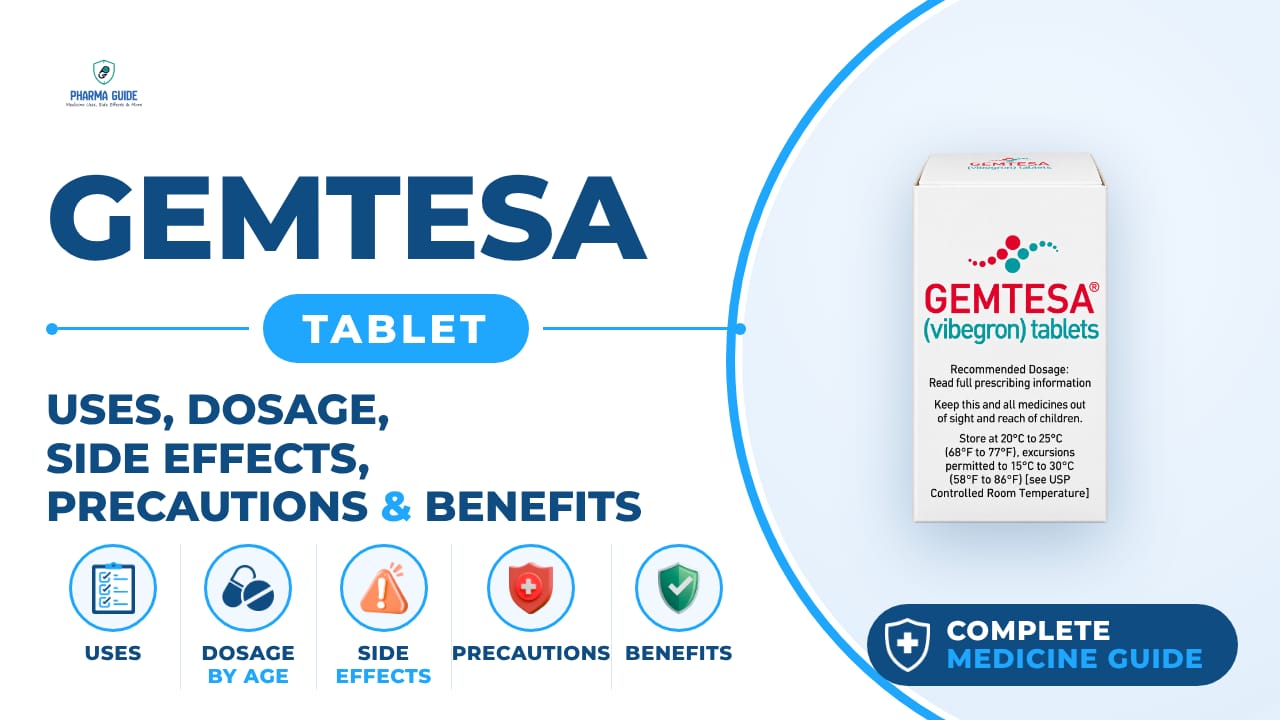
| Generic name | vibegron |
|---|---|
| Drug class | Urinary antispasmodics (beta-3 agonist) |
| Forms | Tablet (75 mg) |
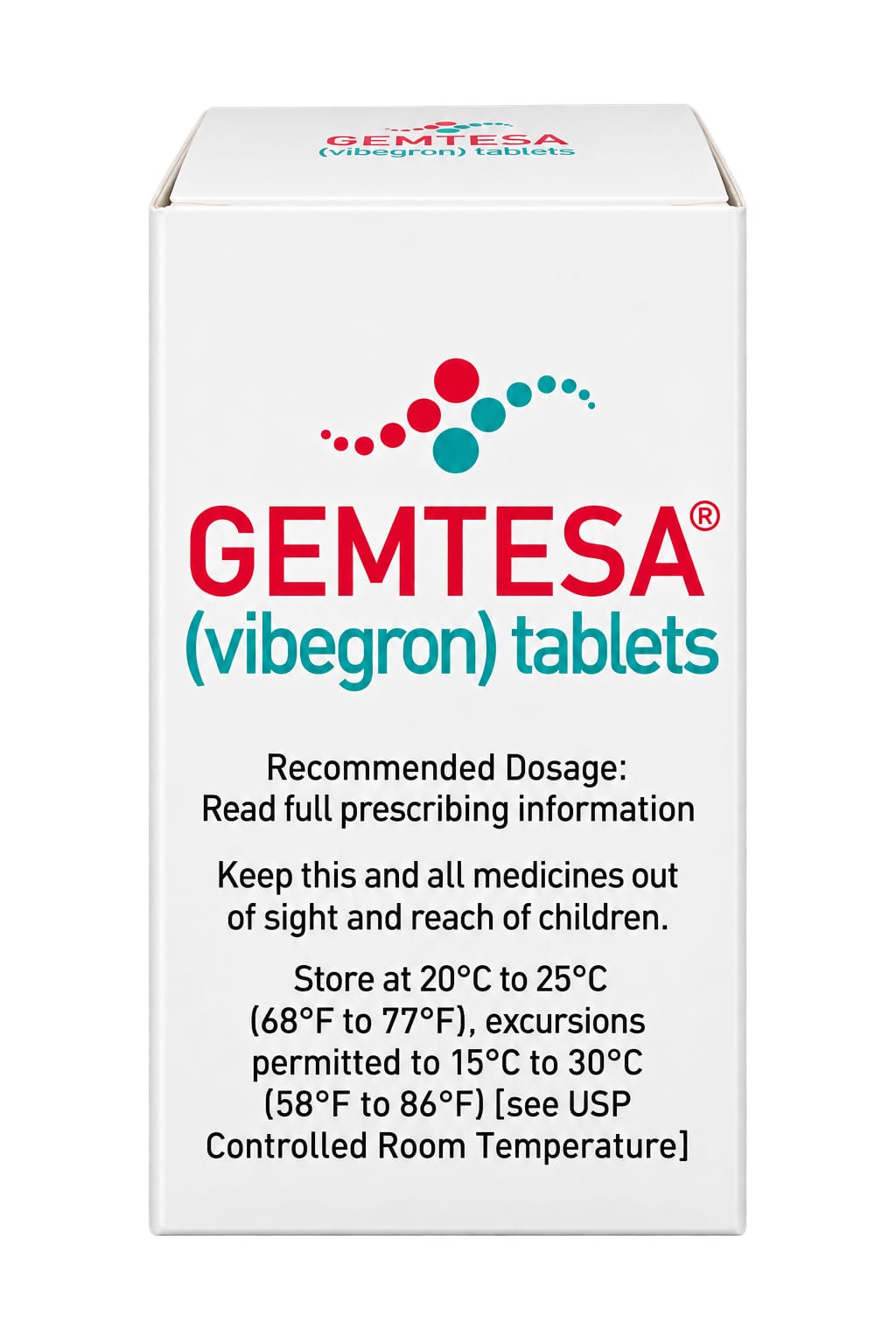
Quick overview
Gemtesa (vibegron) is a prescription tablet used to treat overactive bladder symptoms in adults. It belongs to a class of medicines called beta-3 agonists and works by relaxing the bladder muscle so it can hold more urine. Gemtesa is taken once daily and may help with urgency, frequency, and urine leakage. It is available as a 75 mg tablet.
What is Gemtesa Tablet
Gemtesa is a prescription tablet used to treat overactive bladder symptoms in adults. It contains the active ingredient vibegron and belongs to a group of medicines called beta-3 agonists.
Gemtesa Tablet uses
- Treats urinary urgency (needing to urinate right away) in adults with overactive bladder
- Treats urinary frequency (needing to urinate often) in adults with overactive bladder
- Treats urge urinary incontinence (leaking or wetting accidents) in adults with overactive bladder
- Treats overactive bladder symptoms in men who are also taking medicine for benign prostatic hyperplasia (BPH)
Benefits of Gemtesa Tablet
- Helps treat overactive bladder symptoms.
- Reduces sudden and urgent need to urinate.
- Helps decrease frequent urination.
- Can reduce urge incontinence (urine leakage).
- Helps the bladder store urine for longer by relaxing the bladder muscle.
How Gemtesa Tablet works
Gemtesa works by activating a receptor that relaxes the muscle in the bladder wall. This lets the bladder hold more urine before sending signals that you need to urinate, which can reduce urgency, frequency, and leakage.
Gemtesa Tablet dosage
Take one tablet once a day, with or without food. Swallow the tablet whole with a full glass of water. If you cannot swallow the tablet whole, you may crush it, mix it with a tablespoon of applesauce, and eat the mixture right away with a full glass of water. Do not save a crushed, mixed dose for later use.
Try to take your dose at about the same time each day to keep a steady level of medicine in your body. If you miss a dose, take it as soon as you remember, but skip it if it is almost time for your next dose — do not take two doses at once.
| Age group | Dose |
|---|---|
| Under 18 years | Safety and effectiveness not established |
| Adults – Overactive bladder | 75 mg once daily |
| 65+ years | Usually 75 mg once daily; no routine age-based dose adjustment |
| Kidney impairment | No dose adjustment is generally needed for mild-to-severe renal impairment not requiring dialysis |
| Liver impairment | No adjustment for mild-to-moderate impairment; not recommended in severe hepatic impairment |
Available forms and strengths
- Tablet (75 mg)
Side effects of Gemtesa Tablet
Common
- Headache
- Diarrhea
- Nausea
- Urinary tract infection
- Cold symptoms such as stuffy or runny nose, sneezing, and sore throat
- Dry mouth
- Constipation
- Hot flashes
- Producing more urine than usual
- Bronchitis
Serious
- Not being able to empty your bladder completely (urinary retention)
- Pain or burning when you urinate
- Signs of a serious allergic reaction, including hives, swelling of the face, lips, tongue, or throat, and trouble breathing (angioedema)
Warnings and precautions
- Do not take Gemtesa if you are allergic to vibegron or any of its ingredients.
- Gemtesa can increase the risk of not being able to empty your bladder, especially if you have a bladder blockage or take other overactive bladder medicines. Tell your doctor right away if you cannot empty your bladder.
- Gemtesa may cause a serious allergic reaction called angioedema, with swelling of the lips, face, tongue, or throat, which can be life-threatening. Stop the medicine and get emergency help right away if this happens.
- Gemtesa is not recommended for people with end-stage kidney disease or severe liver problems.
- Gemtesa can interact with the heart medicine digoxin, so tell your doctor if you take it.
- It is not known if Gemtesa is safe to take during pregnancy. Talk to your doctor if you are pregnant or planning to become pregnant.
- It is not known if Gemtesa passes into breast milk. Talk to your doctor about the best way to feed your baby if you take this medicine.
- Gemtesa is not recommended for people with end-stage kidney disease, with or without dialysis. Tell your doctor if you have kidney problems.
- Gemtesa is not recommended for people with severe liver problems. Tell your doctor if you have liver disease.
- There is no known direct interaction between Gemtesa and alcohol, but both can cause similar side effects like headache, diarrhea, and nausea, and alcohol may worsen overactive bladder symptoms.
Storage
- Store at 20–25°C (68–77°F) at controlled room temperature.
- Keep in a cool, dry place away from excessive heat and humidity.
- Protect tablets from moisture and direct sunlight.
- Keep tablets in the original, tightly closed container until use.
- Avoid storing in bathrooms or other hot and humid areas.
- Keep out of reach and sight of children and pets.
When to see a doctor
- Get emergency medical help if you have signs of an allergic reaction, such as hives, difficulty breathing, or swelling of your face, lips, tongue, or throat.
- Call your doctor right away if you are unable to empty your bladder completely, or if you have pain or burning when you urinate.
- If you think you have taken too much Gemtesa, contact your doctor or your local poison control center right away. If your symptoms are severe, go to the nearest emergency room or call for emergency help.
Alternatives
- Oxybutynin (Ditropan XL)
- Fesoterodine (Toviaz)
- Tolterodine (Detrol)
- Solifenacin (Vesicare)
- Mirabegron
Watch the video
FAQs
What is Gemtesa used for?
Gemtesa treats overactive bladder symptoms in adults, including urinary urgency, frequency, and urge urinary incontinence. It can also be used in men with overactive bladder symptoms who are also taking medicine for BPH.
How do you take Gemtesa tablets?
Take one 75 mg tablet once daily, with or without food, swallowed whole with a full glass of water. If needed, it can be crushed and mixed with a tablespoon of applesauce and eaten right away, not saved for later.
What are the common side effects of Gemtesa?
Common side effects include headache, diarrhea, nausea, urinary tract infection, cold symptoms, dry mouth, constipation, hot flashes, increased urine output, and bronchitis.
What happens if I miss a dose of Gemtesa?
If you miss a dose, take it as soon as you remember, but skip it if it is almost time for your next dose. Do not take two doses at once.
Is Gemtesa safe for people with kidney or liver problems?
No dose adjustment is generally needed for mild-to-severe kidney impairment not requiring dialysis, or for mild-to-moderate liver impairment. Gemtesa is not recommended for end-stage kidney disease or severe liver impairment.
General information, not medical advice
Your prescriber and the leaflet in your pack know your situation. This page does not.
- Follow your prescriber and the leaflet
- Don't start, stop, or change a dose on your own
- Doses and warnings differ by country and product
Sources
Video
Related medicines

Injectafer Injection: Uses, Dosage, Side Effects, Precautions and Alternates
Iron products
Injectafer (ferric carboxymaltose) treats iron deficiency anemia and heart failure-related iron deficiency via IV. Learn uses, dosage, side effects, and

Gliclazide Tablet: Uses, Dosage, Side Effects, Precautions and Alternates
Sulfonylurea (hypoglycemic/antidiabetic agent)
Gliclazide Tablet is a sulfonylurea for type 2 diabetes that boosts insulin release. Learn about dosage, side effects, warnings, and precautions.