
Safety
General information, not medical advice
Your prescriber and the leaflet in your pack know your situation. This page does not.
- Follow your prescriber and the leaflet
- Don't start, stop, or change a dose on your own
- Doses and warnings differ by country and product
Gentamicin Injection: Uses, Dosage, Side Effects, Precautions and Alternates

| Generic name | Gentamicin sulfate |
|---|---|
| Drug class | Aminoglycoside antibiotic |
| Forms | Solution for injection (intravenous or intramuscular use) |
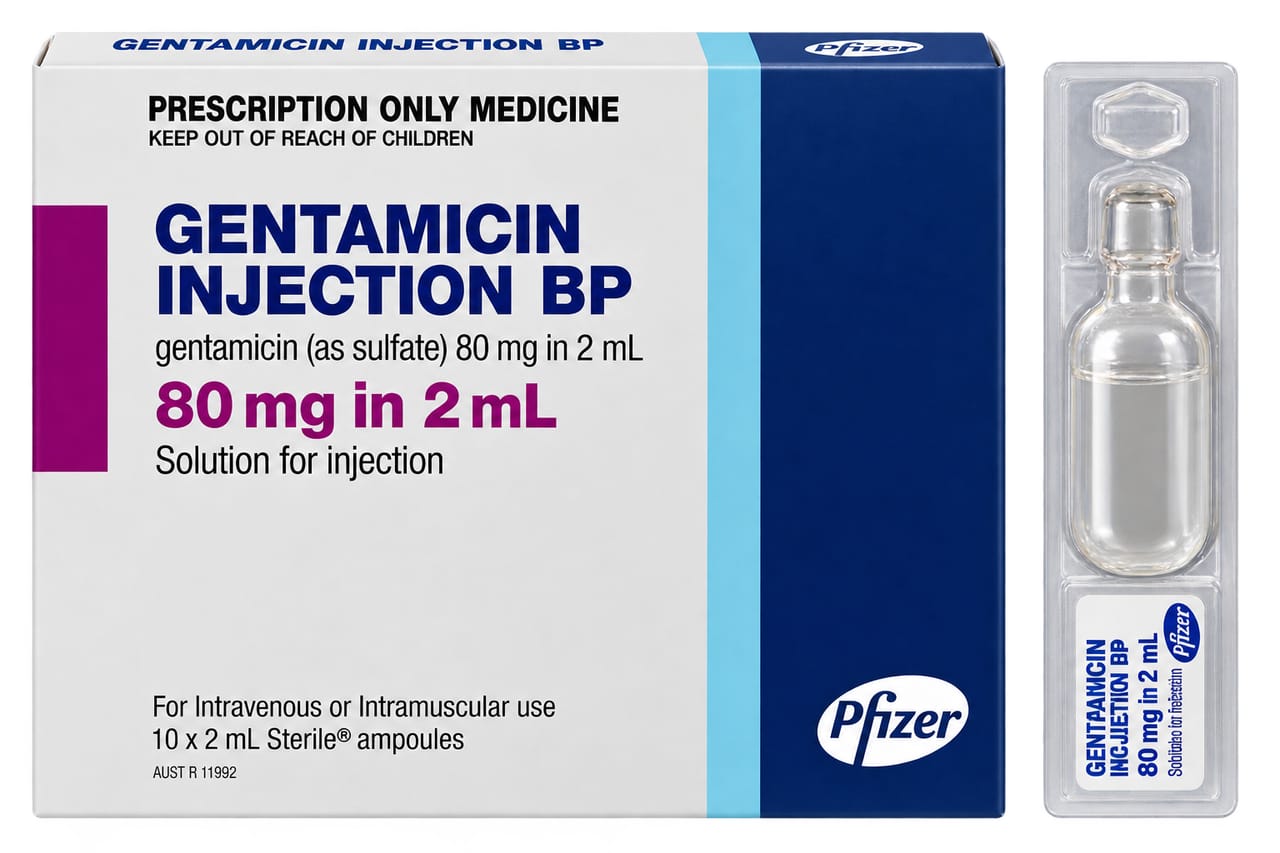
Quick overview
Gentamicin Injection (gentamicin sulfate) is an aminoglycoside antibiotic used to treat certain serious bacterial infections, including infections of the blood, lungs, urinary tract, abdomen, skin, bone, and joints. It is given by injection into a muscle or vein, usually by a healthcare provider. It will not treat colds, the flu, or infections caused by viruses.
What is Gentamicin Injection
Gentamicin is an antibiotic that treats certain serious infections caused by bacteria. It will not treat colds, the flu, or infections caused by viruses.
Gentamicin Injection uses
- Bacteria in the blood (bacteremia/septicemia)
- Meningitis (infection of the membranes around the brain and spinal cord)
- Lung and respiratory tract infections
- Urinary tract infections
- Abdominal (stomach area) infections
- Skin, bone, and joint infections
- Infected wounds, both surgical and from injury
- Burns complicated by infection
- Pelvic inflammatory disease, granuloma inguinale, plague, and tularemia (other uses)
Benefits of Gentamicin Injection
- Kills or stops the growth of many serious bacteria, including gram-negative bacteria and some staphylococci
How Gentamicin Injection works
Gentamicin works by interfering with the bacteria's ability to make proteins it needs, which causes the bacteria to die.
Gentamicin Injection dosage
This medication is injected into a muscle or infused into a vein by a healthcare provider, in a hospital, clinic, or at home. If given at home, you will be taught how to prepare and give the injection safely.
Take it at the same time each day as directed, and finish the full course even if you feel better. Do not stop early unless your care team tells you to. Do not share this medicine with others.
If you miss a dose, take it as soon as you can; if it is almost time for the next dose, skip the missed one and do not double up.
Put used needles and syringes in a sharps container, not in the regular trash. Special care may be needed when this medicine is given to children.
| Age group | Dose |
|---|---|
| Infants & children | Usually 2–2.5 mg/kg every 8 hours; extended-interval regimens may also be used |
| 12–17 years | Weight-based dosing; commonly 5–7 mg/kg once daily in appropriate patients |
| 18–64 years | Commonly 5–7 mg/kg once daily, or divided-dose regimens depending on infection |
| 65+ years | Individualized by weight, kidney function and serum gentamicin levels |
Available forms and strengths
- Solution for injection (intravenous or intramuscular use)
Side effects of Gentamicin Injection
Common
- Nausea
- Vomiting
- Diarrhea
- Decreased appetite
- Pain at the injection site
- Headache
- Fever
- Joint pain
- Unusual tiredness
- Skin rash
- Difficulty sleeping
- Dizziness or light-headedness
- Swelling
- Depression
- Anxiety, confusion
Serious
- Allergic reactions—skin rash, itching, hives, swelling of the face, lips, tongue, or throat, difficulty breathing or swallowing
- Hearing loss, ringing in ears
- Kidney injury—decrease in the amount of urine, dark-colored urine, swelling of the ankles, hands, or feet
- Pain, tingling, or numbness in the hands or feet, muscle weakness, change in vision, confusion or trouble speaking, loss of balance or coordination, trouble walking, seizures
- Severe diarrhea (bloody or watery) with or without fever, abdominal pain or tenderness (possible bowel inflammation)
- Unusual vaginal discharge, itching, or odor
- Bruising, bleeding, fatigue and weakness (decreased platelets)
- Infections, fatigue, fever, aches, pains and flu-like symptoms (decreased white blood cells)
- Loss of balance while walking, dizziness, sensation of spinning
- Blurred vision, double vision, loss of vision
Warnings and precautions
- This medicine is not recommended during pregnancy except in life-threatening situations, because it can cross the placenta and may cause hearing loss in the baby.
- Gentamicin passes into breast milk and nursing infants may be exposed to it, so a decision should be made about whether to continue breastfeeding or continue the medicine.
- This medicine can harm the kidneys, and your kidney function will be checked with blood tests before and during treatment.
- Gentamicin can cause serious kidney problems, especially in older or dehydrated people. Tell your doctor about any kidney disease and call your doctor right away if you notice reduced urination or swelling.
- Gentamicin can cause serious, sometimes permanent, hearing problems, especially in older people.
- Gentamicin can cause nerve problems such as burning or tingling in the hands and feet, muscle twitching or weakness, or seizures.
- Taking certain other medicines together with gentamicin increases the risk of serious kidney, hearing, or nerve problems.
- Gentamicin can cause severe diarrhea from bowel inflammation (Clostridium difficile colitis); stop the medicine and get medical help right away if this happens.
- Do not use this medicine if you have had a serious allergic reaction to gentamicin or other similar antibiotics in the past.
Storage
- Keep out of the reach of children and pets.
- You will be instructed on how to store this medication.
- Get rid of any unused medication after the expiration date.
- Take the medication to a medication take-back program, or ask your pharmacist or care team how to get rid of it safely.
- Gentamicin Injection USP vials should be protected from light and stored at room temperature (15 – 30 °C).
When to see a doctor
- Get medical help right away if you have signs of an allergic reaction like rash, hives, itching, or swelling of the face, lips, tongue, or throat, or trouble breathing or swallowing.
- Contact your healthcare professional immediately if you notice a change in the amount or color of your urine, which could mean kidney damage.
- Contact your healthcare professional immediately if you develop hearing loss or ringing in the ears.
- Seek medical help right away if you have trouble walking, dizziness, numbness, skin tingling, muscle twitching, convulsions, seizures, or trouble breathing.
- Seek medical help right away for loss of balance, dizziness, or a spinning sensation.
- Seek medical help right away if you have blurred vision, double vision, or loss of vision.
- If you think you have taken too much of this medicine, contact a poison control center or emergency room at once.
Alternatives
- Ceftazidime
- Piperacillin + Tazobactam
- Meropenem
- Imipenem + Cilastatin
- Aztreonam
- Ciprofloxacin
Watch the video
FAQs
What is Gentamicin Injection used for?
It treats serious bacterial infections including bloodstream infections, meningitis, lung and respiratory tract infections, urinary tract infections, abdominal infections, and skin, bone, and joint infections. It will not treat colds, the flu, or viral infections.
How is Gentamicin Injection given?
It is injected into a muscle or infused into a vein, usually by a healthcare provider in a hospital, clinic, or at home after proper training on preparation and administration.
What are the serious side effects of Gentamicin Injection?
Serious side effects include hearing loss and ringing in the ears, kidney injury, nerve problems like tingling or numbness, severe diarrhea from bowel inflammation, allergic reactions, and vision changes like blurred or double vision.
Can Gentamicin Injection be used during pregnancy?
It is not recommended during pregnancy except in life-threatening situations, because it can cross the placenta and may cause hearing loss in the baby.
What precautions should be taken with Gentamicin Injection?
Kidney function is monitored with blood tests before and during treatment because gentamicin can harm the kidneys, cause permanent hearing problems, and nerve issues, especially in older or dehydrated people.
General information, not medical advice
Your prescriber and the leaflet in your pack know your situation. This page does not.
- Follow your prescriber and the leaflet
- Don't start, stop, or change a dose on your own
- Doses and warnings differ by country and product
Sources
Video
Related medicines

Tobramycin Eye Drops: Uses, Dosage, Side Effects, Precautions and Alternates
aminoglycoside antibiotic
Tobramycin Eye Drops treat bacterial eye infections like conjunctivitis and styes. Learn uses, dosage, side effects, and warnings before use.

Neomycin Ointment: Uses, Dosage, Side Effects, Precautions and Alternates
Aminoglycoside antibiotic
Neomycin Ointment is a topical antibiotic that helps prevent and treat minor bacterial skin infections. Learn uses, dosage, side effects, and precautions.