
Safety
General information, not medical advice
Your prescriber and the leaflet in your pack know your situation. This page does not.
- Follow your prescriber and the leaflet
- Don't start, stop, or change a dose on your own
- Doses and warnings differ by country and product
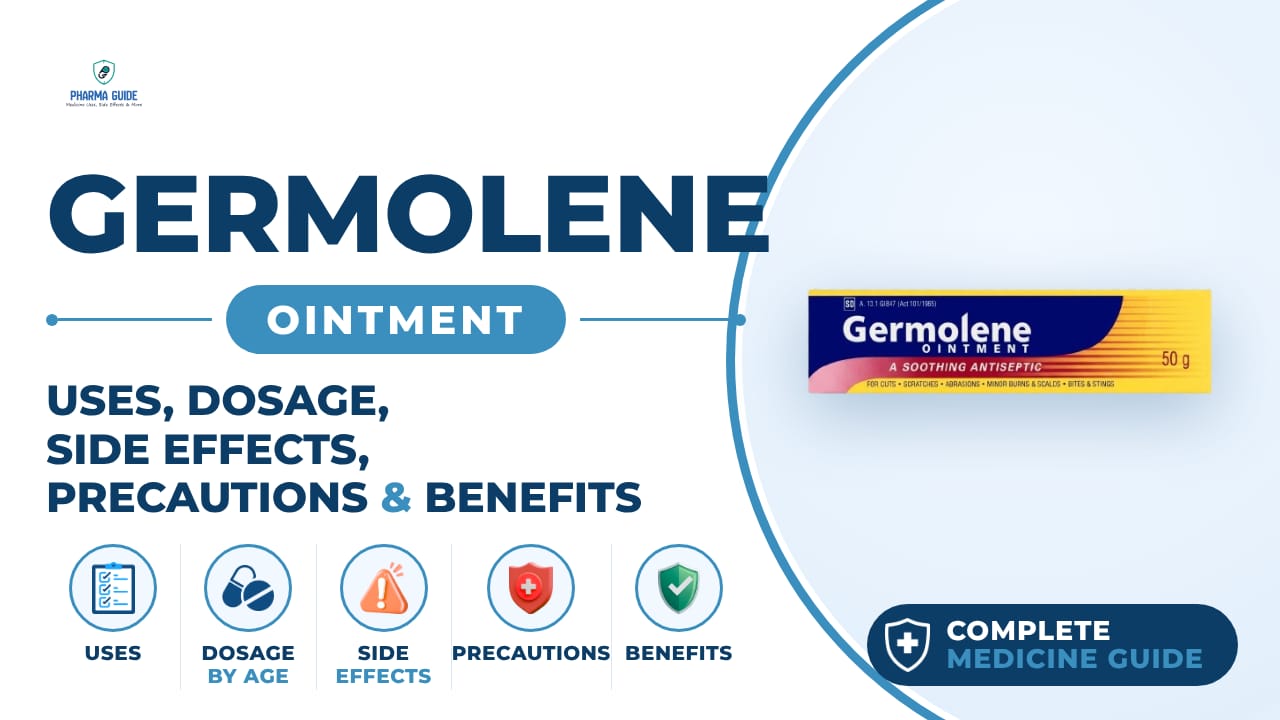
Germolene Ointment: Uses, Dosage, Side Effects, Precautions and Alternates
| Forms | Cream |
|---|
Quick overview
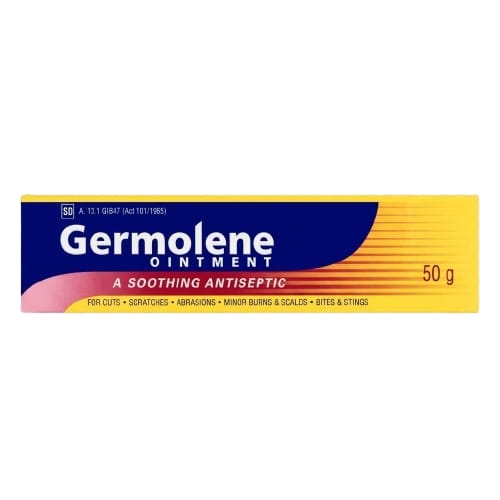
Germolene Ointment is an antiseptic cream that also has local anaesthetic properties. It is used to relieve pain and help prevent infection in minor cuts, grazes, burns, scalds, blisters, stings, insect bites, spots and chapped or rough skin. It is non-greasy, rubs in easily, and is suitable for use on children.
What is Germolene Ointment
Germolene Antiseptic Cream is a cream that combines antiseptic and local anaesthetic properties. It is used to relieve pain and help prevent infections of minor cuts, grazes, burns, scalds, blisters, stings, insect bites, spots and chapped or rough skin.
Germolene Ointment uses
- Minor cuts and grazes
- Minor burns and scalds
- Blisters
- Stings and insect bites
- Spots
- Chapped or rough skin
Benefits of Germolene Ointment
- Non-greasy cream that rubs in easily
- Antiseptic action helps prevent infection
- Numbs pain
- Suitable for use on children
How Germolene Ointment works
Germolene contains two active ingredients that work together: phenol and chlorhexidine digluconate both have antiseptic properties that disinfect the skin, wounds and burns, while phenol also acts as a local anaesthetic to relieve pain. The cream base also helps soften the skin and soothe irritation.
Germolene Ointment dosage
Wash and dry your hands thoroughly before treating the wound. Make sure the tube seal is broken before first use. Clean the affected area of skin with warm water, but do not use soap.
For minor cuts and grazes, apply the cream directly to the wound or onto a dressing. For scalds, minor burns and blisters, apply the cream generously and massage it in gently. Replace the cap firmly after use, and reapply during the day if needed. For external use only; avoid contact with the eyes and mouth.
| Age group | Dose |
|---|---|
| Under 18 years | Not recommended |
| 18–64 years | Thin layer, 2–3 times/day |
| 65+ years | Thin layer, 2–3 times/day |
Available forms and strengths
- Cream
Side effects of Germolene Ointment
Common
- Local irritation, rash, or other skin reactions at the site of application
- Skin irritation from frequent application to the same area or large areas of skin
- Mild stinging or burning sensation when applied to broken skin
Serious
- Sudden wheeziness or difficulty breathing
- Swelling of the eyelids, face or lips
- Rash or itching, especially affecting the whole body
Warnings and precautions
- This cream should only be used on the skin and should never be used inside the body. Keep it away from the eyes and mouth.
- If the cream is swallowed by accident, get medical help right away.
- Do not use this cream if you are allergic to phenol, chlorhexidine digluconate, or any other ingredient in it.
- The cream contains cetostearyl alcohol, which can cause skin reactions such as contact dermatitis in some people.
- Using this cream on a chronic wound is not recommended because it can harm the cells needed for healing, delaying recovery.
- Serious injuries such as animal bites or severe burns should not be treated with this over-the-counter cream and need medical attention instead.
- This product may not be suitable for very young babies because antiseptic creams can be harsh on a baby's skin.
- If you are pregnant, it's best to speak to a doctor or pharmacist before using this product, especially if you plan to use it often.
- If you are breastfeeding, it's best to speak to a doctor or pharmacist before using this product.
- Do not apply to large or deep wounds without medical advice.
- Avoid contact with eyes and mouth.
- Avoid use if allergic to any ingredient.
- Stop use if irritation or rash develops.
Storage
- Store at room temperature.
- Keep away from direct sunlight and heat.
- Keep the container tightly closed.
- Keep out of reach of children.
When to see a doctor
- Get medical help straight away if you have sudden wheeziness, trouble breathing, swelling of the eyelids, face or lips, or a rash or itching affecting your whole body — these can be signs of a serious allergic reaction.
- If the wound does not improve, or you are unsure how to use this product, seek advice from your doctor or pharmacist.
- Stop using the cream and tell your doctor or pharmacist if it affects you in any way that concerns you.
Alternatives
- Sudocrem
- E45 Cream
Watch the video
FAQs
What is Germolene Ointment used for?
It is used to relieve pain and help prevent infection in minor cuts, grazes, burns, scalds, blisters, stings, insect bites, spots and chapped or rough skin.
How does Germolene Ointment work?
It contains phenol and chlorhexidine digluconate, which have antiseptic properties to disinfect skin and wounds, while phenol also acts as a local anaesthetic to relieve pain. The cream base softens skin and soothes irritation.
How often should Germolene Ointment be applied?
For those aged 18 and over, a thin layer should be applied 2–3 times a day; it is not recommended for those under 18 years.
Can Germolene Ointment be used on children?
The cream is suitable for use on children, but it is not recommended for those under 18 years according to the dosage guidance, and may not be suitable for very young babies as antiseptic creams can be harsh on their skin.
What are the side effects of Germolene Ointment?
Common side effects include local irritation, rash or other skin reactions, skin irritation from frequent application, and mild stinging or burning on broken skin. Serious reactions include sudden wheeziness, difficulty breathing, swelling of the eyelids, face or lips, or widespread rash or itching.
General information, not medical advice
Your prescriber and the leaflet in your pack know your situation. This page does not.
- Follow your prescriber and the leaflet
- Don't start, stop, or change a dose on your own
- Doses and warnings differ by country and product
Sources
Video
Related medicines

Injectafer Injection: Uses, Dosage, Side Effects, Precautions and Alternates
Iron products
Injectafer (ferric carboxymaltose) treats iron deficiency anemia and heart failure-related iron deficiency via IV. Learn uses, dosage, side effects, and

Gliclazide Tablet: Uses, Dosage, Side Effects, Precautions and Alternates
Sulfonylurea (hypoglycemic/antidiabetic agent)
Gliclazide Tablet is a sulfonylurea for type 2 diabetes that boosts insulin release. Learn about dosage, side effects, warnings, and precautions.