
Safety
General information, not medical advice
Your prescriber and the leaflet in your pack know your situation. This page does not.
- Follow your prescriber and the leaflet
- Don't start, stop, or change a dose on your own
- Doses and warnings differ by country and product
Giazo Tablet: Uses, Dosage, Side Effects, Precautions and Alternates
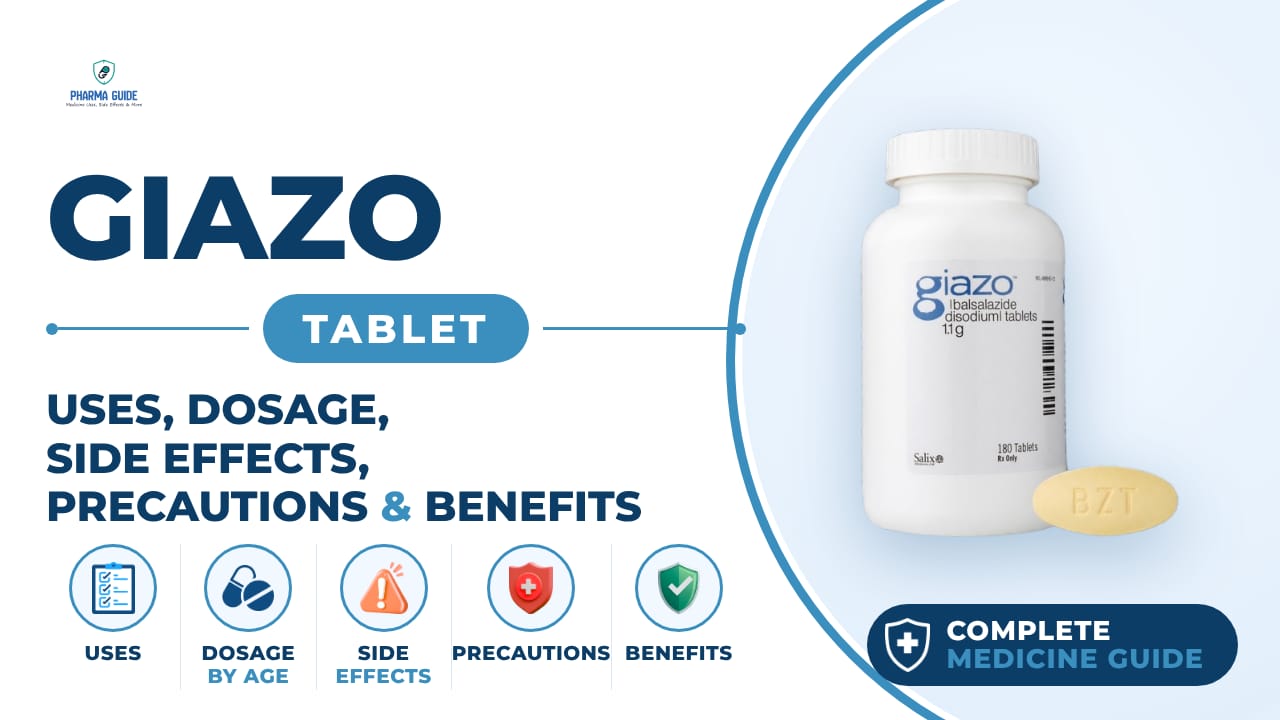
| Generic name | balsalazide disodium |
|---|---|
| Drug class | 5-Aminosalicylic Acid Derivatives (5-aminosalicylates), Inflammatory Bowel Disease Agents |
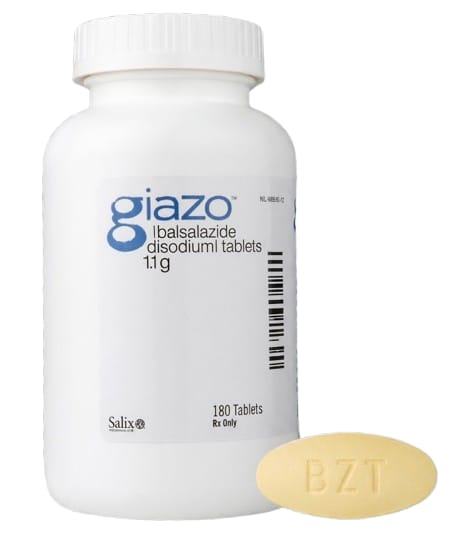
| Forms | Tablets (1.1 g) |
Quick overview
Giazo Tablet contains balsalazide disodium, an aminosalicylate used to treat mild to moderate ulcerative colitis in men 18 years and older. It works by breaking down into mesalamine in the colon, which reduces inflammation and helps control symptoms such as diarrhea and rectal bleeding. The Giazo brand has been discontinued in the U.S., though generic balsalazide may still be available. It is usually used for a short course and carries specific warnings around kidney, liver, and skin reactions.
What is Giazo Tablet
Giazo is an anti-inflammatory medicine (an aminosalicylate) used to treat mildly to moderately active ulcerative colitis in men 18 years and older. The Giazo brand has been discontinued in the U.S., but generic balsalazide may still be available.
Giazo Tablet uses
- Mild to moderate ulcerative colitis
- Inflammation of the colon associated with ulcerative colitis
- Diarrhea associated with ulcerative colitis
- Rectal bleeding associated with ulcerative colitis
- Abdominal discomfort associated with ulcerative colitis
Benefits of Giazo Tablet
- Reduces inflammation in the colon.
- Helps improve bowel symptoms.
- May reduce rectal bleeding and diarrhea.
- Helps control ulcerative colitis flare-ups.
- Supports recovery of the intestinal lining.
How Giazo Tablet works
Giazo is broken down in the gut into mesalamine, a substance that works directly on the lining of the colon to reduce inflammation.
Giazo Tablet dosage
Giazo can be taken with or without food. It is usually taken only for a short time, about 8 to 12 weeks; follow your doctor's instructions carefully. Drink enough fluids while taking this medicine. If you miss a dose, take it as soon as you remember, but skip it if it is almost time for your next dose — do not take two doses at once. Safety and effectiveness beyond 8 weeks have not been established.
| Age group | Dose |
|---|---|
| Under 18 years | Not recommended |
| 18–64 years | 6600 mg, once/day |
| 65+ years | 6600 mg, once/day |
Available forms and strengths
- Tablets (1.1 g)
Side effects of Giazo Tablet
Common
- Headache
- Mild or occasional nausea, vomiting, stomach pain, diarrhea
- Joint pain
- Fever
- Cold symptoms such as stuffy nose, sneezing, sore throat
- Low iron in the blood (anemia)
- Urinary tract infection
- Problems sleeping (insomnia)
- Muscle and joint pain
- Mouth and throat pain
- Feeling tired or weak
Serious
- Signs of an allergic reaction: hives, difficulty breathing, swelling of the face, lips, tongue, or throat
- Pain or burning when urinating
- Worsening colitis symptoms: fever, stomach pain, cramps, or bloody diarrhea
- Kidney problems: little or no urinating, swelling, rapid weight gain
- Liver problems: upper stomach pain, loss of appetite, dark urine, clay-colored stools, yellowing of the skin or eyes (jaundice)
- Low red blood cells (anemia): pale skin, unusual tiredness, light-headedness, shortness of breath, cold hands and feet
- Myocarditis (heart inflammation)
- Pneumonia
- Pancreatitis
- Nephritis (kidney inflammation)
- Severe skin reactions such as Stevens-Johnson syndrome, toxic epidermal necrolysis, DRESS, or AGEP
- Kidney stones: severe side or back pain, blood in the urine
Warnings and precautions
- This drug should only be used during pregnancy if clearly needed, because it is not known whether it harms an unborn baby, though untreated ulcerative colitis itself can cause problems like premature delivery or low birth weight.
- It is not known if this medicine passes into breast milk in amounts that could affect a nursing baby. Caution should be used, and breastfed infants should be watched for diarrhea.
- This medicine can affect kidney function. Your doctor should check your kidney function before you start and periodically during treatment, especially if you have existing kidney problems.
- There have been reports of liver failure in people with existing liver disease who took medicines related to this one. Tell your doctor if you have liver disease.
- This medicine can cause an acute intolerance reaction that looks like a flare of ulcerative colitis itself, with cramping, severe stomach pain, bloody diarrhea, sometimes fever, headache, and rash. Treatment should be stopped right away if this is suspected.
- People who are sensitive to sunlight, or who have skin conditions like eczema, may get worse sun sensitivity reactions. Avoid sun exposure, wear protective clothing, and use broad-spectrum sunscreen outdoors.
- Kidney stones have been reported with this type of medicine, and these stones cannot always be seen on standard X-rays or CT scans. Drink enough fluids during treatment to help prevent this.
- Each tablet contains a notable amount of sodium, which matters if you are on a low-sodium diet or at risk of heart failure.
- Do not take this medicine if you are allergic to salicylates (such as aspirin), aminosalicylates, or any of its ingredients.
- This medicine may cause serious skin reactions including Stevens-Johnson syndrome and toxic epidermal necrolysis. Stop the medicine and get medical help at the first sign of a severe skin reaction.
- Older adults may have a higher chance of blood disorders like low white blood cell counts while taking this type of medicine, so blood counts should be monitored.
Storage
- Store at room temperature (20° to 25°C / 68° to 77°F); brief changes between 15° and 30°C (59° and 86°F) are permitted
- Store in a dry place; do not store in a bathroom
- Keep out of reach of children and pets
- Throw away unused or expired medicine properly; do not flush down a toilet or pour down a drain unless instructed; ask your pharmacist about drug take-back programs
When to see a doctor
- Get emergency help for signs of an allergic reaction: hives, difficulty breathing, or swelling of the face, lips, tongue, or throat.
- Call your doctor right away for pain or burning when urinating, worsening colitis symptoms (fever, stomach pain, cramps, or bloody diarrhea), signs of kidney problems (little or no urinating, swelling, rapid weight gain), or signs of liver problems (upper stomach pain, loss of appetite, dark urine, clay-colored stools, yellowing of skin or eyes).
- Seek medical help right away for signs of low red blood cells (anemia): pale skin, unusual tiredness, feeling light-headed or short of breath, or cold hands and feet.
- If you think there has been an overdose, get medical help right away or contact your local poison control center, and be ready to describe what was taken, how much, and when.
- Call your doctor right away if you have bad belly pain or cramps, bloody stools, fever, headache, or rash, as these could be a reaction that looks like ulcerative colitis symptoms.
Alternatives
- Olsalazine
- Balsalazide
- Colazal
Watch the video
FAQs
What is Giazo Tablet used for?
Giazo is an aminosalicylate used to treat mildly to moderately active ulcerative colitis in men 18 years and older, helping reduce colon inflammation, diarrhea, rectal bleeding, and abdominal discomfort.
How does Giazo Tablet work?
Giazo is broken down in the gut into mesalamine, which works directly on the lining of the colon to reduce inflammation.
How long can Giazo Tablet be taken?
Giazo is usually taken for a short time, about 8 to 12 weeks, following your doctor's instructions. Safety and effectiveness beyond 8 weeks have not been established.
Is the Giazo brand still available?
The Giazo brand has been discontinued in the U.S., though generic balsalazide may still be available.
What are the serious side effects of Giazo Tablet?
Serious side effects include allergic reactions, kidney problems, liver problems, worsening colitis symptoms, low red blood cells, myocarditis, pancreatitis, nephritis, kidney stones, and severe skin reactions such as Stevens-Johnson syndrome.
General information, not medical advice
Your prescriber and the leaflet in your pack know your situation. This page does not.
- Follow your prescriber and the leaflet
- Don't start, stop, or change a dose on your own
- Doses and warnings differ by country and product
Sources
Video
Related medicines

Injectafer Injection: Uses, Dosage, Side Effects, Precautions and Alternates
Iron products
Injectafer (ferric carboxymaltose) treats iron deficiency anemia and heart failure-related iron deficiency via IV. Learn uses, dosage, side effects, and

Gliclazide Tablet: Uses, Dosage, Side Effects, Precautions and Alternates
Sulfonylurea (hypoglycemic/antidiabetic agent)
Gliclazide Tablet is a sulfonylurea for type 2 diabetes that boosts insulin release. Learn about dosage, side effects, warnings, and precautions.