
Safety
General information, not medical advice
Your prescriber and the leaflet in your pack know your situation. This page does not.
- Follow your prescriber and the leaflet
- Don't start, stop, or change a dose on your own
- Doses and warnings differ by country and product
Gilenya Capsule: Uses, Dosage, Side Effects, Precautions and Alternates
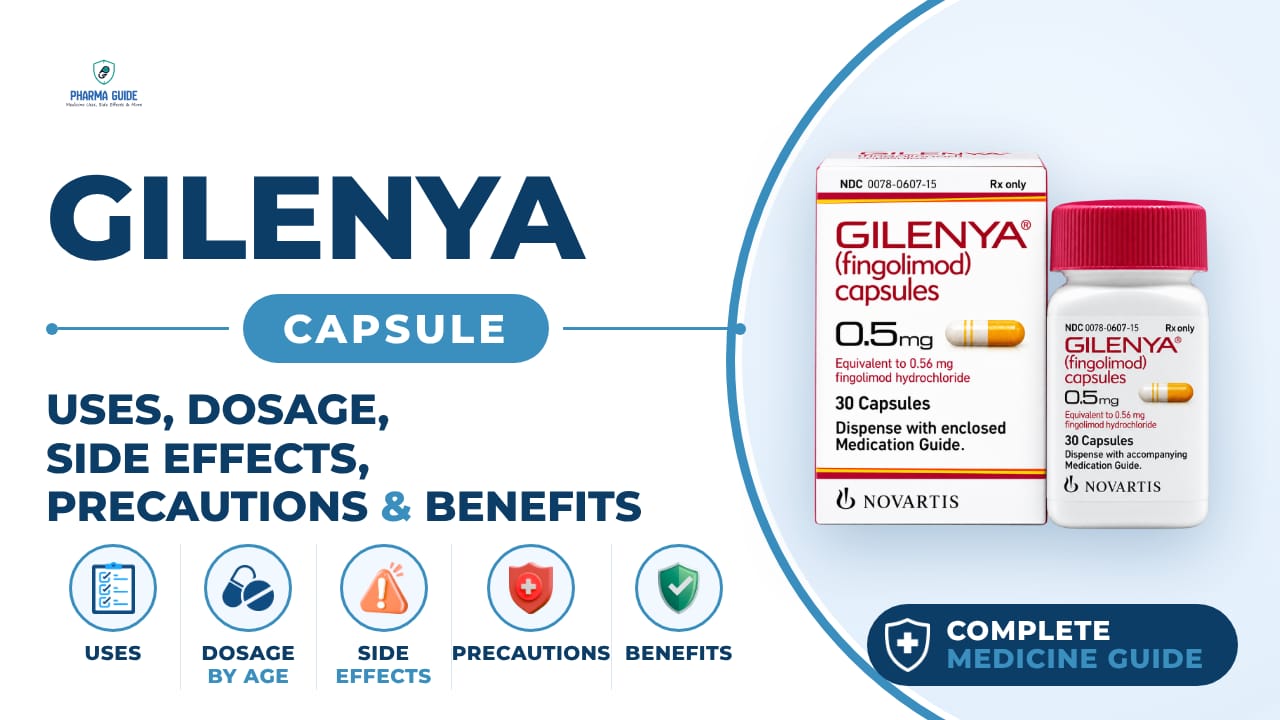
| Generic name | fingolimod |
|---|---|
| Drug class | Selective immunosuppressant (sphingosine 1-phosphate receptor modulator); disease-modifying therapy |
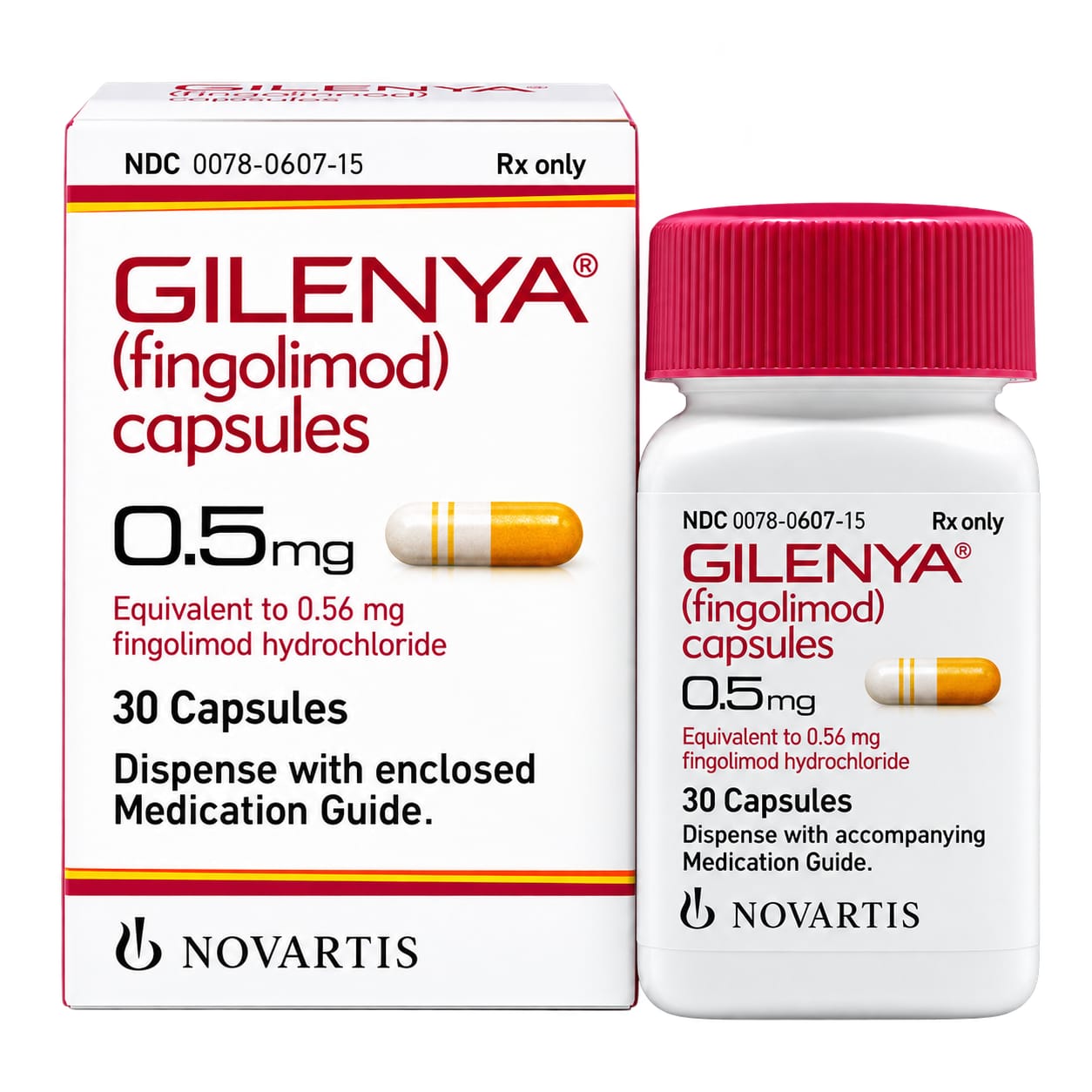
| Forms | Capsules (0.25 mg and 0.5 mg strengths) |
Quick overview
Gilenya Capsule (fingolimod) is a brand-name prescription medicine used to treat relapsing forms of multiple sclerosis (MS) in adults and children ages 10 and older, as well as clinically isolated syndrome. It is a selective immunosuppressant taken as a once-daily capsule and is not available as a generic. Gilenya does not cure MS but helps reduce how often relapses happen and slows worsening disability.
What is Gilenya Capsule
Gilenya is a brand-name prescription medicine used to treat relapsing forms of multiple sclerosis (MS) in adults and children ages 10 years and older. It comes as a capsule that you swallow once a day. It is not available as a generic. Its generic name is fingolimod, and it belongs to the drug class of selective immunosuppressants (sphingosine 1-phosphate receptor modulators), used as a disease-modifying therapy.
Gilenya Capsule uses
- Treats relapsing forms of multiple sclerosis (MS) in adults and children ages 10 years and older
- Treats clinically isolated syndrome (CIS), which can be the first sign of MS
- Helps prevent episodes of MS symptoms and slows the worsening of disability
- Does not cure MS; it only decreases how often relapses happen
Benefits of Gilenya Capsule
- In a two-year study, 70% of adults taking Gilenya had no relapses, compared with 46% of those on placebo
- In a one-year study, 83% of adults taking Gilenya had no relapses, compared with 70% of those taking interferon beta-1a
- In a study of children ages 10 to 18, those taking Gilenya had 81.9% fewer relapses each year compared with children taking interferon beta-1a
How Gilenya Capsule works
MS happens when the immune system mistakenly attacks the protective coating around nerve fibers, causing inflammation and damage that disrupts nerve signals. Gilenya attaches to certain receptors on immune cells, trapping them inside the lymph nodes so they can't travel through the body and attack the nerve coating. This helps reduce how often and how severe MS symptoms are.
Gilenya Capsule dosage
Take Gilenya once a day, at any time of day, with or without food. Your first dose must be given in a doctor's office or clinic, where you will be watched for at least six hours because it can slow your heart rate. You will have a heart test (ECG) before your first dose and again a few hours afterward. If you miss a dose, contact your doctor right away instead of doubling up on the next dose, since restarting after a gap can cause serious heart problems. Children may also need to be monitored when starting a higher dose. It is not known if the capsule can be crushed, split, or chewed; ask your doctor or pharmacist if you have trouble swallowing it.
| Age group | Dose |
|---|---|
| Under 10 years | Safety and effectiveness have not been established |
| 10–17 years, ≤40 kg | 0.25 mg once daily |
| 10–17 years, >40 kg | 0.5 mg once daily |
Available forms and strengths
- Capsules (0.25 mg and 0.5 mg strengths)
Side effects of Gilenya Capsule
Common
- Headache
- Cough
- Diarrhea
- Nausea
- Back pain
- Upper respiratory infections such as sinus infections and bronchitis
- Abdominal/stomach pain
- Pain in arms and legs
- Flu symptoms, stuffy nose
- High levels of liver enzymes
- Hair loss
Serious
- Slow heart rate (bradycardia) or blocked electrical signals in the heart (AV block)
- Increased risk of infections, including herpes, meningitis, shingles, and pneumonia, due to low white blood cell (lymphocyte) levels
- Progressive multifocal leukoencephalopathy (PML), a serious brain infection
- Macular edema (swelling in the retina) causing blurry vision or color changes
- Posterior reversible encephalopathy syndrome (PRES), a brain disorder with severe headache, confusion, vision loss, or seizures
- Trouble breathing or shortness of breath
- Liver damage, with nausea, vomiting, belly pain, fatigue, loss of appetite, dark urine, or jaundice
- Increased blood pressure
- Increased risk of skin cancer, including basal cell carcinoma and melanoma
- Tumefactive MS, a rare type of MS with a brain mass
- Severe allergic reactions, including swelling of the face, lips, tongue, or throat, and trouble breathing
- Seizures (reported more often in children in one study)
Warnings and precautions
- Do not take Gilenya if you have had certain serious heart problems in the past six months, such as a heart attack, stroke, unstable angina, or heart failure requiring hospitalization, or if you have certain heart rhythm disorders
- Gilenya can slow your heart rate when you start taking it, so your first dose must be given and monitored in a medical setting
- Gilenya can weaken your immune system, raising your risk of serious or even fatal infections, for up to two months after stopping the drug
- Do not get live vaccines while taking Gilenya or for at least two months after stopping, as this could cause a serious infection
- Longer use of Gilenya (more than 18 months) increases the risk of a rare but serious brain infection called PML
- Your MS symptoms may seriously worsen if you stop taking Gilenya, sometimes within three to six months of stopping; your doctor will monitor you closely
- Gilenya can increase your risk of skin cancer, so you should limit sun exposure, use sunscreen, and wear protective clothing
- It isn't known if Gilenya is safe during pregnancy. Animal studies showed harm to the fetus. Women should use effective birth control while taking it and for at least two months after stopping, and should tell their doctor right away if they become pregnant.
- It isn't known if Gilenya is safe while breastfeeding; in animal studies it passed into breast milk. Talk with your doctor about the risks and benefits before breastfeeding.
- No routine renal dose adjustment is generally required.
- Liver damage has been reported with Gilenya. Tell your doctor about any liver disease before starting, and watch for nausea, loss of appetite, stomach pain, tiredness, itching, dark urine, or yellowing of the skin or eyes.
- There's no known direct interaction between Gilenya and alcohol, but both can cause liver damage, so heavy drinking may raise the risk. Talk with your doctor about whether alcohol is safe for you.
- Dizziness or visual changes may affect driving.
Storage
- Keep your Gilenya capsules at room temperature in a tightly sealed container
- Avoid storing this medication in areas where it could get damp or wet, such as in a bathroom
- Store in the original container at room temperature away from moisture and heat
- Gilenya does not require refrigeration and can be stored in a cool, dry place; keep it out of reach of children
- If you no longer need to take Gilenya and have leftover medication, dispose of it safely to prevent others, including children and pets, from taking it by accident
When to see a doctor
- Get emergency help right away if you have signs of a severe allergic reaction, such as hives, trouble breathing, or swelling of the face, lips, tongue, or throat
- Tell your doctor right away if you have problems with speech, thought, vision, or muscle movement, as these can be signs of a serious brain infection and can get worse quickly
- Call your doctor if you notice signs of a new infection, such as fever, night sweats, swollen glands, cold sores, cough, wheezing, diarrhea, or weight loss
- Call your doctor if you notice a new dark skin patch, a sore that won't heal, a mole that has changed in size or color, or a shiny, pearly, or pink bump, as these could be signs of skin cancer
- Seek medical help for sudden confusion, severe headache, weakness, vision loss, or seizures
- Get medical help for heart-related symptoms such as chest pain, slow or irregular heartbeat, or feeling dizzy or tired
- If you think you've taken too much Gilenya, contact your doctor immediately or go to the nearest emergency room if symptoms are severe
- Call your doctor right away if you miss a dose, since taking a capsule after a gap can cause serious heart problems
Alternatives
- Azathioprine (Azasan, Imuran)
- Cladribine (Mavenclad)
- Interferon beta-1a (Avonex, Rebif)
- Teriflunomide (Aubagio)
Watch the video
FAQs
What is Gilenya Capsule used for?
Gilenya treats relapsing forms of multiple sclerosis in adults and children ages 10 and older, as well as clinically isolated syndrome. It does not cure MS but helps reduce relapses and slows worsening disability.
How is Gilenya Capsule taken?
Gilenya is taken once a day, at any time, with or without food. The first dose must be given in a doctor's office or clinic, where you will be monitored for at least six hours because it can slow your heart rate.
What should I do if I miss a dose of Gilenya?
If you miss a dose, contact your doctor right away instead of doubling up on the next dose, since restarting after a gap can cause serious heart problems.
What are the serious side effects of Gilenya Capsule?
Serious side effects include slow heart rate or AV block, increased risk of infections, a brain infection called PML, macular edema, PRES, liver damage, increased blood pressure, and increased risk of skin cancer.
Is Gilenya Capsule available as a generic?
No, Gilenya is a brand-name medicine and is not available as a generic. Its generic name is fingolimod.
General information, not medical advice
Your prescriber and the leaflet in your pack know your situation. This page does not.
- Follow your prescriber and the leaflet
- Don't start, stop, or change a dose on your own
- Doses and warnings differ by country and product
Sources
Video
Related medicines

Injectafer Injection: Uses, Dosage, Side Effects, Precautions and Alternates
Iron products
Injectafer (ferric carboxymaltose) treats iron deficiency anemia and heart failure-related iron deficiency via IV. Learn uses, dosage, side effects, and

Gliclazide Tablet: Uses, Dosage, Side Effects, Precautions and Alternates
Sulfonylurea (hypoglycemic/antidiabetic agent)
Gliclazide Tablet is a sulfonylurea for type 2 diabetes that boosts insulin release. Learn about dosage, side effects, warnings, and precautions.