
Safety
General information, not medical advice
Your prescriber and the leaflet in your pack know your situation. This page does not.
- Follow your prescriber and the leaflet
- Don't start, stop, or change a dose on your own
- Doses and warnings differ by country and product
Glevo Tablet: Uses, Dosage, Side Effects, Precautions and Alternates
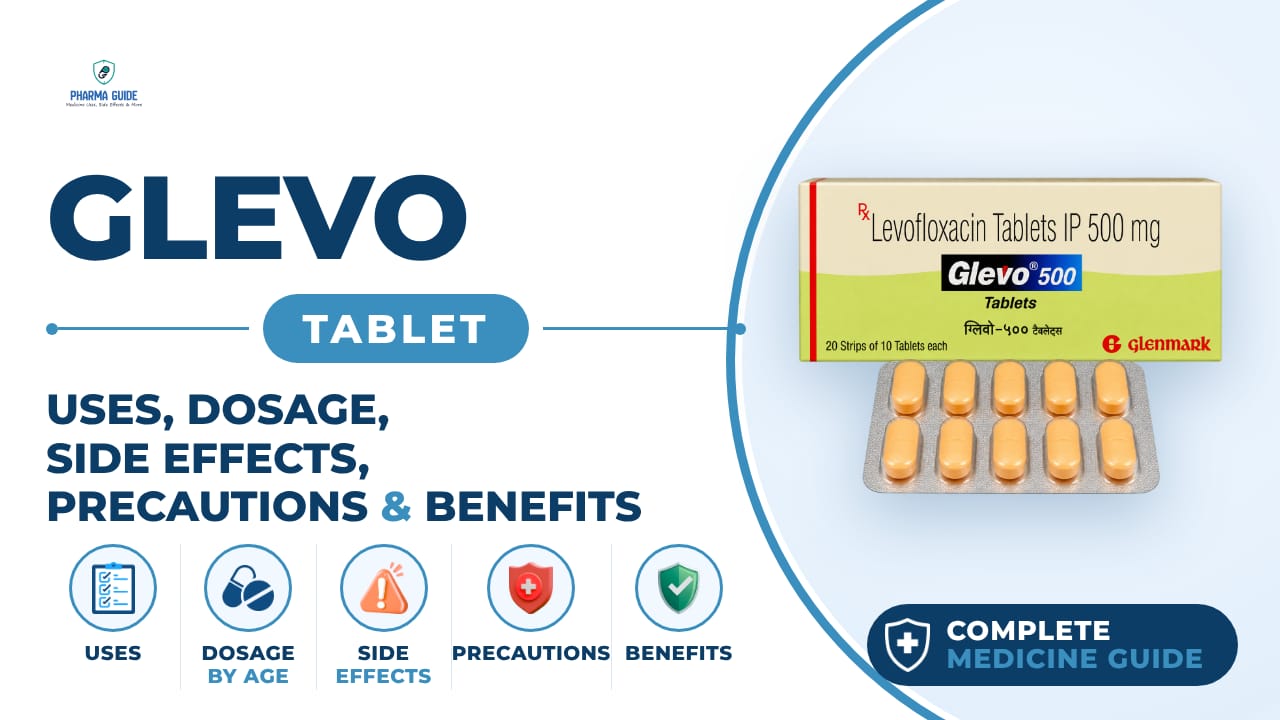
| Generic name | Levofloxacin |
|---|---|
| Drug class | Quinolone antibiotic (DNA Gyrase Inhibitor) |
| Forms | Tablet |
Quick overview
Glevo Tablet contains Levofloxacin, a quinolone antibiotic that treats bacterial infections such as urinary tract infections, respiratory infections including pneumonia, and skin infections. It does not work against viral infections. It works by blocking enzymes bacteria need to copy and repair their DNA, starting to act within 1-2 hours and lasting about 24 hours.
What is Glevo Tablet
Glevo Tablet is an antibiotic medicine that contains Levofloxacin. It belongs to a group of antibiotics called quinolones and is used to treat bacterial infections. It does not work against infections caused by viruses.
Glevo Tablet uses
- Urinary tract infections (kidneys, bladder, ureters, or urethra)
- Skin and soft tissue infections
- Respiratory tract infections, including pneumonia
- Inhalation Anthrax
- Plague
- Bronchitis and sinus infections
- Prostate infections
Benefits of Glevo Tablet
- Kills or stops the growth of a wide range of bacteria causing infection
- Starts working within 1-2 hours of taking it
- Effects last about 24 hours, allowing once or twice daily dosing
How Glevo Tablet works
This medicine blocks two enzymes that bacteria need to copy and repair their DNA. By stopping these enzymes from working, it prevents bacteria from growing and dividing, which eventually kills the bacteria.
Glevo Tablet dosage
Glevo Tablet can be taken with or without food, around the same time every day. Swallow the tablet whole with a glass of water; do not crush, chew, or split it. Try to take doses at evenly spaced times to keep steady levels in your body. Finish the entire course of treatment prescribed by your doctor, even if you start feeling better, to prevent bacterial resistance.
Avoid taking antacids or dairy products like milk or curd for at least two hours before and after taking this medicine, as they may reduce its effectiveness. Drink plenty of water and avoid strong sun exposure while taking this medicine. Rest your joints and avoid strenuous exercise if you feel any tendon discomfort. If you have pneumonia or bronchitis, avoid smoking as it can make the infection harder to treat.
| Age group | Dose |
|---|---|
| Under 18 Years | Use only if prescribed by a healthcare professional |
| Adults (18–64 Years) | 250 mg, 500 mg, or 750 mg once daily depending on infection |
| Older Adults (65+ Years) | 250–750 mg once daily; dose adjustment may be needed with kidney problems |
Available forms and strengths
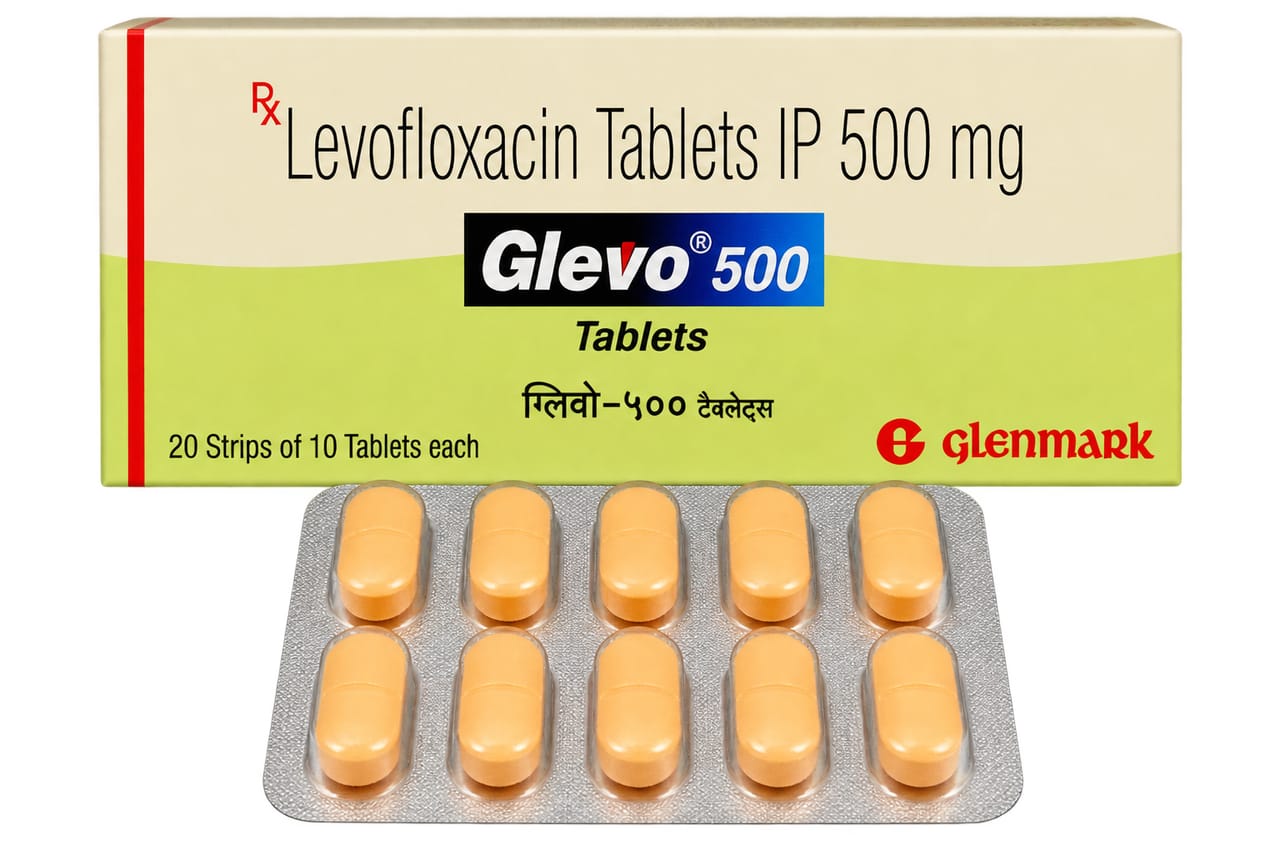
Glevo Tablet is available as a tablet.
Side effects of Glevo Tablet
Common
- Diarrhoea
- Stomach pain
- Headache
- Weakness
- Nausea or vomiting
- Confusion
- Fever
- Skin rash
- Change in taste
- Constipation
- Dizziness
- Difficulty sleeping
- Fungal infections
- Photosensitivity (increased sensitivity to sunlight)
Serious
- Muscle or tendon damage, usually in the ankle
- Tendon pain or swelling
- Numbness or tingling from nerve damage
- Severe liver problems, including hepatitis
Warnings and precautions
- Do not take this medicine if you are allergic to levofloxacin or other quinolone antibiotics.
- This medicine is not recommended for people with epilepsy. Before starting, tell your doctor about any tendon problems, nerve problems, epilepsy, heart rhythm disorders, or diabetes, and about all other medicines you take.
- Children under 18 should only take this medicine with caution and under a doctor's guidance. Older adults should take this medicine under medical supervision, as they may be more likely to experience side effects. Avoid strong sun exposure, as this medicine can make skin more sensitive to sunlight.
- This medicine should generally be avoided during pregnancy because it may harm the joints of the developing baby. Your doctor may still prescribe it if it is truly necessary, weighing the benefits against the risks.
- Small amounts of this medicine may pass into breast milk and could harm your baby, so it should only be used while breastfeeding if your doctor recommends it. Watch the baby for signs of a yeast infection such as a white coating on the tongue, diarrhoea, or diaper rash.
- Use with caution if you have kidney disease, since the medicine is mainly removed from the body through urine. Your dose may need to be adjusted, so talk to your doctor first.
- Use with caution if you have liver disease, as this medicine can cause severe liver problems including hepatitis. Your dose may need adjusting, so discuss this with your doctor first.
- It's best to avoid alcohol while taking this medicine, as it can raise the chance of side effects like drowsiness, dizziness, and liver problems.
- This medicine can cause dizziness, drowsiness, or changes in eyesight, so avoid driving or operating machinery until you know how it affects you.
Storage
- Store below 30°C
- Store in a cool and dry place, ideally at a temperature between 20°C to 25°C
- Keep away from direct sunlight and moisture
- Keep out of reach of children
- Check the expiry date on the package before use
- Store at room temperature, away from moisture and direct sunlight; keep out of reach of children and pets
When to see a doctor
- Report tendon pain or swelling, or numbness or tingling, to your doctor right away.
- If any side effect does not improve or becomes serious, speak with your doctor. Do not stop taking the medicine unless your doctor tells you to.
- If you suspect you've taken too much of this medicine, contact your doctor for guidance, as it can make side effects like nausea, diarrhoea, headaches, and dizziness worse.
- Complete the full course of treatment prescribed by your doctor, even if you start feeling better, and report any persistent or serious side effects.
Alternatives
- Azithromycin
- Ofloxacin
- Moxifloxacin
- Ciprofloxacin
Watch the video
FAQs
What is Glevo Tablet used for?
Glevo Tablet is used to treat bacterial infections such as urinary tract infections, respiratory infections including pneumonia, skin and soft tissue infections, bronchitis, sinus infections, prostate infections, inhalation anthrax, and plague. It does not work against viral infections.
How does Glevo Tablet work?
Glevo Tablet contains Levofloxacin, which blocks two enzymes that bacteria need to copy and repair their DNA, preventing bacteria from growing and dividing, which eventually kills them.
How should I take Glevo Tablet?
Glevo Tablet can be taken with or without food, around the same time every day. Swallow it whole with water without crushing, chewing, or splitting it, and complete the full course even if you feel better.
Can I take antacids or dairy products with Glevo Tablet?
No, you should avoid antacids or dairy products like milk or curd for at least two hours before and after taking this medicine, as they may reduce its effectiveness.
What are the serious side effects of Glevo Tablet?
Serious side effects include muscle or tendon damage usually in the ankle, tendon pain or swelling, numbness or tingling from nerve damage, and severe liver problems including hepatitis.
General information, not medical advice
Your prescriber and the leaflet in your pack know your situation. This page does not.
- Follow your prescriber and the leaflet
- Don't start, stop, or change a dose on your own
- Doses and warnings differ by country and product
Sources
Video
Related medicines

Injectafer Injection: Uses, Dosage, Side Effects, Precautions and Alternates
Iron products
Injectafer (ferric carboxymaltose) treats iron deficiency anemia and heart failure-related iron deficiency via IV. Learn uses, dosage, side effects, and

Gliclazide Tablet: Uses, Dosage, Side Effects, Precautions and Alternates
Sulfonylurea (hypoglycemic/antidiabetic agent)
Gliclazide Tablet is a sulfonylurea for type 2 diabetes that boosts insulin release. Learn about dosage, side effects, warnings, and precautions.