
Safety
General information, not medical advice
Your prescriber and the leaflet in your pack know your situation. This page does not.
- Follow your prescriber and the leaflet
- Don't start, stop, or change a dose on your own
- Doses and warnings differ by country and product
Glimepiride Tablet: Uses, Dosage, Side Effects, Precautions and Alternates
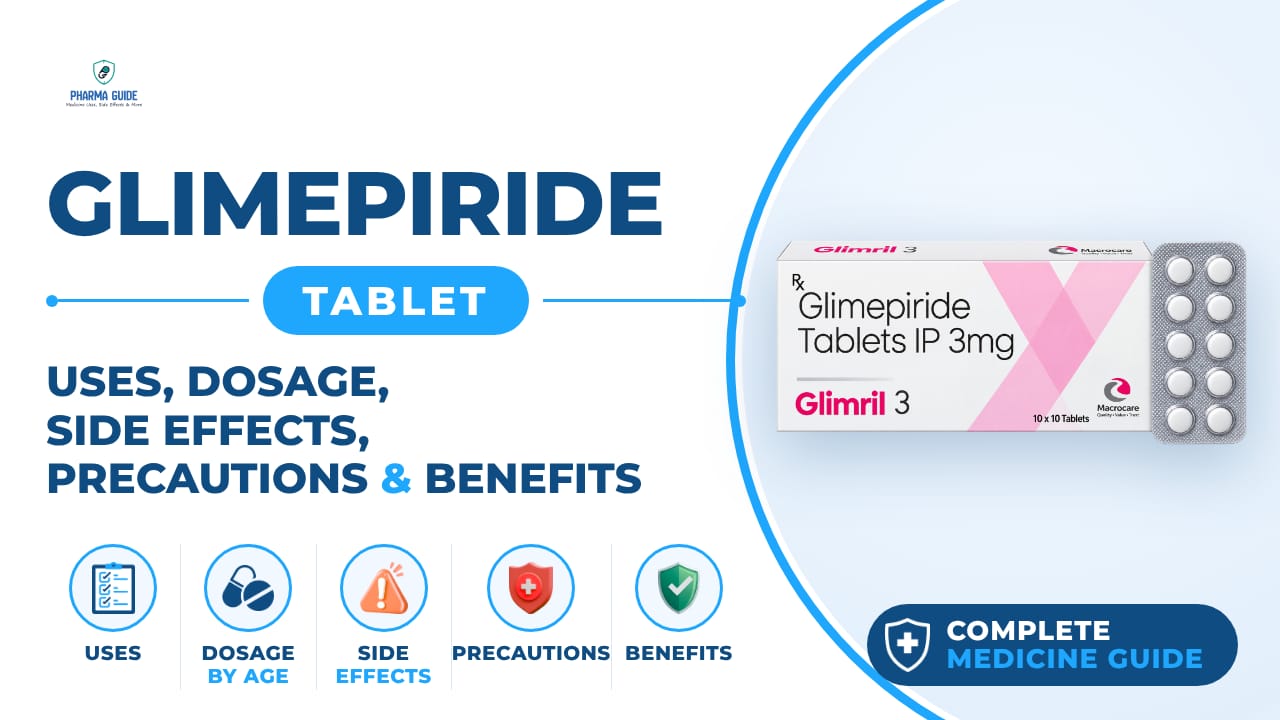
| Generic name | Glimepiride |
|---|---|
| Drug class | Sulfonylurea |
| Forms | Oral tablet |
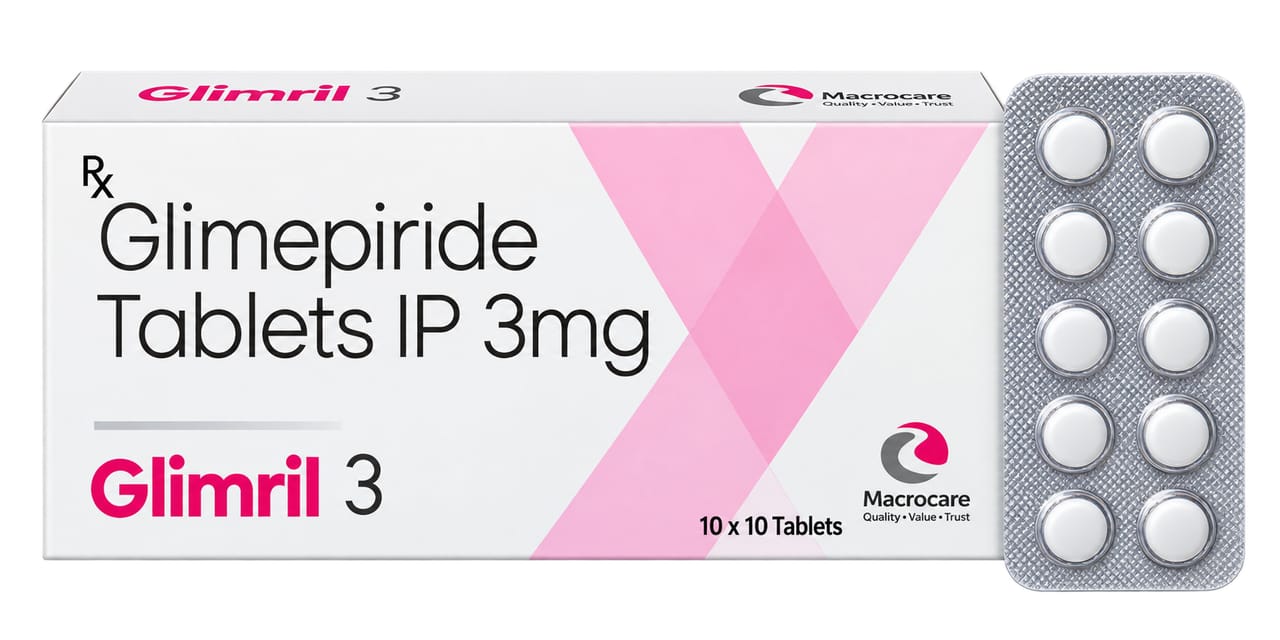
Quick overview
Glimepiride Tablet is a long-acting, oral anti-diabetic medicine belonging to the sulfonylurea drug class. It is used to manage type 2 diabetes in adults, either alone or combined with other treatments such as insulin. Glimepiride works by helping the pancreas release more insulin and helping the body use insulin more effectively, which lowers blood sugar levels.
What is Glimepiride Tablet
Glimepiride is a long-acting, oral anti-diabetic medicine used to lower blood sugar levels. It is used to manage type 2 diabetes in adults, either alone or combined with other treatments such as insulin.
Glimepiride Tablet uses
- Treats type 2 diabetes by lowering blood sugar levels
- Used along with a healthy diet and exercise to help manage high blood sugar
- Can be combined with insulin or other diabetic medicines for better blood sugar control
Benefits of Glimepiride Tablet
- Helps lower high blood sugar levels in people with type 2 diabetes
- Helps improve fasting and after-meal blood glucose levels
- Helps reduce HbA1c, improving long-term blood sugar control
- May be used alone or together with other diabetes medicines when additional control is needed
- Helps reduce the risk of complications related to poorly controlled diabetes when blood sugar is effectively managed
How Glimepiride Tablet works
Glimepiride helps the pancreas release more insulin and also helps the body use insulin more effectively, which lowers blood sugar levels.
Glimepiride Tablet dosage
Glimepiride is taken by mouth, usually once a day with breakfast or the first main meal. It should be taken with food as directed by your doctor. Take it exactly as your doctor tells you — not more, less, or more often than prescribed. Keep taking it even if you feel better; do not stop without talking to your doctor. Do not skip meals, as this can cause low blood sugar.
| Age group | Dose |
|---|---|
| Under 18 years | Not recommended for routine pediatric use |
| 18–64 years | Start 1–2 mg once daily with breakfast or first main meal |
| 65+ years | Usually start 1 mg once daily and increase cautiously |
Available forms and strengths
- Oral tablet
Side effects of Glimepiride Tablet
Common
- Headache
- Nausea
- Dizziness
- Low blood sugar
- Unexplained weight gain
- Flu-like symptoms
- Allergic skin reaction
Serious
- Severe low blood sugar
- Hypersensitivity (allergic) reactions
- Yellowing of skin and eyes
- Dark-colored urine
- Pale or tar-colored stool
- Infections, bruising, or bleeding that does not stop as quickly as it should
- Low sodium levels
- Anaemia
- Jaundice
Warnings and precautions
Glimepiride carries warnings about low blood sugar, allergic reactions, liver and kidney issues, sun sensitivity, alcohol interactions, caution during pregnancy and breastfeeding, and possible drug interactions.
- Glimepiride can make your skin more sensitive to sunlight, increasing the risk of sunburn. Wear protective clothing and use sunscreen when outdoors.
- Glimepiride can cause moderate to severe low blood sugar, and the risk is higher in elderly, malnourished people, or those with kidney and hormone disorders.
- If you are under stress from fever, injury, surgery, or an accident, this medicine may not control your blood sugar as well, and your doctor may need to switch you to another treatment temporarily.
- This medicine can lower sodium levels in the blood, which may lead to fluid retention, especially in older adults or those taking certain diuretic medicines.
- Glimepiride is not recommended for people with type 1 diabetes, severe liver or kidney problems, or a known allergy to the medicine.
- This medicine should not be used if you have a history of hemolytic anaemia or G6PD deficiency, as it can lower red blood cell counts and worsen these conditions.
- Glimepiride is generally not recommended during pregnancy unless your doctor decides the benefits outweigh the risks. Do not start or stop this medicine without talking to your doctor.
- It is not known if Glimepiride passes into breast milk, so it is not usually recommended while breastfeeding unless your doctor advises otherwise. If it is used, your baby will need to be watched for side effects.
- Glimepiride should be used carefully if you have kidney problems, since the medicine may build up in your body and cause serious side effects. Your dose may need to be adjusted.
- Glimepiride should be used carefully if you have liver problems, because a damaged liver may not process the medicine properly, leading to higher levels in your body and possible toxicity.
- Avoid drinking alcohol while taking Glimepiride, as it can affect your blood sugar levels and interfere with how well the medicine works.
- This medicine can cause blurred vision, dizziness, or sleepiness from very low or high blood sugar. Do not drive or operate machinery unless you are sure you can do so safely.
Storage
- Store at 20–25°C (68–77°F)
- Protect from moisture and excessive heat
- Keep in a cool, dry place
- Keep in the original, tightly closed container
- Keep out of reach of children
When to see a doctor
- Get medical help right away if you have signs of a serious allergic reaction, such as trouble breathing, swelling of the face, lips, or tongue, rash, itching, or hives.
- Seek help if you have signs of very low blood sugar, such as sweating, shaking, dizziness, headache, or a fast heartbeat.
- If you take too much medicine and your blood sugar drops very low, treat it right away with a fast-acting sugar source, and seek emergency care if you pass out or cannot swallow.
- Watch for yellowing of the skin or eyes, dark urine, or pale stools, and tell your doctor right away, as these can be signs of a serious liver problem.
- If you take more than the prescribed amount and notice symptoms like confusion, fast heartbeat, tremor, or heavy sweating, contact a doctor immediately.
Alternatives
- Empagliflozin
- Linagliptin
- Pioglitazone
- Insulin
- Metformin
Watch the video
FAQs
What is Glimepiride Tablet used for?
Glimepiride Tablet is used to manage type 2 diabetes in adults, either alone or combined with other treatments such as insulin, along with a healthy diet and exercise.
How does Glimepiride Tablet work?
Glimepiride helps the pancreas release more insulin and also helps the body use insulin more effectively, which lowers blood sugar levels.
What is the dosage of Glimepiride Tablet?
Glimepiride is taken by mouth once a day with breakfast or the first main meal. Adults 18–64 years usually start with 1–2 mg once daily, while those 65 and older usually start with 1 mg once daily and increase cautiously. It is not recommended for routine pediatric use.
What are the common side effects of Glimepiride Tablet?
Common side effects include headache, nausea, dizziness, low blood sugar, unexplained weight gain, flu-like symptoms, and allergic skin reaction.
Can Glimepiride Tablet be taken during pregnancy?
Glimepiride is generally not recommended during pregnancy unless your doctor decides the benefits outweigh the risks, and you should not start or stop it without talking to your doctor.
General information, not medical advice
Your prescriber and the leaflet in your pack know your situation. This page does not.
- Follow your prescriber and the leaflet
- Don't start, stop, or change a dose on your own
- Doses and warnings differ by country and product
Sources
- https://www.carehospitals.com/medicine-detail/glimepiride
- https://pmc.ncbi.nlm.nih.gov/articles/PMC3448454/
- https://www.practo.com/medicine-info/glimepiride-131-api
- https://www.webmd.com/drugs/2/drug-12271/Glimepiride-oral/details
- https://www.healthline.com/health/drugs/Glimepiride-oral-tablet#about
- https://my.clevelandclinic.org/health/drugs/19079-Glimepiride-tablets
- https://dailymed.nlm.nih.gov/dailymed/drugInfo.cfm?setid=60e9397e-83b9-489e-9683-6f87e458bbaa
- https://www.accessdata.fda.gov/drugsatfda_docs/label/2009/020496s021lbl.pdf
- https://pubchem.ncbi.nlm.nih.gov/compound/3476#
- https://www.medicines.org.uk/emc/product/6053/smpc
Video
Related medicines
Glucotrol Tablet: Uses, Dosage, Side Effects, Precautions and Alternates
Sulfonylurea
Glucotrol Tablet (glipizide) is a once-daily extended-release tablet for type 2 diabetes. Learn how it works, dosage, side effects, and precautions.
Reclide Tablet: Uses, Dosage, Side Effects, Precautions and Alternates
Sulfonylurea
Reclide Tablet contains gliclazide, used to control blood sugar in type 2 diabetes. Learn about its uses, dosage, side effects, and precautions.