
Safety
General information, not medical advice
Your prescriber and the leaflet in your pack know your situation. This page does not.
- Follow your prescriber and the leaflet
- Don't start, stop, or change a dose on your own
- Doses and warnings differ by country and product
Glumetza Tablet: Uses, Dosage, Side Effects, Precautions and Alternates
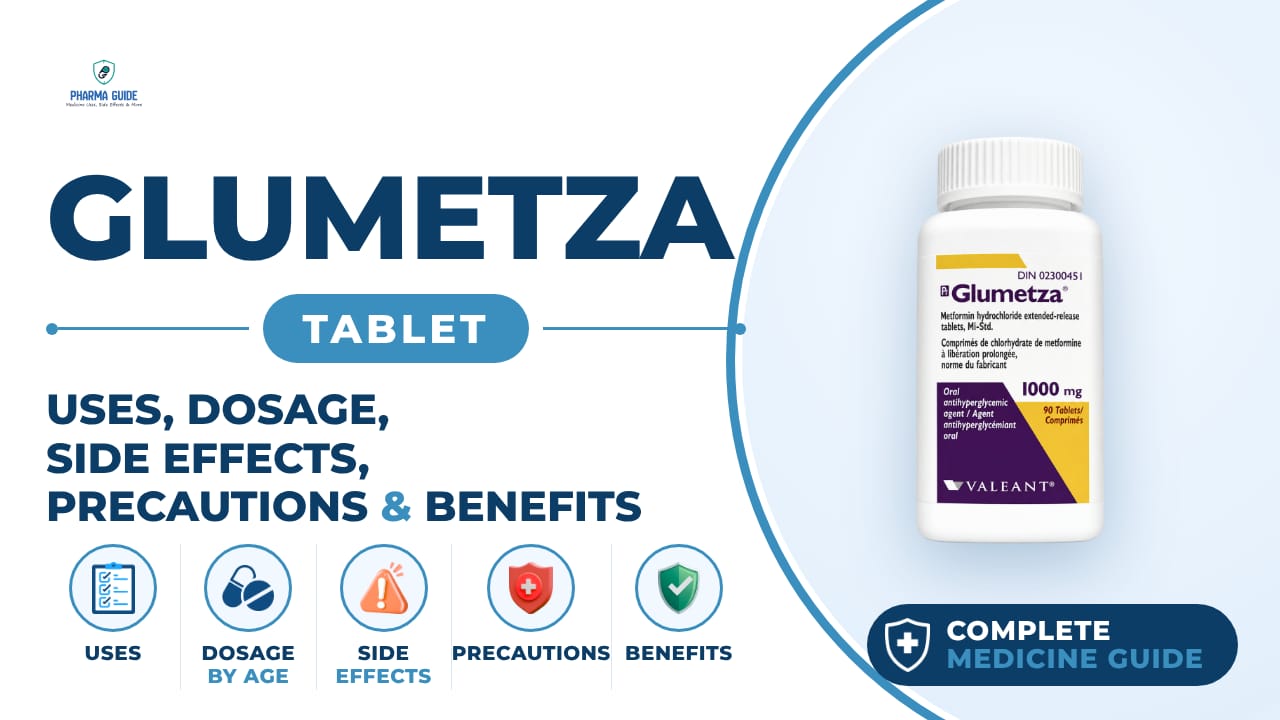
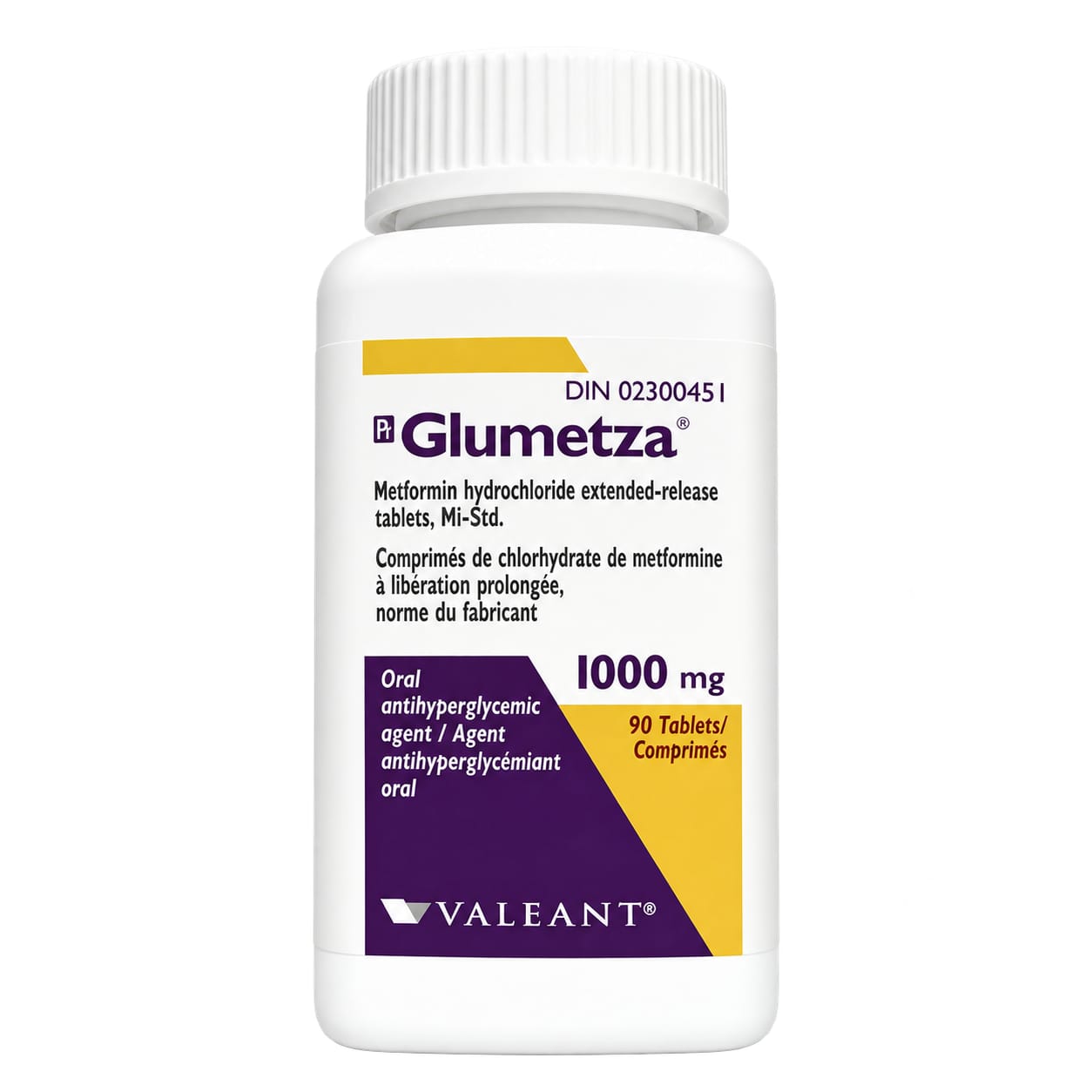
| Generic name | metformin hydrochloride |
|---|---|
| Drug class | Biguanide (oral antihyperglycemic agent) |
| Forms | Extended-release tablets, 500 mg, Extended-release tablets, 1000 mg |
Quick overview
Glumetza is a prescription medicine containing metformin hydrochloride, a biguanide used along with diet and exercise to help control high blood sugar in adults with type 2 diabetes. It comes as an extended-release tablet taken once daily with the evening meal. It may be used alone or together with a sulfonylurea medicine or insulin, but it is not for type 1 diabetes or diabetic ketoacidosis.
What is Glumetza Tablet
Glumetza is a prescription medicine that contains metformin hydrochloride. It is an extended-release tablet used along with diet and exercise to help control high blood sugar in adults with type 2 diabetes.
Glumetza Tablet uses
- Helps control blood sugar in adults with type 2 diabetes, used along with diet and exercise
- Can be used alone or together with a sulfonylurea medicine or insulin
- Not for use in people with type 1 diabetes
- Not for treating diabetic ketoacidosis (high ketones in blood or urine)
Benefits of Glumetza Tablet
- Lowers both fasting and after-meal blood sugar levels
- Does not usually cause low blood sugar (hypoglycemia) when used alone
- May help with modest reduction in body weight compared to some other diabetes medicines
How Glumetza Tablet works
Metformin helps the body respond better to the insulin it already makes, lowers the amount of sugar the liver produces, and reduces the amount of sugar absorbed from the intestines.
Glumetza Tablet dosage
Take once daily with your evening meal. Swallow tablets whole; do not split, crush, cut, dissolve, or chew them. Tell your doctor if you cannot swallow tablets whole, as a different medicine may be needed. You may sometimes notice a soft mass or tablet shell in your stool that looks like the tablet; this is normal and does not mean the medicine did not work. If you miss a dose, resume your regular dosing schedule rather than doubling up. Continue following your prescribed diet and exercise program and check your blood sugar regularly while taking this medicine. Your doctor may need to adjust your dose if you are having surgery, an x-ray procedure using injectable dye, or if you become seriously ill, as these situations can change how much medicine you need.
| Age group | Dose |
|---|---|
| Under 18 years | Safety and effectiveness are not established for Glumetza extended-release tablets |
| 18–64 years | Common starting dose: 500 mg once daily with the evening meal; dose may be increased gradually according to glucose control and tolerance |
| 65–74 years | Same adult dosing may be used, but kidney function should be monitored more closely |
| 75 years and older | Use cautiously and individualize the dose according to kidney function and overall tolerance |
Available forms and strengths
- Extended-release tablets, 500 mg
- Extended-release tablets, 1000 mg
Side effects of Glumetza Tablet
Common
- Diarrhea
- Nausea
- Upset stomach or stomach pain
- Hypoglycemia (low blood sugar)
- Dizziness, weakness, or lack of energy
- Headache
- Altered sense of taste
- Heartburn, indigestion, bloating, gas, constipation
- Cold-like symptoms such as stuffy nose, sneezing, sore throat
Serious
- Lactic acidosis (a rare but serious buildup of acid in the blood) which can be fatal
- Severely low blood sugar with extreme weakness, confusion, tremors, sweating, fast heartbeats, trouble speaking, nausea, vomiting, rapid breathing, fainting, or seizures
- Vitamin B12 deficiency which may cause anemia or nerve damage (peripheral neuropathy)
- Hemolytic anemia (breakdown of red blood cells), some cases fatal
- Pancreatitis (inflammation of the pancreas)
- Liver problems, including abnormal liver tests or hepatitis
- Encephalopathy (brain disease) with symptoms such as muscle weakness, poor concentration, trembling, or seizures
- Hypothyroidism (low thyroid hormone) in some patients
- Allergic reactions such as rash, itching, or swelling of the face, lips, tongue, or throat
Warnings and precautions
- Lactic acidosis is a rare but serious and potentially fatal complication of this medicine, caused by a buildup of metformin in the body. The risk is higher in people with kidney or liver problems, heart failure, dehydration, serious infection, or heavy alcohol use.
- People should not take this medicine if they have kidney disease, a history of diabetic ketoacidosis, or known allergy to metformin or any of its ingredients.
- This medicine must be temporarily stopped before and after certain x-ray or scanning procedures that use an injected dye, because these can affect kidney function and raise the risk of lactic acidosis.
- Long-term use may lower vitamin B12 levels, so blood tests are recommended periodically to check for this.
- Using this medicine with other diabetes medicines such as sulfonylureas or insulin increases the chance of low blood sugar.
- Metformin has not been shown to cause birth defects in animal studies, but it is not known if it is safe for human pregnancy. It should not be used during pregnancy unless clearly needed, and insulin is generally recommended instead to control blood sugar during pregnancy.
- It is not known if metformin passes into human breast milk in amounts that could affect a nursing baby, though studies in animals show it is excreted into milk.
- This medicine is removed from the body by the kidneys, and people with kidney problems should not take it because of the higher risk of a serious condition called lactic acidosis. People whose kidneys are not working properly should not take this medicine.
- This medicine is not recommended for people with liver problems, because impaired liver function can raise the risk of lactic acidosis.
- Drinking a lot of alcohol, whether regularly or in short binges, increases the risk of a serious condition called lactic acidosis and should be avoided while taking this medicine.
- If you take this medicine with other medicines that can lower blood sugar, such as insulin or sulfonylureas, you should take care while driving or operating machinery because of the risk of low blood sugar.
Storage
- Store at 59°F to 86°F (15°C to 30°C)
- Keep this medicine and all medicines out of the reach of children
- Throw away any medication that is outdated or no longer needed; ask your pharmacist about proper disposal
When to see a doctor
- Stop taking this medicine and call your doctor right away if you feel very weak or tired, have unusual muscle pain, trouble breathing, unexplained stomach or intestinal problems with nausea and vomiting or diarrhea, feel unusually sleepy, feel cold especially in the arms or legs, feel dizzy or lightheaded, or have a slow or irregular heartbeat, as these can be signs of lactic acidosis.
- Get emergency help right away if you take too much of this medicine, even if you do not have symptoms.
- Tell your doctor right away if you have symptoms of low blood sugar such as shaking, sweating, rapid heartbeat, vision changes, hunger, headache, or mood changes.
- Contact your doctor if gastrointestinal symptoms like nausea or stomach upset return after you have been on a steady dose for a while, since this could be a sign of a more serious problem rather than normal start-up side effects.
Alternatives
- Metformin ER
- Glucophage XR
- Fortamet
Watch the video
FAQs
What is Glumetza Tablet used for?
Glumetza is used along with diet and exercise to help control high blood sugar in adults with type 2 diabetes. It can be used alone or with a sulfonylurea medicine or insulin, but it is not for type 1 diabetes or diabetic ketoacidosis.
How should I take Glumetza Tablet?
Take it once daily with your evening meal. Swallow tablets whole without splitting, crushing, cutting, dissolving, or chewing them. If you miss a dose, resume your regular schedule rather than doubling up.
What are the common side effects of Glumetza Tablet?
Common side effects include diarrhea, nausea, upset stomach or stomach pain, hypoglycemia, dizziness, weakness, headache, altered taste, heartburn, indigestion, bloating, gas, constipation, and cold-like symptoms.
What is the most serious risk with Glumetza Tablet?
The most serious risk is lactic acidosis, a rare but potentially fatal buildup of acid in the blood, which is more likely in people with kidney or liver problems, heart failure, dehydration, serious infection, or heavy alcohol use.
Can Glumetza Tablet be used during pregnancy?
It is not known if metformin is safe during human pregnancy, so it should not be used unless clearly needed, and insulin is generally recommended instead to control blood sugar during pregnancy.
General information, not medical advice
Your prescriber and the leaflet in your pack know your situation. This page does not.
- Follow your prescriber and the leaflet
- Don't start, stop, or change a dose on your own
- Doses and warnings differ by country and product
Sources
Video
Related medicines

Injectafer Injection: Uses, Dosage, Side Effects, Precautions and Alternates
Iron products
Injectafer (ferric carboxymaltose) treats iron deficiency anemia and heart failure-related iron deficiency via IV. Learn uses, dosage, side effects, and

Gliclazide Tablet: Uses, Dosage, Side Effects, Precautions and Alternates
Sulfonylurea (hypoglycemic/antidiabetic agent)
Gliclazide Tablet is a sulfonylurea for type 2 diabetes that boosts insulin release. Learn about dosage, side effects, warnings, and precautions.