
Safety
General information, not medical advice
Your prescriber and the leaflet in your pack know your situation. This page does not.
- Follow your prescriber and the leaflet
- Don't start, stop, or change a dose on your own
- Doses and warnings differ by country and product
Glyxambi Tablet: Uses, Dosage, Side Effects, Precautions and Alternates
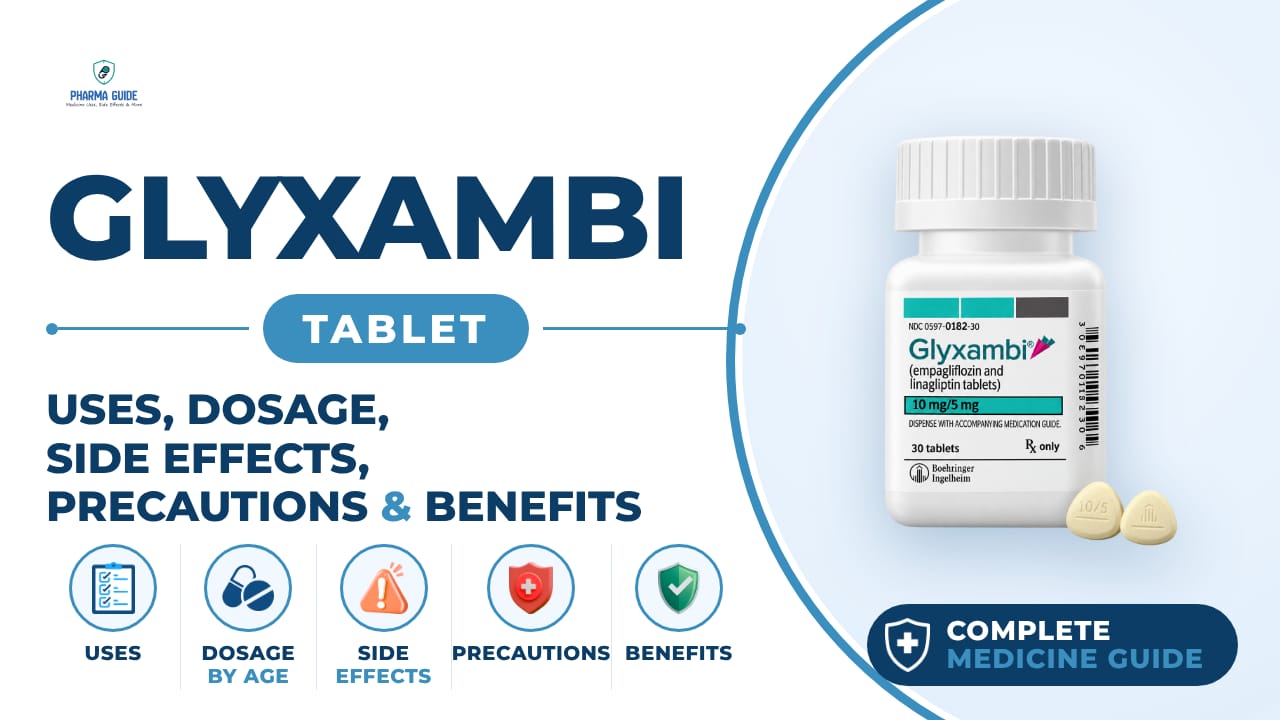
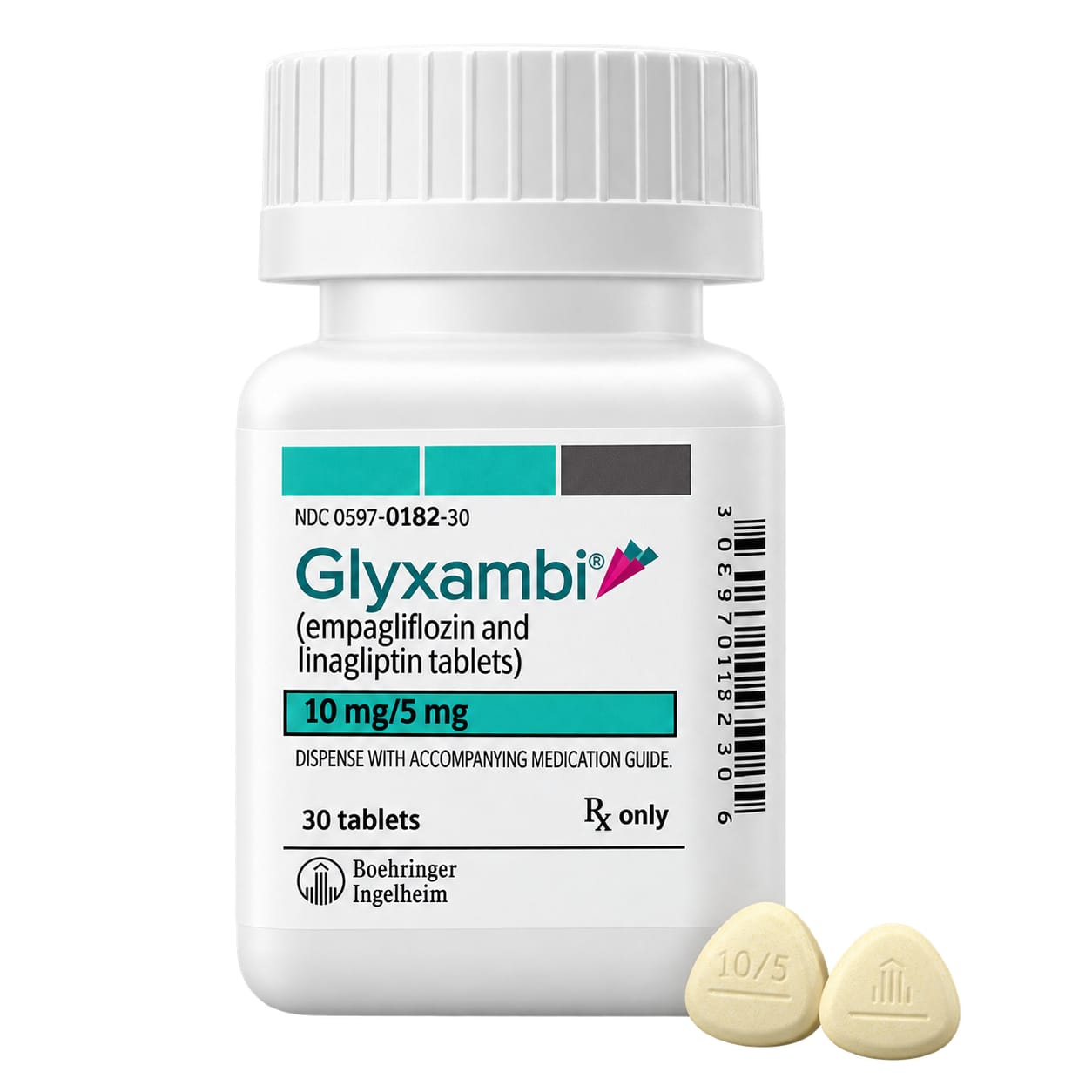
| Generic name | empagliflozin and linagliptin |
|---|---|
| Drug class | Antidiabetic combinations (SGLT2 inhibitor and DPP-4 inhibitor) |
| Forms | 10 mg/5 mg oral tablets, 25 mg/5 mg oral tablets |
Quick overview
Glyxambi Tablet is a prescription medicine that combines empagliflozin and linagliptin, belonging to the antidiabetic combination class (SGLT2 inhibitor and DPP-4 inhibitor). It is used along with diet and exercise to help control blood sugar in adults with type 2 diabetes and may also lower the risk of cardiovascular death in those with existing heart disease. It is not used for type 1 diabetes.
What is Glyxambi Tablet
Glyxambi is a prescription tablet that combines two medicines, empagliflozin and linagliptin, used to help manage type 2 diabetes.
Glyxambi Tablet uses
- Used along with diet and exercise to improve blood sugar control in adults with type 2 diabetes mellitus
- Used to lower the risk of death from heart attack, stroke, or heart failure in adults with type 2 diabetes who also have heart disease
- Not for treating type 1 diabetes
- Treats type 2 diabetes mellitus in adults
- Helps reduce elevated blood glucose levels
Benefits of Glyxambi Tablet
- Helps lower blood sugar levels when combined with diet and exercise
- May reduce the risk of cardiovascular death in people with type 2 diabetes and existing heart disease
- Combines two different ways of controlling blood sugar in one tablet
- Combines two glucose-lowering medications in one tablet
- Helps improve overall blood glucose control
- May reduce HbA1c levels in patients with type 2 diabetes
How Glyxambi Tablet works
Glyxambi works in two ways: empagliflozin helps your kidneys remove extra sugar, salt, and water through your urine, while linagliptin increases natural hormones that help your body release more insulin after meals and reduces extra sugar production by the liver.
Glyxambi Tablet dosage
Take exactly as prescribed and follow all directions on your prescription label. Glyxambi is usually taken in the morning, with or without food. Your blood sugar will need to be checked often, and you may also need to test ketones in your urine. Call your doctor if you are sick with vomiting or diarrhea, or if you eat or drink less than usual, since this can increase dehydration risk.
If you miss a dose, take it as soon as you remember, but skip it if it is almost time for your next dose; do not take two doses at once. Treatment may also include diet, exercise, and weight control as advised by your doctor.
| Age group | Dose |
|---|---|
| Under 18 years | Safety and effectiveness not established; no approved pediatric dosage |
| 18–39 years | Starting dose: 10 mg/5 mg once daily; maximum 25 mg/5 mg once daily |
| 40–64 years | Starting dose: 10 mg/5 mg once daily; maximum 25 mg/5 mg once daily |
| 65–74 years | Starting dose: 10 mg/5 mg once daily; maximum 25 mg/5 mg once daily, with closer monitoring |
Available forms and strengths
- 10 mg/5 mg oral tablets
- 25 mg/5 mg oral tablets
Side effects of Glyxambi Tablet
Common
- Urinary tract infections (UTIs)
- Kidney and bladder infections
- Upper respiratory tract infections and common cold symptoms (nasopharyngitis, sore throat, stuffy/runny nose)
- Increased thirst and frequent urination
- Mild joint pain or body aches
- Genital fungal or yeast infections
- Nausea, cough, rash, or itching
Serious
- Dehydration and kidney damage, which can cause low blood pressure or acute kidney injury
- Diabetic ketoacidosis, a life-threatening buildup of acid in the blood
- Severe urinary tract infections such as kidney infection or urosepsis
- Rare, severe genital or perineal flesh-eating infection (Fournier's gangrene)
- Low blood sugar (hypoglycemia), especially with insulin or sulfonylureas
- Pancreatitis (inflammation of the pancreas)
- Heart failure, with signs like sudden weight gain, swelling in legs/feet, or trouble breathing
- Severe joint pain
- Serious skin reactions such as bullous pemphigoid
- Increased risk of lower limb amputation
- Severe allergic reactions
Warnings and precautions
- Do not use Glyxambi if you have severe kidney disease, are on dialysis, have diabetic ketoacidosis, or have had a severe allergic reaction to empagliflozin or linagliptin.
- Glyxambi can cause diabetic ketoacidosis, a serious buildup of acid in the blood, which can happen even if blood sugar is not very high.
- Glyxambi can cause serious genital or urinary tract infections, including a rare but serious flesh-eating infection called necrotizing fasciitis (Fournier's gangrene).
- People taking Glyxambi may have an increased risk of lower limb amputation, especially those with certain risk factors.
- Glyxambi may increase the risk of low blood sugar when combined with insulin or other diabetes medicines like sulfonylureas.
- Glyxambi may cause heart failure; tell your doctor right away if you notice swelling, rapid weight gain, or shortness of breath.
- Controlling diabetes is important during pregnancy, but Glyxambi should not be used during the second or third trimester because it may harm the baby.
- Glyxambi should not be used while breastfeeding because it may pass into breast milk and harm the baby.
- Glyxambi should not be used by people with severe kidney disease or those on dialysis, and people with kidney problems may have more side effects.
- Glyxambi is not recommended for improving blood glucose control in patients with an eGFR below 30 mL/min/1.73 m². Kidney function should be assessed before treatment and monitored as clinically indicated.
- Tell your doctor if you have liver problems before taking Glyxambi.
- Drinking alcohol, especially often or in large amounts, can increase the risk of low blood sugar and diabetic ketoacidosis while taking Glyxambi.
Storage
- Store at room temperature away from moisture and heat
- Store between 68 F and 77 F (20 C and 25 C)
- Can be exposed to temperatures between 59 F and 86 F (15 C and 30 C) for shorter periods of time, such as when transporting it
- Store in a cool, dry place
When to see a doctor
- Get emergency help right away if you have signs of a serious allergic reaction, such as rash, hives, swelling of the face, lips, tongue, or throat, or trouble breathing or swallowing.
- Seek medical attention right away if you have signs of a serious genital infection, such as burning, itching, odor, discharge, pain, tenderness, redness, or swelling of the genital or rectal area, fever, or feeling unwell.
- Stop taking Glyxambi and call your doctor right away if you have symptoms of diabetic ketoacidosis, such as nausea, vomiting, stomach pain, confusion, unusual drowsiness, or trouble breathing.
- Stop taking Glyxambi and call your doctor right away if you have signs of pancreatitis, such as severe pain in your upper stomach that spreads to your back, with nausea and vomiting.
- Call your doctor right away if you have symptoms of heart failure, such as swelling, rapid weight gain, or feeling short of breath.
- Call your doctor right away if you have symptoms of dehydration, such as dizziness, confusion, feeling very thirsty, or less urination.
- Call your doctor if you have new pain or tenderness, sores, ulcers, or infections in your leg or foot, as these could be early signs leading to amputation if untreated.
Alternatives
- Jentadueto
- Synjardy
- Tradjenta
- Jardiance
Watch the video
FAQs
What is Glyxambi Tablet used for?
Glyxambi is used along with diet and exercise to improve blood sugar control in adults with type 2 diabetes, and it may also lower the risk of death from heart attack, stroke, or heart failure in those who also have heart disease. It is not used for type 1 diabetes.
How does Glyxambi Tablet work?
Glyxambi works in two ways: empagliflozin helps the kidneys remove extra sugar, salt, and water through urine, while linagliptin increases natural hormones that help the body release more insulin after meals and reduces extra sugar production by the liver.
What is the dosage of Glyxambi Tablet?
For adults, the starting dose is 10 mg/5 mg once daily, with a maximum of 25 mg/5 mg once daily. It is usually taken in the morning, with or without food. Safety and effectiveness have not been established in children under 18.
What are the serious side effects of Glyxambi Tablet?
Serious side effects include dehydration and kidney damage, diabetic ketoacidosis, severe urinary tract infections, Fournier's gangrene, low blood sugar, pancreatitis, heart failure, severe skin reactions, and increased risk of lower limb amputation.
What are the alternatives to Glyxambi Tablet?
Alternatives mentioned include Jentadueto, Synjardy, Tradjenta, and Jardiance.
General information, not medical advice
Your prescriber and the leaflet in your pack know your situation. This page does not.
- Follow your prescriber and the leaflet
- Don't start, stop, or change a dose on your own
- Doses and warnings differ by country and product
Sources
Video
Related medicines

Injectafer Injection: Uses, Dosage, Side Effects, Precautions and Alternates
Iron products
Injectafer (ferric carboxymaltose) treats iron deficiency anemia and heart failure-related iron deficiency via IV. Learn uses, dosage, side effects, and

Gliclazide Tablet: Uses, Dosage, Side Effects, Precautions and Alternates
Sulfonylurea (hypoglycemic/antidiabetic agent)
Gliclazide Tablet is a sulfonylurea for type 2 diabetes that boosts insulin release. Learn about dosage, side effects, warnings, and precautions.