
Safety
General information, not medical advice
Your prescriber and the leaflet in your pack know your situation. This page does not.
- Follow your prescriber and the leaflet
- Don't start, stop, or change a dose on your own
- Doses and warnings differ by country and product
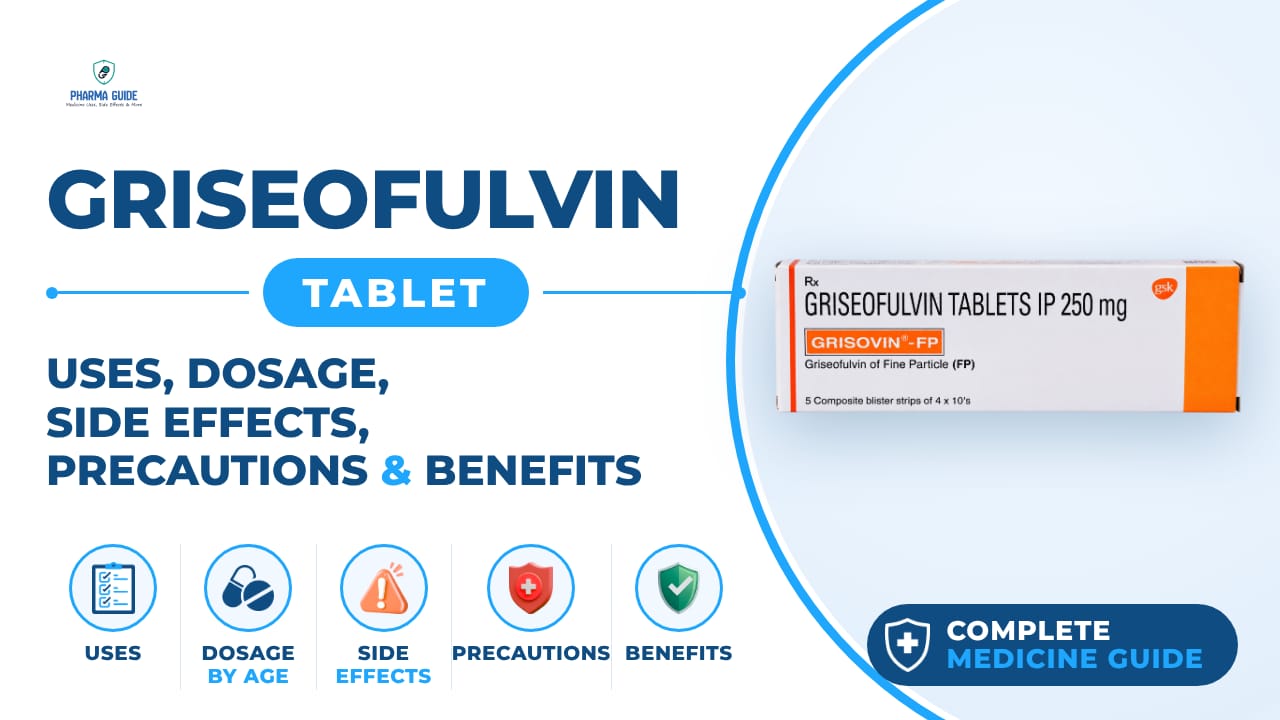
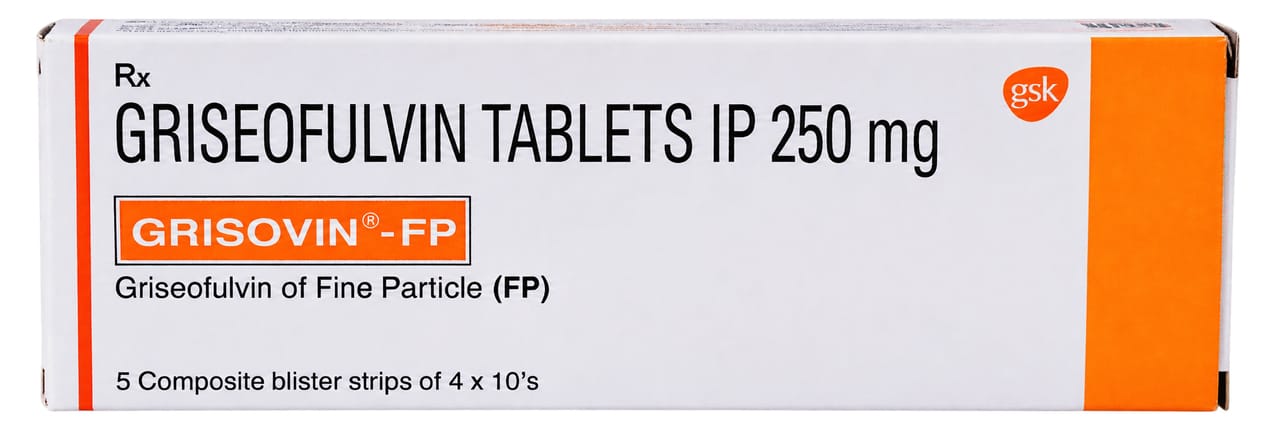
Griseofulvin Tablet: Uses, Dosage, Side Effects, Precautions and Alternates
| Generic name | Griseofulvin |
|---|---|
| Drug class | Antifungal (fungistatic antibiotic) |
| Forms | Tablet, Suspension (oral liquid) |
Quick overview
Griseofulvin Tablet (griseofulvin) is an antifungal medicine classified as a fungistatic antibiotic. It is used to treat fungal infections of the skin, hair, and nails caused by dermatophyte fungi, including ringworm, athlete's foot, jock itch, and nail infections. It works by building up in skin, hair, and nail cells to stop fungal growth, and it is available as tablets and an oral suspension.
What is Griseofulvin Tablet
Griseofulvin is an antifungal medicine derived from a species of Penicillium mold. It is used to treat fungal infections of the skin, hair, and nails caused by certain types of fungi called dermatophytes.
Griseofulvin Tablet uses
- Treatment of ringworm of the body (tinea corporis)
- Treatment of athlete's foot (tinea pedis)
- Treatment of jock itch (tinea cruris)
- Treatment of fungal infection of the beard area (tinea barbae)
- Treatment of fungal infection of the scalp (tinea capitis)
- Treatment of fungal infection of the nails (tinea unguium/onychomycosis)
Benefits of Griseofulvin Tablet
- Can clear dermatophyte infections of the skin, hair, and nails that have not responded to topical treatment alone
- May be used together with medicines applied to the skin for fungal infections
How Griseofulvin Tablet works
Griseofulvin builds up in skin, hair, and nail cells and blocks a process fungal cells need to divide and grow, which stops the fungus from spreading and lets healthy tissue replace the infected tissue over time.
Griseofulvin Tablet dosage
Keep taking this medicine for the full treatment time, even if you feel better after the first few doses, because stopping too soon may let the infection come back. Griseofulvin is absorbed best when taken with a high-fat meal, such as whole milk or ice cream; tell your doctor if you are on a low-fat diet. It is best taken with or after meals, especially fatty ones, to reduce stomach upset and help your body absorb the medicine better.
Tablets may be swallowed whole. If using a liquid form, use a proper measuring device rather than a household spoon. Keep yourself clean to help control the infection and prevent it from coming back.
If you miss a dose, take it as soon as you remember, but skip it if it is almost time for your next dose - do not take a double dose. General hygiene measures should be followed to control the source of infection or reinfection.
| Age group | Dose |
|---|---|
| 2 years and under | Dose not established; specialist advice required |
| 3–11 years | Usually 10 mg daily |
| 12–17 years | Usually 10 mg daily |
| Adults ≥18 years | 500–1,000 mg daily |
Available forms and strengths
- Tablet
- Suspension (oral liquid)
Side effects of Griseofulvin Tablet
Common
- Blistering, peeling, or loosening of the skin
- Chills
- Cough
- Diarrhea
- Fever
- Itching
- Joint or muscle pain
- Red, irritated eyes
- Sore throat
- Sores, ulcers, or white spots in the mouth or on the lips
- Unusual tiredness or weakness
- Hives or welts
- Redness of the skin
- Nausea, vomiting, stomach upset
- Headache
- Fatigue
- Dizziness
- Trouble sleeping
Serious
- Severe skin reactions such as Stevens-Johnson syndrome or toxic epidermal necrolysis
- Liver problems including elevated liver enzymes, jaundice, and hepatitis
- Numbness, tingling, pain, or weakness in the hands or feet
- Black, tarry stools or vomiting blood
- Unusual bleeding or bruising
- Yellow eyes or skin
- Swollen glands
- Large, hive-like swelling on the face, eyelids, lips, tongue, throat, hands, legs, feet, or sex organs
- Painful or difficult urination or cloudy urine
- Shortness of breath
- Chest pain
- Confusion
Warnings and precautions
- Griseofulvin can cause severe skin reactions, including Stevens-Johnson syndrome and toxic epidermal necrolysis, which can be serious and may lead to hospitalization or death.
- Griseofulvin can cause liver damage, including elevated liver enzymes, bilirubin, and jaundice, which may be serious and lead to hospitalization or death.
- This medicine can make skin much more sensitive to sunlight, so patients should avoid strong or prolonged sun exposure.
- Birth control pills containing estrogen may not work as well while taking griseofulvin, so an additional form of birth control should be used.
- Men should wait at least six months after finishing griseofulvin treatment before trying to father a child.
- This medicine has caused liver and thyroid tumors in animal studies, so its risks and benefits should be discussed with a doctor.
- Griseofulvin should not be used by women who are or may become pregnant. It has been linked to serious birth defects, including reports of conjoined twins, when taken during early pregnancy.
- It is not known if griseofulvin passes into breast milk. Because of possible risks, you and your doctor should decide whether to stop breastfeeding or stop the medicine.
- Griseofulvin should not be used by people with liver failure, and it can cause serious liver problems including elevated liver enzymes and jaundice.
- Drinking alcohol while taking griseofulvin can cause nausea, vomiting, flushing, fast heartbeat, and a serious drop in blood pressure.
- This medicine may cause dizziness, drowsiness, or reduced alertness. Know how it affects you before driving or using machinery.
Storage
- Dispense in a tight container as defined in the USP
- Store at 20° to 25°C (68° to 77°F) [see USP Controlled Room Temperature]
- Store the medicine in a closed container at room temperature, away from heat, moisture, and direct light
- Keep from freezing
- Keep out of the reach of children
- Do not keep outdated medicine or medicine no longer needed
- Ask your healthcare professional how you should dispose of any medicine you do not use
When to see a doctor
- Stop the medicine and contact your doctor right away if you notice blistering, peeling, or loosening skin, red skin lesions, severe acne or rash, skin sores or ulcers, or fever and chills.
- Stop the medicine and contact your doctor right away if you have upper stomach pain or tenderness, pale stools, dark urine, loss of appetite, nausea, unusual tiredness, or yellowing of the eyes or skin, as these can be signs of a serious liver problem.
- If severe skin reactions occur, the medicine should be stopped.
Alternatives
- Fulvicin P/G
- Fulvicin-U/F
- Grifulvin V
- Gris-PEG
Watch the video
FAQs
What is Griseofulvin Tablet used for?
It is used to treat fungal infections of the skin, hair, and nails caused by dermatophyte fungi, including ringworm, athlete's foot, jock itch, beard area infections, scalp infections, and nail infections.
How should Griseofulvin Tablet be taken for best absorption?
It is absorbed best when taken with a high-fat meal, such as whole milk or ice cream, and should be taken with or after meals, especially fatty ones, to reduce stomach upset and improve absorption.
What should I do if I miss a dose of Griseofulvin Tablet?
Take it as soon as you remember, but skip it if it is almost time for your next dose. Do not take a double dose.
What are the serious side effects of Griseofulvin Tablet?
Serious side effects include severe skin reactions such as Stevens-Johnson syndrome or toxic epidermal necrolysis, liver problems like elevated liver enzymes and jaundice, numbness or tingling in hands or feet, black tarry stools, unusual bleeding, and confusion.
Can women who are pregnant take Griseofulvin Tablet?
No, griseofulvin should not be used by women who are or may become pregnant, as it has been linked to serious birth defects, including reports of conjoined twins, when taken during early pregnancy.
General information, not medical advice
Your prescriber and the leaflet in your pack know your situation. This page does not.
- Follow your prescriber and the leaflet
- Don't start, stop, or change a dose on your own
- Doses and warnings differ by country and product
Sources
- Sandoz Inc, Griseofulvin Tablets USP prescribing information, Rev. May 2025
- Mayo Clinic, Griseofulvin (oral route), mayoclinic.org
- StatPearls, Griseofulvin, NCBI Bookshelf NBK537323
Video
Related medicines

Injectafer Injection: Uses, Dosage, Side Effects, Precautions and Alternates
Iron products
Injectafer (ferric carboxymaltose) treats iron deficiency anemia and heart failure-related iron deficiency via IV. Learn uses, dosage, side effects, and

Gliclazide Tablet: Uses, Dosage, Side Effects, Precautions and Alternates
Sulfonylurea (hypoglycemic/antidiabetic agent)
Gliclazide Tablet is a sulfonylurea for type 2 diabetes that boosts insulin release. Learn about dosage, side effects, warnings, and precautions.