
Safety
General information, not medical advice
Your prescriber and the leaflet in your pack know your situation. This page does not.
- Follow your prescriber and the leaflet
- Don't start, stop, or change a dose on your own
- Doses and warnings differ by country and product
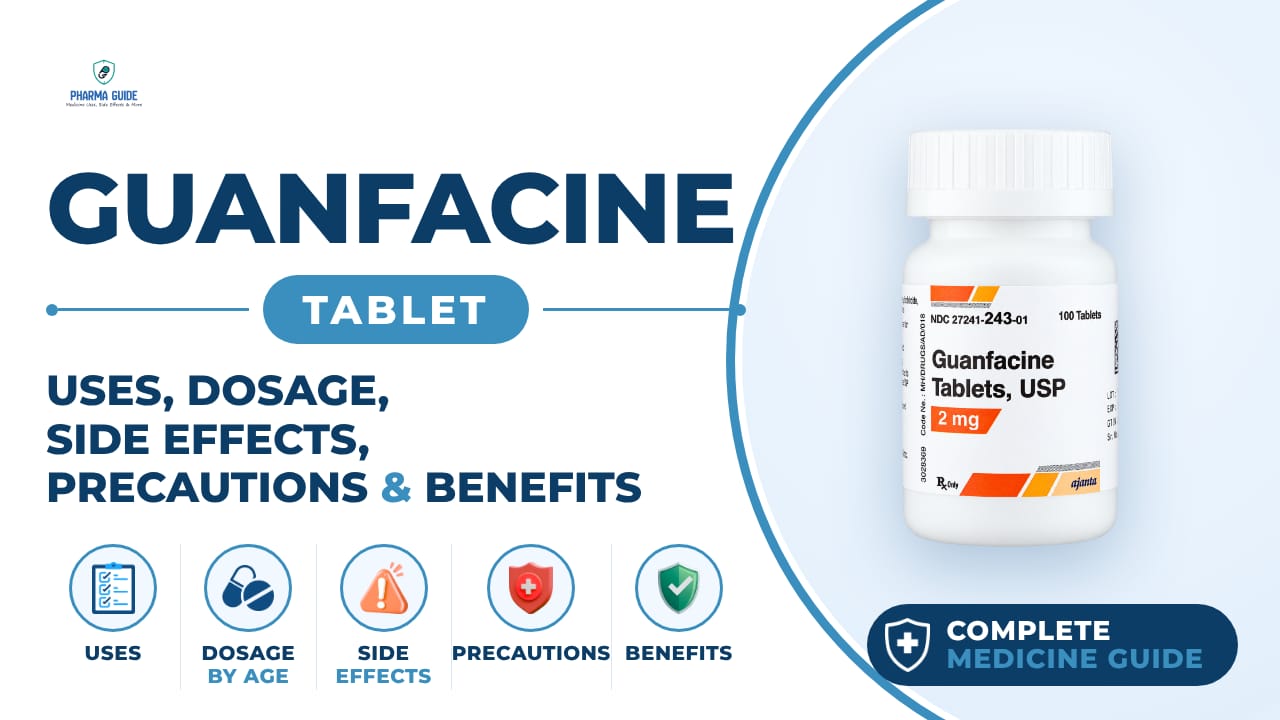
Guanfacine Tablet: Uses, Dosage, Side Effects, Precautions and Alternates
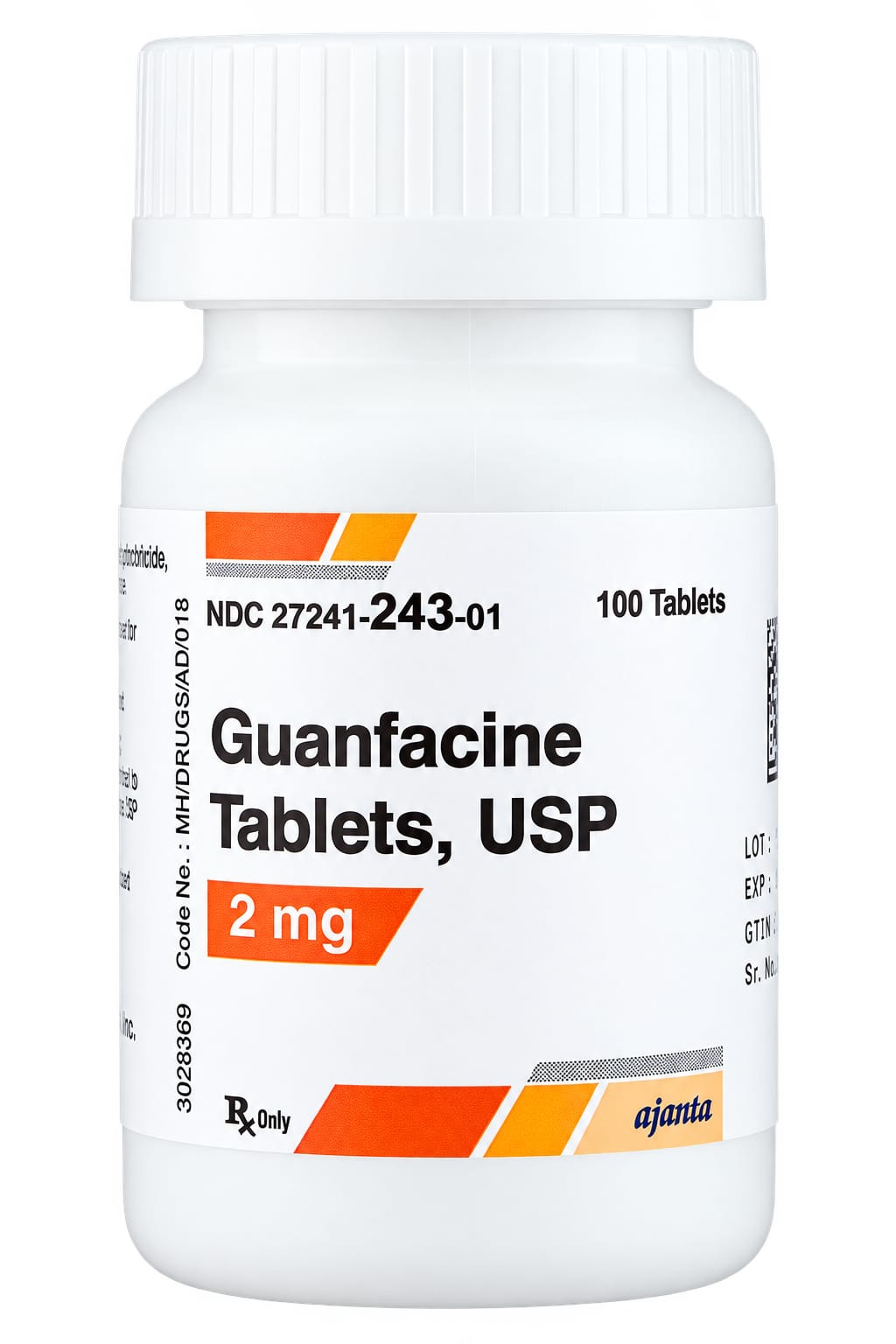
| Generic name | Guanfacine |
|---|---|
| Drug class | Alpha-2 adrenergic receptor agonist (centrally acting) |
| Forms | Oral tablet, Oral extended-release tablet |
Quick overview
Guanfacine Tablet (guanfacine) is a prescription medicine from the alpha-2 adrenergic receptor agonist drug class. It is used mainly to treat high blood pressure in adults and teens, while an extended-release version is used to help treat ADHD in children and teens. It works in the brain to relax blood vessels and slow the heart rate, and it is typically taken once a day.
What is Guanfacine Tablet
Guanfacine is a prescription medicine used mainly to treat high blood pressure in adults and teens. It works in the brain to help relax blood vessels and slow the heart rate. An extended-release version (Intuniv) is used differently, to help treat ADHD.
Guanfacine Tablet uses
- High blood pressure in people ages 12 years and older
- Sometimes used along with other blood pressure medications
- The extended-release form (Intuniv) is used to treat ADHD symptoms in children and teens
Benefits of Guanfacine Tablet
- Helps lower blood pressure, which can reduce the risk of heart disease, stroke, kidney problems, and other organ damage
- Taken only once a day
- Available as a lower-cost generic medicine
How Guanfacine Tablet works
Guanfacine acts on receptors in the brain that control blood vessel tightness and heart rate. By activating these receptors, it lowers a chemical called norepinephrine, which normally raises blood pressure by squeezing blood vessels. This relaxes the blood vessels and slows the heart rate, lowering blood pressure.
Guanfacine Tablet dosage
Take guanfacine by mouth, usually once a day at bedtime, to help reduce daytime sleepiness and dizziness. Take it at around the same time every day. Do not take more or less than prescribed, and don't take it more often than directed.
Do not suddenly stop taking this medicine without talking to your doctor, since this can cause your blood pressure to rise quickly and cause nervousness or anxiety.
If you miss a dose, take it as soon as you remember unless it's almost time for your next dose — in that case, skip the missed dose and continue your regular schedule; do not double up. Call your doctor if you miss two or more doses in a row.
If you're sick and vomiting and can't take your dose as usual, contact your doctor. Older adults are generally not advised to take this medicine since it may not be as safe or effective as other options for the same condition.
| Age group | Dose |
|---|---|
| Under 6 years | Not established |
| 6–17 years | 1 mg once daily; may increase by 1 mg/week; maximum 4 mg/day |
| 18 years and older | Not established for ADHD |
Available forms and strengths
- Oral tablet
- Oral extended-release tablet
Side effects of Guanfacine Tablet
Common
- Dry mouth
- Sleepiness or drowsiness
- Dizziness
- Constipation
- Headache
- Weakness
- Tiredness
- Upset stomach or stomach pain
- Nausea
- Weight gain
- Irritability
- Decreased appetite
- Decreased sexual ability
Serious
- Severely low blood pressure (lightheadedness, dizziness, feeling faint, tiredness, confusion)
- Fainting
- Blurred vision
- Rash
- Slow heart rate
- Chest pain or tightness
- Trouble breathing or noisy breathing
- Fast, pounding, or irregular heartbeat
- Mental depression
- Hallucinations (especially in children)
- Seizures
- Severe drowsiness
- Symptoms of stopping the medicine too quickly: anxiety, nervousness, headaches, confusion, rapid heartbeats, tremors, increased blood pressure
Warnings and precautions
- Tell your doctor if you are pregnant or plan to become pregnant. It isn't known for certain whether this medicine could harm an unborn baby, so your doctor needs to weigh the risks and benefits with you.
- Ask your doctor about the risks before breastfeeding while taking this medicine, since it may not be safe for your baby.
- Tell your doctor if you have kidney disease, since your dose may need to be adjusted. Tell your doctor if you have liver disease, since your dose may need to be adjusted.
- Ask your doctor about drinking alcohol while taking this medicine, since alcohol can make side effects like drowsiness and dizziness worse.
- This medicine can make you drowsy or dizzy, so don't drive or operate machinery until you know how it affects you.
- Do not suddenly stop taking this medicine without talking to your doctor first. Stopping suddenly can cause your blood pressure to rise quickly and lead to nervousness or anxiety. Your doctor can help you lower the dose gradually.
- This medicine can cause extreme sleepiness and dizziness, especially at higher doses, in older adults, with alcohol use, or when combined with other medicines that cause drowsiness. This can affect your ability to think, react, and focus.
- You may feel dizzy or faint when standing up quickly, especially when you first start the medicine. Get up slowly from a lying position to help avoid this.
- You could faint if you become dehydrated or overheated while taking this medicine, so drink enough fluids and stay cool.
Storage
- Keep this medication in the container it came in, tightly closed, and out of reach of children
- Store it at room temperature and away from excess heat and moisture (not in the bathroom)
- Keep all medication out of sight and reach of children
- Dispose of unneeded medications in a way so that pets, children, and other people cannot take them. Do not flush this medication down the toilet. Use a medicine take-back program
When to see a doctor
- Get emergency medical help right away if you have signs of an allergic reaction, such as hives, difficulty breathing, or swelling of your face, lips, tongue, or throat.
- Call your doctor right away if you experience anxiety, nervousness, hallucinations, severe drowsiness, slow heartbeats, or a light-headed feeling like you might pass out.
- If you stop taking this medicine, tell your doctor if you get headaches, confusion, rapid heartbeats, tremors, increased blood pressure, or feel nervous or agitated — if untreated, these could lead to very high blood pressure, vision problems, or seizures.
- Seek emergency medical help right away if you think you have taken too much of this medicine. Signs of overdose can include extreme dizziness or faintness, and severe tiredness or weakness.
Alternatives
- Atomoxetine
- Methylphenidate
- Lisdexamfetamine
Watch the video
FAQs
What is Guanfacine Tablet used for?
Guanfacine is used mainly to treat high blood pressure in people ages 12 and older, sometimes alongside other blood pressure medications. An extended-release version (Intuniv) is used to treat ADHD symptoms in children and teens.
How does Guanfacine Tablet work?
Guanfacine acts on receptors in the brain that control blood vessel tightness and heart rate. It lowers norepinephrine, a chemical that raises blood pressure by squeezing blood vessels, which relaxes the vessels and slows the heart rate.
When should I take Guanfacine Tablet?
Guanfacine is usually taken by mouth once a day at bedtime to help reduce daytime sleepiness and dizziness, at around the same time every day, exactly as prescribed.
What happens if I stop taking Guanfacine Tablet suddenly?
Do not suddenly stop taking this medicine without talking to your doctor, since this can cause your blood pressure to rise quickly and lead to nervousness, anxiety, headaches, confusion, rapid heartbeats, and tremors.
What are the common side effects of Guanfacine Tablet?
Common side effects include dry mouth, sleepiness, dizziness, constipation, headache, weakness, tiredness, upset stomach, nausea, weight gain, irritability, decreased appetite, and decreased sexual ability.
General information, not medical advice
Your prescriber and the leaflet in your pack know your situation. This page does not.
- Follow your prescriber and the leaflet
- Don't start, stop, or change a dose on your own
- Doses and warnings differ by country and product
Sources
- https://www.goodrx.com/guanfacine/what-is
- https://medlineplus.gov/druginfo/meds/a601059.html
- https://www.talkspace.com/blog/guanfacine/
- DailyMed - Guanfacine Extended-Release Tablets Label
Video
Related medicines

Injectafer Injection: Uses, Dosage, Side Effects, Precautions and Alternates
Iron products
Injectafer (ferric carboxymaltose) treats iron deficiency anemia and heart failure-related iron deficiency via IV. Learn uses, dosage, side effects, and

Gliclazide Tablet: Uses, Dosage, Side Effects, Precautions and Alternates
Sulfonylurea (hypoglycemic/antidiabetic agent)
Gliclazide Tablet is a sulfonylurea for type 2 diabetes that boosts insulin release. Learn about dosage, side effects, warnings, and precautions.