
Safety
General information, not medical advice
Your prescriber and the leaflet in your pack know your situation. This page does not.
- Follow your prescriber and the leaflet
- Don't start, stop, or change a dose on your own
- Doses and warnings differ by country and product
Haldol Decanoate Injection: Uses, Dosage, Side Effects, Precautions and Alternates
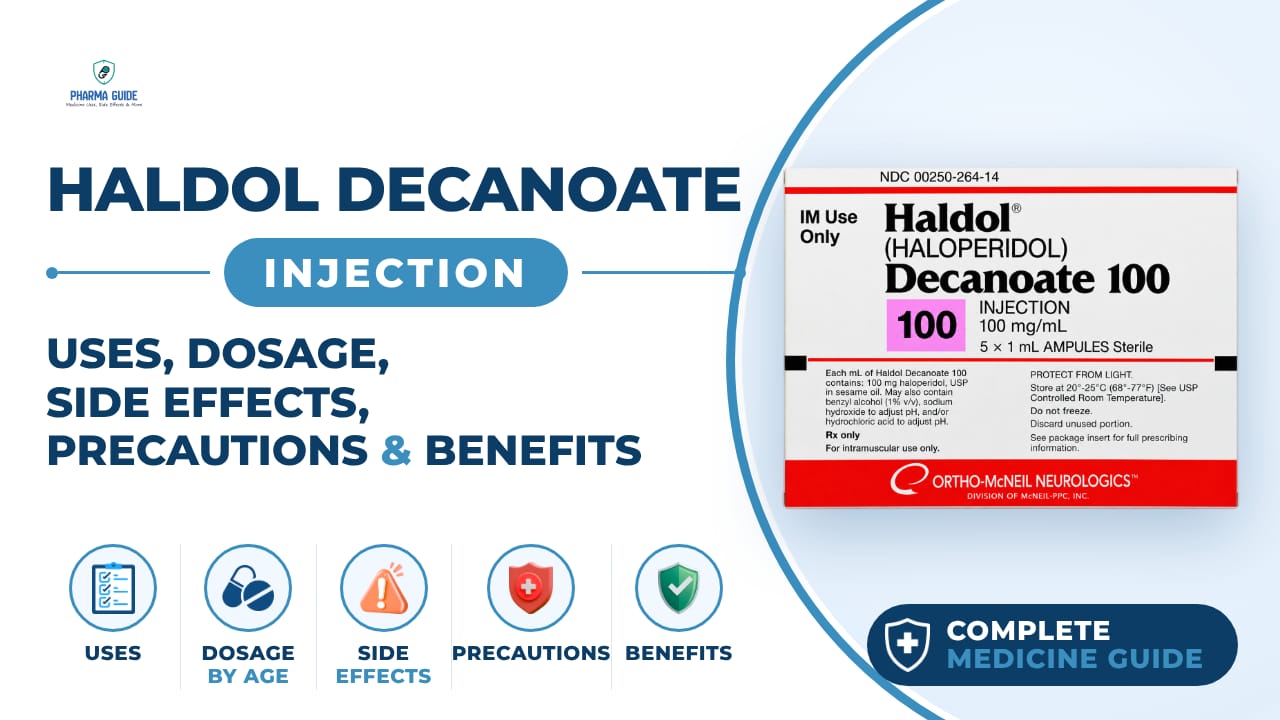
| Generic name | Haloperidol (as haloperidol decanoate) |
|---|---|
| Drug class | Antipsychotic (butyrophenone derivative) |
| Forms | Solution for injection |
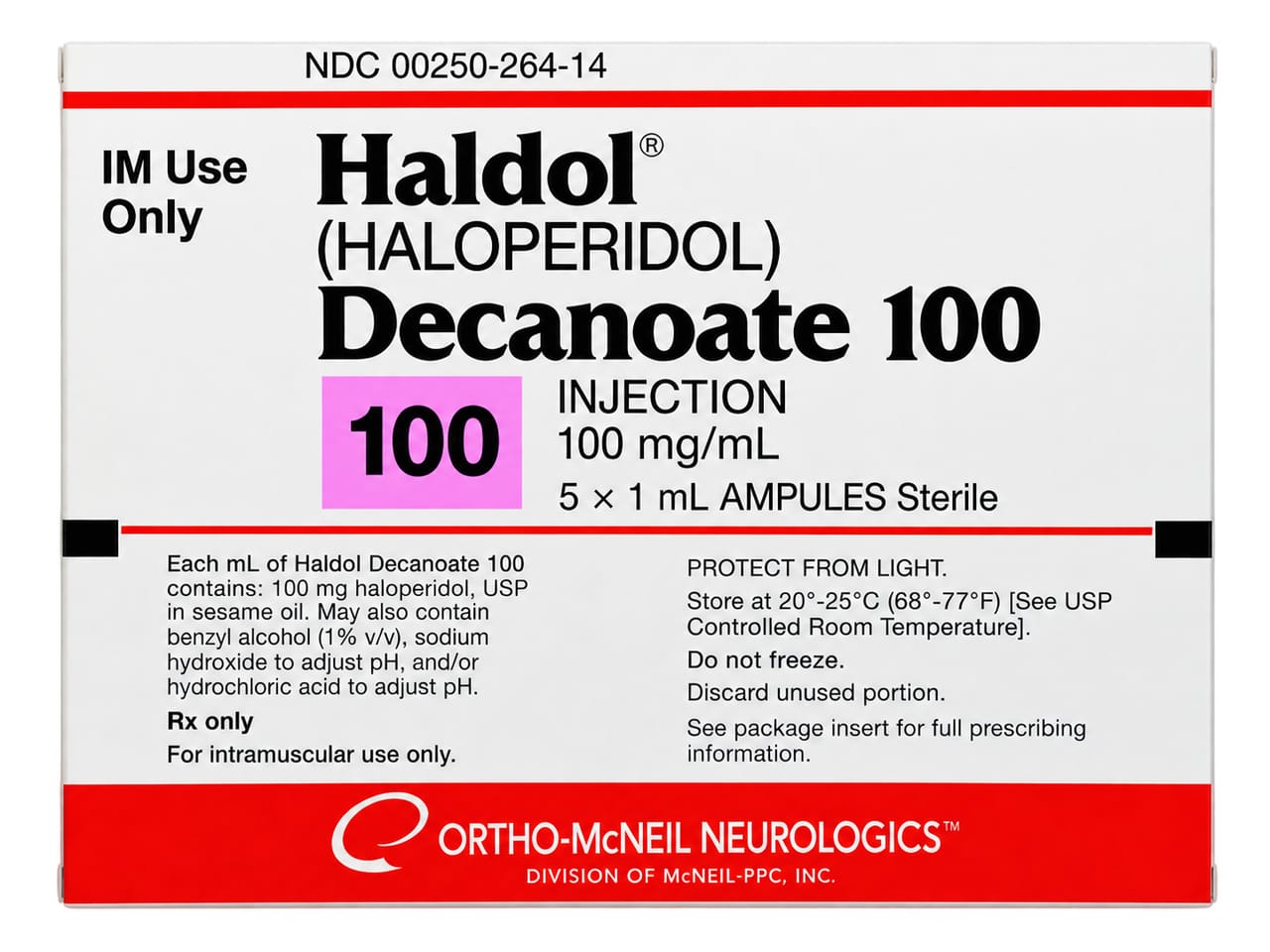
Quick overview
Haldol Decanoate Injection contains haloperidol in a long-acting decanoate form, belonging to the antipsychotic (butyrophenone) class. It is given as a deep intramuscular injection, usually once every 4 weeks, to adults who have already been stabilized on oral haloperidol. It is used for maintenance treatment of schizophrenia, schizoaffective disorder, and related conditions, as well as for Tourette's syndrome tics.
What is Haldol Decanoate Injection
Haldol Decanoate is a long-acting injectable antipsychotic medicine. It contains haloperidol, given as the decanoate form so it releases slowly into the body over several weeks. It is used in adults who have already been stabilized on haloperidol taken by mouth.
Haldol Decanoate Injection uses
- Maintenance treatment of schizophrenia and schizoaffective disorder in adults previously stabilized on oral haloperidol
- Treatment of schizophrenic patients who require prolonged parenteral antipsychotic therapy
- Control of symptoms of mental illnesses in adults with disturbances in thinking, feelings and behaviour
- Control of motor and speech tics in people with Tourette's syndrome
- Used in people who are unable to take medicine by mouth
Benefits of Haldol Decanoate Injection
- Reduces hallucinations, delusions, and paranoid or disorganized thinking
- Long-acting injection usually given every 4 weeks, reducing the need for daily tablets
- Can help control agitation, aggression, and excited or hyperactive behavior linked to psychosis
How Haldol Decanoate Injection works
Haldol blocks the action of a brain chemical called dopamine, which helps reduce hallucinations and false beliefs. It works on the parts of the brain involved in thinking and mood, but it can also affect areas that control body movement, which explains some of its movement-related side effects.
Haldol Decanoate Injection dosage
Your doctor will usually have you take haloperidol tablets first for a short time before starting the injection, to see how you respond and reduce the chance of an unexpected reaction. The injection is given only as a deep injection into a muscle (usually the buttock), never into a vein, with injections usually alternating between the two buttock muscles.
It is usually given once every 4 weeks, though your doctor may adjust the timing based on how you respond. You may also be given haloperidol tablets alongside the injection during dose changes or if symptoms flare up. Do not stop treatment or miss appointments without talking to your doctor, as your symptoms may return or withdrawal effects may occur if you stop suddenly after long-term use.
| Age group | Dose |
|---|---|
| Under 18 years | Not recommended |
| 18–64 years | 50–200 mg, once/4 weeks |
| 65+ years | 50–200 mg, once/4 weeks |
Available forms and strengths
- Solution for injection
Side effects of Haldol Decanoate Injection
Common
- Drowsiness or sleepiness
- Tremor
- Neck/muscle stiffness
- Involuntary muscle movements
- Restlessness
- Constipation
- Dry mouth or increased saliva
- Nausea or vomiting
- Changes in sex drive
- Weight gain
- Blurred vision
- Low blood pressure, dizziness or headache
- Injection site pain, redness or irritation
- Depression
- Difficulty sleeping
Serious
- Abnormal or fast heart rhythm, chest pounding, fainting, or sudden dizziness
- Neuroleptic malignant syndrome: high fever, severe muscle stiffness, confusion, loss of consciousness, irregular heartbeat
- Tardive dyskinesia: uncontrolled movements of the face, tongue, jaw or limbs that may be permanent
- Severe allergic reaction: swollen face, lips, tongue or throat, difficulty breathing or swallowing, hives
- Blood clots (deep vein thrombosis or pulmonary embolism): leg swelling, pain, redness, chest pain, difficulty breathing
- Low white blood cell counts: fever, chills, mouth sores, sore throat, cough, trouble breathing
- Stroke: sudden numbness or weakness of face, arm or leg, trouble speaking, seeing, or walking
- Seizures/convulsions
- Severe extrapyramidal reactions: severe muscle rigidity, inability to walk or talk
- Sudden death and cardiac arrest have been reported
Warnings and precautions
- Elderly people with dementia-related psychosis who take this type of medicine have a higher risk of death. This medicine is not approved for treating dementia-related behavior problems.
- This medicine must never be given into a vein, only as a deep injection into a muscle, because of heart rhythm risks.
- This medicine can cause a serious heart rhythm problem called QT prolongation, which can lead to dangerous irregular heartbeats or sudden death, especially at high doses or when combined with certain other medicines.
- Long-term use can cause a movement disorder called tardive dyskinesia, with repeated involuntary movements of the face, tongue or jaw, which may not go away even after stopping the medicine.
- This medicine can cause a rare but life-threatening reaction called neuroleptic malignant syndrome, with high fever, severe muscle stiffness, and confusion.
- Do not use this medicine if you have Parkinson's disease or Lewy body dementia, since it can make these conditions much worse.
- This medicine contains sesame oil, so people with a peanut or sesame allergy should be cautious.
- Taking this medicine together with lithium has, in rare cases, caused serious brain-related symptoms; treatment with both must be stopped right away if symptoms occur.
- It's preferred to avoid this medicine during pregnancy unless your doctor decides the benefits outweigh the risks. Babies exposed in the last three months of pregnancy may have muscle problems, sleepiness, agitation, or feeding and breathing difficulties after birth.
- Haloperidol passes into breast milk, and there isn't enough information about its effects on breastfed infants. You and your doctor will need to decide whether to continue breastfeeding or continue treatment.
- The effect of kidney problems on this medicine hasn't been fully studied, but caution is advised, especially with severe kidney impairment, as the medicine may build up in the body.
- Since this medicine is broken down by the liver, people with liver problems may need a lower starting dose and more careful dose adjustments.
- Avoid drinking alcohol while using this medicine, as it can increase sleepiness and other side effects and may lower blood pressure.
- This medicine can affect your ability to drive or use machines, especially when you first start treatment or after a higher dose. Don't drive or use machinery until you know how it affects you.
Storage
- Keep out of the sight and reach of children
- Keep in a cool, dry place where the temperature is below 25°C
- Do not freeze or refrigerate
- Protect from light
- Do not store in the bathroom or near a sink, or leave in a car or on a windowsill
- Do not use after the expiry date printed on the pack
- Any unused medicine or waste material should be disposed of according to local requirements
When to see a doctor
- Get emergency help right away if you have signs of a severe allergic reaction, such as swelling of the face, lips, tongue or throat, difficulty breathing, or hives.
- Call your doctor immediately if you notice uncontrolled movements of the face, mouth, or tongue, as these may be signs of a serious, possibly permanent movement disorder.
- Seek urgent medical attention for signs of a dangerous heart rhythm problem, such as fast or pounding heartbeat, fluttering in the chest, shortness of breath, or sudden dizziness or fainting.
- Get medical help immediately if you develop a high fever, severe muscle stiffness, confusion, sweating, or an irregular heartbeat, which can be signs of a life-threatening reaction called neuroleptic malignant syndrome.
- Seek emergency care for signs of stroke, such as sudden numbness in the face, arm or leg, trouble speaking, seeing, or walking.
- Call your doctor right away if you have signs of a low white blood cell count, such as fever, chills, mouth sores, sore throat or cough.
- If you think you have taken too much or are showing signs of overdose such as severe tremor, fainting, or extreme drowsiness, contact your doctor or poison control center right away, or go to the emergency department.
Alternatives
- Risperdal Consta
- Abilify Maintena
- Invega Sustenna
Watch the video
FAQs
How often is Haldol Decanoate Injection given?
It is usually given once every 4 weeks as a deep intramuscular injection, though your doctor may adjust the timing based on how you respond.
What is Haldol Decanoate Injection used for?
It is used for maintenance treatment of schizophrenia and schizoaffective disorder in adults previously stabilized on oral haloperidol, and for controlling motor and speech tics in Tourette's syndrome.
Can Haldol Decanoate Injection be given into a vein?
No, it must never be given into a vein. It is given only as a deep injection into a muscle, usually the buttock, because of heart rhythm risks.
What are the serious side effects of Haldol Decanoate Injection?
Serious side effects include neuroleptic malignant syndrome, tardive dyskinesia, severe allergic reactions, abnormal heart rhythms, blood clots, stroke, seizures, low white blood cell counts, and sudden death or cardiac arrest.
Who should not use Haldol Decanoate Injection?
It should not be used in people with Parkinson's disease or Lewy body dementia, as it can worsen these conditions. It is also not approved for dementia-related behavior problems in elderly people, who have a higher risk of death with this type of medicine.
General information, not medical advice
Your prescriber and the leaflet in your pack know your situation. This page does not.
- Follow your prescriber and the leaflet
- Don't start, stop, or change a dose on your own
- Doses and warnings differ by country and product
Sources
Video
Related medicines

Injectafer Injection: Uses, Dosage, Side Effects, Precautions and Alternates
Iron products
Injectafer (ferric carboxymaltose) treats iron deficiency anemia and heart failure-related iron deficiency via IV. Learn uses, dosage, side effects, and

Gliclazide Tablet: Uses, Dosage, Side Effects, Precautions and Alternates
Sulfonylurea (hypoglycemic/antidiabetic agent)
Gliclazide Tablet is a sulfonylurea for type 2 diabetes that boosts insulin release. Learn about dosage, side effects, warnings, and precautions.