
Safety
General information, not medical advice
Your prescriber and the leaflet in your pack know your situation. This page does not.
- Follow your prescriber and the leaflet
- Don't start, stop, or change a dose on your own
- Doses and warnings differ by country and product
Halobetasol Cream: Uses, Dosage, Side Effects, Precautions and Alternates
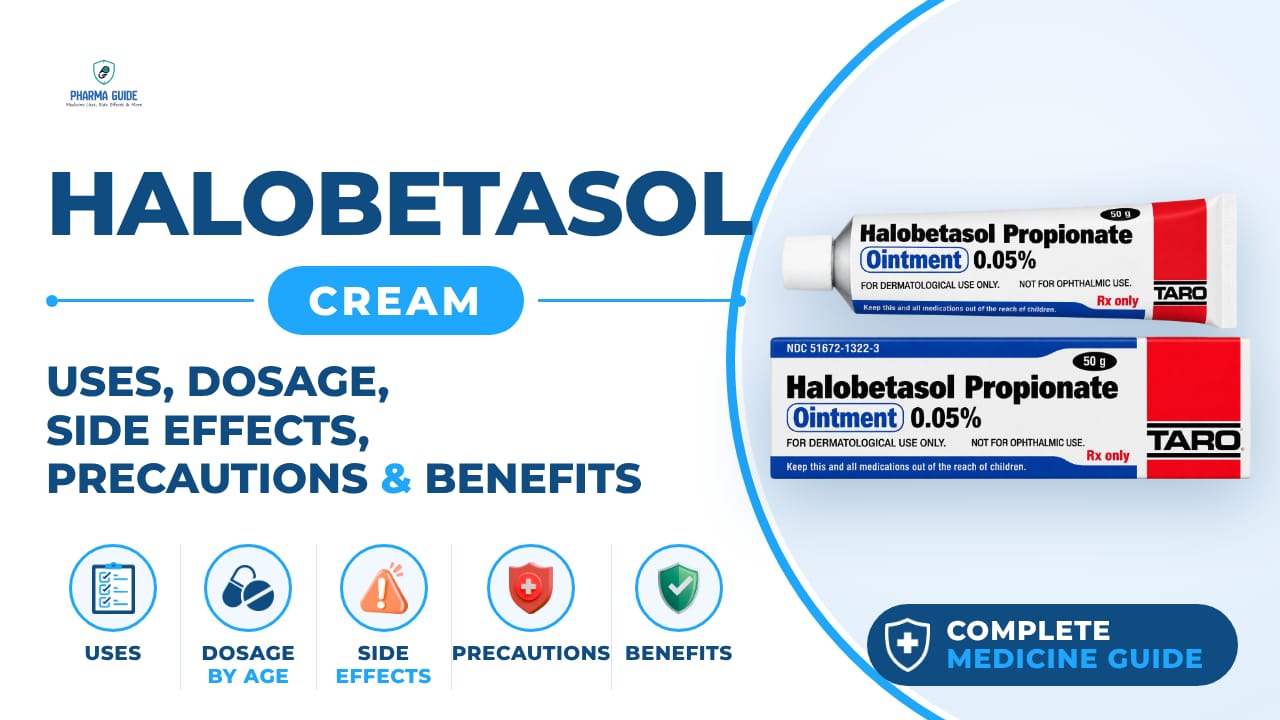
| Generic name | Halobetasol propionate |
|---|---|
| Drug class | Topical corticosteroid (super-high potency, Class I) |
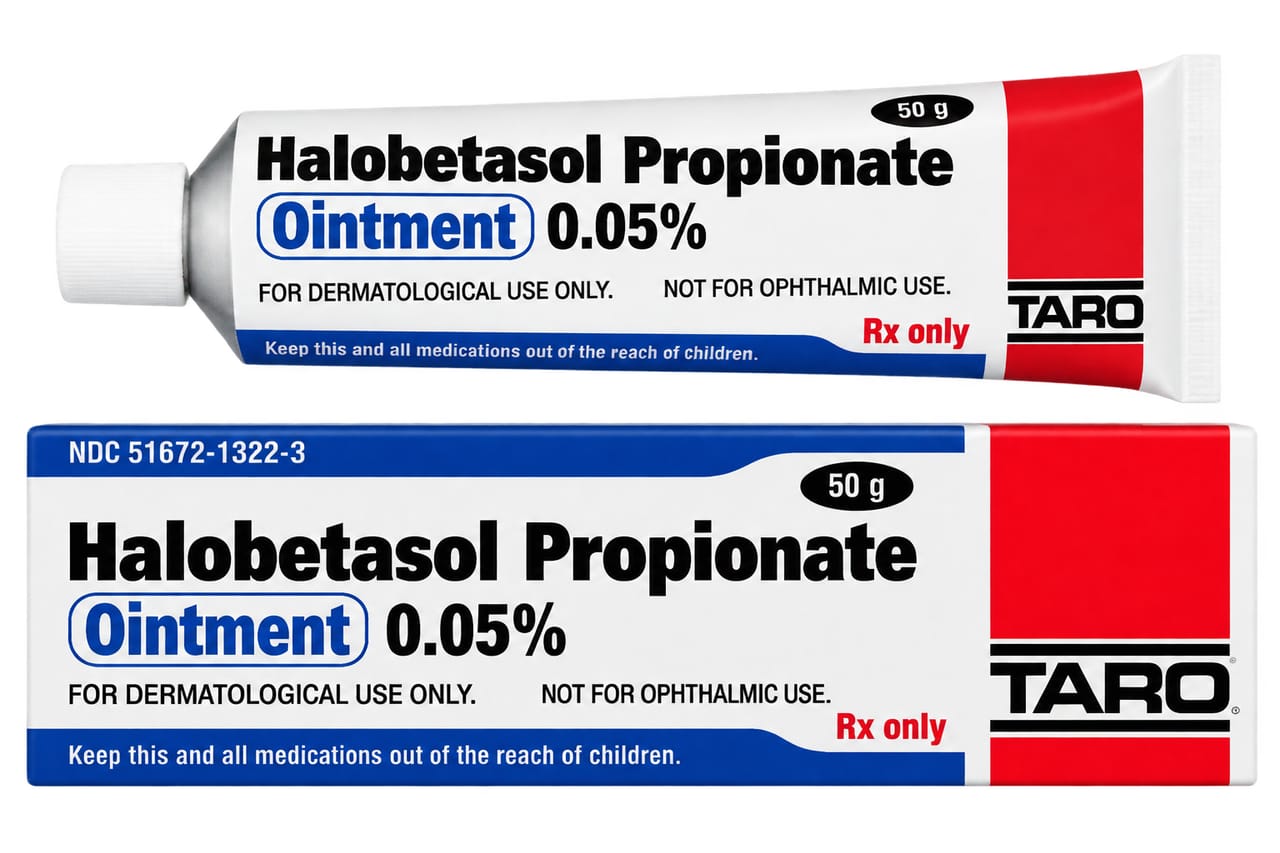
| Forms | Ointment, Cream, Foam, Lotion |
Quick overview
Halobetasol Cream contains halobetasol propionate, a super-high potency (Class I) topical corticosteroid. It is a very strong prescription medicine applied to the skin for short periods to calm inflamed, itchy, and irritated skin conditions such as plaque psoriasis and eczema. It is approved for adults and children 12 years of age and older.
What is Halobetasol Cream
Halobetasol cream is a very strong prescription corticosteroid that you apply to the skin. It is used for short periods of time to calm down inflamed, itchy, and irritated skin conditions.
Halobetasol Cream uses
- Treats redness, swelling, itching, and discomfort of various skin conditions in adults and children 12 years of age and older, including plaque psoriasis and eczema
- Relief of the inflammatory and itchy symptoms of corticosteroid-responsive skin conditions
Benefits of Halobetasol Cream
- Reduces skin redness, swelling, and itching
- Helps improve skin conditions like plaque psoriasis and eczema, usually within the first 2 weeks of treatment
How Halobetasol Cream works
This medicine is a corticosteroid that acts on the skin to calm inflammation. It works by turning on natural substances in the skin that reduce swelling, redness, and itching, and it also helps slow down how fast new skin cells are made.
Halobetasol Cream dosage
Apply a small amount to cover the affected area of skin with a thin, even film and rub it in gently and completely. It is usually applied once or twice a day, exactly as your doctor directs. Do not apply more or less than prescribed, or use it more often than prescribed. Do not apply to other areas of the body or use for other skin conditions unless your doctor tells you to.
Avoid use on the face, in the genital and rectal areas, in skin creases, and in the armpits unless your doctor directs otherwise. Do not wrap or bandage the treated area unless your doctor tells you to, since this can increase side effects. This medicine is for use on the skin only; do not let it get into your eyes or mouth, and do not swallow it.
If using the foam, shake it before each use, and stay away from open flame or smoking while applying it and for a short time afterward. Wash your hands before and after applying, unless you are treating the skin on your hands. Your skin should start to improve within the first 2 weeks of treatment; call your doctor if it does not.
If you forget a dose, apply it as soon as you remember, but skip it if it is almost time for your next dose - do not apply a double amount.
| Age group | Dose |
|---|---|
| Under 12 years | Not recommended |
| 12–17 years | Apply a thin layer once or twice daily to affected areas |
| 18–64 years | Apply a thin layer once or twice daily |
| 65+ years | Apply a thin layer once or twice daily; no routine age-based adjustment |
Available forms and strengths
- Ointment
- Cream
- Foam
- Lotion
Side effects of Halobetasol Cream
Common
- Burning, itching, irritation, redness, or dryness of the skin
- Acne
- Tiny red bumps or rash around the mouth
- Small white or red bumps on the skin
- Unwanted hair growth
- Change in skin color
- Bruising or shiny skin
- Red or purple blotches or lines under the skin
- Stinging feeling on the skin
- Pain where the product was applied
- Headache
- Cold-like symptoms such as stuffy nose, sneezing, and sore throat
Serious
- Redness, swelling, or other signs of skin infection where you applied the medicine
- Severe skin rash
- Skin sores
- Sudden weight gain
- Unusual tiredness
- Muscle weakness
- Depression and irritability
- Blurred vision or other vision changes
- Signs of an allergic reaction such as hives, difficulty breathing, or swelling of the face, lips, tongue, or throat
- High blood sugar symptoms such as increased thirst, increased urination, dry mouth, or fruity breath odor
- Slowed growth and delayed weight gain in children
Warnings and precautions
- This medicine can be absorbed through the skin into the bloodstream and may cause the body's stress hormone system to slow down, sometimes leading to Cushing's syndrome or high blood sugar. Do not use it for longer than 2 weeks, and do not use more than the recommended amount.
- Do not use this medicine on skin that is oozing fluid, or on areas where two skin folds touch each other, such as underarms or groin. Children absorb more of this medicine through the skin than adults, so most forms are not approved for anyone under 12, and some forms are only for adults 18 and older.
- Avoid applying this medicine to the face, scalp, underarms, or groin area, and do not use other topical steroids on the treated areas unless your doctor tells you to. The foam form of this medicine is flammable. Stay away from open flames and do not smoke while applying it or shortly afterward, and do not puncture or burn the container.
- Stopping this medicine suddenly after using it regularly for a while can cause topical steroid withdrawal, which can show up as skin burning or swelling. Follow your prescriber's instructions to slowly reduce use before stopping.
- For external use only. Avoid contact with the eyes. Do not apply to the face, groin, or armpits unless specifically directed by a doctor. Do not use for rosacea or perioral dermatitis.
- Do not cover the treated area with tight bandages or occlusive dressings unless prescribed. Treatment should generally not exceed 2 consecutive weeks and should not exceed 50 g per week. Avoid applying to large areas because increased absorption can cause systemic corticosteroid effects. Prolonged or excessive use may cause skin thinning, stretch marks, discoloration, folliculitis, or secondary infection.
- Systemic absorption may cause HPA-axis suppression, adrenal insufficiency, Cushing's syndrome, increased blood glucose, or glucose in the urine. Children under 12 years: use is not recommended because of increased risk of systemic corticosteroid effects. Stop treatment when the skin condition is controlled. If there is no improvement within 2 weeks, the diagnosis should be reassessed.
- Tell your doctor if you have liver disease before using this medicine.
- Tell your doctor if you are pregnant or plan to become pregnant. It is not known whether this medicine will harm an unborn baby, so use only a small amount for the shortest time possible if your doctor tells you to use it.
- It may not be safe to breastfeed while using this medicine. If your doctor tells you to use it, use a small amount for the shortest time possible and do not apply it to the breasts.
Storage
- Keep this medication in the container it came in, tightly closed, and out of reach of children
- Store it at room temperature and away from excess heat and moisture (not in the bathroom)
- Do not freeze the foam product
- Dispose of unneeded medications in a way so that pets, children, and other people cannot take them
- Do not flush this medication down the toilet; use a medicine take-back program instead
When to see a doctor
Call your doctor right away if you notice redness, swelling, or other signs of skin infection where you applied the medicine, severe skin rash, skin sores, sudden weight gain, unusual tiredness, muscle weakness, depression and irritability, or blurred vision or other vision changes.
Get emergency medical help if you have signs of an allergic reaction, such as hives, difficulty breathing, or swelling of your face, lips, tongue, or throat. Seek emergency medical attention or contact poison control if someone accidentally swallows this medicine.
Stop using the medicine and tell a healthcare professional if you notice redness, warmth, tenderness, swelling, or pain on the treated skin, or if you have a fever or chills, since these can be signs of a skin infection needing treatment.
Alternatives
- Clobetasol propionate 0.05% cream
- Fluocinonide 0.05% cream
- Mometasone furoate 0.1% cream
Watch the video
FAQs
What is Halobetasol Cream used for?
It treats redness, swelling, itching, and discomfort of corticosteroid-responsive skin conditions like plaque psoriasis and eczema in adults and children 12 years of age and older.
How long can I use Halobetasol Cream?
Treatment should generally not exceed 2 consecutive weeks and should not exceed 50 g per week. Your skin should start improving within the first 2 weeks; call your doctor if it does not.
How do I apply Halobetasol Cream?
Apply a small amount to cover the affected area with a thin, even film and rub it in gently and completely, usually once or twice a day as directed. Avoid the face, genital and rectal areas, skin creases, and armpits unless your doctor says otherwise.
What are the serious side effects of Halobetasol Cream?
Serious side effects include signs of skin infection, severe skin rash, skin sores, sudden weight gain, unusual tiredness, muscle weakness, depression and irritability, blurred vision, allergic reactions, and high blood sugar symptoms.
Can children use Halobetasol Cream?
It is approved for children 12 years of age and older, but is not recommended for children under 12 because they absorb more of the medicine through the skin, increasing the risk of systemic corticosteroid effects.
General information, not medical advice
Your prescriber and the leaflet in your pack know your situation. This page does not.
- Follow your prescriber and the leaflet
- Don't start, stop, or change a dose on your own
- Doses and warnings differ by country and product
Sources
Video
Related medicines

Injectafer Injection: Uses, Dosage, Side Effects, Precautions and Alternates
Iron products
Injectafer (ferric carboxymaltose) treats iron deficiency anemia and heart failure-related iron deficiency via IV. Learn uses, dosage, side effects, and

Gliclazide Tablet: Uses, Dosage, Side Effects, Precautions and Alternates
Sulfonylurea (hypoglycemic/antidiabetic agent)
Gliclazide Tablet is a sulfonylurea for type 2 diabetes that boosts insulin release. Learn about dosage, side effects, warnings, and precautions.