
Safety
General information, not medical advice
Your prescriber and the leaflet in your pack know your situation. This page does not.
- Follow your prescriber and the leaflet
- Don't start, stop, or change a dose on your own
- Doses and warnings differ by country and product
Haloperidol Injection: Uses, Dosage, Side Effects, Precautions and Alternates
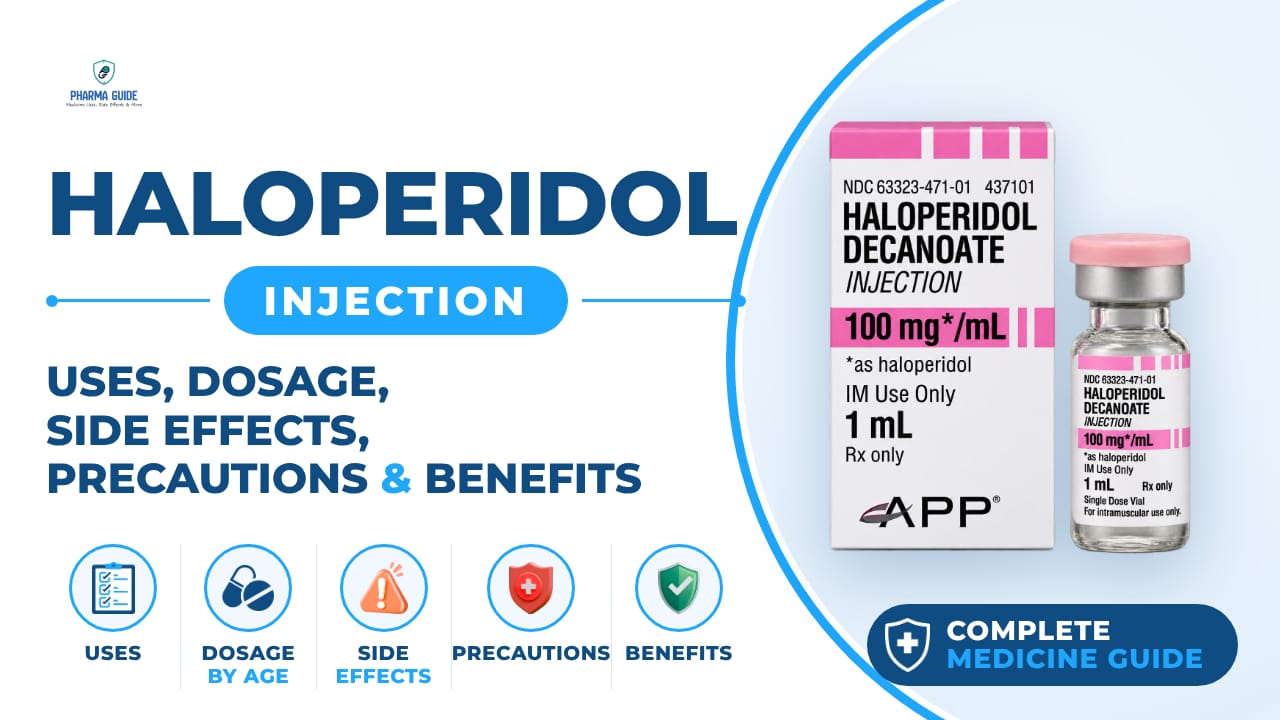
| Generic name | Haloperidol |
|---|---|
| Drug class | Antipsychotic (first-generation typical antipsychotic) |
| Forms | Solution for injection (5 mg/ml), Tablets (0.5 mg, 1 mg, 2 mg, 5 mg, 10 mg), Oral concentrate (2 mg/mL), Nasal spray, Depot (long-acting) intramuscular injection (haloperidol decanoate) |
Quick overview
Haloperidol Injection contains haloperidol, a first-generation antipsychotic medicine. It is given as an injection into a muscle, or occasionally into a vein under medical supervision, to treat serious mental health and behavioural conditions such as severe agitation, psychosis and mania. It works by blocking dopamine in the brain to help control symptoms like hallucinations, delusions and agitation. It is used under close medical supervision because of possible serious side effects.
What is Haloperidol Injection
Haloperidol Injection contains the active substance haloperidol, which belongs to a group of medicines called antipsychotics. It is given as an injection into a muscle (or occasionally into a vein, only under medical supervision) to treat serious mental health and behavioural conditions.
Haloperidol Injection uses
- Rapid control of severe acute agitation associated with psychotic disorder or manic episodes of bipolar I disorder when oral treatment is not suitable
- Acute treatment of delirium when non-drug treatments have failed
- Treatment of mild to moderate chorea in Huntington's disease when other medicines are not effective or not tolerated
- Prevention of nausea and vomiting after surgery in patients at moderate to high risk
- Combination treatment of nausea and vomiting after surgery
- Schizophrenia and other psychotic disorders
- Mania
- Severe anxiety, tension, agitation or aggression linked to mental illness
- Behavioural problems in children with mental illness or intellectual disability
- Tourette's syndrome (uncontrolled vocal outbursts and body movements)
Benefits of Haloperidol Injection
- Provides rapid control of severe agitation when taking medicine by mouth is not possible
- Helps correct chemical imbalances in the brain that cause symptoms such as hallucinations, delusions and agitation
- Can reduce chorea movements in Huntington's disease when other treatments have not worked
- Can help prevent or treat nausea and vomiting after surgery
How Haloperidol Injection works
Haloperidol blocks dopamine receptors (a chemical messenger) in the brain, which helps reduce psychotic symptoms such as hallucinations and delusions. It also has some blocking action on other brain chemical receptors, which can contribute to side effects.
Haloperidol Injection dosage
This medicine is given as an injection into a muscle by a doctor or nurse; it is not meant to be given into a vein except in unusual circumstances under close supervision. Your doctor will start with a low dose and adjust it based on how you respond. If you need to keep taking haloperidol after the injection, your doctor will usually switch you to tablets or liquid form.
Do not stop treatment or change your dose without checking with your doctor, since stopping suddenly can cause your condition to worsen or trigger withdrawal effects. Your doctor may gradually lower your dose before stopping treatment completely. Elderly people are usually started on a lower dose than younger adults. This medicine is not recommended for children.
| Age group | Dose |
|---|---|
| Under 3 Years | Not recommended unless prescribed by a doctor |
| 3–12 Years | Dose based on weight and medical condition; specialist supervision required |
| Adults (18–64 Years) | Usually 2–5 mg per dose; may be repeated based on clinical need |
| Older Adults (65+ years) | Usually lower initial doses (0.5–1 mg); adjusted carefully |
Available forms and strengths
- Solution for injection (5 mg/ml)
- Tablets (0.5 mg, 1 mg, 2 mg, 5 mg, 10 mg)
- Oral concentrate (2 mg/mL)
- Nasal spray
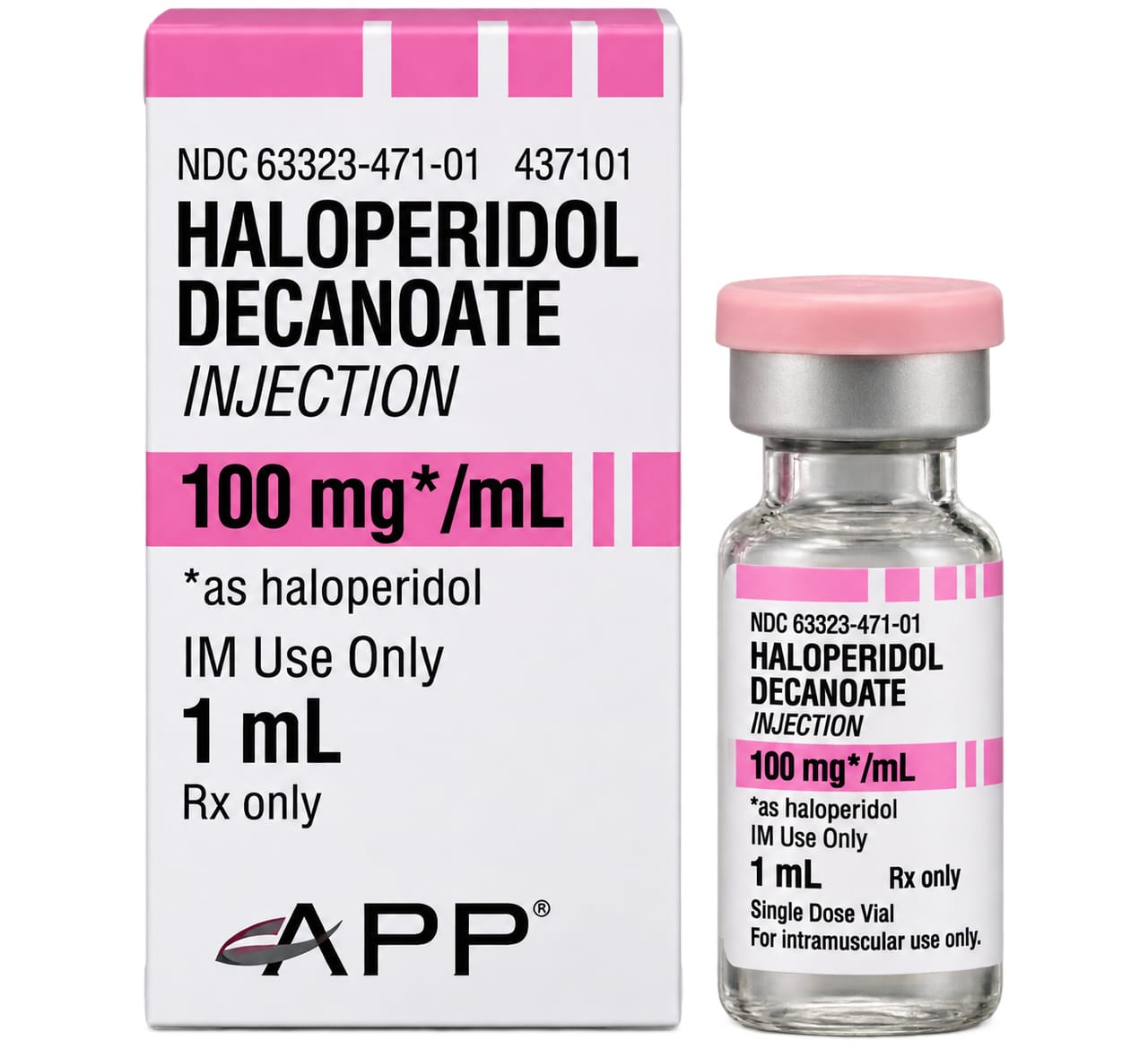
- Depot (long-acting) intramuscular injection (haloperidol decanoate)
Side effects of Haloperidol Injection
Common
- Nausea and vomiting
- Dry mouth or increased saliva
- Headache
- Dizziness, including on standing up
- Drowsiness or feeling sleepy
- Difficulty sleeping
- Feeling agitated
- Restlessness
- Confusion
- Skin rash
- Muscle stiffness or weakness
- Blurred vision
- Constipation
- Weight changes
- Breast enlargement or tenderness
- Irregular menstrual periods
- Loss of interest in sex
- Difficulty urinating
Serious
- Extremely high body temperature (fever)
- Neuroleptic malignant syndrome: high fever, severe muscle stiffness, confusion, fast or irregular heartbeat, sweating
- Abnormal heart rhythm (QT prolongation, torsades de pointes), which can cause loss of consciousness or sudden death
- Tardive dyskinesia: worm-like movements of the tongue, or uncontrolled movements of the mouth, tongue, cheeks or jaw, which may progress to the arms and legs
- Severe allergic reaction: swelling of face, lips, tongue or throat, difficulty breathing or swallowing, hives
- Blood clots (deep vein thrombosis), which may cause leg swelling, pain, redness, chest pain or breathing difficulty
- Seizures or fits
- Yellowing of the skin or eyes (jaundice)
- Signs of low blood cell counts: fever, chills, sore throat, mouth ulcers, unusual bleeding or bruising
- Persistent, painful erection (priapism)
- Severe muscle spasms affecting the eyes, head, neck and body (dystonia)
- Hallucinations
- Fainting or collapse
Warnings and precautions
- Elderly people with dementia-related psychosis who take antipsychotics like haloperidol have a higher risk of death, including from heart problems and infections such as pneumonia. This medicine is not approved for treating dementia-related psychosis.
- This medicine must not be given into a vein, and giving it this way or using higher-than-recommended doses raises the risk of dangerous heart rhythm problems and sudden death.
- Long-term use of this medicine can lead to a movement disorder called tardive dyskinesia, which may be permanent, especially in elderly women.
- This medicine should not be used in people with Parkinson's disease or Lewy body dementia because it can worsen symptoms and increase sensitivity to side effects.
- This medicine may make your skin more sensitive to sunlight, increasing risk of sunburn-like reactions; protective clothing and sunscreen are advised.
- Combining this medicine with lithium has, in rare cases, caused a serious brain reaction with confusion, fever and muscle problems.
- Haloperidol is not usually recommended during pregnancy. It should only be used if your doctor believes the benefits outweigh the risks to the baby, since babies exposed in the last three months of pregnancy can experience breathing problems, muscle stiffness or floppiness, tremors, and feeding difficulties after birth.
- Haloperidol passes into breast milk and is not recommended while breastfeeding. Talk to your doctor if you are breastfeeding or plan to.
- No routine dose change is generally needed for kidney problems, but caution is advised, and people with severe kidney impairment may need a lower starting dose.
- Since haloperidol is broken down mainly in the liver, people with liver problems may need a lower starting dose, adjusted based on how they respond.
- Drinking alcohol while using this medicine can increase sleepiness, dizziness or light-headedness, so care is needed and your doctor may advise avoiding alcohol.
- This medicine can affect your ability to drive or use machinery, especially when you first start treatment or after a high dose, because it can cause sleepiness and reduced alertness.
Storage
- Do not store above 25°C
- Store in the original package in order to protect from light
- Do not use this medicine if the solution is cloudy, discoloured or if there are any particles present; it should be returned unused to the pharmacist
- If only part used, discard the remaining solution
- This product should be used immediately after opening
- For single use only
- Do not use this medicine after the expiry date which is stated on the ampoule and carton
- Keep this medicine out of the sight and reach of children
- Do not throw away any medicines via wastewater or household waste; ask your pharmacist how to throw away medicines you no longer use
When to see a doctor
- Get medical help right away if you notice worm-like or uncontrolled movements of the tongue, mouth, cheeks or jaw, which may spread to the arms and legs — these can be signs of a movement disorder called tardive dyskinesia.
- Seek emergency care for signs of a severe allergic reaction, such as swelling of the face, lips, tongue or throat, difficulty breathing or swallowing, or hives.
- Get urgent help if you develop a high fever, severe muscle stiffness, confusion, sweating, fast heartbeat or fluctuating blood pressure, which could be neuroleptic malignant syndrome, a rare but life-threatening reaction.
- Seek emergency treatment for signs of a blood clot, such as swelling, pain and redness in the leg, or chest pain and difficulty breathing.
- Get help immediately for fast, irregular or pounding heartbeats, dizziness, or fainting, as these could indicate a dangerous heart rhythm problem.
- Seek medical attention for a persistent, painful erection lasting several hours.
Alternatives
- Chlorpromazine
- Olanzapine
- Risperidone
Watch the video
FAQs
What is Haloperidol Injection used for?
It is used for rapid control of severe acute agitation linked to psychosis or mania, acute delirium, chorea in Huntington's disease, nausea and vomiting after surgery, schizophrenia, mania, severe anxiety or aggression linked to mental illness, and Tourette's syndrome.
How is Haloperidol Injection given?
It is given as an injection into a muscle by a doctor or nurse, and only occasionally into a vein under close medical supervision. The dose starts low and is adjusted based on response, with elderly people usually given lower doses.
What are the serious side effects of Haloperidol Injection?
Serious side effects include neuroleptic malignant syndrome, abnormal heart rhythm, tardive dyskinesia, severe allergic reactions, blood clots, seizures, jaundice, low blood cell counts, priapism, and severe muscle spasms.
Can Haloperidol Injection be used during pregnancy or breastfeeding?
It is not usually recommended during pregnancy and is only used if benefits outweigh risks, since babies exposed late in pregnancy may have breathing problems, stiffness or feeding difficulties. It passes into breast milk and is not recommended while breastfeeding.
Can I drink alcohol while using Haloperidol Injection?
Drinking alcohol can increase sleepiness, dizziness or light-headedness, so care is needed and your doctor may advise avoiding alcohol.
General information, not medical advice
Your prescriber and the leaflet in your pack know your situation. This page does not.
- Follow your prescriber and the leaflet
- Don't start, stop, or change a dose on your own
- Doses and warnings differ by country and product
Sources
Video
Related medicines
Haloperidol Tablet: Uses, Dosage, Side Effects, Precautions and Alternates
Antipsychotic (first-generation/typical antipsychotic)
Haloperidol Tablet treats schizophrenia, psychotic disorders, and Tourette's tics. Learn how it works, dosage, side effects, and safety warnings.

Injectafer Injection: Uses, Dosage, Side Effects, Precautions and Alternates
Iron products
Injectafer (ferric carboxymaltose) treats iron deficiency anemia and heart failure-related iron deficiency via IV. Learn uses, dosage, side effects, and