
Safety
General information, not medical advice
Your prescriber and the leaflet in your pack know your situation. This page does not.
- Follow your prescriber and the leaflet
- Don't start, stop, or change a dose on your own
- Doses and warnings differ by country and product
Haloperidol Tablet: Uses, Dosage, Side Effects, Precautions and Alternates
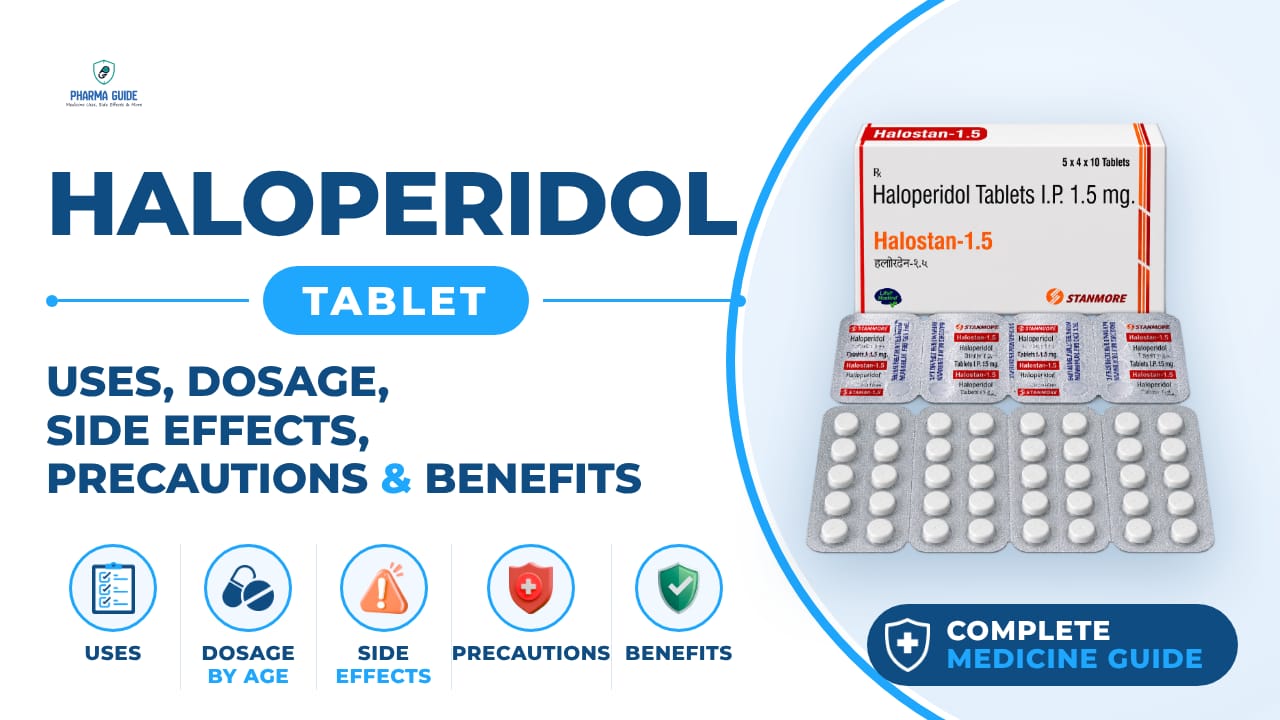
| Generic name | Haloperidol |
|---|---|
| Drug class | Antipsychotic (first-generation/typical antipsychotic) |
| Forms | Tablet, Oral solution |
Quick overview
Haloperidol Tablet (generic name: Haloperidol) is a first-generation antipsychotic medicine. It is used to treat schizophrenia and other psychotic disorders, and to manage tics and vocal outbursts in Tourette's disorder. It may also be used for severe behavior problems or hyperactivity with conduct disorders in children after other treatments have not worked. It works by balancing dopamine in the brain and is available as a tablet and an oral solution.
What is Haloperidol Tablet
Haloperidol is a first-generation antipsychotic medicine. It is used to treat certain mental and mood conditions, including schizophrenia, and to manage tics and vocal outbursts in Tourette's syndrome.
Haloperidol Tablet uses
- Schizophrenia and other psychotic disorders
- Tourette's disorder (tics and vocal outbursts)
- Severe behavior problems in children (combative, explosive behavior) after other treatments have not worked
- Hyperactive children with conduct disorders after other treatments have not worked
Benefits of Haloperidol Tablet
- May reduce hallucinations and delusions
- May help control tics and vocal outbursts of Tourette's syndrome
- May reduce severe behavior problems in children when other therapies have not worked
- Immune Support: Helps maintain normal immune system function
- Antioxidant Protection: Helps protect body cells from oxidative damage
How Haloperidol Tablet works
Haloperidol is thought to work by balancing dopamine, a brain chemical involved in mood, thinking, and behavior. It reduces the effects of extra dopamine, which can help ease symptoms like hallucinations and delusions.
Haloperidol Tablet dosage
Take by mouth with a glass of water, with or without food, following your prescription label. Take doses at regular, evenly spaced times each day. Do not take this medicine more often than directed. Do not suddenly stop taking this medicine; your dose may need to be lowered gradually before stopping.
If using the liquid form, measure each dose with the specially marked dropper or dosing device provided, and mix with water or a beverage before taking it right away. Special care may be needed when this medicine is used in children; talk to your care team about this. Continue taking the medicine for the full length of treatment; it may take time before you notice its full effect.
If you miss a dose, take it as soon as you remember; if it is almost time for the next dose, skip the missed one and do not double up.
| Age group | Dose |
|---|---|
| Under 1 Year | Use only if prescribed by a doctor |
| 1–3 Years | 15 mg/day |
| 4–8 Years | 25 mg/day |
| 9–13 Years | 45 mg/day |
| 14–18 Years | 65–75 mg/day |
Available forms and strengths
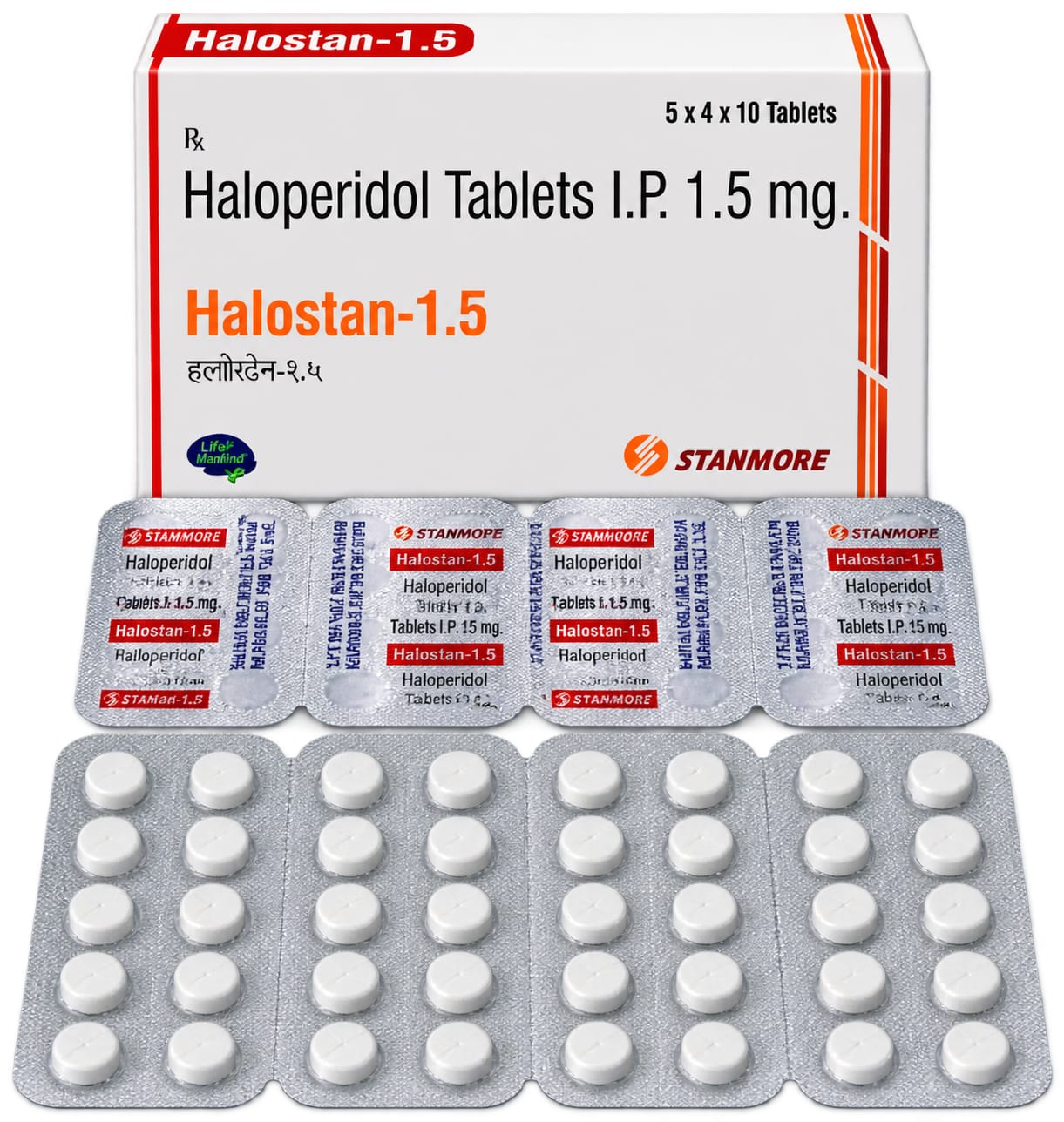
- Tablet
- Oral solution
Side effects of Haloperidol Tablet
Common
- Drowsiness or sedation
- Dry mouth
- Constipation
- Headache
- Weight gain
- Blurred vision
- Change in sex drive or performance
- Restlessness
Serious
- Allergic reactions—skin rash, itching, hives, swelling of the face, lips, tongue, or throat
- Heart rhythm changes—fast or irregular heartbeat, dizziness, feeling faint or lightheaded, chest pain, trouble breathing
- High fever, stiff muscles, increased sweating, fast or irregular heartbeat, and confusion, which may be signs of neuroleptic malignant syndrome
- High prolactin level—unexpected breast tissue growth, discharge from the nipple, change in sex drive or performance, irregular menstrual cycle
- Infection—fever, chills, cough, or sore throat
- Low blood pressure—dizziness, feeling faint or lightheaded, blurry vision
- Seizures
- Trouble passing urine
- Uncontrolled and repetitive body movements, muscle stiffness or spasms, tremors or shaking, loss of balance or coordination, restlessness, shuffling walk, which may be signs of extrapyramidal symptoms (EPS)
- Tardive dyskinesia (involuntary, potentially permanent movements of the tongue, face, mouth, or jaw)
- Signs of liver disease such as nausea/vomiting that doesn't stop, stomach pain, yellowing eyes/skin
- Falls and injuries from dizziness or muscle problems
Warnings and precautions
- Elderly people with dementia-related psychosis who take this type of medicine have a higher risk of death, often from heart-related causes or pneumonia. This medicine is not approved for treating dementia-related behavior problems.
- This medicine can cause heart rhythm problems, including a dangerous condition called QT prolongation, which can lead to fainting or sudden death, especially at higher doses or in people with certain heart or electrolyte conditions.
- Long-term use can cause tardive dyskinesia, a movement disorder with uncontrollable movements of the face, tongue, or body that may not go away even after stopping the medicine.
- A rare but life-threatening condition called neuroleptic malignant syndrome (NMS) can occur, with high fever, muscle stiffness, confusion, and unstable heartbeat or blood pressure.
- This medicine can cause low white blood cell counts, including a severe drop called agranulocytosis, which raises infection risk.
- Combining this medicine with lithium has been linked to a serious brain condition with weakness, fever, confusion, and possible lasting brain damage.
- This medicine should not be used by people with severe central nervous system depression, coma, or Parkinson's disease, or by those allergic to it.
- This medicine can cause falls due to drowsiness, low blood pressure on standing, and movement or sensory problems, which can lead to fractures or other injuries.
- Haloperidol should be used during pregnancy only if the benefit clearly outweighs the risk to the baby. Babies exposed during the last three months of pregnancy may develop muscle stiffness, shakiness, drowsiness, or feeding and breathing problems after birth.
- This medicine passes into breast milk and could affect a nursing infant, so talk to your doctor before breastfeeding.
- Tell your doctor if you have liver disease before taking this medicine, and get medical help right away for signs of liver problems such as ongoing nausea/vomiting, stomach pain, or yellowing of the eyes or skin.
- Avoid alcohol while taking this medicine, since it can increase dizziness, drowsiness, and low blood pressure effects.
- This medicine can affect the mental and physical skills needed for driving or operating machinery, so be careful with these activities until you know how the medicine affects you.
Storage
- Store at room temperature between 15 and 30 degrees C (59 and 86 degrees F)
- Protect from light
- Keep the container tightly closed
- Keep out of the reach of children
- Do not keep outdated medicine or medicine no longer needed
- Ask your healthcare professional how to dispose of any unused medicine
- Throw away any unused medication after the expiration date
When to see a doctor
- Get medical help right away if you have signs of an allergic reaction, such as rash, itching, swelling of the face or tongue, severe dizziness, or trouble breathing
- Contact your care team right away if you notice a fast or irregular heartbeat, chest pain, trouble breathing, dizziness, or fainting
- Seek medical help immediately for high fever, stiff muscles, heavy sweating, fast or irregular heartbeat, and confusion, which may be signs of a serious condition called neuroleptic malignant syndrome
- Tell your doctor right away if you notice uncontrolled movements, muscle stiffness or spasms, shaking, loss of balance, restlessness, or a shuffling walk
- Contact your care team right away if you have trouble controlling your body temperature, such as overheating or being unusually sensitive to cold
- Get emergency help right away if you or someone else shows signs of overdose, such as severe drowsiness, severe dizziness, severe trouble breathing, or severe muscle stiffness, jerking, or trembling
- If you think you have taken too much of this medicine, contact a poison control center or go to an emergency room right away
- Tell your doctor right away if you develop uncontrollable tongue thrusting, chewing movements, or puckering/puffing of the mouth, as these may be signs of a movement disorder called tardive dyskinesia
Alternatives
- Ascorbic Acid Tablet
- Redoxon
- Calcium Ascorbate
Watch the video
FAQs
What is Haloperidol Tablet used for?
It is used to treat schizophrenia and other psychotic disorders, manage tics and vocal outbursts in Tourette's disorder, and for severe behavior problems or hyperactivity with conduct disorders in children after other treatments have not worked.
How does Haloperidol Tablet work?
It is thought to work by balancing dopamine, a brain chemical involved in mood, thinking, and behavior, reducing the effects of extra dopamine to help ease symptoms like hallucinations and delusions.
What are the common side effects of Haloperidol Tablet?
Common side effects include drowsiness or sedation, dry mouth, constipation, headache, weight gain, blurred vision, change in sex drive or performance, and restlessness.
What are the serious warnings for Haloperidol Tablet?
Serious risks include heart rhythm changes such as QT prolongation, neuroleptic malignant syndrome, tardive dyskinesia, low white blood cell counts, extrapyramidal symptoms, and increased risk of death in elderly people with dementia-related psychosis.
What should I do if I miss a dose of Haloperidol Tablet?
If you miss a dose, take it as soon as you remember; if it is almost time for the next dose, skip the missed one and do not double up.
General information, not medical advice
Your prescriber and the leaflet in your pack know your situation. This page does not.
- Follow your prescriber and the leaflet
- Don't start, stop, or change a dose on your own
- Doses and warnings differ by country and product
Sources
Video
Related medicines

Haloperidol Injection: Uses, Dosage, Side Effects, Precautions and Alternates
Antipsychotic (first-generation typical antipsychotic)
Haloperidol Injection treats severe agitation, psychosis and mania by blocking dopamine in the brain. Learn about dosage, side effects and precautions.

Injectafer Injection: Uses, Dosage, Side Effects, Precautions and Alternates
Iron products
Injectafer (ferric carboxymaltose) treats iron deficiency anemia and heart failure-related iron deficiency via IV. Learn uses, dosage, side effects, and