
Safety
General information, not medical advice
Your prescriber and the leaflet in your pack know your situation. This page does not.
- Follow your prescriber and the leaflet
- Don't start, stop, or change a dose on your own
- Doses and warnings differ by country and product
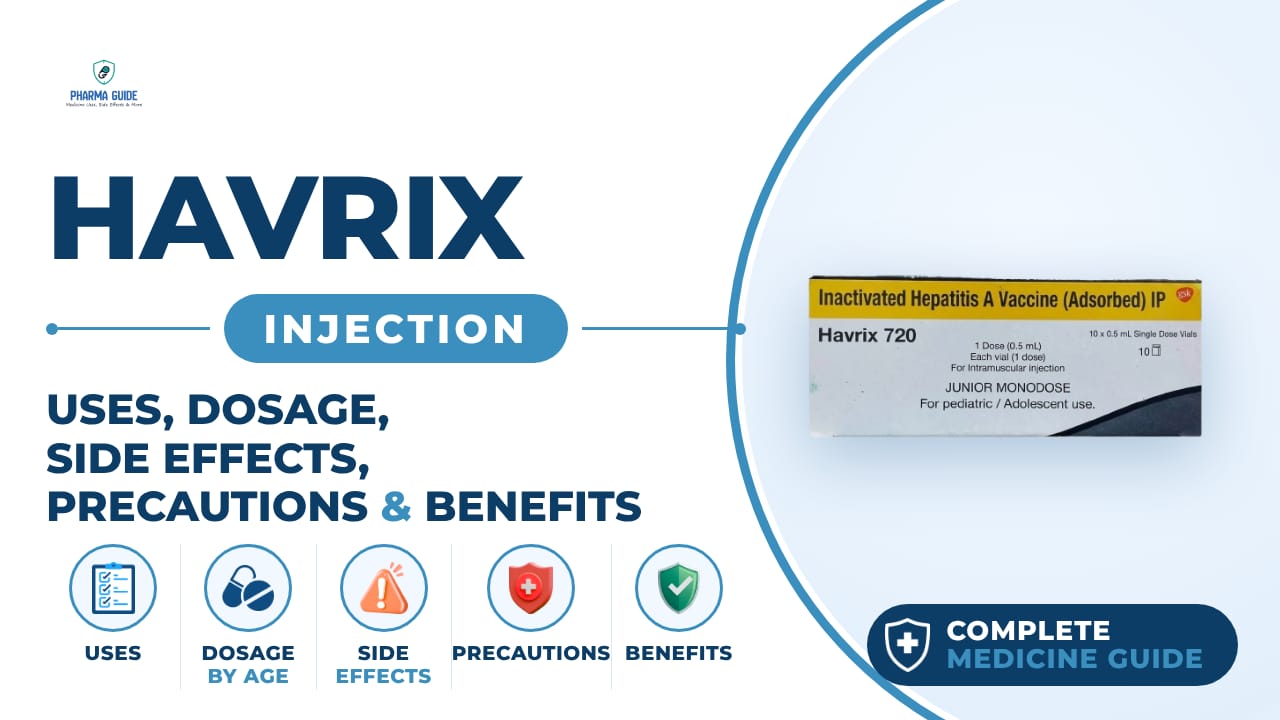
Havrix Injection: Uses, Dosage, Side Effects, Precautions and Alternates
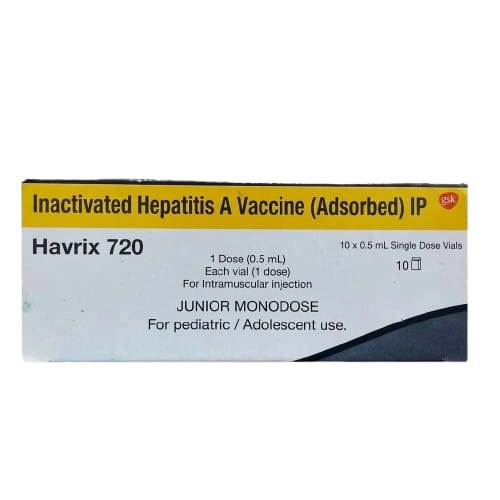
| Generic name | hepatitis A vaccine, inactivated |
|---|---|
| Drug class | Viral vaccines (Vaccines, Inactivated, Viral, Vaccines, Travel) |
| Forms | Injectable suspension, Single-dose vials |
Quick overview
Havrix Injection is a vaccine (hepatitis A vaccine, inactivated) that helps prevent hepatitis A, a liver infection caused by the hepatitis A virus. It contains a killed form of the virus, so it cannot cause hepatitis A infection. It is used to protect people 12 months of age and older, including travelers and people at higher risk of exposure. It is given as two doses, with the second dose given as a booster 6 to 12 months after the first.
What is Havrix Injection
Havrix is a vaccine that helps prevent hepatitis A, a liver infection caused by the hepatitis A virus. It contains a killed (inactivated) form of the virus, so it cannot cause hepatitis A infection.
Havrix Injection uses
- Helps prevent hepatitis A disease in people 12 months of age and older
- Recommended for people traveling to areas where hepatitis A is common
- Recommended for people with higher risk of hepatitis A, such as men who have sex with men, people with chronic liver disease, people who use IV drugs, people with bleeding disorders, lab or animal workers exposed to the virus, or people in outbreak areas
Benefits of Havrix Injection
- Helps the body build immunity to hepatitis A before exposure
- Can be given alongside many other routine vaccines without reducing their effectiveness
- Booster dose can give longer-lasting protection, possibly for many years
How Havrix Injection works
Havrix exposes the body to a small, inactivated (killed) amount of hepatitis A virus. This causes the immune system to make antibodies that protect against future infection with the virus. It cannot cause hepatitis A infection itself.
Havrix Injection dosage
Havrix is given as a shot into a muscle, usually in the upper arm for adults and older children, or the thigh muscle for infants. It should not be given into the buttock area, under the skin, into a vein, or into the skin, as this may make it less effective, except in some people with bleeding disorders, where it may be given under the skin.
The vaccine should be shaken well before use so it looks like an evenly mixed, cloudy white liquid. It is usually given as a primary dose followed by a booster dose 6 to 12 months later. If traveling, the first dose should be given at least 2 weeks before departure.
Havrix can be given at the same time as certain other vaccines or immune globulin, but always with separate syringes and at different injection sites. Vaccination should be postponed if you have a severe illness with high fever; a minor cold is not a reason to delay. Your doctor may suggest treating fever or soreness with an aspirin-free pain reliever like acetaminophen or ibuprofen after the shot.
| Age group | Dose |
|---|---|
| Under 1 year | Not recommended |
| 1–18 years | 0.5 mL, 2 doses |
| 19+ years | 1 mL, 2 doses |
Available forms and strengths
- Injectable suspension
- Single-dose vials
Side effects of Havrix Injection
Common
- Soreness, redness, swelling, or a hard lump where the shot was given
- Low fever
- Headache
- Tiredness/fatigue
- Nausea, vomiting, stomach pain, diarrhea
- Loss of appetite
- Joint pain or muscle aches
- Sore throat
- Irritability and drowsiness (common in young children)
- Feeling generally unwell
Serious
- Hives, difficulty breathing, or swelling of the face, lips, tongue, or throat (signs of a severe allergic reaction)
- Extreme drowsiness or fainting
- High fever within hours or days after the vaccine
- Severe headache, confusion, slurred speech, arm or leg weakness, trouble walking, loss of coordination, very stiff muscles, profuse sweating, or tremors
- Seizures
- Serious eye symptoms such as sudden vision loss, blurred vision, or eye pain
- Serious heart symptoms such as fast or irregular heartbeat, chest fluttering, shortness of breath, or sudden dizziness/passing out
Warnings and precautions
- Fainting can happen after getting this or other injectable vaccines, sometimes with shaking or vision changes. Precautions should be taken to prevent injury from falling.
- People with a weakened immune system, including those on immune-suppressing treatments, may not respond as well to this vaccine.
- This vaccine may not protect you if you are already infected with hepatitis A at the time of vaccination, since the virus can take 15 to 50 days to cause symptoms. It also may not protect every person who receives it.
- Do not get this vaccine if you have ever had a severe allergic reaction to a hepatitis A vaccine or to any of its ingredients, including neomycin.
- The prefilled syringe tip cap may contain natural rubber latex, which could be a concern for people with latex allergies.
- Vaccines are generally not given during pregnancy unless clearly needed, though available data has not shown increased risk of birth defects or miscarriage. Your doctor will decide if you should get this vaccine, especially if you have a high risk of hepatitis A infection.
- It is not known if this vaccine passes into breast milk or if it could affect a nursing baby. Tell your doctor if you are breastfeeding.
- People with chronic liver disease may have a weaker antibody response to this vaccine than healthy people.
- Be careful before driving or using machines until you know how this vaccine affects you, since it may cause dizziness or lightheadedness in some people.
Storage
- Store refrigerated between 2°C and 8°C (36°F and 46°F)
- Do not freeze; discard the vaccine if it has been frozen
- Protect prefilled syringes from light
- Do not dilute before giving
- If you no longer need the vaccine or it is out of date, take it to a pharmacy for safe disposal
- Keep out of the reach of children
When to see a doctor
- Get emergency medical help right away if you have signs of a severe allergic reaction: hives, difficulty breathing, or swelling of the face, lips, tongue, or throat.
- Call your doctor right away if you have extreme drowsiness, fainting, or a high fever within hours or days after the vaccine.
- Seek medical care immediately for serious eye symptoms, serious heart symptoms, or severe neurological symptoms like confusion, slurred speech, limb weakness, trouble walking, very stiff muscles, or seizures.
Alternatives
- Twinrix
- Avaxim
- Vaqta
Watch the video
FAQs
What is Havrix Injection used for?
Havrix helps prevent hepatitis A disease in people 12 months of age and older, including travelers to areas where hepatitis A is common and people at higher risk of exposure.
How many doses of Havrix are needed?
Havrix is given as two doses, with a primary dose followed by a booster dose 6 to 12 months later.
Can Havrix cause hepatitis A infection?
No, Havrix contains a killed (inactivated) form of the hepatitis A virus, so it cannot cause hepatitis A infection.
What are the common side effects of Havrix?
Common side effects include soreness, redness, or swelling at the injection site, low fever, headache, tiredness, nausea, joint pain or muscle aches, and irritability or drowsiness, especially in young children.
How should Havrix be stored?
Havrix should be stored refrigerated between 2°C and 8°C (36°F and 46°F), protected from light, and must not be frozen or diluted before use.
General information, not medical advice
Your prescriber and the leaflet in your pack know your situation. This page does not.
- Follow your prescriber and the leaflet
- Don't start, stop, or change a dose on your own
- Doses and warnings differ by country and product
Sources
Video
Related medicines

Injectafer Injection: Uses, Dosage, Side Effects, Precautions and Alternates
Iron products
Injectafer (ferric carboxymaltose) treats iron deficiency anemia and heart failure-related iron deficiency via IV. Learn uses, dosage, side effects, and

Gliclazide Tablet: Uses, Dosage, Side Effects, Precautions and Alternates
Sulfonylurea (hypoglycemic/antidiabetic agent)
Gliclazide Tablet is a sulfonylurea for type 2 diabetes that boosts insulin release. Learn about dosage, side effects, warnings, and precautions.