
Safety
General information, not medical advice
Your prescriber and the leaflet in your pack know your situation. This page does not.
- Follow your prescriber and the leaflet
- Don't start, stop, or change a dose on your own
- Doses and warnings differ by country and product
HPV Vaccine Injection: Uses, Dosage, Side Effects, Precautions and Alternates
| Generic name | Human Papillomavirus 9-valent Vaccine (recombinant, adsorbed) |
|---|---|
| Drug class | Vaccines, Papillomavirus vaccines |
| Forms | Suspension for injection in single-dose vial, Suspension for injection in pre-filled syringe |
Quick overview
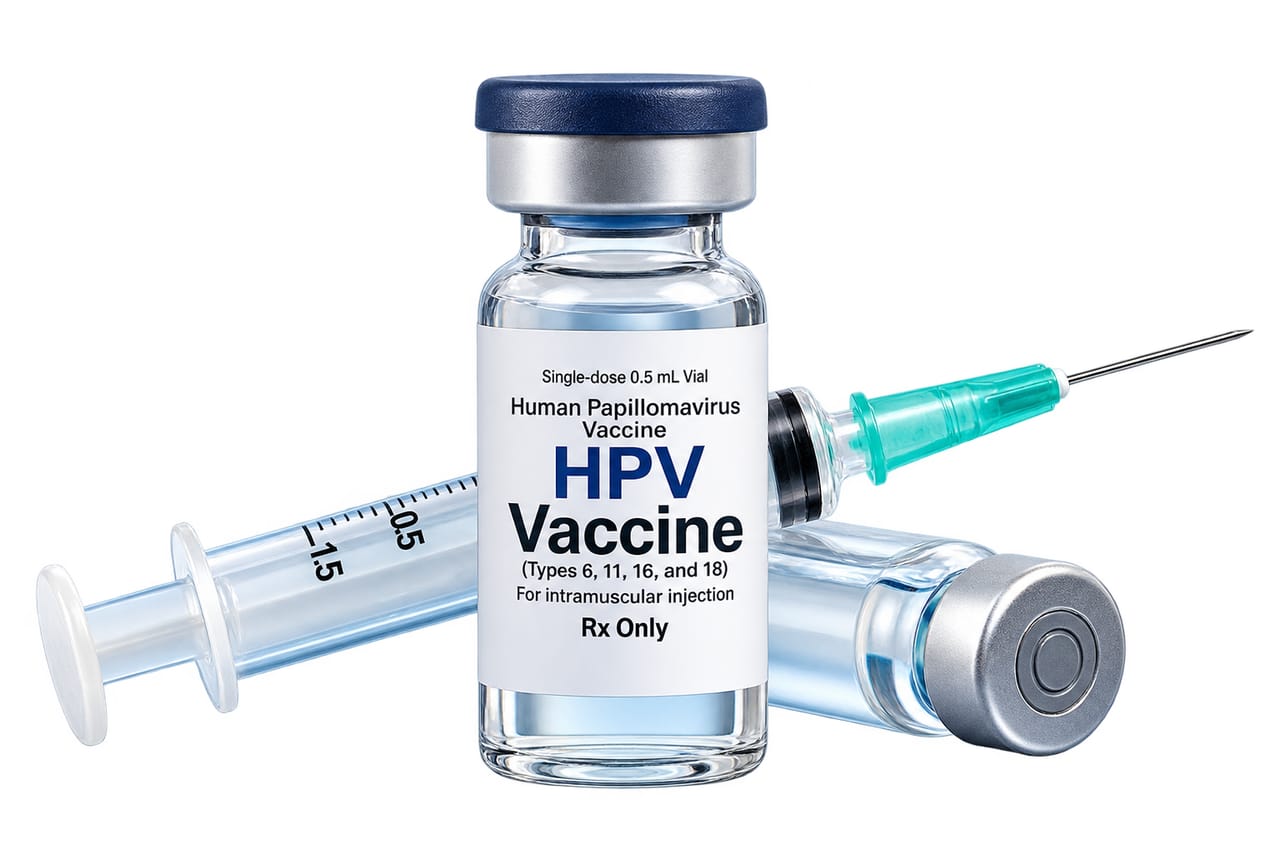
HPV Vaccine Injection (Gardasil 9) is a vaccine given to children, adolescents from 9 years of age, and adults to help protect against diseases caused by nine types of human papillomavirus (HPV): types 6, 11, 16, 18, 31, 33, 45, 52 and 58. It helps protect against pre-cancerous lesions and cancers of the cervix, vulva, vagina, and anus, as well as genital warts. The vaccine is given as an injection into the muscle and works by triggering the immune system to make antibodies against HPV.
What is HPV Vaccine Injection
Gardasil 9 is a vaccine given to children, adolescents from 9 years of age, and adults to help protect against diseases caused by nine types of human papillomavirus (HPV): types 6, 11, 16, 18, 31, 33, 45, 52 and 58. Its generic name is Human Papillomavirus 9-valent Vaccine (recombinant, adsorbed), and it belongs to the drug class Vaccines, Papillomavirus vaccines.
HPV Vaccine Injection uses
- Protects against pre-cancerous lesions and cancers of the cervix, vulva, and vagina in women
- Protects against pre-cancerous lesions and cancers of the anus in males and females
- Protects against genital warts (Condyloma acuminata) caused by specific HPV types
- Used for active immunisation of individuals from age 9 years against these HPV diseases
Benefits of HPV Vaccine Injection
- Prevents infection from high-risk HPV strains
- Reduces the risk of cervical and other cancers
- Protects against genital warts
- Helps lower HPV transmission between partners
How HPV Vaccine Injection works
The vaccine contains virus-like particles made from a surface protein of nine HPV types. These particles cannot cause infection, but they trigger the body's immune system to make antibodies against the virus, so if the person is later exposed to HPV, the antibodies help prevent infection.
HPV Vaccine Injection dosage
The vaccine is given as an injection into the muscle, preferably in the upper arm or thigh, by a doctor, pharmacist or nurse. People who receive a first dose should complete the full vaccination course with the same vaccine. It may be given at the same time as other vaccines, at a separate injection site. People should be observed for about 15 minutes after vaccination because fainting can occur, especially in adolescents.
If a scheduled dose is missed, the healthcare provider will decide when to give the missed dose. Vaccination should be postponed in people suffering from an acute severe feverish illness, though a mild cold or low-grade fever is not a reason to delay. Continued cervical screening (Pap tests) is still recommended after vaccination, since the vaccine does not protect against all HPV types.
| Age group | Dose |
|---|---|
| Under 9 Years | Not routinely recommended |
| 9–14 Years | 0.5 mL, usually 2 doses at 0 and 6–12 months |
| 15–26 Years | 0.5 mL, usually 3 doses at 0, 1–2, and 6 months |
| 27–45 Years | 0.5 mL; vaccination may be considered based on individual medical advice |
Available forms and strengths
- Suspension for injection in single-dose vial
- Suspension for injection in pre-filled syringe
Side effects of HPV Vaccine Injection
Common
- Pain, swelling, and redness at the injection site
- Headache
- Fever
- Tiredness/fatigue
- Dizziness
- Nausea
- Bruising and itching at the injection site
- Muscle or joint pain
Serious
- Swollen glands (neck, armpit, or groin)
- Hives (urticaria)
- Fainting, sometimes accompanied by shaking or stiffening
- Vomiting
- Allergic reactions
- Serious allergic reactions (anaphylactic reaction)
- Guillain-Barré syndrome and acute disseminated encephalomyelitis (reported during general use)
- Bleeding or bruising more easily than normal
- Skin infection at the injection site
Warnings and precautions
- This vaccine should be used with caution in people with bleeding disorders or clotting problems, because bleeding may occur after an injection into the muscle.
- People with weakened immune systems, from conditions like HIV, genetic defects, or immune-suppressing medicines, may not respond as well to the vaccine.
- The vaccine does not treat existing HPV infections or diseases already caused by HPV, and it is not a substitute for routine cervical cancer screening.
- Fainting, sometimes with falling, can happen after any vaccination, especially in adolescents, so people should be observed for about 15 minutes after the injection.
- Do not receive this vaccine if you have had an allergic reaction to a previous dose of this vaccine or to Gardasil/Silgard, or if you are allergic to any of its ingredients.
- The vaccine is not recommended during pregnancy. If you are pregnant or become pregnant during the vaccination course, vaccination should be postponed or interrupted until after pregnancy. Data from women vaccinated during pregnancy has not shown a higher risk of miscarriage or birth defects.
- The vaccine can be given to women who are breastfeeding or intend to breastfeed.
- Inform your healthcare provider about any previous severe allergic reaction to an HPV vaccine or its ingredients.
- Mild illness such as a common cold generally does not require delaying vaccination.
- Seek medical attention for signs of a severe allergic reaction after vaccination.
- The vaccine may slightly and temporarily affect the ability to drive or use machines, due to possible side effects such as dizziness.
Storage
- Store in a refrigerator (2°C – 8°C)
- Do not freeze
- Keep the vial, multidose container or pre-filled syringe in the outer carton to protect from light
- After first opening of the multidose container, immediate use is recommended; if not used immediately, store in a refrigerator and discard if not used within 6 hours
- Do not use after the expiry date stated on the carton and label
- Any unused vaccine or waste material should be disposed of in accordance with local requirements
- Do not throw away medicines via wastewater or household waste; ask your pharmacist how to dispose of medicines no longer used
When to see a doctor
- Get emergency help right away if you notice signs of a severe allergic reaction after vaccination, such as hives, swelling of the face and throat, trouble breathing, a fast heartbeat, dizziness, or weakness.
- Tell your provider right away if you feel dizzy or have vision changes or ringing in the ears after vaccination, since fainting can happen after the shot.
- If you notice any other side effects that worry you, contact your doctor, pharmacist, or nurse.
Alternatives
- Gardasil 9
- Gardasil
- HPV Vaccine Bivalent
Watch the video
FAQs
What is HPV Vaccine Injection used for?
It is used for active immunisation from age 9 to protect against pre-cancerous lesions and cancers of the cervix, vulva, vagina, and anus, as well as genital warts caused by nine HPV types.
How is the HPV vaccine given?
It is given as an injection into the muscle, preferably in the upper arm or thigh, by a doctor, pharmacist, or nurse, following a schedule of 2 or 3 doses depending on age.
What are the common side effects of the HPV vaccine?
Common side effects include pain, swelling, and redness at the injection site, headache, fever, tiredness, dizziness, nausea, bruising, itching, and muscle or joint pain.
Can the HPV vaccine be given during pregnancy?
The vaccine is not recommended during pregnancy; if pregnancy occurs during the vaccination course, it should be postponed or interrupted until after pregnancy. It can be given to breastfeeding women.
Is cervical screening still needed after HPV vaccination?
Yes, continued cervical screening (Pap tests) is still recommended after vaccination since the vaccine does not protect against all HPV types.
General information, not medical advice
Your prescriber and the leaflet in your pack know your situation. This page does not.
- Follow your prescriber and the leaflet
- Don't start, stop, or change a dose on your own
- Doses and warnings differ by country and product
Sources
- CHOP Vaccine Education Center: Human Papillomavirus: The Disease & Vaccine (https://www.chop.edu/vaccine-education-center/vaccine-details/human-papillomavirus-vaccine)
- EU Summary of Product Characteristics and Package Leaflet, Gardasil 9 (European Medicines Agency)
- Matoshree Hospital: HPV Vaccine: Benefits, Age Schedule, Safety, and HPV Vaccine Side Effects (https://matoshreehospitalkamothe.com/hpv-vaccine-benefits-age-schedule-safety-side-effects.php)
- CDC: Human Papillomavirus (HPV) Vaccine Safety (https://www.cdc.gov/vaccine-safety/vaccines/hpv.html)
- CDC Vaccine Information Statement: HPV Vaccine (8/6/2021)
- Public Health England: Protecting against HPV infection to help reduce your risk of cancer
Video
Related medicines

Injectafer Injection: Uses, Dosage, Side Effects, Precautions and Alternates
Iron products
Injectafer (ferric carboxymaltose) treats iron deficiency anemia and heart failure-related iron deficiency via IV. Learn uses, dosage, side effects, and

Gliclazide Tablet: Uses, Dosage, Side Effects, Precautions and Alternates
Sulfonylurea (hypoglycemic/antidiabetic agent)
Gliclazide Tablet is a sulfonylurea for type 2 diabetes that boosts insulin release. Learn about dosage, side effects, warnings, and precautions.