
Safety
General information, not medical advice
Your prescriber and the leaflet in your pack know your situation. This page does not.
- Follow your prescriber and the leaflet
- Don't start, stop, or change a dose on your own
- Doses and warnings differ by country and product
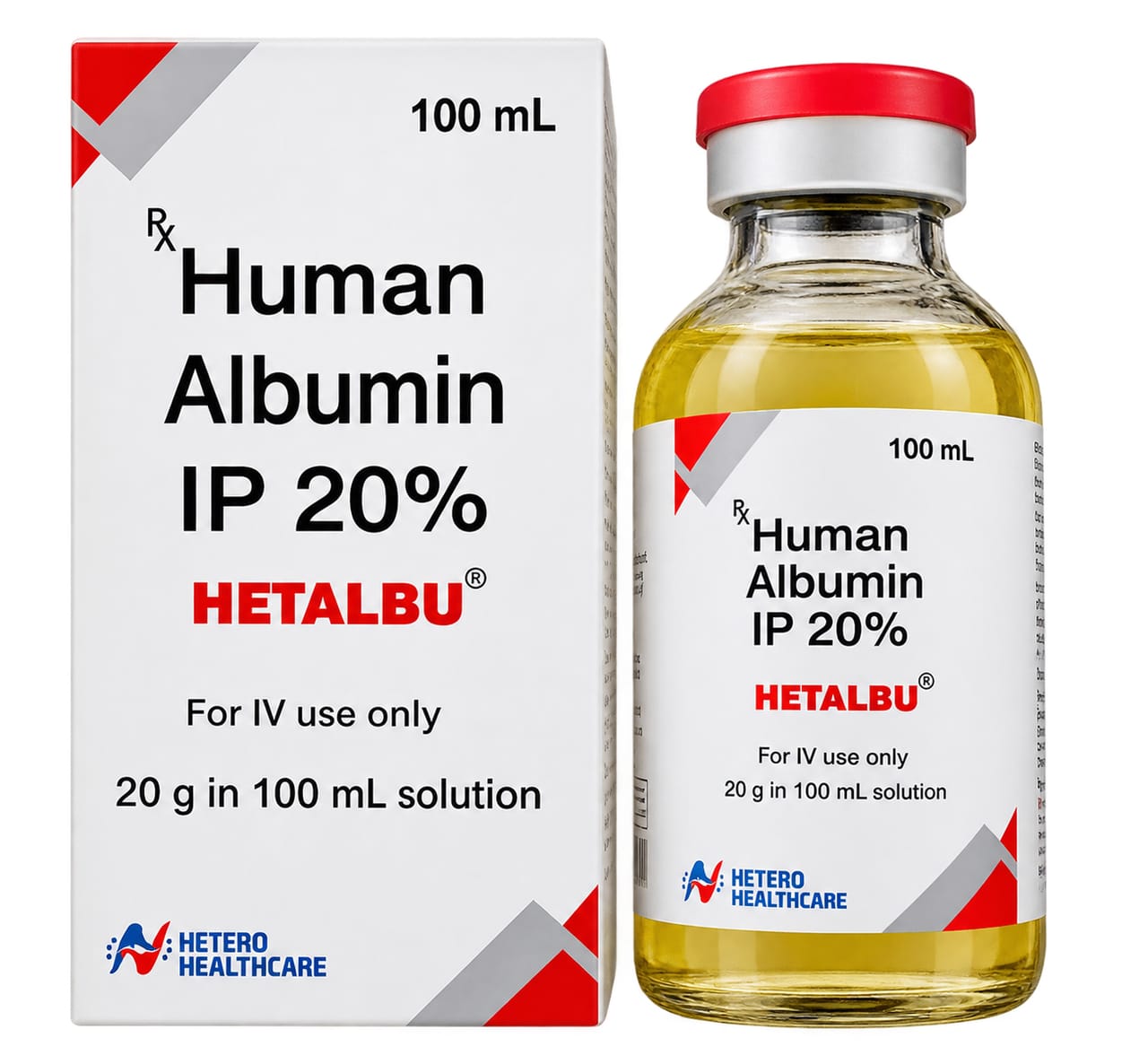
Human Albumin Injection: Uses, Dosage, Side Effects, Precautions and Alternates
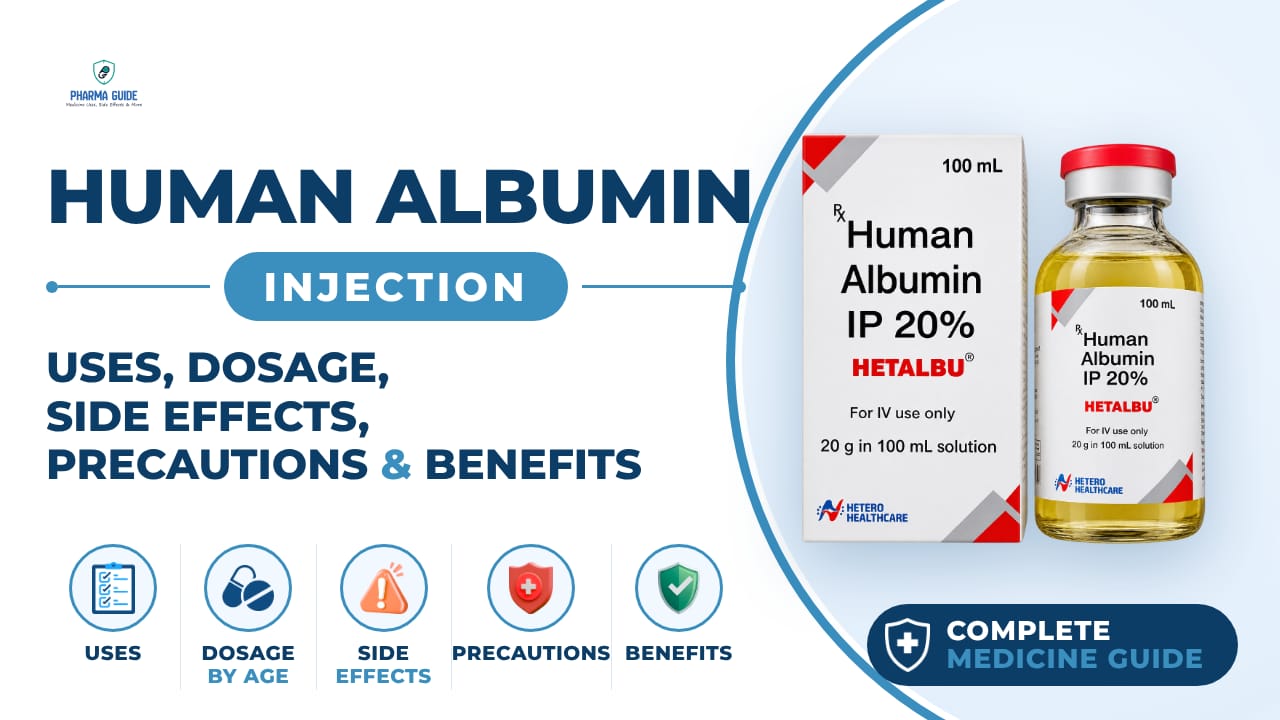
| Generic name | Albumin (Human) |
|---|---|
| Drug class | Protein colloid |
| Forms | Solution for injection (intravenous) |
Quick overview
Human Albumin Injection is a sterile solution made from the protein albumin found in human blood plasma. It is given into a vein to increase blood volume and restore albumin levels in people whose levels are low due to illness or injury. It is used in conditions such as hypovolemia, hypoalbuminaemia, liver disease, severe burns, shock, and major surgery, among others.
What is Human Albumin Injection
Human Albumin is a sterile solution made from the protein (albumin) found in human blood plasma. It is given into a vein to increase blood volume and restore albumin levels in people whose levels are low due to illness or injury.
Human Albumin Injection uses
- Hypovolemia (low blood volume)
- Hypoalbuminaemia (low blood albumin levels)
- Liver disease, including cirrhosis and ascites
- Severe burns
- Shock and trauma
- Major surgery
- Plasma exchange procedures
- Cardiopulmonary bypass procedures
- Adult respiratory distress syndrome
- Paracentesis
- Hemolytic disease of the newborn (HDN)
- Kidney disorders with fluid imbalance
- Intensive care and critical illness management
Benefits of Human Albumin Injection
- Restores circulating blood volume
- Helps correct low albumin levels (hypoalbuminemia)
- Helps maintain fluid balance and reduce swelling
- Supports patients with liver disease, burns, shock, and critical illness
- Helps transport hormones, nutrients, and medications in the blood
How Human Albumin Injection works
Albumin works by increasing the level of protein in the blood, which helps keep fluid inside blood vessels instead of leaking into body tissues, and helps move important substances through the body.
Human Albumin Injection dosage
This medicine is given as an injection into a vein by a doctor or nurse in a hospital or medical facility. Your doctor will decide how often you receive it based on your condition and how your body responds. Continue your normal diet unless your doctor tells you otherwise.
| Age group | Dose |
|---|---|
| Under 18 years | 5–10 g/day |
| 18–60 years | 25 g/day |
| 60+ years | 25 g/day |
Available forms and strengths
- Solution for injection (intravenous)
- Human Albumin 5%
- Human Albumin 25%
Side effects of Human Albumin Injection
Common
- Nausea
- Vomiting
- Fever
- Chills
- Flushing (warmth, redness, or tingly feeling)
- Mild rash
- Fast heart rate
- Headache
- Edema (swelling)
- Itching
- Low blood pressure
Serious
- Hives, rash, itching, or swelling of the face, mouth, tongue, or throat
- Fast or irregular heartbeat
- Difficulty breathing or swallowing
- Shortness of breath or unusual breathing sounds
- Severe allergic reaction (anaphylaxis)
Warnings and precautions
- Do not use this medicine if you have severe anemia (very low red blood cell levels), as it may worsen your condition.
- Severe allergic reactions have occurred with this medicine and can progress to a life-threatening condition called anaphylaxis. Treatment may need to be stopped right away if this happens.
- Your doctor may check your blood electrolyte levels during treatment, since this medicine can cause electrolyte imbalances.
- Your blood pressure, pulse, and other measures will be closely monitored during and after you receive this medicine.
- Tell your doctor if you have or have had heart failure, high blood pressure, fluid in the lungs, enlarged blood vessels in the esophagus, or bleeding problems before receiving this medicine.
- This medicine is made from donated human blood. There is an extremely small chance that viruses could be passed on, though no such cases have been reported with this product.
- If you are having any surgery, including dental surgery, tell your doctor or dentist that you are receiving this medicine.
- It is not known if this medicine is safe to use during pregnancy. Talk to your doctor before using it, and call your doctor if you become pregnant while receiving it.
- It is not known if this medicine is safe to use while breastfeeding. Talk to your doctor before using it.
- Tell your doctor if you have or have ever had kidney problems, as your doctor may decide this medicine is not right for you.
- It is not known how this medicine interacts with alcohol. Ask your doctor before drinking alcohol while being treated.
Storage
- Store at 2–25°C.
- Do not freeze.
- Protect from light.
- Keep in the original packaging.
- Use promptly after opening.
When to see a doctor
- Get medical help right away if you notice hives, rash, itching, or swelling of your face, mouth, tongue, or throat, a fast or irregular heartbeat, or difficulty breathing or swallowing.
- Get medical help right away if you have shortness of breath or unusual breathing sounds.
- Seek immediate medical attention if you notice worsening symptoms such as skin rash, itching or swelling (especially of the face, tongue, or throat), severe dizziness, or breathing difficulty.
Alternatives
- Human Albumin 5%
- Human Albumin 25%
- Hydroxyethyl Starch (HES)
Watch the video
FAQs
What is Human Albumin Injection used for?
It is used to increase blood volume and restore albumin levels in conditions such as hypovolemia, hypoalbuminaemia, liver disease, severe burns, shock, major surgery, and critical illness management.
How does Human Albumin Injection work?
It works by increasing the level of protein in the blood, which helps keep fluid inside blood vessels instead of leaking into body tissues, and helps move important substances through the body.
What is the dosage of Human Albumin Injection?
It is given as an injection into a vein by a doctor or nurse in a hospital. Typical doses are 5–10 g/day for those under 18 years, and 25 g/day for ages 18–60 and 60+, depending on the patient's condition.
What are the common side effects of Human Albumin Injection?
Common side effects include nausea, vomiting, fever, chills, flushing, mild rash, fast heart rate, headache, edema, itching, and low blood pressure.
Who should not use Human Albumin Injection?
It should not be used in people with severe anemia, as it may worsen the condition. Caution is also needed in those with heart failure, high blood pressure, fluid in the lungs, or bleeding problems.
General information, not medical advice
Your prescriber and the leaflet in your pack know your situation. This page does not.
- Follow your prescriber and the leaflet
- Don't start, stop, or change a dose on your own
- Doses and warnings differ by country and product
Sources
Video
Related medicines

Injectafer Injection: Uses, Dosage, Side Effects, Precautions and Alternates
Iron products
Injectafer (ferric carboxymaltose) treats iron deficiency anemia and heart failure-related iron deficiency via IV. Learn uses, dosage, side effects, and

Gliclazide Tablet: Uses, Dosage, Side Effects, Precautions and Alternates
Sulfonylurea (hypoglycemic/antidiabetic agent)
Gliclazide Tablet is a sulfonylurea for type 2 diabetes that boosts insulin release. Learn about dosage, side effects, warnings, and precautions.