
Safety
General information, not medical advice
Your prescriber and the leaflet in your pack know your situation. This page does not.
- Follow your prescriber and the leaflet
- Don't start, stop, or change a dose on your own
- Doses and warnings differ by country and product
Huminsulin Injection: Uses, Dosage, Side Effects, Precautions and Alternates
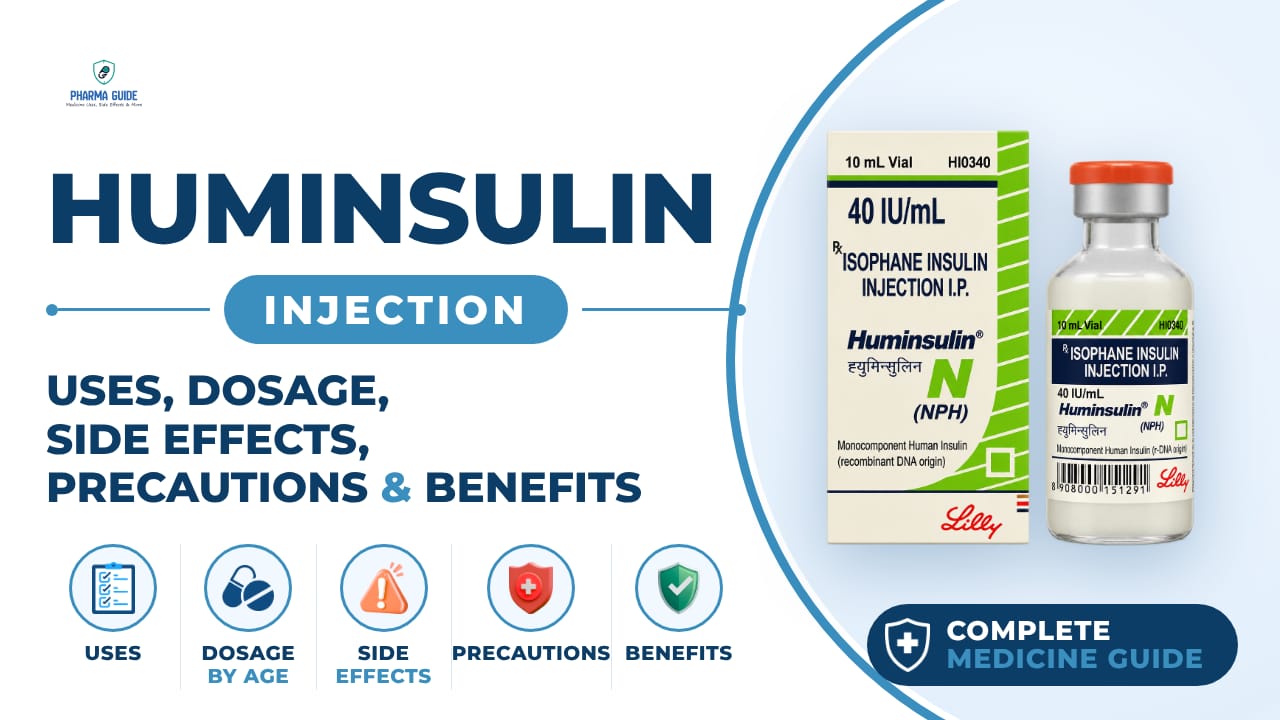
| Generic name | insulin isophane (NPH insulin) |
|---|---|
| Drug class | Insulin |
| Forms | Injection (vial), Injection pen |
Quick overview
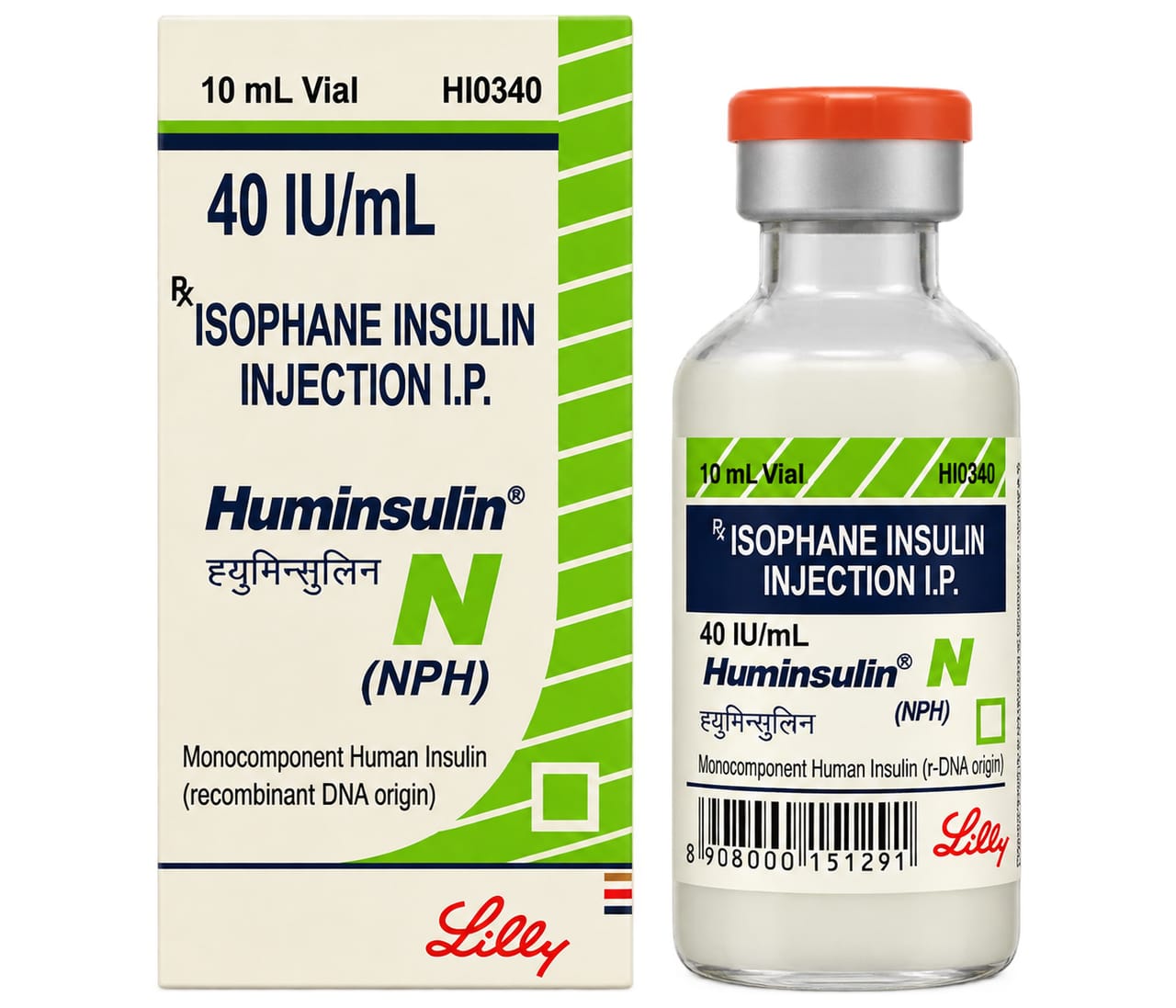
Huminsulin Injection contains insulin isophane (NPH insulin), an intermediate-acting insulin used to help control blood sugar in people with diabetes. It is used in type 1 and type 2 diabetes mellitus in both adults and children. It works by helping the body use glucose for energy and by controlling blood glucose levels when the body doesn't make enough insulin or can't use it properly. It is available as an injection vial and an injection pen.
What is Huminsulin Injection
Huminsulin is a man-made form of insulin, a hormone your body normally makes. It is an intermediate-acting insulin used to help control blood sugar in people with diabetes. It helps the body use glucose (sugar) for energy and controls blood glucose levels in patients who don't make enough insulin or can't use it properly.
Huminsulin Injection uses
- Type 1 diabetes mellitus
- Type 2 diabetes mellitus
- Improving blood sugar control in adults and children with diabetes mellitus
Benefits of Huminsulin Injection
- Helps lower blood glucose levels in people with diabetes
- Helps the body use glucose for energy production
- Works alongside diet and exercise to control blood sugar
How Huminsulin Injection works
Insulin is a hormone that lowers blood glucose levels. It helps the body absorb and store sugar from the bloodstream after meals, and it stops the liver from making more glucose. People with diabetes either don't make enough insulin or their body doesn't respond to it properly, so insulin from an injection helps control blood sugar.
Huminsulin Injection dosage
Follow all directions on your prescription label and read all medication guides or instruction sheets, and use the medicine exactly as directed. It is injected under the skin; a healthcare provider can teach you how to properly give the injection yourself. Do not use with an insulin pump, and do not mix it with other insulins. Do not inject into a vein or muscle. Do not inject into skin that is damaged, tender, bruised, pitted, thickened, scaly, or has a scar or hard lump.
The mixture should look cloudy after mixing; do not use it if it looks clear or has particles in it. Use a different injection site each time, and do not inject into the same spot two times in a row. If using an injection pen, use only the pen that comes with the medicine, attach a new needle before each use, and do not transfer the insulin into a syringe. Never share an injection pen or syringe with another person, even if the needle has been changed.
Blood sugar can be affected by stress, illness, surgery, exercise, alcohol use, or skipping meals, so ask your doctor before changing your dose or schedule. This medicine is only part of a complete treatment plan that may also include diet, exercise, weight control, and blood sugar testing. Do not give this medicine to a child without a doctor's advice.
| Age group | Dose |
|---|---|
| Children | Dose based on body weight, blood glucose level, and insulin requirement (as prescribed) |
| Adults (18–64 Years) | Individualized dose; commonly adjusted according to blood glucose monitoring and meal timing |
| Older Adults (65+ Years) | Lower starting dose may be required; adjusted according to response and kidney function |
Available forms and strengths
- Injection (vial)
- Injection pen
Side effects of Huminsulin Injection
Common
- Low blood sugar
- Weight gain, swelling in hands or feet
- Itching or mild skin rash
- Thickening or hollowing of the skin where you injected the medicine
- Burning, numbness, or tingling in the arms and feet
- Changes in vision
- Injection site pain
- Irregular heartbeat
- Edema (swelling)
Serious
- Signs of an allergic reaction: redness or swelling where an injection was given, itchy skin rash over the entire body, trouble breathing, chest tightness, feeling like you might pass out, or swelling in your tongue or throat
- Fluid retention: weight gain, swelling in hands or feet, feeling short of breath
- Low potassium: leg cramps, constipation, irregular heartbeats, fluttering in your chest, increased thirst or urination, numbness or tingling, muscle weakness or limp feeling
- Diabetic retinopathy
- Lipodystrophy (hardening, pitting, or scarring of tissue at injection site)
- Hypoglycemia (low blood sugar)
Warnings and precautions
- Do not use this medicine if you are having an episode of low blood sugar.
- Never share an injection pen or syringe with another person, even if the needle has been changed, since this can spread infections or disease.
- Do not use this medicine with an insulin pump or mix it with other insulins, and do not inject it into a vein or muscle.
- Taking certain oral diabetes medicines (like pioglitazone or rosiglitazone) together with insulin may increase the risk of serious heart problems.
- Changing your insulin type, brand, or injection routine can affect how your body responds and may cause high or low blood sugar.
- This medicine can lower potassium levels in the blood, which can sometimes be dangerous, especially if you take other medicines that also lower potassium.
- Taking this insulin together with certain diabetes medicines called glitazones can cause the body to hold onto fluid, which can lead to or worsen heart failure.
- Tell your doctor if you are pregnant. Controlling diabetes is very important during pregnancy, and high blood sugar can cause complications in both the mother and baby. This medicine is generally considered safe during pregnancy, but should only be used when needed, with the potential benefits outweighing the risks.
- Using insulin while breastfeeding is generally considered acceptable, and breastfeeding women often need lower doses of insulin. Tell your doctor if you are breastfeeding.
- Tell your doctor if you have ever had kidney disease, as this may affect whether this medicine is safe for you.
- Tell your doctor if you have ever had liver disease, as this may affect whether this medicine is safe for you.
- Avoid drinking alcohol. It can cause low blood sugar and may interfere with your diabetes treatment. Alcohol also increases the risk of both low and high blood sugar and may cause dizziness, drowsiness, increased thirst, increased hunger, mood changes, or extreme fatigue.
- This medicine can cause low blood sugar, so avoid driving or operating machinery until you know how it affects you.
Storage
- Keep this medicine in its original container protected from heat and light
- Do not draw insulin from a vial into a syringe until you are ready to give an injection
- Do not freeze insulin or store it near the cooling element in a refrigerator; throw away any insulin that has been frozen
- Unopened (not in use): refrigerate and use until the expiration date, or store at room temperature and use within the number of days specified in the instructions provided with your medicine
- Opened (in use): store in a refrigerator or at room temperature as directed in the instructions provided with your medicine; do not refrigerate an in-use injection pen
- In-use medicine is stable for only a certain number of days; throw away any medicine not used within that time
- Use a needle and syringe only once, then place them in a puncture-proof sharps container, and follow local laws about disposing of the container; keep it out of reach of children and pets
When to see a doctor
- Get emergency medical help if you have signs of an allergic reaction, such as redness or swelling where the injection was given, an itchy rash over the entire body, trouble breathing, chest tightness, feeling like you might pass out, or swelling of the tongue or throat.
- Call your doctor right away if you have signs of fluid retention (weight gain, swelling in hands or feet, feeling short of breath) or low potassium (leg cramps, constipation, irregular heartbeats, fluttering in the chest, increased thirst or urination, numbness or tingling, muscle weakness).
- Seek emergency medical attention if you think you've taken too much insulin, since an overdose can cause life-threatening low blood sugar with symptoms like drowsiness, confusion, blurred vision, numbness or tingling in the mouth, trouble speaking, muscle weakness, clumsy or jerky movements, seizures, or loss of consciousness.
- Get medical help right away if your blood sugar does not improve even after you try to treat low blood sugar yourself.
Alternatives
- Novolin R Injection
- Humulin R Injection
- Human Mixtard Injection
- Actrapid Injection
Watch the video
FAQs
What is Huminsulin Injection used for?
It is used to improve blood sugar control in adults and children with type 1 or type 2 diabetes mellitus.
How does Huminsulin Injection work?
It works like natural insulin by helping the body absorb and store sugar from the bloodstream after meals and by stopping the liver from making more glucose, which lowers blood glucose levels.
Can Huminsulin Injection be mixed with other insulins or used with an insulin pump?
No, it should not be used with an insulin pump or mixed with other insulins, and it should not be injected into a vein or muscle.
What are common side effects of Huminsulin Injection?
Common side effects include low blood sugar, weight gain, swelling in the hands or feet, itching or mild skin rash, thickening or hollowing of the skin at the injection site, burning or tingling in the arms and feet, vision changes, and irregular heartbeat.
Is Huminsulin Injection safe during pregnancy and breastfeeding?
It is generally considered safe during pregnancy when needed, as controlling diabetes is important, and it is also generally considered acceptable while breastfeeding, though breastfeeding women often need lower insulin doses.
General information, not medical advice
Your prescriber and the leaflet in your pack know your situation. This page does not.
- Follow your prescriber and the leaflet
- Don't start, stop, or change a dose on your own
- Doses and warnings differ by country and product
Sources
Video
Related medicines
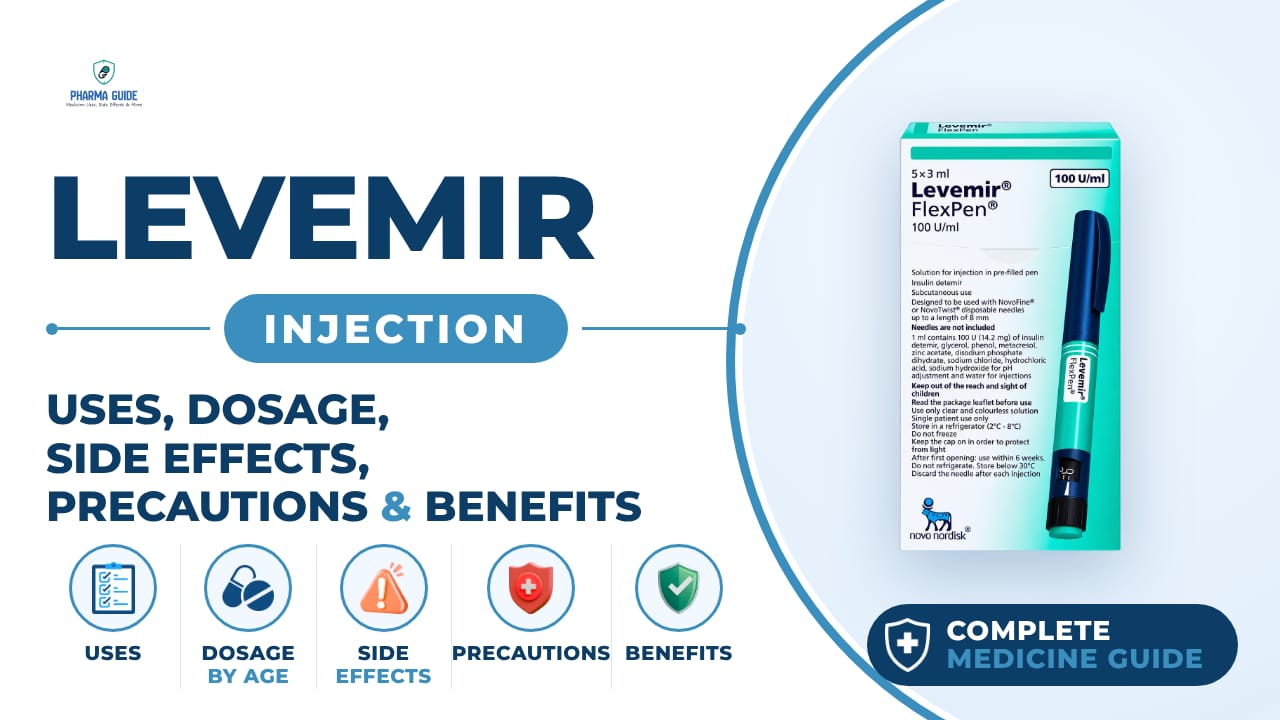
Levemir Injection: Uses, Dosage, Side Effects, Precautions and Alternates
Insulin
Levemir Injection (insulin detemir) is a long-acting insulin for type 1 and type 2 diabetes. Learn uses, dosage, side effects, and storage tips.
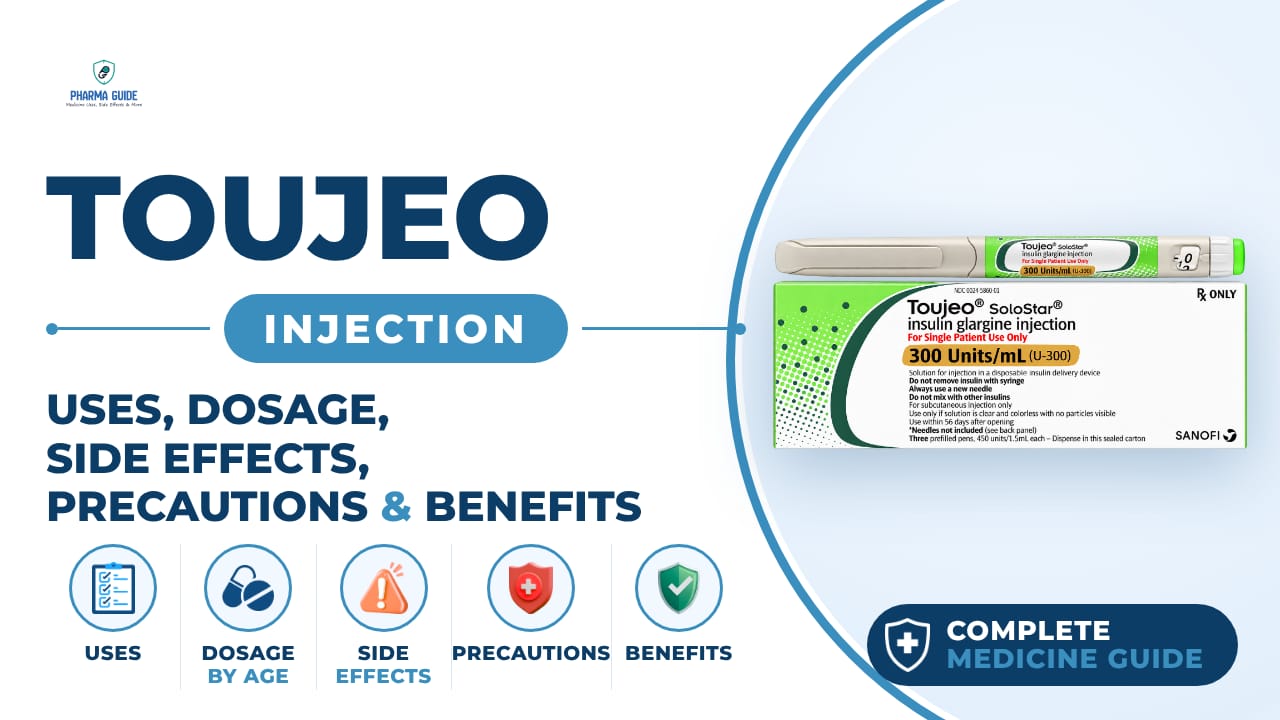
Toujeo Injection: Uses, Dosage, Side Effects, Precautions and Alternates
Insulin
Toujeo Injection (insulin glargine) is a long-acting insulin for adults and children 6+ with diabetes, given once daily to help control blood sugar.