
Safety
General information, not medical advice
Your prescriber and the leaflet in your pack know your situation. This page does not.
- Follow your prescriber and the leaflet
- Don't start, stop, or change a dose on your own
- Doses and warnings differ by country and product
Toujeo Injection: Uses, Dosage, Side Effects, Precautions and Alternates
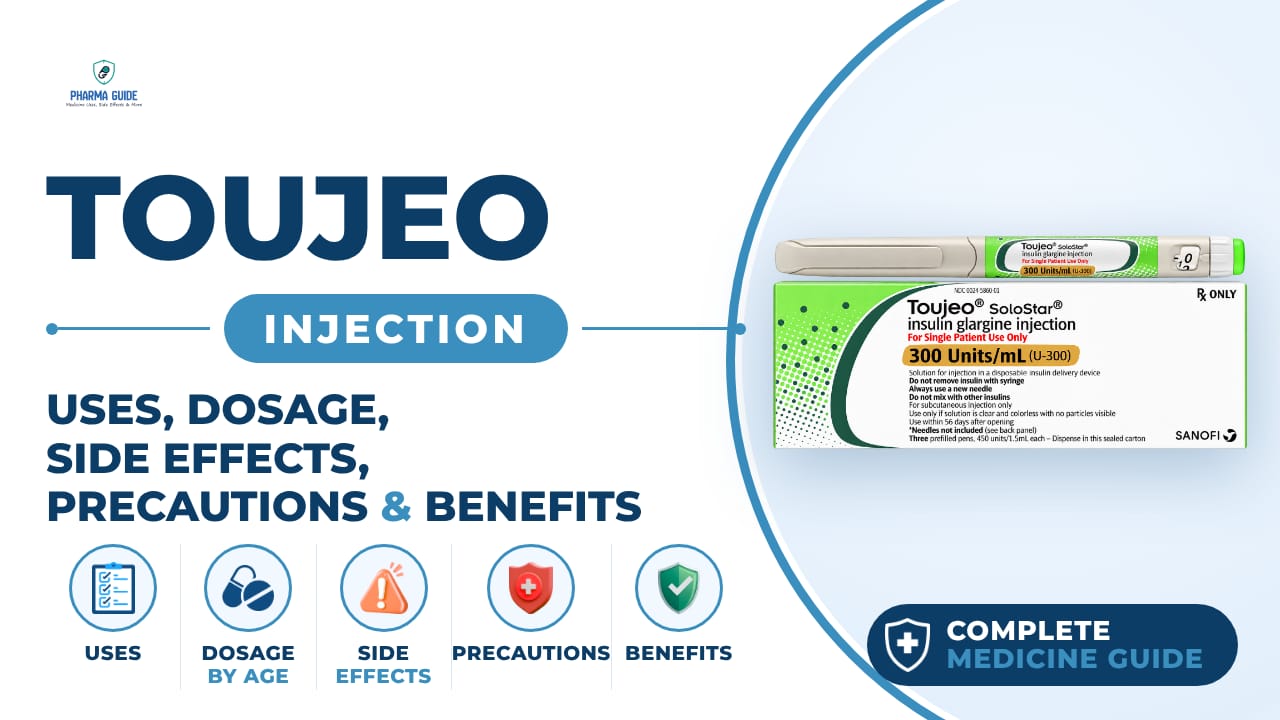
| Generic name | insulin glargine |
|---|---|
| Drug class | Insulin |
| Forms | Prefilled injection pen (Toujeo SoloStar, 1.5 mL, 300 units/mL), Prefilled injection pen (Toujeo Max SoloStar, 3 mL, 300 units/mL) |
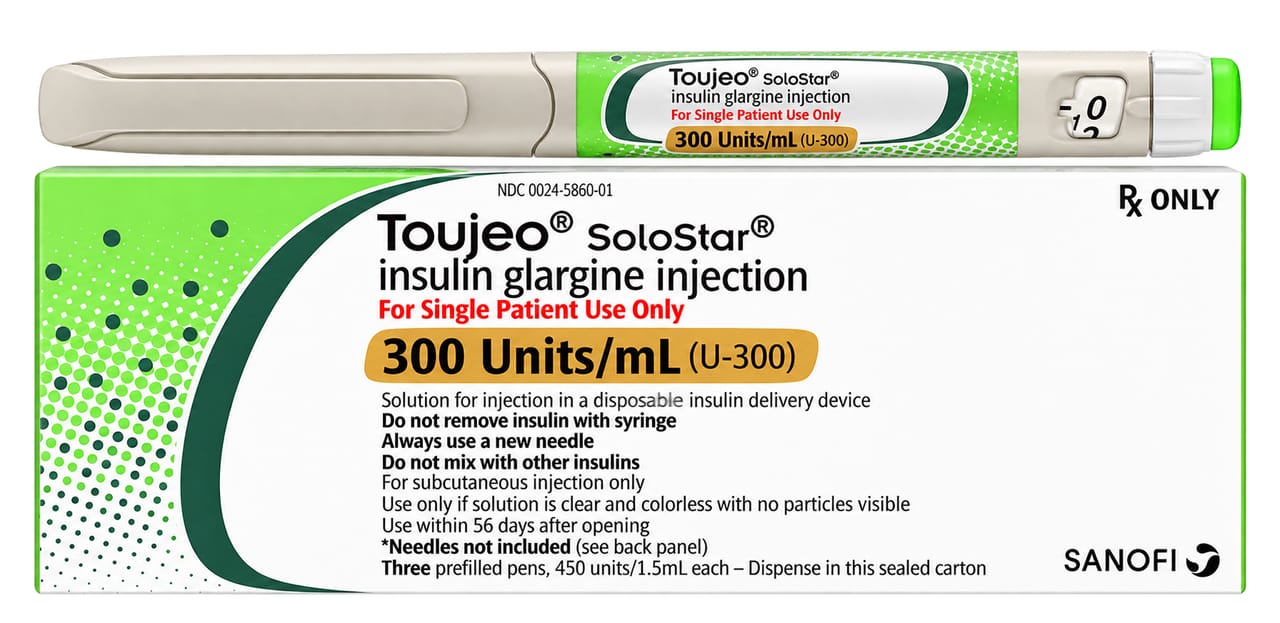
Quick overview
Toujeo Injection (insulin glargine) is a long-acting, man-made form of insulin used to help control blood sugar in adults and children aged 6 years and older with type 1 or type 2 diabetes. It starts working several hours after injection and continues working steadily for about 24 hours or longer. It is given as a once-daily injection under the skin using a prefilled pen, and should be used exactly as prescribed by your doctor.
What is Toujeo Injection
Toujeo is a man-made form of a hormone that your body normally makes. It is a long-acting insulin that starts working several hours after injection and keeps working steadily for about 24 hours or longer. It is used to help control blood sugar in people with diabetes.
Toujeo Injection uses
- Improving blood sugar control in adults with type 1 or type 2 diabetes
- Improving blood sugar control in children 6 years of age and older with type 1 or type 2 diabetes
Benefits of Toujeo Injection
- Helps lower and control blood sugar levels over a full day with one injection
- Works steadily for up to 24-36 hours, which can help keep blood sugar levels more stable
How Toujeo Injection works
Insulin glargine works like your body's own insulin. It helps move sugar (glucose) from your blood into your body's cells, where it can be used for energy. It also reduces how much sugar your liver releases into your blood. Because it is long-acting, it keeps working evenly over a full day instead of peaking and wearing off quickly.
Toujeo Injection dosage
Inject this medicine under the skin, usually once a day at the same time of day. If you have type 1 diabetes, use your short-acting insulin before meals as directed by your doctor, along with this medicine. Do not use this medicine with an insulin pump, and do not mix it with other insulins. Do not inject into a vein or a muscle.
Only prepare an injection when you are ready to give it; do not use it if it looks cloudy, has changed color, or has particles in it. Use only the injection pen that comes with this product; attach a new needle before each use and never transfer the insulin into a syringe. Never share an injection pen with another person, even if the needle has been changed, because this can spread infections.
Change (rotate) the injection site each time; do not inject into the same spot twice in a row. Avoid injecting into skin that is damaged, bruised, tender, pitted, thickened, scaly, scarred, or has a hard lump.
This medicine does not need to be taken with food or at mealtime, but your diet, exercise, and insulin schedule should stay consistent as your doctor advises. Taking your pen out of the refrigerator about an hour before injecting may reduce stinging or burning discomfort.
Use exactly as prescribed by your doctor or pharmacist.
Available forms and strengths
- Prefilled injection pen (Toujeo SoloStar, 1.5 mL, 300 units/mL)
- Prefilled injection pen (Toujeo Max SoloStar, 3 mL, 300 units/mL)
Side effects of Toujeo Injection
Common
- Low blood sugar
- Swelling and weight gain
- Allergic reaction, itching, or rash
- Thickening or hollowing of the skin where you injected the medicine
- Respiratory infections such as the common cold, flu, or bronchitis
- Cough
- Pain, rash, swelling, or itchiness at the injection site
Serious
- Signs of a severe allergic reaction: redness or swelling where an injection was given, an itchy rash over the entire body, trouble breathing, fast heartbeats, feeling like you might pass out, or swelling of the tongue or throat
- Rapid weight gain, swelling in the feet or ankles, or shortness of breath (possible signs of heart problems)
- Low blood potassium: leg cramps, constipation, irregular heartbeats, fluttering in the chest, increased thirst or urination, numbness or tingling, muscle weakness or a limp feeling
- Severe low blood sugar: drowsiness, confusion, blurred vision, numbness or tingling in the mouth, trouble speaking, muscle weakness, clumsy or jerky movements, seizures, or loss of consciousness
Warnings and precautions
- This medicine contains 3 times as much insulin in each milliliter as regular-strength insulin, so doses and devices are not interchangeable with other insulin products.
- Never share an injection pen with another person, even if you change the needle, because this can spread serious infections like hepatitis or HIV.
- Do not use this medicine if you are having an episode of low blood sugar or if you are in diabetic ketoacidosis; call your doctor right away for treatment in these cases.
- Taking this insulin together with certain oral diabetes medicines (like pioglitazone or rosiglitazone) can increase the risk of serious heart problems, including new or worsening heart failure.
- Do not dilute or mix this medicine with any other insulin or solution, as it will not work as intended and you could lose blood sugar control.
- Tell your doctor if you are pregnant or planning to become pregnant. Controlling diabetes carefully is very important during pregnancy, and your insulin dose may need to change.
- This medicine is considered safe to use while breastfeeding, but your insulin needs may change, so talk with your doctor before breastfeeding while using it.
- People with kidney disease have a higher risk of low blood sugar while using this medicine. Tell your doctor if you have kidney problems.
- People with liver disease have a higher risk of low blood sugar while using this medicine. Tell your doctor if you have liver problems.
- Avoid drinking alcohol or using medicines that contain alcohol, since alcohol can raise or lower your blood sugar and interfere with your diabetes treatment.
- Avoid driving or doing anything that requires alertness until you know how this medicine affects you, since low blood sugar can impair your reactions.
Storage
- Keep this medicine in its original container, protected from heat and light
- Do not freeze insulin or store it near the cooling element in a refrigerator; throw away any insulin that has been frozen
- Unopened (not in use) pens: refrigerate and use until the expiration date
- Opened (in use) pens: store at room temperature below 86 degrees Fahrenheit (do not refrigerate) and use within 56 days
- Do not store an injection pen with the needle attached
- Do not reuse a needle or syringe; place used needles and syringes in a puncture-proof 'sharps' container and dispose of it following state or local laws
- Keep out of the reach of children and pets
When to see a doctor
- Get emergency medical help right away if you have signs of a severe allergic reaction, such as a rash over your whole body, trouble breathing, swelling of your face, tongue, or throat, fast heartbeat, or extreme dizziness or confusion.
- Call your doctor right away if you have rapid weight gain, swelling in your feet or ankles, or shortness of breath.
- If you think you have taken too much insulin, seek emergency medical attention or contact your local poison control center right away. Signs of overdose include drowsiness, confusion, blurred vision, numbness or tingling in the mouth, trouble speaking, muscle weakness, clumsy or jerky movements, seizures, or loss of consciousness.
Alternatives
- Tresiba (Insulin Degludec)
- Basalog (Insulin Glargine U-100)
- Lantus (Insulin Glargine U-100)
Watch the video
FAQs
What is Toujeo Injection used for?
Toujeo is used to improve blood sugar control in adults and children 6 years and older with type 1 or type 2 diabetes.
How often is Toujeo injected?
Toujeo is injected under the skin, usually once a day at the same time of day, using a prefilled pen.
Can Toujeo be used with an insulin pump or mixed with other insulins?
No, Toujeo should not be used with an insulin pump, and it should not be mixed with other insulins.
How long does an opened Toujeo pen last?
Once opened and in use, a Toujeo pen should be stored at room temperature below 86 degrees Fahrenheit and used within 56 days.
What are common side effects of Toujeo?
Common side effects include low blood sugar, swelling and weight gain, allergic reaction or rash, thickening or hollowing of skin at the injection site, respiratory infections, cough, and injection site reactions.
General information, not medical advice
Your prescriber and the leaflet in your pack know your situation. This page does not.
- Follow your prescriber and the leaflet
- Don't start, stop, or change a dose on your own
- Doses and warnings differ by country and product
Sources
Video
Related medicines
Levemir Injection: Uses, Dosage, Side Effects, Precautions and Alternates
Insulin
Levemir Injection (insulin detemir) is a long-acting insulin for type 1 and type 2 diabetes. Learn uses, dosage, side effects, and storage tips.
Huminsulin Injection: Uses, Dosage, Side Effects, Precautions and Alternates
Insulin
Huminsulin Injection is an intermediate-acting insulin that helps control blood sugar in type 1 and type 2 diabetes. Learn uses, dosage, and side effects.