
Safety
General information, not medical advice
Your prescriber and the leaflet in your pack know your situation. This page does not.
- Follow your prescriber and the leaflet
- Don't start, stop, or change a dose on your own
- Doses and warnings differ by country and product
Humulin N Injection: Uses, Dosage, Side Effects, Precautions and Alternates
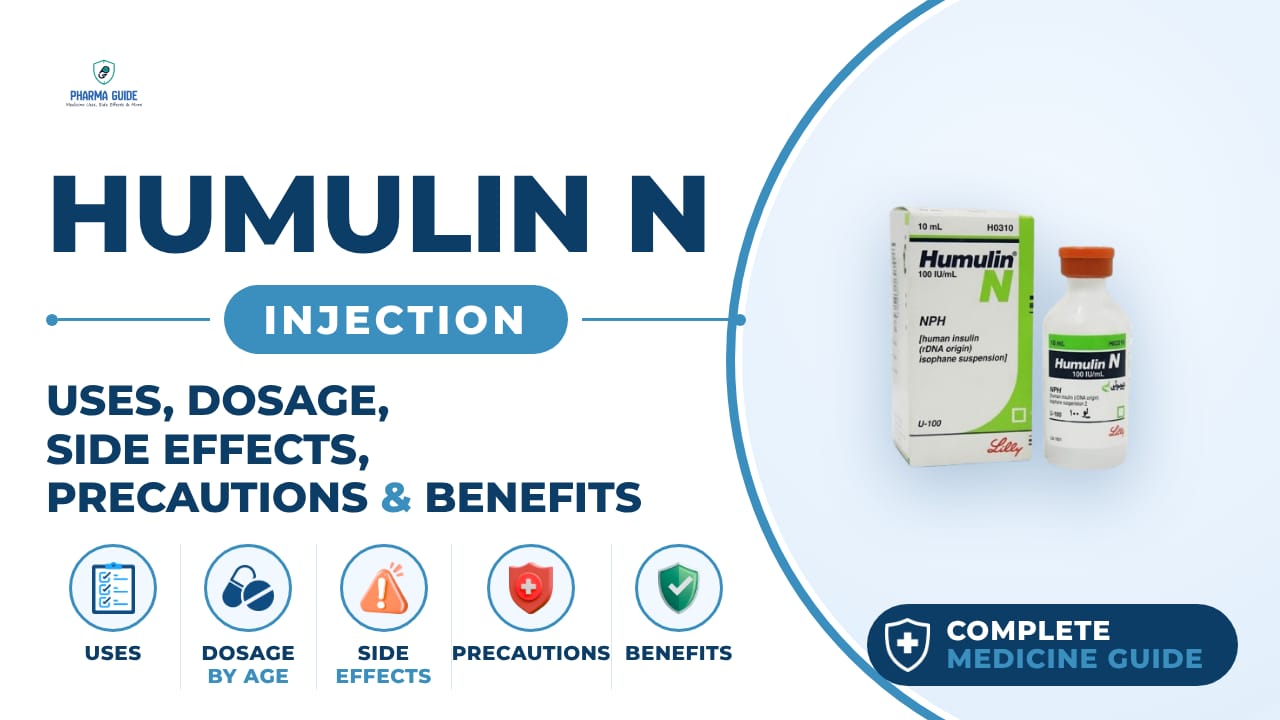
| Generic name | insulin isophane human (NPH insulin) |
|---|---|
| Drug class | Insulin (intermediate-acting human insulin) |
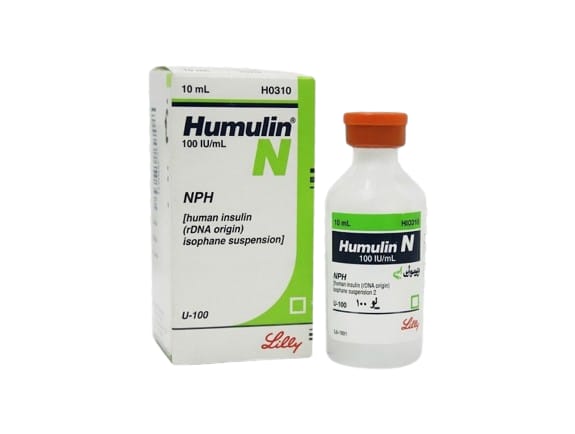
| Forms | 10 mL multiple-dose vial |
Quick overview
Humulin N Injection (insulin isophane human, also known as NPH insulin) is an intermediate-acting human insulin used to help manage type 1 diabetes and type 2 diabetes requiring insulin. It helps control fasting blood sugar and blood sugar levels between meals as part of a prescribed diabetes treatment plan. It is given by injection under the skin and should be used exactly as directed by your doctor.
What is Humulin N Injection
Humulin N is a man-made form of insulin, a hormone your body normally makes to control blood sugar levels. It is an intermediate-acting insulin used to help manage diabetes in adults and children.
Humulin N Injection uses
- Type 1 diabetes.
- Type 2 diabetes requiring insulin.
- Control of fasting blood sugar.
- Control of blood sugar between meals.
- Long-acting insulin treatment as part of a prescribed diabetes plan.
Benefits of Humulin N Injection
- Helps lower blood sugar between meals.
- Helps control fasting blood sugar.
- Supports long-term glucose management.
- Helps maintain target blood sugar levels.
- Supports diabetes management.
How Humulin N Injection works
Humulin N lowers blood sugar by helping your muscle and fat cells take up glucose from the blood, and by stopping the liver from making too much sugar. It also helps the body build protein and reduces the breakdown of fat.
Humulin N Injection dosage
Use Humulin N exactly as your healthcare provider tells you to, and follow the Instructions for Use that come with your product. Only inject Humulin N under the skin (subcutaneously) in the stomach area, thigh, upper arm, or buttocks — never inject into a vein or muscle, and never use it in an insulin pump. Rotate (change) your injection site within the same body area each time you inject to lower the risk of skin changes.
Roll and gently invert the vial or pen before use so the insulin mixes; it should look evenly white and cloudy — do not use it if it looks clear or has lumps or particles in it. Do not shake the vial or pen vigorously, as this can cause bubbles that affect your dose.
If you use an injection pen, always attach a new needle before each use and do not transfer the insulin into a syringe. Prime your pen before each injection to remove air from the needle and cartridge. Never share your injection pen, needles, or syringes with another person, even if the needle has been changed.
Know the type and strength of insulin you use, and check the label before every injection to avoid mixing up insulins. Blood sugar levels can be affected by stress, illness, surgery, exercise, alcohol use, or skipped meals — talk to your doctor before changing your dose or schedule. Your dose may need to change due to changes in physical activity, weight, stress, illness, or diet.
Humulin N may be mixed with Humulin R or Humalog insulin before injection if directed, and should be injected right after mixing.
Use exactly as prescribed by your doctor or pharmacist.
Available forms and strengths
- 10 mL multiple-dose vial
Side effects of Humulin N Injection
Common
- Low blood sugar (hypoglycemia)
- Allergic reactions, including redness, swelling, or itching at the injection site
- Skin thickening or pitting at the injection site (lipodystrophy)
- Itching, mild skin rash
- Weight gain
- Swelling in the hands, feet, legs, or ankles
Serious
- Severe low blood sugar, which can cause seizures and may be life-threatening
- Serious whole-body allergic reaction (anaphylaxis) — rash over the entire body, trouble breathing, fast heartbeat, swelling of the face, tongue, or throat
- Low potassium in the blood (hypokalemia) — muscle weakness or cramps, constipation, irregular heartbeat, tiredness, trouble breathing
- Heart failure, especially when taken with certain diabetes pills called thiazolidinediones (TZDs) — shortness of breath, swelling of ankles or feet, sudden weight gain
Warnings and precautions
- Never share your Humulin N pen or syringe with another person, even if you change the needle — this can spread serious infections.
- Low blood sugar is the most common side effect and can be severe or life-threatening, sometimes causing seizures.
- Serious allergic reactions, including life-threatening whole-body reactions, can occur. Stop using Humulin N and get medical help if this happens.
- Humulin N can cause low potassium levels in the blood, which can be life-threatening if untreated.
- Taking certain diabetes pills called TZDs together with Humulin N can cause fluid buildup and may lead to or worsen heart failure.
- Mix-ups between insulin products have happened. Always check the insulin label before each injection.
- Do not use Humulin N if you are currently having an episode of low blood sugar or if you have had an allergic reaction to it or its ingredients before.
- If you are pregnant, planning to become pregnant, or become pregnant while using Humulin N, tell your doctor. Good blood sugar control is important for the health of both mother and baby during pregnancy, and your insulin needs may change during and after pregnancy.
- Tell your doctor if you are breastfeeding. Insulin may pass into breast milk, but good blood sugar control supports breastfeeding, and women who are breastfeeding may need their insulin dose adjusted.
- If you have kidney problems, tell your doctor, since you may be at higher risk of low blood sugar and may need more frequent dose adjustments and blood sugar monitoring.
- If you have liver problems, tell your doctor, since you may be at higher risk of low blood sugar and may need more frequent dose adjustments and blood sugar monitoring.
- Avoid drinking alcohol while using Humulin N, as it can raise or lower your blood sugar and make it harder to manage your diabetes.
- Do not drive or operate heavy machinery until you know how Humulin N affects you, because low blood sugar can affect your ability to concentrate and react quickly.
Storage
- Protect from heat and light. Do not freeze. Do not use after the expiration date.
- Do not use if it has been frozen.
- Unopened vials: store in a refrigerator (36° to 46°F) until the expiration date, or at room temperature below 86°F for up to 31 days.
- Opened vials: store in a refrigerator or at room temperature below 86°F; discard after 31 days even if insulin remains.
- Unopened KwikPen: store in a refrigerator until the expiration date, or at room temperature below 86°F for up to 14 days.
- Opened (in-use) KwikPen: store at room temperature below 86°F only — do not refrigerate; discard after 14 days even if insulin remains.
- Put used needles and syringes in an FDA-cleared sharps disposal container right away after use; do not throw loose needles in household trash.
- If you don't have a sharps container, you may use a heavy-duty plastic household container with a tight-fitting, puncture-resistant lid that is upright, stable, leak-resistant, and labeled as hazardous waste.
- Follow your community guidelines for disposing of a full sharps container; do not put it in household trash unless allowed, and do not recycle it.
- The used pen (without the needle) may be thrown away in household trash after the needle has been removed.
When to see a doctor
- Get emergency medical help right away if you have signs of a serious allergic reaction, such as trouble breathing, swelling of your face, tongue, or throat, a fast heartbeat, or a rash over your whole body.
- Call your doctor right away if you have signs of fluid retention or heart failure, such as weight gain, swelling in your hands or feet, or feeling short of breath.
- Call your doctor if you notice signs of low potassium, such as leg cramps, constipation, irregular heartbeats, fluttering in your chest, increased thirst or urination, numbness or tingling, or muscle weakness.
- Seek emergency help if you think you have taken too much insulin, especially if you have symptoms like confusion, blurred vision, trouble speaking, clumsy movements, seizures, or loss of consciousness.
Alternatives
- Insuman Basal
- Insulatard
- Novolin N
Watch the video
FAQs
What is Humulin N Injection used for?
It is an intermediate-acting human insulin used to help manage type 1 diabetes and type 2 diabetes requiring insulin, controlling fasting blood sugar and blood sugar between meals.
How should Humulin N be injected?
It should only be injected under the skin (subcutaneously) in the stomach area, thigh, upper arm, or buttocks, with injection sites rotated within the same body area. Never inject into a vein or muscle, and never use it in an insulin pump.
What are the common side effects of Humulin N?
Common side effects include low blood sugar, allergic reactions at the injection site, skin thickening or pitting, itching, mild skin rash, weight gain, and swelling in the hands, feet, legs, or ankles.
How do I store Humulin N vials and pens?
Unopened vials can be refrigerated until expiration or kept at room temperature below 86°F for up to 31 days, with opened vials discarded after 31 days. Unopened KwikPens can be refrigerated or kept at room temperature for up to 14 days, while opened pens should be stored at room temperature only and discarded after 14 days.
Can Humulin N be mixed with other insulins?
Yes, Humulin N may be mixed with Humulin R or Humalog insulin before injection if directed by a doctor, and should be injected right after mixing.
General information, not medical advice
Your prescriber and the leaflet in your pack know your situation. This page does not.
- Follow your prescriber and the leaflet
- Don't start, stop, or change a dose on your own
- Doses and warnings differ by country and product
Sources
Video
Related medicines

Injectafer Injection: Uses, Dosage, Side Effects, Precautions and Alternates
Iron products
Injectafer (ferric carboxymaltose) treats iron deficiency anemia and heart failure-related iron deficiency via IV. Learn uses, dosage, side effects, and

Gliclazide Tablet: Uses, Dosage, Side Effects, Precautions and Alternates
Sulfonylurea (hypoglycemic/antidiabetic agent)
Gliclazide Tablet is a sulfonylurea for type 2 diabetes that boosts insulin release. Learn about dosage, side effects, warnings, and precautions.