
Safety
General information, not medical advice
Your prescriber and the leaflet in your pack know your situation. This page does not.
- Follow your prescriber and the leaflet
- Don't start, stop, or change a dose on your own
- Doses and warnings differ by country and product
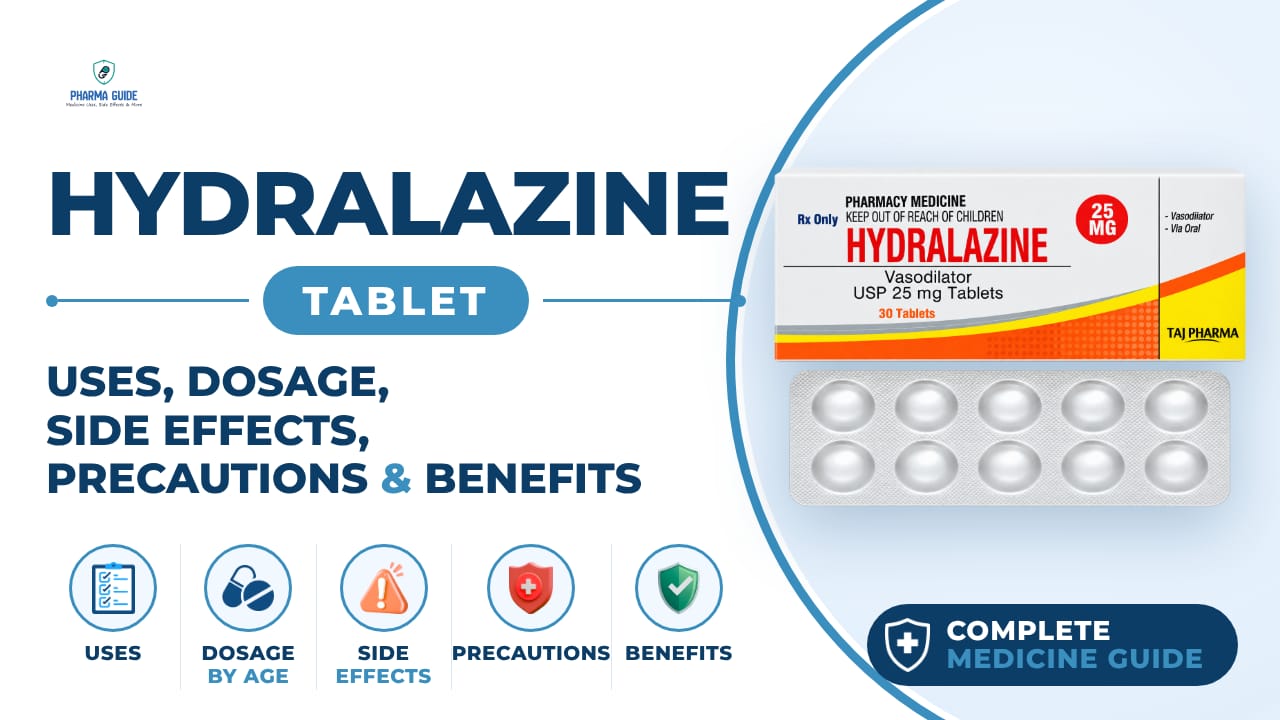
Hydralazine Tablet: Uses, Dosage, Side Effects, Precautions and Alternates
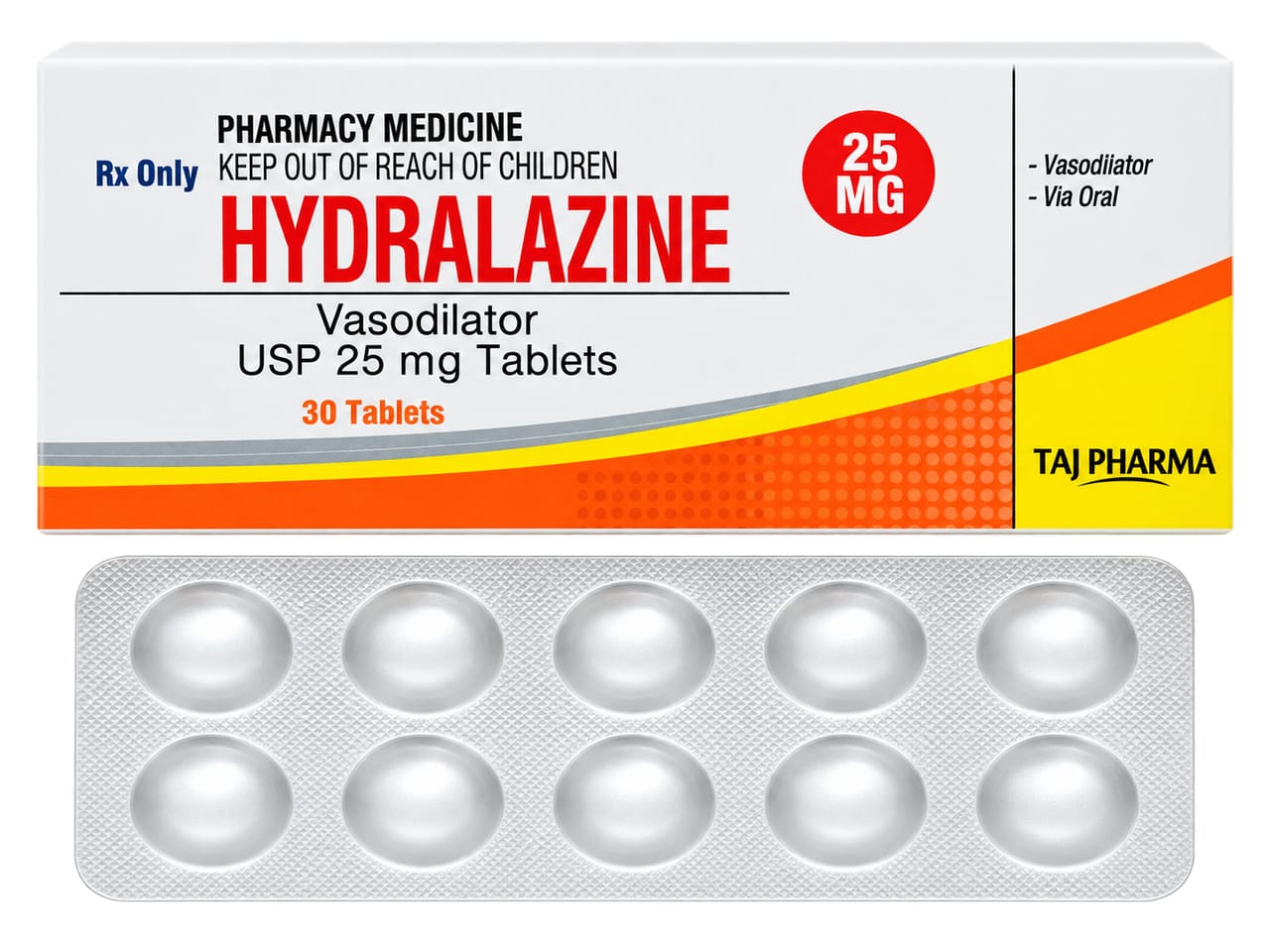
| Generic name | Hydralazine Hydrochloride |
|---|---|
| Drug class | Antihypertensive (vasodilator) |
| Forms | Tablet (10 mg, 25 mg, 50 mg, 100 mg) |
Quick overview
Hydralazine Tablet (Hydralazine Hydrochloride) is a prescription antihypertensive medicine belonging to the vasodilator class. It is used to treat high blood pressure, either alone or together with other blood pressure medicines. It works by relaxing and widening blood vessels, which helps lower blood pressure and reduce the resistance the heart works against.
What is Hydralazine Tablet
Hydralazine is a prescription medicine used to treat high blood pressure. It belongs to a group of medicines called vasodilators, which relax and widen blood vessels.
Hydralazine Tablet uses
- Treatment of high blood pressure (essential hypertension), used alone or together with other blood pressure medicines
Benefits of Hydralazine Tablet
- Helps lower high blood pressure
- Relaxes and widens blood vessels
- Reduces resistance against which the heart pumps
- May be used in selected cases of heart failure with other medicines
- Can help reduce complications associated with uncontrolled hypertension
How Hydralazine Tablet works
Hydralazine relaxes the muscles in the walls of blood vessels, helping them widen so blood can flow more easily. This lowers blood pressure.
Hydralazine Tablet dosage
Take this medicine exactly as directed by your healthcare professional. It can be taken with or without food, but take it the same way every time (always with food or always without). Take the medicine regularly and continuously as directed.
If a dose is missed, skip it and take the next dose at the regular time; do not take two doses together. Some patients may be switched to a twice-daily schedule after the initial dose-adjustment period.
In children, dosing and safety have not been firmly established and should be guided by a healthcare professional. Elderly patients may be more sensitive to the blood-pressure-lowering effects and may need closer monitoring.
| Age group | Dose |
|---|---|
| Adults 18–64 years | Commonly starts at 10 mg four times daily, then adjusted gradually by a clinician |
Available forms and strengths
- Tablet (10 mg, 25 mg, 50 mg, 100 mg)
Side effects of Hydralazine Tablet
Common
- Headache
- Loss of appetite
- Nausea
- Vomiting
- Diarrhea
- Palpitations (fast or pounding heartbeat)
- Chest pain (angina)
- Chills, fever
- Blocked or stuffy nose
Serious
- Signs of lupus-like syndrome: joint pain, swelling, stiffness, fatigue, fever, rash, chest pain, shortness of breath
- Numbness, tingling, pins and needles, or burning pain (peripheral neuritis)
- Signs of blood disorders: unusual tiredness, pale skin, frequent infections, easy bruising or bleeding, sore throat, fever
- Signs of a heart attack: chest pain or pressure, shortness of breath, sweating, nausea, pain in arms, neck or jaw
- Signs of an allergic reaction: hives, rash, itching, swelling of face/lips/tongue/throat, difficulty breathing or swallowing
- Signs of vasculitis: fever, fatigue, weight loss, muscle and joint pain, rash, trouble breathing, numbness or weakness
- Signs of kidney problems: blood in urine, less urine, swelling in legs or feet, high blood pressure
- Signs of liver problems: yellowing of skin or eyes, dark urine, nausea, vomiting, stomach pain
Warnings and precautions
- In some people, hydralazine can cause a condition that looks like lupus, including kidney inflammation. If this happens, the medicine is usually stopped unless the benefits of continuing still outweigh the risks.
- This medicine should not be used by people with known allergy to hydralazine, coronary artery disease, or certain rheumatic heart valve diseases.
- Because the medicine stimulates the heart, it can trigger chest pain or heart attack signs on an ECG, so it should be used carefully in people with suspected coronary artery disease.
- Regular blood tests and urine tests are needed before and during long-term treatment, even if you feel fine, to check for early signs of blood problems or lupus-like reactions.
- Serious blood disorders, including drops in red blood cells and white blood cells, have been reported. Treatment should be stopped if these occur.
- Hydralazine should only be used during pregnancy if the benefits clearly outweigh the risks to the baby, since there isn't enough research in pregnant women. Hydralazine passes into breast milk, so other options should be considered for breastfeeding mothers.
- People with kidney problems may need a different dose or dosing schedule because the medicine can build up in the body. Use with caution if kidney damage is advanced. People with liver problems may have higher levels of the medicine in their blood, so the dose or schedule may need to be adjusted.
- Avoid drinking alcohol while taking this medicine, since it can increase the blood-pressure-lowering effect and cause excessive drops in blood pressure.
- This medicine can lower blood pressure enough to affect your reactions, so don't drive or use machinery until you know how it affects you.
Storage
- Store at room temperature (15°C to 30°C / 68°F to 77°F)
- Keep in a tight, light-resistant container
- Keep out of the reach and sight of children
When to see a doctor
- Get medical help right away if you have signs of a heart attack, such as chest pain or pressure, shortness of breath, sweating, nausea, or pain spreading to your arms, neck, or jaw.
- Seek medical help right away if you have signs of a serious allergic reaction, such as hives, rash, itching, swelling of the face, lips, tongue, or throat, or difficulty breathing or swallowing.
- Contact your healthcare professional if you develop joint pain, swelling, stiffness, fever, rash, or chest pain, as these may be signs of a lupus-like reaction to the medicine.
- Tell your healthcare professional if you notice signs of a blood disorder, such as unusual tiredness, pale skin, easy bruising or bleeding, frequent infections, or fever.
- If you think too much of this medicine has been taken, contact a healthcare professional or hospital emergency department right away, even if there are no symptoms yet.
Alternatives
- Amlodipine
- Lisinopril
- Hydrochlorothiazide
Watch the video
FAQs
What is Hydralazine Tablet used for?
It is used to treat high blood pressure (essential hypertension), either alone or together with other blood pressure medicines.
How does Hydralazine Tablet work?
It relaxes the muscles in the walls of blood vessels, helping them widen so blood can flow more easily, which lowers blood pressure.
What is the common starting dose of Hydralazine for adults?
Adults 18–64 years commonly start at 10 mg four times daily, then the dose is adjusted gradually by a clinician, with some patients switched to a twice-daily schedule afterward.
What are the serious side effects of Hydralazine Tablet?
Serious side effects include signs of a lupus-like syndrome, peripheral neuritis, blood disorders, heart attack signs, allergic reactions, vasculitis, kidney problems, and liver problems.
Can Hydralazine Tablet be taken during pregnancy?
It should only be used during pregnancy if the benefits clearly outweigh the risks to the baby, since there isn't enough research in pregnant women, and it passes into breast milk so other options should be considered for breastfeeding mothers.
General information, not medical advice
Your prescriber and the leaflet in your pack know your situation. This page does not.
- Follow your prescriber and the leaflet
- Don't start, stop, or change a dose on your own
- Doses and warnings differ by country and product
Sources
- Teva Pharmaceuticals USA, Inc. Hydralazine Hydrochloride Tablets USP prescribing information, Rev. F 2/2016
- Sanis Health Inc. HYDRALAZINE (hydralazine hydrochloride tablets) Product Monograph, Date of Authorization 2026-05-29
- DailyMed - Hydralazine Hydrochloride Tablets, Proficient Rx LP, Revised 2/2025
- GoodRx - Hydralazine drug information, reviewed July 19, 2023
Video
Related medicines

Injectafer Injection: Uses, Dosage, Side Effects, Precautions and Alternates
Iron products
Injectafer (ferric carboxymaltose) treats iron deficiency anemia and heart failure-related iron deficiency via IV. Learn uses, dosage, side effects, and

Gliclazide Tablet: Uses, Dosage, Side Effects, Precautions and Alternates
Sulfonylurea (hypoglycemic/antidiabetic agent)
Gliclazide Tablet is a sulfonylurea for type 2 diabetes that boosts insulin release. Learn about dosage, side effects, warnings, and precautions.