
Safety
General information, not medical advice
Your prescriber and the leaflet in your pack know your situation. This page does not.
- Follow your prescriber and the leaflet
- Don't start, stop, or change a dose on your own
- Doses and warnings differ by country and product
Hydrochlorothiazide Capsule: Uses, Dosage, Side Effects, Precautions and Alternates
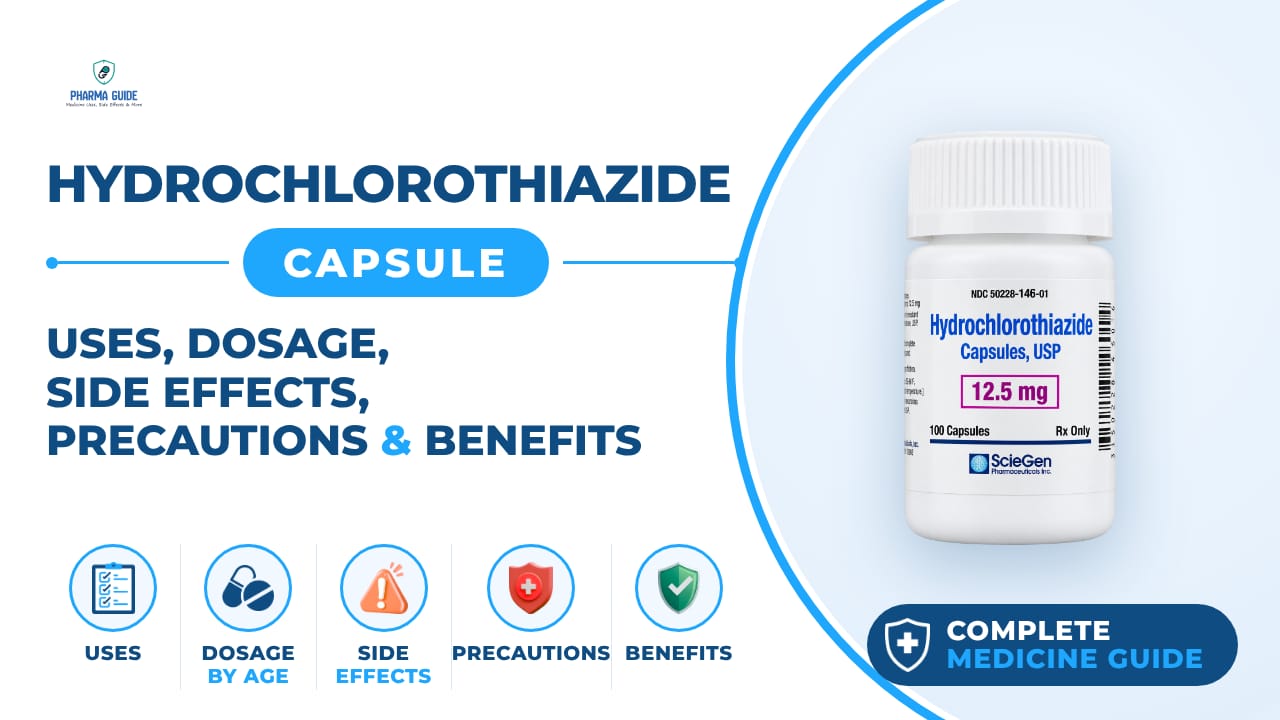
| Generic name | Hydrochlorothiazide |
|---|---|
| Drug class | Thiazide diuretic |
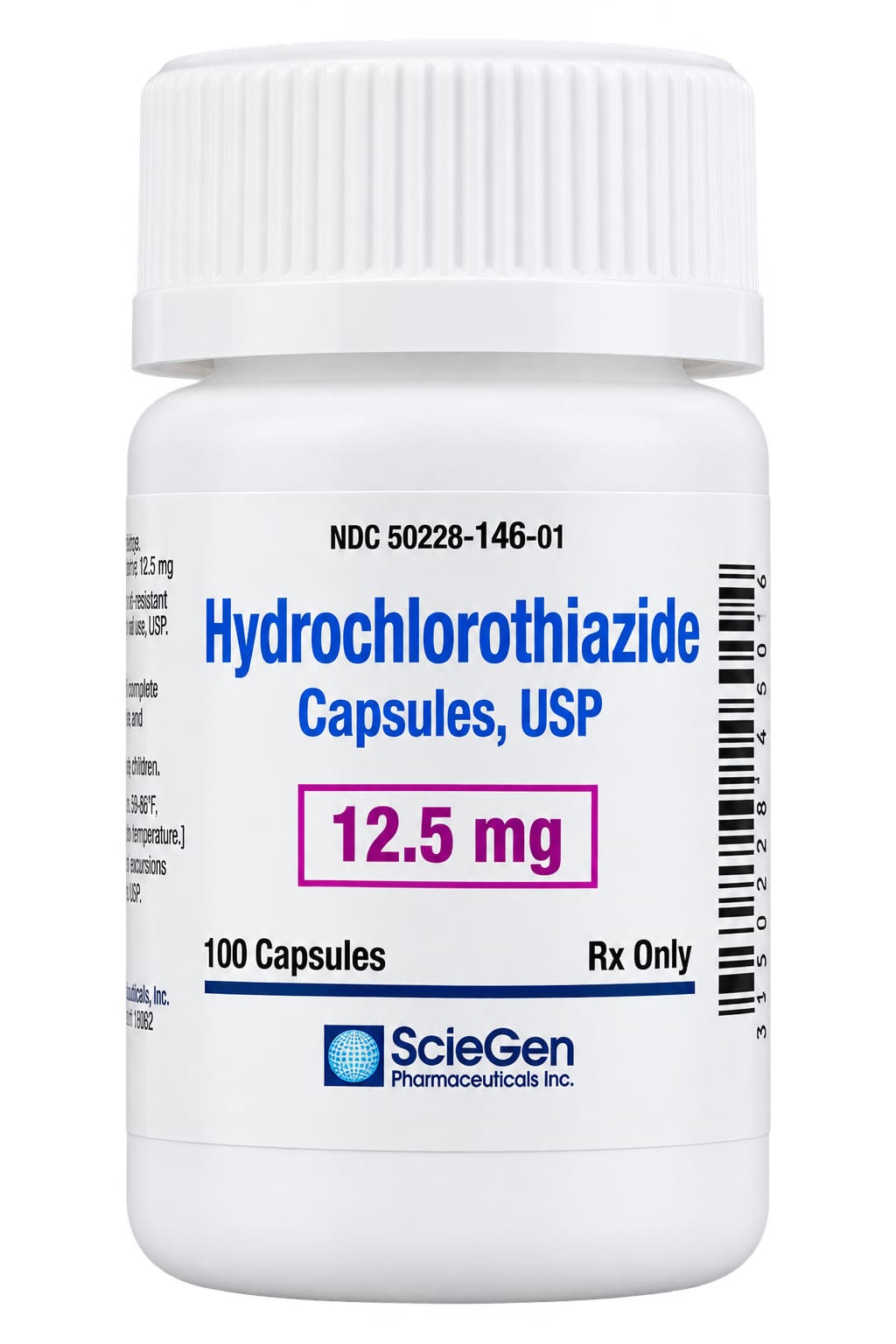
| Forms | Capsule, Tablet, Powder for oral suspension |
Quick overview
Hydrochlorothiazide Capsule is a thiazide diuretic, often called a water pill, used alone or with other medicines to treat high blood pressure. It is also used to treat fluid build-up in the body caused by conditions such as heart, liver, or kidney disease. It works by causing the kidneys to remove more salt and water into the urine, which helps lower blood pressure and reduce swelling.
What is Hydrochlorothiazide Capsule
Hydrochlorothiazide is a thiazide diuretic, sometimes called a water pill. It is used alone or with other medicines to treat high blood pressure, and to treat fluid build-up in the body caused by conditions such as heart, liver, or kidney disease.
Hydrochlorothiazide Capsule uses
- High blood pressure (hypertension), alone or with other blood pressure medicines
- Fluid retention (edema) caused by congestive heart failure, severe liver disease (cirrhosis), kidney disease, or treatment with steroid or hormone medicines
Benefits of Hydrochlorothiazide Capsule
- Helps lower high blood pressure (hypertension)
- Helps reduce fluid retention (edema)
- Helps decrease swelling in the legs, ankles, and feet
- Increases urine production to remove excess salt and water from the body
- Helps reduce the workload on the heart and blood vessels
- By controlling blood pressure, it helps lower the risk of stroke and other cardiovascular complications
How Hydrochlorothiazide Capsule works
This medicine causes the kidneys to remove more salt and water into the urine. This reduces extra fluid in the body, which helps lower blood pressure and reduce swelling.
Hydrochlorothiazide Capsule dosage
This medicine can be taken with or without food. Try to take it around the same time every day so it's easier to remember. Consider taking it during the daytime to avoid needing to urinate frequently at night. This medicine is usually meant for long-term use; do not stop taking it without talking to your doctor first.
If you miss a dose, take it as soon as you remember, but if it's almost time for your next dose, skip the missed dose and go back to your regular schedule; do not take two doses at once. Children and elderly patients should have their dose determined and adjusted by a doctor.
| Age group | Dose |
|---|---|
| Under 6 months | 1–3 mg/kg/day, usually divided into 2 doses |
| 6 months–11 years | 1–2 mg/kg/day, once daily or divided into 2 doses |
| 12–17 years | Usually 12.5–25 mg once daily for hypertension; individualized |
| 18–64 years | Usually 25 mg once daily initially; may increase to 50 mg/day |
| 65+ years | Usually start 12.5–25 mg once daily and adjust cautiously |
Available forms and strengths
- Capsule
- Tablet
- Powder for oral suspension
Side effects of Hydrochlorothiazide Capsule
Common
- Increased urination
- Headache
- Stomach upset
- Weakness
- Dizziness
- Itching or rash
- Stomach pain
- Dry mouth
- Muscle pain and cramps
- Low blood pressure
- Loss of appetite
- Diarrhea
- Constipation
- Increased sensitivity to sunlight
- Hair loss or thinning
- Difficulty getting or keeping an erection
- Temporary blurred vision
Serious
- Signs of an allergic reaction, such as hives, difficulty breathing, or swelling of the face, lips, tongue, or throat
- Severe skin reaction, such as a spreading red or purple rash with blistering and peeling, or skin that is painful to touch
- Sudden change in vision or eye pain
- Severe stomach pain spreading to the back, with nausea and vomiting (possible pancreas inflammation)
- Yellowing of the skin or eyes (jaundice)
- Fever, chills, sore throat, mouth sores, or other signs of infection
- Unusual bruising or bleeding, or pale skin and unusual tiredness
- Shortness of breath, wheezing, or cough with frothy mucus
- Passing much less urine than usual, or swelling in the legs and ankles
- Light-headedness or fainting, especially when standing up
- Signs of dehydration or salt imbalance, such as extreme thirst, dry mouth, confusion, muscle cramps, irregular heartbeat, or unusual weakness
- Seizures
Warnings and precautions
- Limited information suggests this medicine may harm a developing baby. Talk to your doctor about the risks and benefits if you are pregnant.
- This medicine can pass into breast milk and may cause side effects in a nursing baby, and it may also reduce milk production. Talk with your doctor about whether to breastfeed or take this medicine.
- Use this medicine carefully if you have kidney disease, since your body may take longer to remove it, which can increase its effects. Kidney function should be monitored during treatment.
- Use this medicine with extra caution if you have liver disease, since small changes in fluid and salt balance can trigger a serious complication called hepatic coma. Liver function should be monitored.
- Drinking alcohol while taking this medicine is not recommended, as it can increase the risk of dizziness and low blood pressure.
- This medicine may cause dizziness. Do not drive, use machines, or do anything that could be dangerous if you feel dizzy or are not alert.
- This medicine may slightly increase the risk of non-melanoma skin cancer, especially with long-term high-dose use. Protect your skin from the sun and get regular skin checks.
- This medicine can cause low levels of potassium, sodium, magnesium, or other electrolytes in the blood, which can be dangerous. Your doctor will check your blood regularly.
- In rare cases, this medicine can cause a sudden, serious eye problem with vision loss or eye pain, usually within hours to weeks of starting treatment.
- Do not use this medicine if you cannot pass urine (anuria) or if you have a known allergy to hydrochlorothiazide or other sulfa-based medicines.
- This medicine can raise blood sugar, cholesterol, triglycerides, uric acid, and calcium levels, so these may need to be monitored, especially in people with diabetes or gout.
- This medicine may worsen or trigger lupus, and allergic-type reactions can happen even without a prior history of allergies or asthma.
Storage
- Store the medicine in a closed container at room temperature, away from heat, moisture, and direct light.
- Keep from freezing.
- Keep out of the reach of children.
- Do not keep outdated medicine or medicine no longer needed.
- Ask your healthcare professional how you should dispose of any medicine you do not use.
When to see a doctor
- Get emergency help right away if you have signs of a serious allergic reaction, such as hives, trouble breathing, or swelling of the face, lips, tongue, or throat.
- Get emergency help right away if you have a severe skin reaction with a spreading red or purple rash, blistering, peeling, or skin that hurts to touch.
- Stop taking this medicine and get medical help immediately if you have a sudden change in vision or eye pain.
- Call your doctor right away if you have severe stomach pain spreading to your back with nausea and vomiting, yellowing of your skin or eyes, signs of infection, unusual bruising or bleeding, trouble breathing or a cough with frothy mucus, passing much less urine than usual, swelling in your legs, fainting, or signs of dehydration or salt imbalance such as extreme thirst, confusion, muscle cramps, or irregular heartbeat.
- If you think you have taken too much of this medicine, seek emergency medical attention or contact poison control.
Alternatives
- Spironolactone
- Furosemide
- Metolazone
- Indapamide
- Chlorthalidone
Watch the video
FAQs
What is Hydrochlorothiazide Capsule used for?
It is used alone or with other medicines to treat high blood pressure, and to treat fluid build-up caused by conditions such as heart, liver, or kidney disease.
How does Hydrochlorothiazide Capsule work?
It causes the kidneys to remove more salt and water into the urine, which reduces extra fluid in the body, helping lower blood pressure and reduce swelling.
What is the usual adult dose of Hydrochlorothiazide Capsule?
Adults aged 18-64 usually start with 25 mg once daily, which may be increased to 50 mg/day, while those 65 and older usually start with 12.5-25 mg once daily, adjusted cautiously.
What are the common side effects of Hydrochlorothiazide Capsule?
Common side effects include increased urination, headache, stomach upset, weakness, dizziness, itching or rash, dry mouth, muscle cramps, low blood pressure, and increased sensitivity to sunlight.
Can Hydrochlorothiazide Capsule be taken during pregnancy or breastfeeding?
Limited information suggests it may harm a developing baby, and it can pass into breast milk and affect a nursing baby or reduce milk production, so you should discuss the risks and benefits with your doctor.
General information, not medical advice
Your prescriber and the leaflet in your pack know your situation. This page does not.
- Follow your prescriber and the leaflet
- Don't start, stop, or change a dose on your own
- Doses and warnings differ by country and product
Sources
Video
Related medicines

Injectafer Injection: Uses, Dosage, Side Effects, Precautions and Alternates
Iron products
Injectafer (ferric carboxymaltose) treats iron deficiency anemia and heart failure-related iron deficiency via IV. Learn uses, dosage, side effects, and

Gliclazide Tablet: Uses, Dosage, Side Effects, Precautions and Alternates
Sulfonylurea (hypoglycemic/antidiabetic agent)
Gliclazide Tablet is a sulfonylurea for type 2 diabetes that boosts insulin release. Learn about dosage, side effects, warnings, and precautions.