
Safety
General information, not medical advice
Your prescriber and the leaflet in your pack know your situation. This page does not.
- Follow your prescriber and the leaflet
- Don't start, stop, or change a dose on your own
- Doses and warnings differ by country and product
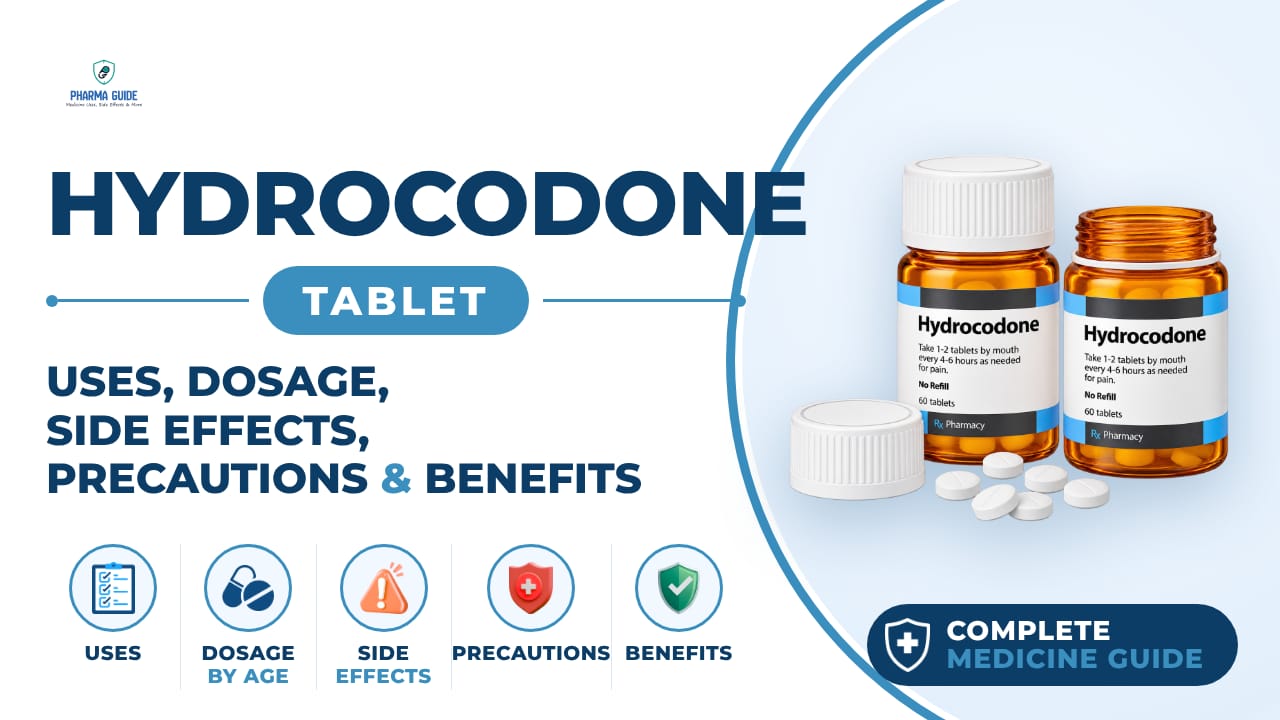
Hydrocodone Tablet: Uses, Dosage, Side Effects, Precautions and Alternates
| Generic name | Hydrocodone bitartrate |
|---|---|
| Drug class | Opioid (narcotic) analgesic / antitussive |
| Forms | Tablet, Extended-release tablet, Capsule, Liquid/syrup |
Quick overview
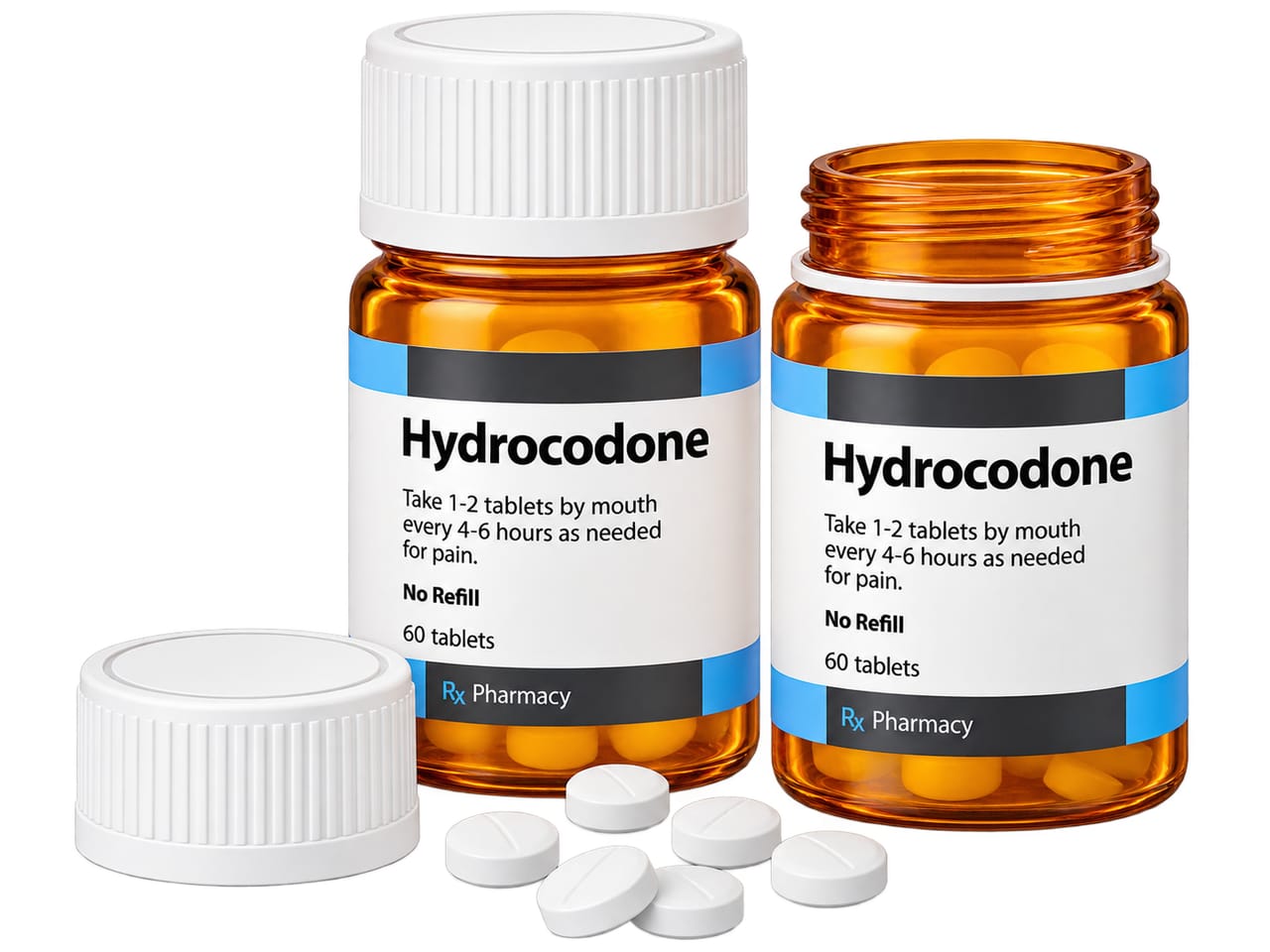
Hydrocodone Tablet (hydrocodone bitartrate) is a strong prescription opioid analgesic, often combined with acetaminophen, used to manage pain severe enough to require an opioid when other treatments have not worked well enough or cannot be tolerated. It works by acting on opioid receptors in the brain and spinal cord to block pain signals. It carries serious risks including breathing problems, dependence, and addiction, and must be used exactly as prescribed.
What is Hydrocodone Tablet
Hydrocodone is a strong prescription opioid pain medicine. It is often combined with acetaminophen and is used to manage pain that is severe enough to need an opioid, when other pain treatments have not worked well enough or cannot be tolerated.
Hydrocodone Tablet uses
- Managing moderate to severe acute pain
- Treating flare-up pain in patients with chronic conditions
- Addressing symptoms of common cold and allergic rhinitis (in combination with other medications)
- Suppressing non-productive coughs (though less common now)
- Managing severe chronic pain requiring daily opioid treatment (extended-release form)
Benefits of Hydrocodone Tablet
- Relieves moderate-to-severe pain
- May be used when non-opioid pain medicines are inadequate
- Can provide short-term pain control after certain injuries or procedures
- Helps reduce pain sufficiently to support daily functioning in selected patients
How Hydrocodone Tablet works
Hydrocodone works by attaching to and activating opioid receptors in the brain and spinal cord (the central nervous system). This blocks pain signals and produces pain relief, but it can also cause sedation and other effects.
Hydrocodone Tablet dosage
Take exactly as prescribed by your healthcare provider; do not change your dose. Use the lowest dose possible for the shortest time needed. Take your prescribed immediate-release dose on a regular schedule as needed for pain, spaced several hours apart. If you miss a dose, take your next dose at your usual time; do not take extra to make up for a missed dose.
For the extended-release tablet, take one tablet at a time, once a day, at the same time each day. Swallow extended-release tablets whole; do not cut, break, chew, crush, dissolve, snort, or inject them. Do not pre-soak, lick, or wet the extended-release tablet before putting it in your mouth, to avoid choking. Extended-release tablets should not be taken on an 'as needed' basis.
Can be taken with or without food; if it upsets your stomach, take it with food. Do not stop taking this medicine suddenly if you have been using it regularly; talk to your healthcare provider first. Hydrocodone is not recommended for pediatric use.
Use exactly as prescribed by your doctor or pharmacist.
Available forms and strengths
- Tablet
- Extended-release tablet
- Capsule
- Liquid/syrup
Side effects of Hydrocodone Tablet
Common
- Constipation
- Nausea
- Sleepiness/drowsiness
- Vomiting
- Tiredness
- Headache
- Dizziness
- Abdominal pain
- Dry mouth
- Trouble sleeping
- Upset stomach
Serious
- Trouble breathing, shortness of breath, or slow/shallow breathing
- Fast heartbeat or chest pain
- Swelling of face, tongue, or throat
- Difficulty swallowing or severe heartburn
- Extreme drowsiness or trouble staying awake
- Light-headedness when changing positions or feeling faint
- Agitation
- High body temperature
- Trouble walking, stiff muscles
- Mental changes such as confusion
- Allergic reactions including rash, itching, hives
- Signs of liver injury: right upper belly pain, loss of appetite, nausea, light-colored stool, dark yellow or brown urine, yellowing skin or eyes, unusual weakness or fatigue
- Signs of low adrenal gland function: nausea, vomiting, loss of appetite, unusual weakness or fatigue, dizziness
- Low blood pressure: dizziness, feeling faint or lightheaded, blurry vision
- Redness, blistering, peeling, or loosening of the skin, including inside the mouth
Warnings and precautions
- This medicine can cause serious or life-threatening breathing problems leading to death, especially when you first start taking it, when your dose is changed, or if you take too much. Get emergency help right away if you take too much.
- Even if you take your dose exactly as prescribed, you are still at risk for opioid addiction, abuse, and misuse that can lead to death.
- Taking this medicine with other opioids, benzodiazepines, alcohol, or other central nervous system depressants (including street drugs) can cause severe drowsiness, decreased awareness, breathing problems, coma, and death.
- Never give your medicine to anyone else. It could cause their death, and sharing or selling it is against the law.
- Do not take this medicine if you have severe asthma, trouble breathing, other lung problems, a bowel blockage, or narrowing of the stomach or intestines, or if you are allergic to hydrocodone or acetaminophen.
- Long-term use may cause your body to become dependent on the medicine, even when taken as directed, and stopping suddenly can cause withdrawal symptoms.
- If you are pregnant or planning to become pregnant, tell your healthcare provider. Using this medicine for a long time during pregnancy can cause withdrawal symptoms in your newborn baby that could be life-threatening if not recognized and treated.
- This medicine passes into breast milk and may harm your baby. Watch infants closely for increased sleepiness, breathing difficulties, or limpness, and get medical care right away if you see these signs.
- Tell your healthcare provider if you have a history of kidney problems before taking this medicine.
- Tell your healthcare provider if you have a history of liver problems before taking this medicine.
- Do not drink alcohol or use medicines containing alcohol while taking this medicine, as this may cause you to overdose and die.
- Do not drive or operate heavy machinery until you know how this medicine affects you, since it can make you sleepy, dizzy, or lightheaded.
Storage
- Store securely, out of sight and reach of children, and in a location not accessible by others, including visitors to the home
- Store at room temperature between 20 and 25 degrees C (68 and 77 degrees F)
- Get rid of any unused medication after the expiration date
- Dispose of expired, unwanted, or unused tablets by promptly flushing them down the toilet if a drug take-back option is not readily available
- Take-back programs are available through pharmacies or law enforcement; ask your pharmacy about pre-paid mail-back envelopes or disposal products
When to see a doctor
- Get emergency medical help right away if you have trouble breathing, shortness of breath, fast heartbeat, chest pain, swelling of the face, tongue, or throat, extreme drowsiness, light-headedness when changing positions, feeling faint, agitation, high body temperature, trouble walking, stiff muscles, or mental changes such as confusion.
- If you think you have taken too much of this medicine, contact a poison control center or go to an emergency room right away.
- Stop giving this medicine to a child and seek emergency help right away if the child has slow or noisy breathing, confusion, unusual sleepiness, or is not able to wake up.
- Know the signs of an opioid overdose, such as trouble breathing, being unusually tired or sleepy, or not being able to respond or wake up, and make sure others know where your naloxone is stored and how to use it.
Alternatives
- Ibuprofen
- Naproxen
- Topical pain-relief treatments
Watch the video
FAQs
What is Hydrocodone Tablet used for?
It is used to manage pain severe enough to require an opioid, including acute pain, flare-up pain in chronic conditions, and severe chronic pain needing daily opioid treatment with the extended-release form. It may also help with cold/allergy symptoms in combination with other medications and, less commonly, cough suppression.
How does Hydrocodone Tablet work?
It attaches to and activates opioid receptors in the brain and spinal cord, blocking pain signals and producing pain relief, though it can also cause sedation and other effects.
How should I take the extended-release Hydrocodone tablet?
Take one tablet once a day at the same time each day, and swallow it whole without cutting, breaking, chewing, crushing, dissolving, snorting, or injecting it. Do not pre-soak, lick, or wet it before putting it in your mouth, and do not take it on an as-needed basis.
What are the serious side effects of Hydrocodone Tablet?
Serious effects include trouble breathing, fast heartbeat or chest pain, swelling of the face, tongue, or throat, extreme drowsiness, confusion, signs of liver injury, low adrenal gland function, low blood pressure, and severe skin reactions.
Can Hydrocodone Tablet cause dependence or addiction?
Yes, even when taken exactly as prescribed, there is a risk of opioid addiction, abuse, and misuse, and long-term use may lead to physical dependence where stopping suddenly can cause withdrawal symptoms.
General information, not medical advice
Your prescriber and the leaflet in your pack know your situation. This page does not.
- Follow your prescriber and the leaflet
- Don't start, stop, or change a dose on your own
- Doses and warnings differ by country and product
Sources
Video
Related medicines

Injectafer Injection: Uses, Dosage, Side Effects, Precautions and Alternates
Iron products
Injectafer (ferric carboxymaltose) treats iron deficiency anemia and heart failure-related iron deficiency via IV. Learn uses, dosage, side effects, and

Gliclazide Tablet: Uses, Dosage, Side Effects, Precautions and Alternates
Sulfonylurea (hypoglycemic/antidiabetic agent)
Gliclazide Tablet is a sulfonylurea for type 2 diabetes that boosts insulin release. Learn about dosage, side effects, warnings, and precautions.