
Safety
General information, not medical advice
Your prescriber and the leaflet in your pack know your situation. This page does not.
- Follow your prescriber and the leaflet
- Don't start, stop, or change a dose on your own
- Doses and warnings differ by country and product
Hydromorphone Tablet: Uses, Dosage, Side Effects, Precautions and Alternates
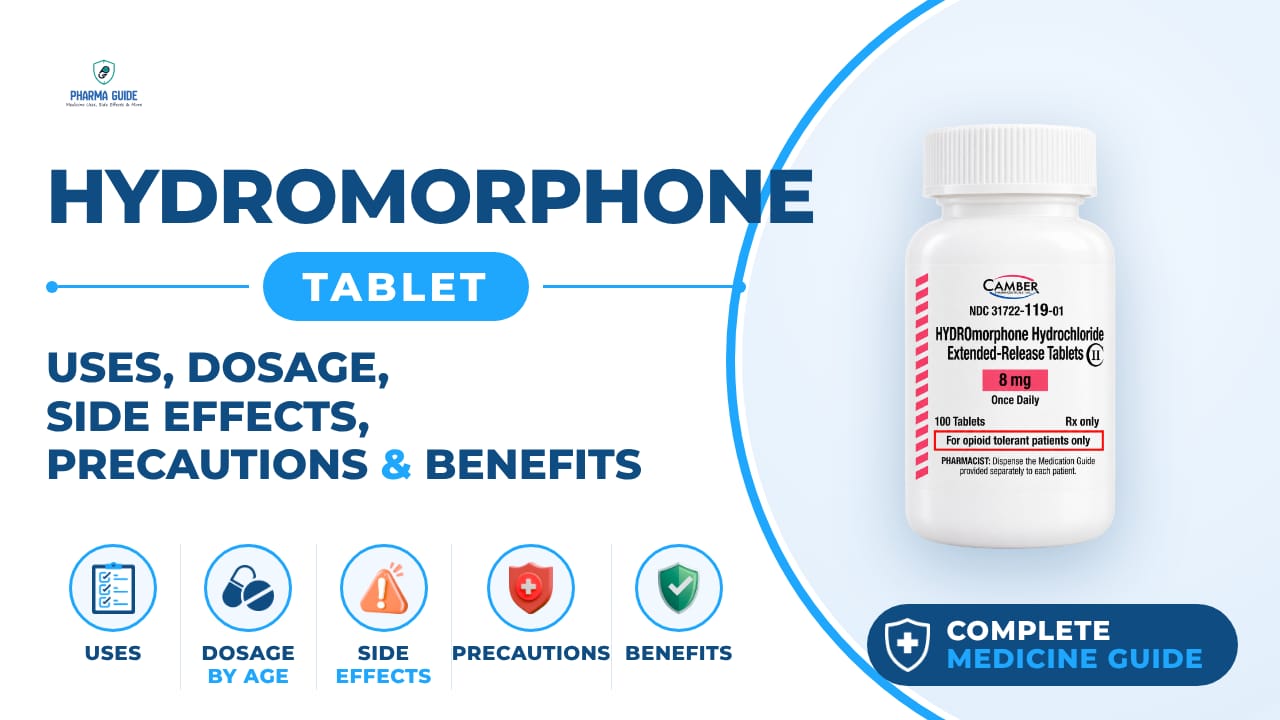
| Generic name | Hydromorphone |
|---|---|
| Drug class | Opioid analgesic (narcotic pain medicine) |
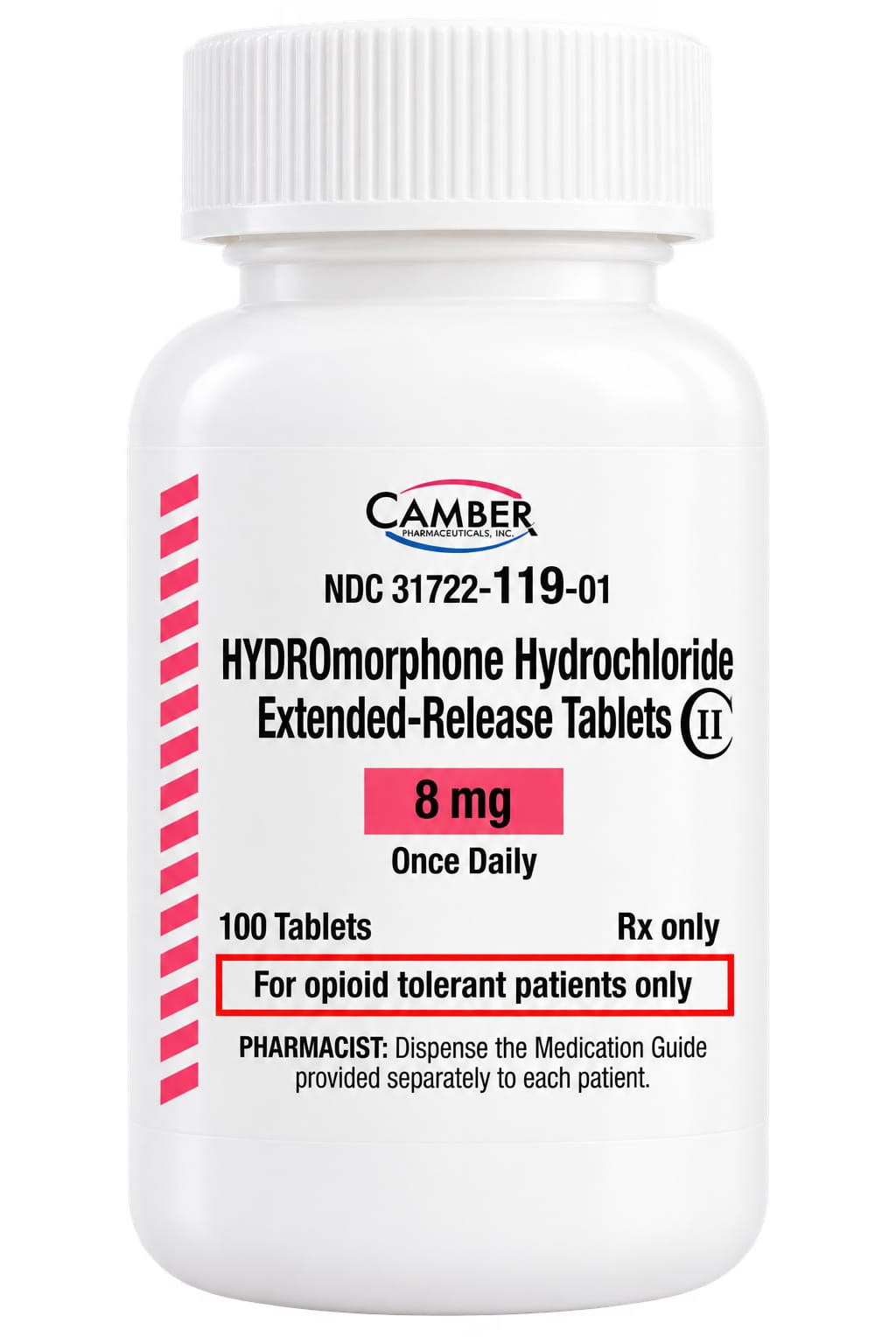
| Forms | Extended-release tablet, Tablet, Oral solution, Injection, Suppository |
Quick overview
Hydromorphone Tablet is a strong opioid analgesic used to treat moderate to severe pain when other pain medicines have not worked well enough or cannot be tolerated. It is a controlled substance because it can be habit-forming. Extended-release tablets are used for around-the-clock pain relief in opioid-tolerant patients, while immediate-release tablets are used for pain requiring an opioid. It is not intended for mild or occasional pain.
What is Hydromorphone Tablet
Hydromorphone is a strong opioid pain medicine belonging to the opioid analgesic (narcotic pain medicine) drug class. It treats moderate to severe pain when other pain medicines have not worked well enough or cannot be tolerated. Because it can be habit-forming, it is classified as a controlled substance.
Hydromorphone Tablet uses
- Relief of pain severe enough to require opioid treatment, when other pain medicines did not work well enough or cannot be tolerated
- Extended-release forms are used for around-the-clock pain relief in opioid-tolerant patients with long-term severe pain
- Not for mild pain or pain you only have once in a while
Benefits of Hydromorphone Tablet
- Provides relief from severe pain that requires an opioid analgesic
- Helps reduce pain intensity when non-opioid treatments are inadequate or not tolerated
- Can improve comfort and daily functioning when severe pain is appropriately controlled
- Immediate-release tablets can provide relatively rapid pain relief after oral administration
- May be used for acute or ongoing severe pain when prescribed by a healthcare professional
How Hydromorphone Tablet works
Hydromorphone acts on the central nervous system and binds to opioid receptors in the brain and spinal cord, blocking the way pain signals travel between the brain and body, reducing the perception of pain.
Hydromorphone Tablet dosage
Take this medicine only as directed by your doctor; do not take more, more often, or for longer than prescribed. Take extended-release tablets at the same time each day, with or without food. Swallow extended-release tablets whole; do not crush, break, chew, dissolve, snort, or inject them. Part of the extended-release tablet may pass into your stool; this is normal. Do not switch between extended-release and immediate-release tablets unless your doctor tells you to.
Take regular tablets by mouth with a glass of water; they may be taken with or without food, and with food if they upset your stomach. Avoid handling crushed or broken tablets, and wash your skin right away if you touch broken or crushed tablets. Do not stop taking this medicine suddenly if you have used it regularly for several weeks; your doctor may have you gradually lower the dose. This medicine should not be shared with anyone else.
| Age group | Dose |
|---|---|
| Under 18 years | Safety and effectiveness for routine tablet use not established; specialist dosing only |
| 18–64 years – Opioid-naïve | Usually 2–4 mg every 4–6 hours as needed |
| 65+ years | Start at the lower end of the dosing range, often with reduced doses and slower titration |
| Kidney/liver impairment | Usually requires a lower starting dose and careful titration |
Available forms and strengths
- Extended-release tablet
- Tablet
- Oral solution
- Injection
- Suppository
Side effects of Hydromorphone Tablet
Common
- Constipation
- Dizziness
- Drowsiness
- Dry mouth
- Headache
- Nausea
- Vomiting
- Difficulty having a bowel movement
- Difficulty with moving
- Joint pain
- Muscle pain or stiffness
Serious
- Allergic reactions such as skin rash, itching, hives, swelling of face, lips, tongue, or throat
- Slow or shallow breathing, shortness of breath, feeling faint, confusion, trouble staying awake
- Signs of low adrenal gland function: nausea, vomiting, loss of appetite, unusual weakness or fatigue, dizziness
- Low blood pressure symptoms: dizziness, feeling faint or lightheaded, blurry vision
- Chest pain or discomfort
- Fast, pounding, slow, or irregular heartbeat
- Thoughts of killing oneself
- Severe stomach pain, cramping, or burning
- Signs of overdose: extreme dizziness or weakness, slow heartbeat or breathing, seizures, trouble breathing, cold and clammy skin
- Bluish lips or skin
- Chest tightness
- Confusion
- Difficulty passing urine
Warnings and precautions
- Hydromorphone can be habit-forming, leading to mental or physical dependence, and misuse can lead to addiction, abuse, or overdose
- This medicine can cause serious or life-threatening breathing problems, especially in the first 24 to 72 hours of treatment or after a dose increase
- Do not stop taking this medicine suddenly after regular use; your doctor may need to lower your dose gradually to prevent withdrawal symptoms
- Taking this medicine with alcohol or other drugs that cause drowsiness can cause dangerous breathing problems, sedation, or coma
- This medicine can harm or cause death in other people, especially children, if they take it accidentally; keep it stored safely
- Do not use this medicine if you have taken an MAO inhibitor in the past 14 days
- Hydromorphone is much stronger than morphine, so it is important not to confuse the two medicines, as this could be dangerous
- Using hydromorphone while pregnant may cause withdrawal symptoms in the newborn baby after birth. Prolonged use during pregnancy has also been linked to poor fetal growth and other complications.
- There isn't enough research to know the risk to a nursing infant. Watch your baby for signs of extreme sleepiness, trouble breathing, or limpness, and tell your doctor right away if these occur.
- People with kidney disease should use this medicine with caution, since the effects may be increased because the medicine is removed from the body more slowly.
- People with liver disease should use this medicine with caution, since the effects may be increased because the medicine is removed from the body more slowly.
- This medicine adds to the effects of alcohol and can increase the risk of serious side effects like drowsiness and breathing problems.
- This medicine may make you dizzy, drowsy, or lightheaded, so avoid driving or doing anything dangerous until you know how it affects you.
Storage
- Store at 20–25°C (68–77°F) or as directed on the specific product label
- Keep in a cool, dry place away from excessive heat and moisture
- Keep tablets in the original, tightly closed container
- Protect from direct light and avoid hot or humid storage areas
- Store securely to prevent accidental ingestion, misuse, or unauthorized access
- Keep out of reach and sight of children and pets
When to see a doctor
- Get emergency help right away if you have signs of an overdose, such as extreme dizziness or weakness, slow heartbeat or breathing, seizures, trouble breathing, or cold, clammy skin
- If a person is not breathing or is unresponsive, seek emergency help immediately
- Call your doctor right away if you have worsening pain, increased sensitivity to pain, or new pain after taking this medicine
- Call your doctor right away if you notice signs of a serious allergic reaction such as rash, itching, hoarseness, trouble breathing or swallowing, or swelling of the hands, face, or mouth
- Check with your doctor right away if you notice signs of adrenal gland problems, such as darkening skin, diarrhea, dizziness, fainting, loss of appetite, depression, nausea, rash, unusual tiredness, or vomiting
- If you haven't had a bowel movement in 3 days, call your care team
Alternatives
- Tramadol
- Buprenorphine
- Hydrocodone
- Oxycodone
- Morphine
Watch the video
FAQs
What is Hydromorphone Tablet used for?
It is used to relieve pain severe enough to require opioid treatment when other pain medicines have not worked well enough or cannot be tolerated. Extended-release forms are used for around-the-clock pain relief in opioid-tolerant patients with long-term severe pain. It is not for mild or occasional pain.
How does Hydromorphone Tablet work?
Hydromorphone acts on the central nervous system by binding to opioid receptors in the brain and spinal cord, blocking the way pain signals travel between the brain and body, which reduces the perception of pain.
How should I take Hydromorphone Tablet?
Take it exactly as directed by your doctor. Extended-release tablets should be taken at the same time each day and swallowed whole without crushing, breaking, chewing, dissolving, snorting, or injecting them. Regular tablets are taken by mouth with water, with or without food. Do not stop taking this medicine suddenly after regular use without consulting your doctor.
What are the common side effects of Hydromorphone Tablet?
Common side effects include constipation, dizziness, drowsiness, dry mouth, headache, nausea, vomiting, difficulty having a bowel movement, difficulty with moving, joint pain, and muscle pain or stiffness.
What warnings should I know about Hydromorphone Tablet?
It can be habit-forming and may cause serious or life-threatening breathing problems, especially in the first 24 to 72 hours of treatment or after a dose increase. It should not be combined with alcohol or other sedating drugs, and it should not be used within 14 days of taking an MAO inhibitor. It can be dangerous or fatal to others if taken accidentally, so store it securely.
General information, not medical advice
Your prescriber and the leaflet in your pack know your situation. This page does not.
- Follow your prescriber and the leaflet
- Don't start, stop, or change a dose on your own
- Doses and warnings differ by country and product
Sources
Video
Related medicines
Meperidine Tablet: Uses, Dosage, Side Effects, Precautions and Alternates
Opioid analgesic (narcotic pain medicine)
Meperidine Tablet is a strong opioid for moderate to severe pain. Learn uses, dosage, side effects, warnings, and when to seek medical care.

Injectafer Injection: Uses, Dosage, Side Effects, Precautions and Alternates
Iron products
Injectafer (ferric carboxymaltose) treats iron deficiency anemia and heart failure-related iron deficiency via IV. Learn uses, dosage, side effects, and