
Safety
General information, not medical advice
Your prescriber and the leaflet in your pack know your situation. This page does not.
- Follow your prescriber and the leaflet
- Don't start, stop, or change a dose on your own
- Doses and warnings differ by country and product
Meperidine Tablet: Uses, Dosage, Side Effects, Precautions and Alternates
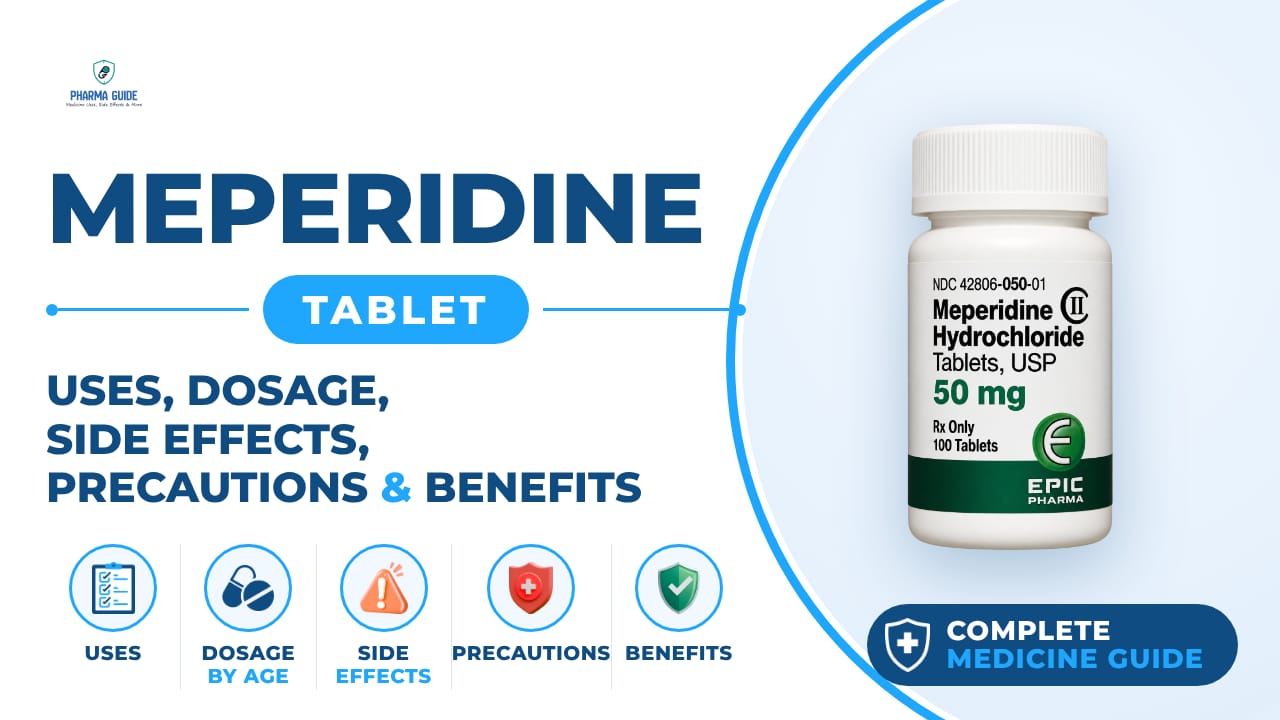
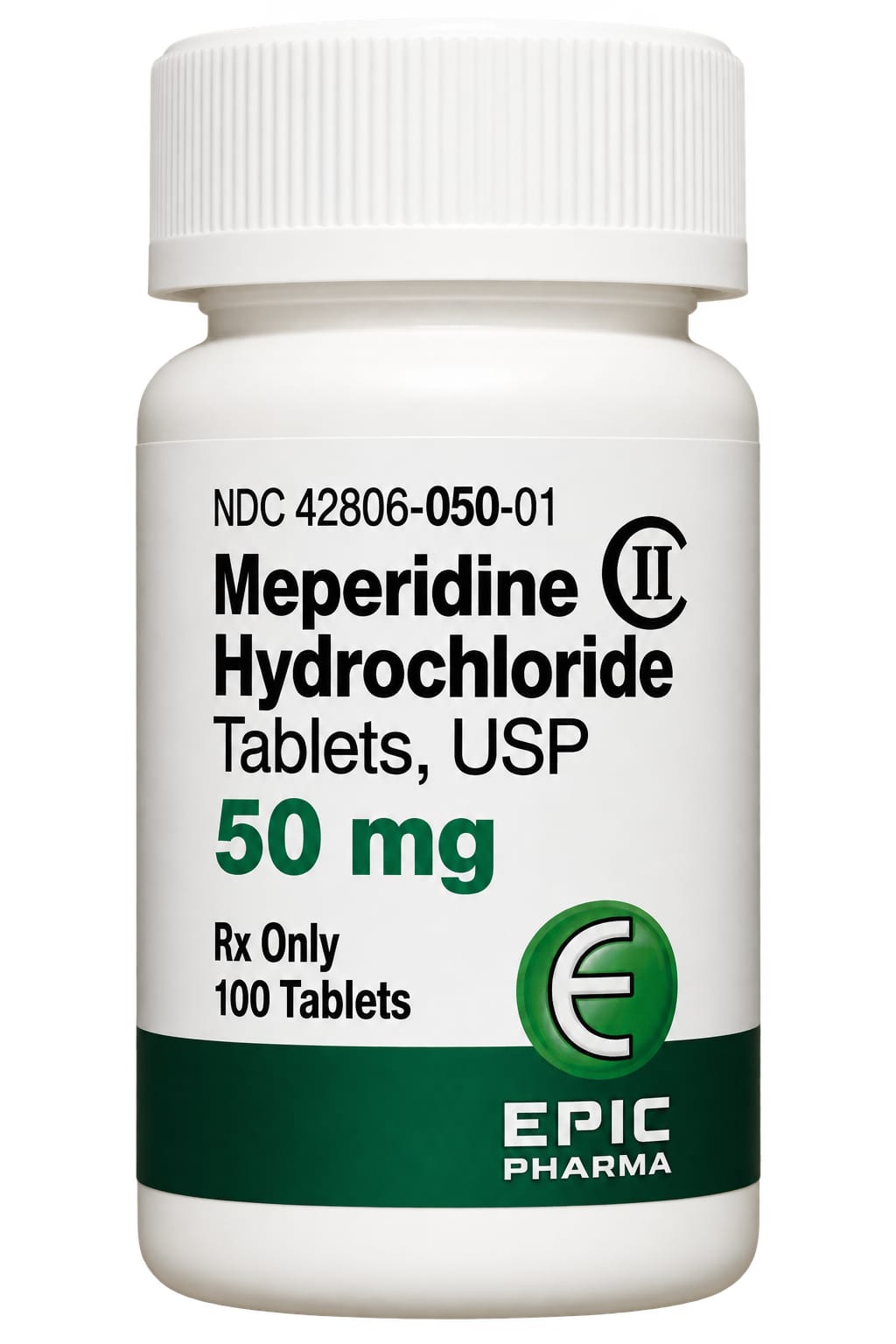
| Generic name | meperidine, meperidine hydrochloride, pethidine |
|---|---|
| Drug class | Opioid analgesic (narcotic pain medicine) |
| Forms | Tablet, Syrup (oral solution), Solution |
Quick overview
Meperidine is a strong prescription opioid pain medicine (also known as meperidine hydrochloride or pethidine) used to relieve moderate to severe pain when opioid treatment is needed. It is a controlled substance because it can be misused or lead to dependence, and it is intended for short-term use rather than long-lasting chronic pain. It works by acting on the central nervous system and pain receptors to change how the brain and body sense pain.
What is Meperidine Tablet
Meperidine is a strong prescription opioid pain medicine used to relieve pain severe enough to require opioid treatment. It belongs to the opioid analgesic (narcotic pain medicine) drug class. It is a controlled substance because it can be misused or lead to dependence.
Meperidine Tablet uses
- Relief of moderate to severe pain
- Used when other pain medicines did not work well enough or could not be tolerated
- Not meant for long-lasting (chronic) pain
Benefits of Meperidine Tablet
- Provides relief from moderate to severe pain when an opioid analgesic is required
- Helps reduce pain intensity when non-opioid treatments are inadequate
- Can provide short-term pain relief in selected patients
- May improve comfort and ability to rest when significant pain is appropriately controlled
- Is generally reserved for situations where a healthcare professional determines meperidine is specifically appropriate
How Meperidine Tablet works
Meperidine works by acting on the central nervous system and on pain receptors in the body, changing how the brain and body sense and respond to pain.
Meperidine Tablet dosage
Take exactly as directed by your doctor; do not take more, more often, or for longer than prescribed. Swallow tablets whole; do not crush, break, or chew them. This medicine can be taken with or without food, usually every 3 to 4 hours as needed for pain. Drink plenty of fluids during treatment to help prevent constipation. If you miss a dose, skip it and go back to your regular schedule; do not double up. Do not stop taking this medicine suddenly after using it for a while, as your doctor may lower your dose gradually to avoid withdrawal symptoms. Elderly patients may be more sensitive to this medicine and may need closer monitoring.
| Age group | Dose |
|---|---|
| Under 18 years | Use should be specialist-directed and weight-based; tablets are generally not preferred |
| 18–64 years – Pain | Usually 50–150 mg every 3–4 hours as needed |
| 65+ years | Generally avoid when possible; if required, use a lower dose with close monitoring |
| Kidney/liver impairment | Generally avoid or use with great caution, particularly with kidney impairment |
Available forms and strengths
- Tablet
- Syrup (oral solution)
- Solution
Side effects of Meperidine Tablet
Common
- Dizziness or lightheadedness
- Drowsiness or sleepiness
- Headache
- Nausea or vomiting
- Sweating
- Constipation
- Dry mouth
Serious
- Serious or life-threatening breathing problems (slow, shallow breathing or long pauses between breaths)
- Severe allergic reaction (swelling of face, lips, tongue, or throat; trouble breathing; hives)
- Confusion, hallucinations, or unusual behavior
- Seizures
- Chest pain or irregular heartbeat
- Severe constipation that may require hospital care
- Signs of low adrenal function (nausea, vomiting, weakness, dizziness, loss of appetite)
- Signs of serotonin syndrome (agitation, fast heartbeat, fever, sweating, muscle stiffness or twitching, loss of coordination, diarrhea)
- New or worsening pain or increased sensitivity to pain
- Signs of low blood pressure (fainting, severe dizziness)
- Signs of overdose (extreme drowsiness, cold clammy skin, slow heartbeat, bluish lips or fingernails, loss of consciousness)
Warnings and precautions
- This medicine can cause serious or life-threatening breathing problems, especially in the first 24 to 72 hours of treatment or after a dose increase. Get emergency help if breathing becomes slow, has long pauses, or you notice shortness of breath.
- This medicine must not be taken with, or within two weeks of stopping, an MAO inhibitor. Combining them can cause severe reactions like extremely high fever, dangerously high blood pressure, or severe seizures.
- Meperidine can be habit-forming and may lead to misuse, addiction, overdose, or death. Keep it in a secure place away from others, especially children.
- Never crush, break, chew, or dissolve the tablet to inject or inhale it. Misusing the tablet this way can be fatal.
- Do not stop taking this medicine suddenly if you have been using it regularly, as this can cause withdrawal symptoms. Your doctor will likely lower the dose gradually.
- This medicine should not be used by people with severe asthma or breathing problems, or a blockage in the stomach or intestines.
- Using meperidine during pregnancy may cause serious problems for the baby, including life-threatening withdrawal symptoms after birth. Tell your doctor right away if you are or might be pregnant.
- Meperidine passes into breast milk and can cause serious effects in a nursing baby. Talk to your doctor about the risks and benefits before breastfeeding while taking this medicine.
- People with kidney disease should use this medicine with caution because the drug and its byproduct can build up in the body, increasing the risk of side effects.
- People with liver disease should use this medicine with caution because the effects may be increased due to slower removal of the medicine from the body.
- Do not drink alcohol while taking meperidine. Combining alcohol with this medicine can cause dangerous breathing problems, overdose, or death.
- This medicine can affect your alertness, coordination, and judgment. Do not drive or operate machinery until you know how it affects you.
Storage
- Store at 20–25°C (68–77°F) at controlled room temperature.
- Keep in a cool, dry place away from excessive heat and moisture.
- Keep tablets in the original, tightly closed container.
- Protect from direct light and avoid hot or humid storage areas.
- Store securely to prevent accidental ingestion, misuse, or unauthorized access.
- Keep out of reach and sight of children and pets.
When to see a doctor
- Get emergency help right away if you or someone else shows signs of an overdose, such as loss of consciousness, cold clammy skin, slow or irregular breathing, bluish lips or fingernails, extreme drowsiness, or seizures.
- Seek emergency help if you have signs of a serious allergic reaction, such as hives, difficulty breathing, or swelling of the face, lips, tongue, or throat.
- Call your doctor right away if you have worsening pain, increased sensitivity to pain, or new pain after taking this medicine.
- Check with your doctor right away if you have symptoms of serotonin syndrome, including anxiety, restlessness, fast heartbeat, fever, sweating, muscle spasms, twitching, nausea, vomiting, diarrhea, or seeing or hearing things that are not there.
- Get help right away if you have not had a bowel movement in three days, as this may signal severe constipation needing treatment.
Alternatives
- Acetaminophen (Paracetamol)
- Codeine
- Tapentadol
- Ibuprofen
- Hydromorphone
Watch the video
FAQs
What is Meperidine Tablet used for?
It is used to relieve moderate to severe pain when opioid treatment is needed, typically when other pain medicines did not work well enough or could not be tolerated. It is not meant for long-lasting chronic pain.
How should Meperidine Tablet be taken?
Take it exactly as directed by your doctor, swallowing tablets whole without crushing, breaking, or chewing them. It is usually taken every 3 to 4 hours as needed for pain, with or without food, and plenty of fluids should be drunk to help prevent constipation.
What is the usual dosage of Meperidine Tablet for adults?
For adults aged 18–64 years, the usual dose is 50–150 mg every 3–4 hours as needed for pain.
What are the serious side effects of Meperidine Tablet?
Serious side effects include life-threatening breathing problems, severe allergic reactions, confusion or hallucinations, seizures, chest pain or irregular heartbeat, severe constipation, signs of low adrenal function, serotonin syndrome, and signs of overdose.
Can Meperidine Tablet be taken with alcohol or MAO inhibitors?
No, alcohol should be avoided because it can cause dangerous breathing problems, overdose, or death. It must also not be taken with, or within two weeks of stopping, an MAO inhibitor, as this can cause severe reactions like extremely high fever, dangerously high blood pressure, or severe seizures.
General information, not medical advice
Your prescriber and the leaflet in your pack know your situation. This page does not.
- Follow your prescriber and the leaflet
- Don't start, stop, or change a dose on your own
- Doses and warnings differ by country and product
Sources
Video
Related medicines
Hydromorphone Tablet: Uses, Dosage, Side Effects, Precautions and Alternates
Opioid analgesic (narcotic pain medicine)
Hydromorphone Tablet is a strong opioid for moderate to severe pain. Learn uses, dosage, side effects, warnings, and when to seek emergency help.

Injectafer Injection: Uses, Dosage, Side Effects, Precautions and Alternates
Iron products
Injectafer (ferric carboxymaltose) treats iron deficiency anemia and heart failure-related iron deficiency via IV. Learn uses, dosage, side effects, and