
Safety
General information, not medical advice
Your prescriber and the leaflet in your pack know your situation. This page does not.
- Follow your prescriber and the leaflet
- Don't start, stop, or change a dose on your own
- Doses and warnings differ by country and product
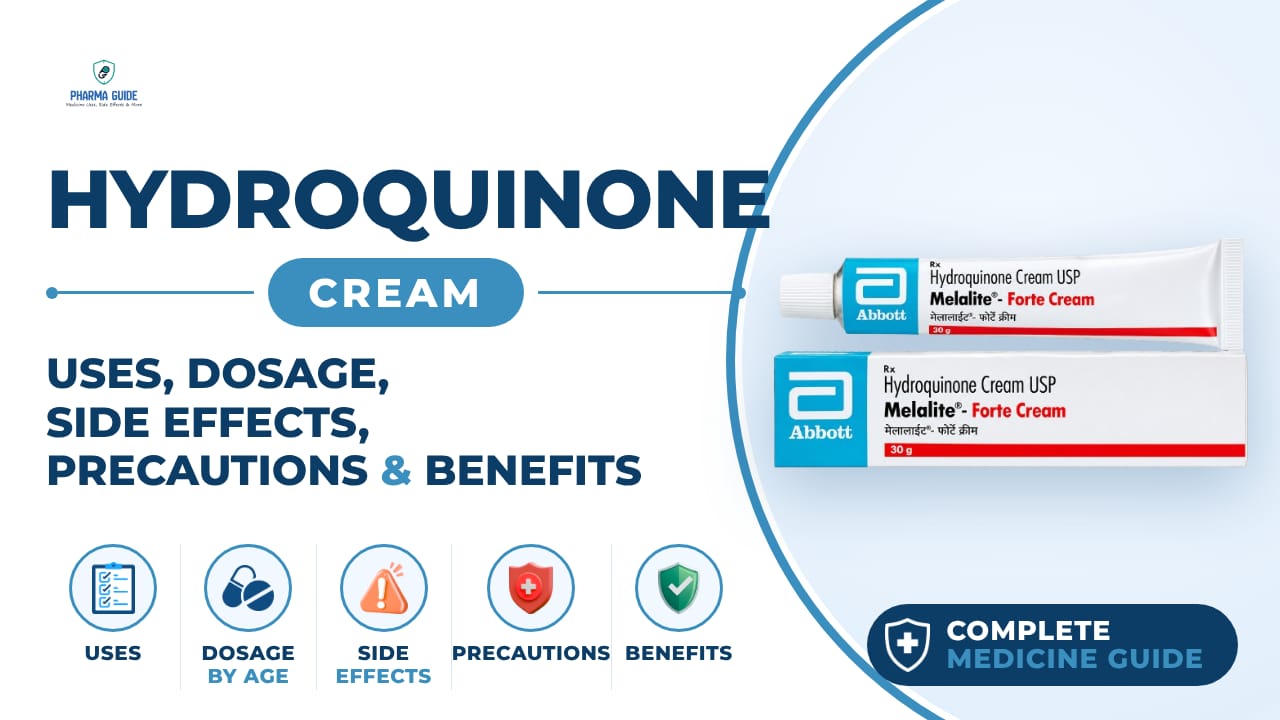
Hydroquinone Cream: Uses, Dosage, Side Effects, Precautions and Alternates
| Generic name | hydroquinone |
|---|---|
| Drug class | depigmenting agent, skin bleaching agent |
| Forms | topical cream, topical liquid, gel, lotion, emulsion |
Quick overview
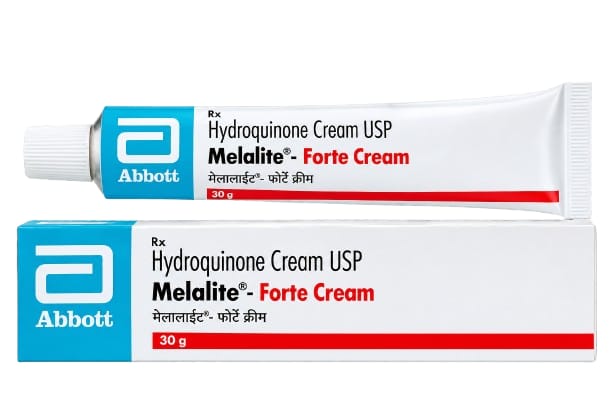
Hydroquinone Cream (hydroquinone) is a prescription skin-lightening medicine from the depigmenting/skin-bleaching agent class, applied to the skin to fade dark patches such as melasma, freckles, age spots, and post-inflammatory marks. It works by blocking an enzyme skin cells use to make melanin, allowing dark patches to gradually lighten. It is available in cream, gel, lotion, solution, and liquid forms and is typically applied as a thin layer once a day, exactly as prescribed.
What is Hydroquinone Cream
Hydroquinone is a prescription skin-lightening medicine applied to the skin. It is used to fade dark patches of skin and is available as a cream, gel, lotion, solution, or liquid.
Hydroquinone Cream uses
- Melasma (brown or gray-brown patches on the skin, sometimes called pregnancy mask)
- Freckles
- Age spots or sun spots (lentigines)
- Post-inflammatory hyperpigmentation, including marks left by acne
- Other areas of darkened or discolored skin as determined by a health care provider
Benefits of Hydroquinone Cream
- Has a long history of use in dermatology and has been widely studied for treating melasma
- Tends to produce reliable and predictable results when used as directed
- Available in different strengths and forms (creams, gels, lotions) to suit different skin types
- Can be combined with other treatments, such as tretinoin or sunscreen, for better results
How Hydroquinone Cream works
Hydroquinone works by blocking an enzyme that your skin cells use to make melanin, the pigment that gives skin its color. With less melanin being made, dark patches gradually become lighter. It may also affect the pigment-making cells directly.
Hydroquinone Cream dosage
Apply only to the skin — do not take by mouth. Wash your hands and the affected area before applying, then apply a thin layer to the affected area and rub in gently until evenly spread. Apply before other skin products such as moisturizer or sunscreen. Avoid contact with eyes, inside the nose or mouth, or lips; rinse with water right away if this happens.
Apply only to the pigmented (dark) skin, since it can lighten normal skin too, and do not apply to broken, damaged, or infected skin. Wash your hands thoroughly after applying so you don't lighten the skin on your fingers.
Before first use, test a small area of skin and check it within 24 hours for a severe reaction before treating larger areas. Use sunscreen (SPF 15 or higher) or wear protective clothing over treated areas, since even brief sun exposure can darken the skin again. After applying, avoid using harsh soaps, bleach, hair removal products, or alcohol-based skin products on the area.
If you miss an application, apply it when you remember unless it is close to time for your next one — in that case skip the missed one. Do not use extra amounts to make up for a missed application. Not advised for use in children under 12 years old, since safety has not been studied in this age group. If you see no improvement after two to three months of regular use, stop and talk with your health care provider.
| Age group | Dose |
|---|---|
| Under 12 years | Not recommended |
| 12–17 years | Thin layer, once/day |
| 18–60 years | Thin layer, once/day |
| 60+ years | Thin layer, once/day |
Available forms and strengths
- Topical cream
- Topical liquid
- Gel
- Lotion
- Emulsion
Side effects of Hydroquinone Cream
Common
- Dry skin and cracking, especially near the nose or below the eyes
- Skin redness or stinging
- Itching
- Skin peeling
- Burning or tingling sensation
- Swelling at the application site
Serious
- Severe allergic reaction (breathing problems, swelling of face/lips/mouth/tongue/throat, hives, fainting)
- Contact dermatitis with blistering or severe burning
- Gradual blue-black darkening of the skin (exogenous ochronosis)
- Thinning of the skin, making it prone to easy bruising
- Skin blistering, crusting, or flaking
- Lightening of normal (non-treated) skin tone
Warnings and precautions
- Do not use hydroquinone unless a health care provider has prescribed it, and use it exactly as directed.
- Do not share this medicine with others, even if they have a similar skin condition.
- Before using it for the first time, test it on a small area of unbroken skin and check the area within 24 hours. Do not continue using it if you see blistering, strong itching, or inflammation.
- Do not get this medicine in your eyes, inside your nose or mouth, or on your lips. If this happens by accident, rinse thoroughly with water and tell your health care provider.
- Always use sunscreen or protective clothing on treated skin, because even a small amount of sun exposure can darken the area again.
- Long-term, excessive use of hydroquinone can cause a bluish-black skin discoloration called ochronosis, which may be permanent.
- This medicine should only be used for a limited time — generally no more than three months at a stretch.
- It isn't known if hydroquinone is safe to use during pregnancy or if it could harm an unborn baby. Tell your health care provider if you are pregnant or planning to become pregnant before using it.
- It isn't known if hydroquinone passes into breast milk. Tell your health care provider if you are breastfeeding so they can advise you.
- Avoid contact with eyes, lips, and inside the nose. Stop use if severe redness, burning, swelling, or irritation occurs. It isn't known whether drinking alcohol affects this medicine. Avoid prolonged continuous use unless advised by a healthcare professional.
Storage
- Store at room temperature, between 68°F and 77°F (20°C and 25°C)
- Can be exposed to temperatures as low as 59°F (15°C) for shorter periods, such as during transport
- Store in a cool, dry place
When to see a doctor
- Stop using the medicine and get help right away if you have signs of a serious allergic reaction, such as trouble breathing, a racing heart, fever, swelling of the face/lips/mouth/tongue/throat, trouble swallowing, hives, nausea, dizziness, or fainting.
- Stop using the medicine and tell your health care provider if you notice an allergic rash or severe skin reactions such as blistering or severe burning.
- Stop using the product and tell your health care provider if you notice any gradual blue-black darkening of the skin.
- If you use too much of this medicine, get medical help right away or contact a poison control center.
Alternatives
- Kojic Acid Cream
- Tretinoin Cream
- Azelaic Acid Cream
Watch the video
FAQs
What is Hydroquinone Cream used for?
It is used to fade dark patches of skin such as melasma, freckles, age spots, post-inflammatory hyperpigmentation from acne, and other areas of discoloration as determined by a health care provider.
How does Hydroquinone Cream work?
It works by blocking an enzyme that skin cells use to make melanin, the pigment that gives skin its color. With less melanin produced, dark patches gradually lighten. It may also affect pigment-making cells directly.
How should I apply Hydroquinone Cream?
Wash your hands and the affected area, then apply a thin layer only to the pigmented skin and rub in gently, applying before other skin products like moisturizer or sunscreen. Avoid contact with eyes, nose, mouth, or lips, and wash your hands thoroughly afterward.
What are the side effects of Hydroquinone Cream?
Common side effects include dry skin and cracking, redness, stinging, itching, peeling, burning or tingling, and swelling at the application site. Serious effects can include severe allergic reactions, contact dermatitis, blue-black skin darkening (ochronosis), skin thinning, and lightening of normal skin.
How long can I use Hydroquinone Cream?
It should only be used for a limited time, generally no more than three months at a stretch, and you should stop and talk to your health care provider if you see no improvement after two to three months of regular use.
General information, not medical advice
Your prescriber and the leaflet in your pack know your situation. This page does not.
- Follow your prescriber and the leaflet
- Don't start, stop, or change a dose on your own
- Doses and warnings differ by country and product
Sources
Video
Related medicines

Injectafer Injection: Uses, Dosage, Side Effects, Precautions and Alternates
Iron products
Injectafer (ferric carboxymaltose) treats iron deficiency anemia and heart failure-related iron deficiency via IV. Learn uses, dosage, side effects, and

Gliclazide Tablet: Uses, Dosage, Side Effects, Precautions and Alternates
Sulfonylurea (hypoglycemic/antidiabetic agent)
Gliclazide Tablet is a sulfonylurea for type 2 diabetes that boosts insulin release. Learn about dosage, side effects, warnings, and precautions.