
Safety
General information, not medical advice
Your prescriber and the leaflet in your pack know your situation. This page does not.
- Follow your prescriber and the leaflet
- Don't start, stop, or change a dose on your own
- Doses and warnings differ by country and product
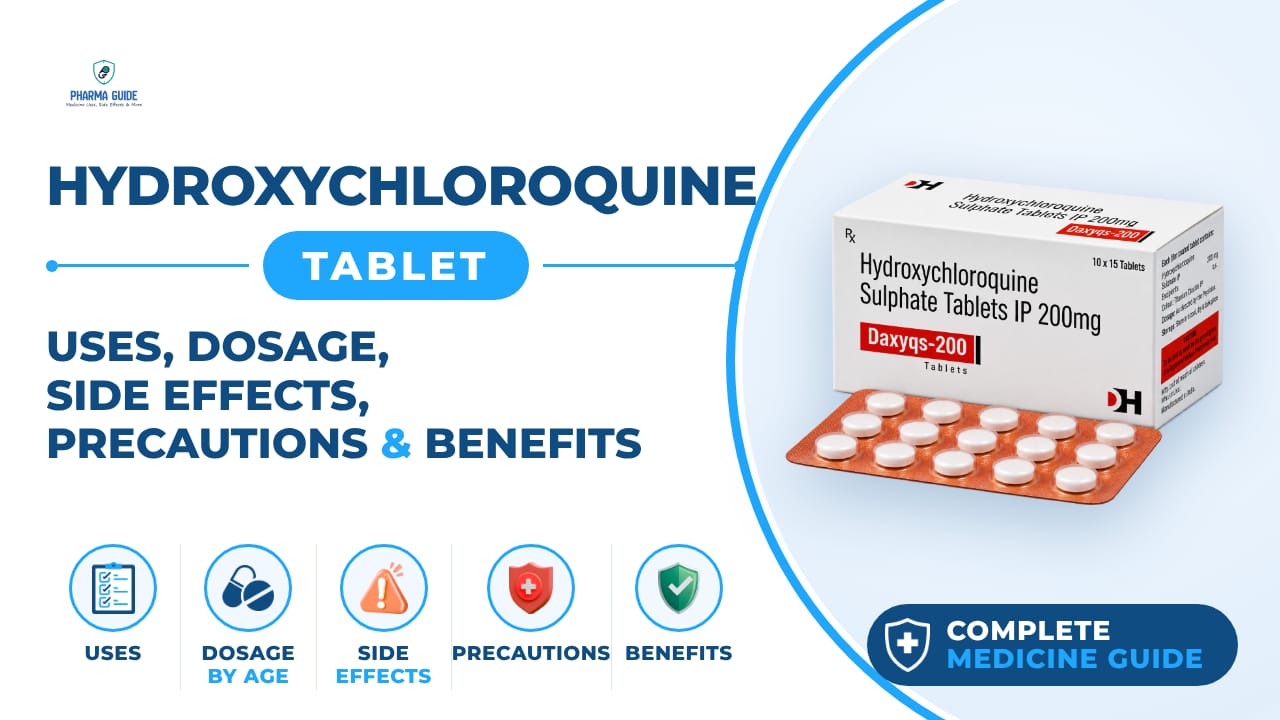
Hydroxychloroquine Tablet: Uses, Dosage, Side Effects, Precautions and Alternates
| Generic name | Hydroxychloroquine sulfate |
|---|---|
| Drug class | DMARD / Antimalarial (4-aminoquinoline) |
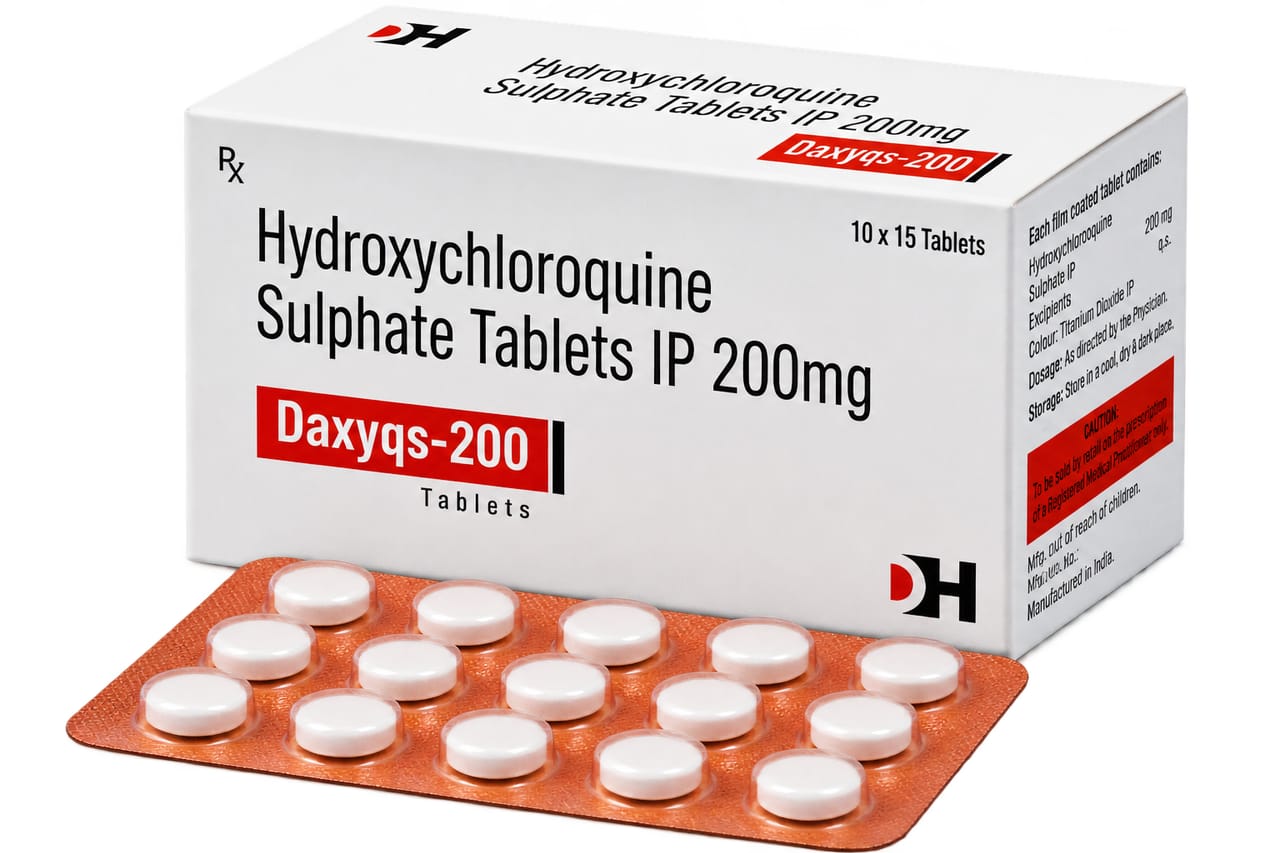
| Forms | Tablet |
Quick overview
Hydroxychloroquine Tablet contains hydroxychloroquine sulfate, a DMARD and antimalarial (4-aminoquinoline) medicine. It is used to treat autoimmune conditions such as rheumatoid arthritis and lupus by slowing down an overactive immune system, and it also prevents and treats certain forms of malaria by killing the parasite that causes the infection. It is sometimes also used for porphyria cutanea tarda. It should be taken exactly as prescribed, with regular monitoring for eye, heart, and mental health effects.
What is Hydroxychloroquine Tablet
Hydroxychloroquine is a medication that treats autoimmune conditions like rheumatoid arthritis and lupus. It slows down your overactive immune system. It can also prevent and treat malaria by killing the parasite that causes it.
Hydroxychloroquine Tablet uses
- Treats rheumatoid arthritis
- Treats systemic lupus erythematosus (SLE)
- Treats discoid lupus erythematosus (DLE)
- Prevents and treats certain forms of malaria
- Sometimes used to treat porphyria cutanea tarda
Benefits of Hydroxychloroquine Tablet
- Slows down an overactive immune system in autoimmune conditions
- Kills the parasite that causes malaria
How Hydroxychloroquine Tablet works
It is not known exactly how the medicine works for rheumatoid arthritis and lupus, though it may reduce immune system activity. For malaria, it works by killing the parasite that causes the infection.
Hydroxychloroquine Tablet dosage
Take this medication by mouth with water, or with food or a glass of milk to help avoid an upset stomach. Swallow the tablets whole; do not split, cut, crush, or chew them. Take antacids at least 2 to 4 hours before or after this medication, not at the same time. Take it exactly as directed and do not take more or less than prescribed. Keep taking it even if you feel better, unless your care team tells you to stop. If treating rheumatoid arthritis, symptoms may take several weeks to months to improve. Do not stop taking this medicine without talking to your doctor, since symptoms can come back. This medicine is only for you; do not share it with others.
| Age group | Dose |
|---|---|
| Children <31 kg | Standard 200 mg tablets not recommended for malaria dosing |
| Children ≥31 kg | Malaria prevention: 6.5 mg/kg once weekly, max 400 mg |
| 12–17 years | Weight-based for malaria; specialist dosing for other conditions |
| 18–64 years | Lupus: 200–400 mg/day; rheumatoid arthritis maintenance: 200–400 mg/day |
| 65+ years | Individualized adult dosing; consider kidney/liver function and toxicity risk |
Available forms and strengths
- Tablet
Side effects of Hydroxychloroquine Tablet
Common
- Diarrhea
- Headache
- Nausea
- Stomach pain
- Vomiting
- Loss of appetite
- Difficulty hearing
- Ringing in ears
- Hair loss
- Hair color changes
Serious
- Allergic reactions—skin rash, itching, hives, swelling of the face, lips, tongue, or throat
- Aplastic anemia or bone marrow problems—unusual weakness or fatigue, dizziness, headache, trouble breathing, increased bleeding or bruising
- Change in vision or permanent eye damage
- Heart rhythm changes—fast or irregular heartbeat, dizziness, feeling faint or lightheaded, chest pain, trouble breathing
- Signs of infection—fever, chills, cough, or sore throat
- Low blood sugar (hypoglycemia)—tremors or shaking, anxiety, sweating, cold or clammy skin, confusion, dizziness, rapid heartbeat
- Muscle injury or weakness—unusual weakness or fatigue, muscle pain, dark yellow or brown urine, decrease in amount of urine
- Pain, tingling, or numbness in the hands or feet
- Rash, fever, and swollen lymph nodes
- Redness, blistering, peeling, or loosening of the skin, including inside the mouth
- Thoughts of suicide or self-harm, worsening mood, or feelings of depression
- Unusual bruising or bleeding
- Liver problems—yellowing of skin or eyes, dark urine, pain in the upper right part of the stomach
- Seizures
- Mood or mental changes, hallucinations, confusion
Warnings and precautions
- This medicine can cause a dangerously fast heart rhythm (long QT interval or torsade de pointes), which can lead to cardiac arrest, sudden collapse, and death. Taking this medicine for long periods can cause serious heart problems such as an enlarged or weak heart (cardiomyopathy), which can be fatal.
- This medicine can cause mental health problems such as abnormal thoughts, anxiety, hallucinations, confusion, depression, or thoughts of self-harm or suicide, even in people with no history of mental health problems. This can happen within the first month of treatment.
- This medicine can cause permanent eye damage. You should have an eye exam before starting treatment and regular eye exams while taking it.
- This medicine can cause severe skin reactions that can be life-threatening, including blistering and peeling of the skin, sometimes starting with fever and flu-like symptoms. Stop taking the medicine and contact your doctor right away if these occur.
- Overdose is dangerous and can be fatal, especially in children; symptoms can appear within 30 minutes of taking too much.
- Protect your skin from the sun by wearing appropriate clothing and using sunscreen with at least SPF 30, since this medicine can increase sensitivity to sunlight. Do not eat grapefruit or drink grapefruit juice while taking this medicine, as it can increase the amount of medicine in your blood.
- Hydroxychloroquine should be avoided during pregnancy unless the potential benefits outweigh the potential harms, as judged by your doctor. It can cross the placenta and may harm the unborn baby.
- Careful consideration should be given before using this medicine while breastfeeding, since small amounts pass into breast milk and infants are very sensitive to its toxic effects. There is not enough in breast milk to protect an infant against malaria.
- This medicine should be used with caution in people with kidney disease, and a lower dose may be needed. It should also be used with caution in people with liver disease or alcoholism, and a lower dose may be needed. Tell your care team if you frequently drink alcohol.
- This medicine can cause blurry vision. Do not drive or operate machinery until you know how the medicine affects you and can see well.
Storage
- Store at room temperature up to 30 degrees C (86 degrees F)
- Protect from light
- Keep out of the reach of children and pets
- Get rid of any unused medication after the expiration date
- Take the medication to a medication take-back program if possible
- If a take-back program is not available, check the label to see if it can be thrown in the garbage; if so, mix it with cat litter, dirt, or coffee grounds, seal it in a bag, and put it in the trash
- Do not flush this medication down the toilet unless instructed
When to see a doctor
- Get medical help right away if you notice fevers or flu-like symptoms with a rash, especially if the rash turns into blisters or peeling skin, or if you see a red rash with facial swelling or swollen lymph nodes.
- Call your care team right away if you or your family notice new or worsening depression, thoughts of harming yourself, anxiety, unusual or disturbing thoughts, or memory loss.
- Seek emergency help if you have a fast or irregular heartbeat, dizziness, fainting, chest pain, or trouble breathing, as these could be signs of a serious heart rhythm problem.
- Tell your doctor right away if you notice any change in your eyesight, such as blurred vision, floaters, or seeing flashes of light.
- Get emergency care if you think you or someone else has taken too much of this medicine, even if there are no symptoms yet.
- If an infant or small child may have swallowed even one pill, take them to the nearest hospital emergency room immediately.
- Stop taking the medicine and tell your doctor right away if you develop symptoms of a severe skin reaction, such as ulcers of the mouth, throat, nose, genitals, red and swollen eyes, or blistering and peeling skin.
Alternatives
- Sulfasalazine
- Methotrexate
- Atovaquone + Proguanil
- Artemether + Lumefantrine
- Chloroquine
Watch the video
FAQs
What is Hydroxychloroquine Tablet used for?
It treats rheumatoid arthritis, systemic lupus erythematosus, and discoid lupus erythematosus, and it prevents and treats certain forms of malaria. It is sometimes used for porphyria cutanea tarda.
How does Hydroxychloroquine Tablet work?
It is not known exactly how it works for rheumatoid arthritis and lupus, though it may reduce immune system activity. For malaria, it works by killing the parasite that causes the infection.
What are the serious side effects of Hydroxychloroquine Tablet?
Serious effects include heart rhythm changes, permanent eye damage, severe skin reactions, liver problems, mood or mental changes including thoughts of suicide, muscle injury, seizures, and aplastic anemia or bone marrow problems.
Can Hydroxychloroquine Tablet cause eye damage?
Yes, it can cause permanent eye damage, so an eye exam is recommended before starting treatment and regular eye exams while taking it.
How should Hydroxychloroquine Tablet be taken?
Take it by mouth with water, food, or milk to avoid upset stomach, and swallow tablets whole without splitting, cutting, crushing, or chewing them. Take antacids at least 2 to 4 hours before or after this medication.
General information, not medical advice
Your prescriber and the leaflet in your pack know your situation. This page does not.
- Follow your prescriber and the leaflet
- Don't start, stop, or change a dose on your own
- Doses and warnings differ by country and product
Sources
Video
Related medicines

Injectafer Injection: Uses, Dosage, Side Effects, Precautions and Alternates
Iron products
Injectafer (ferric carboxymaltose) treats iron deficiency anemia and heart failure-related iron deficiency via IV. Learn uses, dosage, side effects, and

Gliclazide Tablet: Uses, Dosage, Side Effects, Precautions and Alternates
Sulfonylurea (hypoglycemic/antidiabetic agent)
Gliclazide Tablet is a sulfonylurea for type 2 diabetes that boosts insulin release. Learn about dosage, side effects, warnings, and precautions.