
Safety
General information, not medical advice
Your prescriber and the leaflet in your pack know your situation. This page does not.
- Follow your prescriber and the leaflet
- Don't start, stop, or change a dose on your own
- Doses and warnings differ by country and product
Hydroxyurea Capsule: Uses, Dosage, Side Effects, Precautions and Alternates
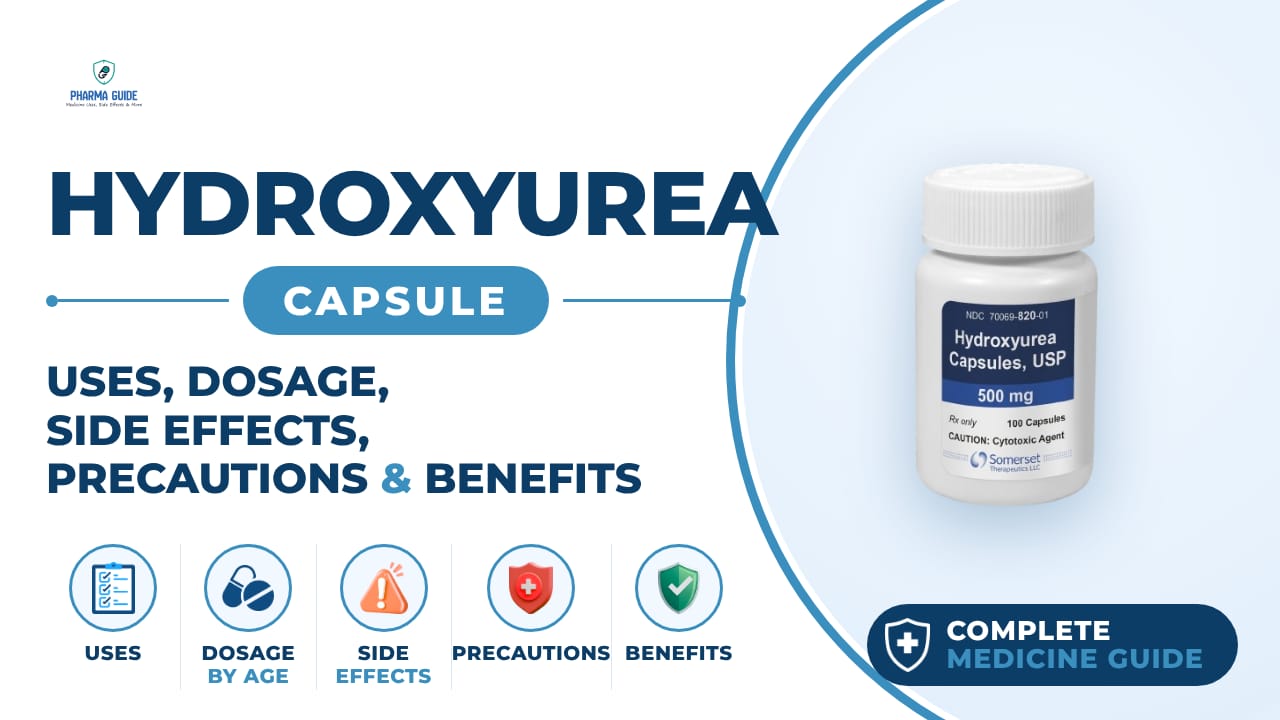
| Generic name | Hydroxyurea |
|---|---|
| Drug class | Antimetabolite (antineoplastic agent) |
| Forms | Capsule, Tablet |
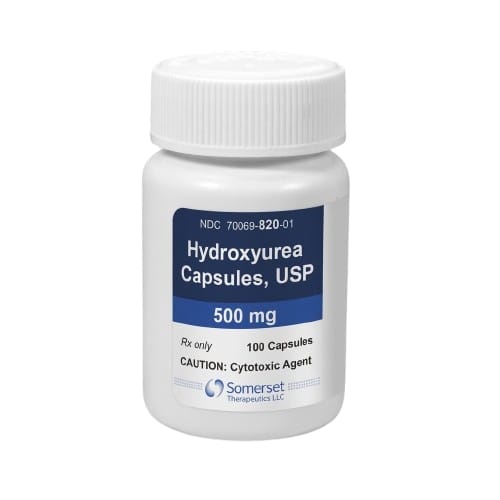
Quick overview
Hydroxyurea Capsule, generic name hydroxyurea, is a prescription antimetabolite antineoplastic agent used to treat certain cancers and sickle cell anemia. It works by slowing or stopping the growth of cancer cells and by helping prevent the formation of sickle-shaped red blood cells. It is usually taken once a day with water, and it requires careful handling and regular monitoring due to its effects on blood cell counts.
What is Hydroxyurea Capsule
Hydroxyurea is a prescription capsule medicine used to treat certain cancers and sickle cell anemia. It works by slowing or stopping the growth of cancer cells and by helping prevent the formation of sickle-shaped red blood cells.
Hydroxyurea Capsule uses
- Treating chronic myelogenous leukemia (CML), a type of blood cancer, alone or with other medicines or radiation
- Treating certain head and neck cancers (mouth, cheek, tongue, throat, tonsils, sinuses), usually along with radiation therapy
- Reducing painful crises and the need for blood transfusions in adults and children 2 years and older with sickle cell anemia
- Treating resistant chronic myelocytic leukemia
- Sometimes used to treat polycythemia vera (a blood disease causing too many red blood cells)
Benefits of Hydroxyurea Capsule
- Slows or stops the growth of cancer cells
- Helps prevent formation of sickle-shaped red blood cells, reducing painful crises and transfusion needs
How Hydroxyurea Capsule works
Hydroxyurea blocks an enzyme needed for DNA production, which stops cancer cells from dividing. In sickle cell disease, it helps prevent red blood cells from forming the abnormal sickle shape.
Hydroxyurea Capsule dosage
Hydroxyurea is usually taken once a day with a glass of water; for certain cancers it may be taken once every third day. Take it at around the same time every day, exactly as your doctor directs. Swallow the capsules whole; do not split, chew, or crush them. If you cannot swallow the capsule, you may be able to empty the contents into a glass of water and drink it right away, though some material may not dissolve and will float on top. Your doctor may also have you take folic acid to help reduce side effects.
Wear rubber or latex gloves when handling the capsules, and wash your hands before and after touching the bottle or medicine. If the powder gets in your eyes, flush with water right away for at least 15 minutes. If spilled, wipe up the powder immediately with a damp disposable towel and dispose of it safely.
Do not stop taking this medicine without talking to your doctor first. Keep up your normal diet unless your doctor tells you otherwise. Your doctor may want you to drink extra fluids to help protect your kidneys.
| Age group | Dose |
|---|---|
| Under 18 years | Not fixed |
| 18–60 years | 500 mg, once/day |
| 60+ years | 500 mg, once/day |
Available forms and strengths
- Capsule
- Tablet (1,000 mg)
Side effects of Hydroxyurea Capsule
Common
- Nausea
- Vomiting
- Diarrhea
- Loss of appetite
- Weight gain
- Sores in the mouth and throat
- Constipation
- Rash
- Pale skin
- Dizziness
- Headache
- Hair loss
- Changes in skin and nails
- Muscle aches and a general unwell feeling
- Fatigue
Serious
- Fever, chills, excessive tiredness or weakness, body aches, sore throat, shortness of breath, ongoing cough and congestion, or other signs of infection
- Unusual bleeding or bruising
- Bloody or black, tarry stools, or vomiting blood or material that looks like coffee grounds
- Fast heartbeat
- Ongoing pain that starts in the stomach area and may spread to the back
- Leg wounds or ulcers
- Pain, itching, redness, swelling, or blisters on the skin
- Pain in the upper right part of the stomach
- Blood in the urine
- Yellowing of the skin or eyes
- Numbness, burning, or tingling in the hands or feet
- Fever, cough, shortness of breath, and other breathing problems
- Signs of liver inflammation: abdominal pain, fatigue, fever, itchiness, light-colored stool, trouble thinking clearly, yellowing of skin and eyes
Warnings and precautions
- This medicine can severely lower blood cell counts, raising the risk of serious infection or bleeding. Call your doctor right away if you notice fever, chills, extreme tiredness, body aches, sore throat, shortness of breath, cough, unusual bleeding or bruising, or black tarry stools.
- This medicine may increase the risk of developing other cancers, including skin cancer. Avoid too much sun exposure and wear protective clothing, sunglasses, and sunscreen.
- Do not take this medicine if you have severely low blood cell counts (white blood cells, platelets) or severe anemia that hasn't been treated.
- A high fever (100.4°F/38°C or higher, specifically 39°C or higher) within the first weeks of treatment can be serious and may come with other body system problems; tell your doctor immediately if this happens.
- This medicine can cause a serious complication called tumor lysis syndrome from rapid breakdown of cancer cells, which can be life-threatening.
- Do not have any vaccinations, especially live vaccines, without talking to your doctor first, since this medicine can weaken the immune response.
- This medicine should be handled carefully. Wear gloves when touching the capsules or bottle, wash your hands before and after, and keep it away from other people, children, and pets.
- This medicine may lower fertility in men, sometimes causing low or absent sperm count.
- You should not become pregnant while taking this medicine because it may harm the unborn baby.
- Use effective birth control during treatment and for some time after stopping, as directed by your doctor. Do not breastfeed while taking this medicine, since it passes into breast milk and could harm the baby.
- People with kidney problems may need a lower dose, since the kidneys help remove this medicine from the body. Your doctor will monitor your kidney function closely. There is no specific dose guidance for people with liver problems, but your doctor will monitor your blood counts closely if you have liver disease.
- This medicine can cause drowsiness, dizziness, weakness, or tiredness, so use caution before driving or operating machinery until you know how it affects you.
Storage
- Keep this medication in the container it came in, tightly closed, and out of reach of children and pets
- Store it at room temperature and away from excess heat and moisture (not in the bathroom)
- Broken 1,000-mg tablets must be stored in the container and must be used within 3 months
- Dispose of unneeded medication through a medicine take-back program; do not flush it down the toilet
When to see a doctor
- Get medical help right away if you have signs of infection such as fever, chills, tiredness, body aches, sore throat, or ongoing cough.
- Seek immediate medical care for unusual bleeding or bruising, or black tarry stools, or vomiting blood or material that looks like coffee grounds.
- Call your doctor immediately or get emergency care for fast heartbeat, stomach pain spreading to the back, leg wounds or ulcers, skin blisters, pain under the right ribs, blood in urine, yellowing of skin or eyes, numbness or tingling in hands or feet, or breathing problems.
- If you think you or someone else has taken too much of this medicine, contact a healthcare professional, hospital emergency department, or poison control center right away, even if there are no symptoms.
- Call your doctor right away if you become pregnant while taking this medicine.
Alternatives
- Busulfan
- Interferon Alfa
- Hydroxycarbamide
Watch the video
FAQs
What is Hydroxyurea Capsule used for?
It is used to treat chronic myelogenous leukemia, certain head and neck cancers (often with radiation), resistant chronic myelocytic leukemia, and to reduce painful crises and transfusion needs in sickle cell anemia; it is sometimes used for polycythemia vera.
How should I take Hydroxyurea Capsule?
It is usually taken once a day with a glass of water at the same time each day, exactly as directed; for certain cancers it may be taken once every third day. Swallow capsules whole without splitting, chewing, or crushing them.
What are the common side effects of Hydroxyurea Capsule?
Common side effects include nausea, vomiting, diarrhea, loss of appetite, weight gain, mouth and throat sores, constipation, rash, pale skin, dizziness, headache, hair loss, skin and nail changes, muscle aches, and fatigue.
What precautions should I follow while taking Hydroxyurea Capsule?
This medicine can severely lower blood cell counts and increase infection or bleeding risk, so report fever, chills, unusual bleeding, or bruising right away. It may increase skin cancer risk, so limit sun exposure, avoid live vaccines without consulting your doctor, and handle capsules with gloves, keeping them away from children and pets.
Can Hydroxyurea Capsule be used during pregnancy?
No, you should not become pregnant while taking this medicine because it may harm the unborn baby. Effective birth control should be used during treatment and for some time after stopping, and breastfeeding should be avoided since the medicine passes into breast milk.
General information, not medical advice
Your prescriber and the leaflet in your pack know your situation. This page does not.
- Follow your prescriber and the leaflet
- Don't start, stop, or change a dose on your own
- Doses and warnings differ by country and product
Sources
- MedlinePlus: https://medlineplus.gov/druginfo/meds/a682004.html
- DailyMed: https://dailymed.nlm.nih.gov/dailymed/fda/fdaDrugXsl.cfm?setid=7a2e2305-78bd-4077-96c6-59c5059201ab&type=display
- Health Canada Product Monograph (HYDREA): https://pdf.hres.ca/dpd_pm/00068184.PDF
Video
Related medicines

Injectafer Injection: Uses, Dosage, Side Effects, Precautions and Alternates
Iron products
Injectafer (ferric carboxymaltose) treats iron deficiency anemia and heart failure-related iron deficiency via IV. Learn uses, dosage, side effects, and

Gliclazide Tablet: Uses, Dosage, Side Effects, Precautions and Alternates
Sulfonylurea (hypoglycemic/antidiabetic agent)
Gliclazide Tablet is a sulfonylurea for type 2 diabetes that boosts insulin release. Learn about dosage, side effects, warnings, and precautions.