
Safety
General information, not medical advice
Your prescriber and the leaflet in your pack know your situation. This page does not.
- Follow your prescriber and the leaflet
- Don't start, stop, or change a dose on your own
- Doses and warnings differ by country and product
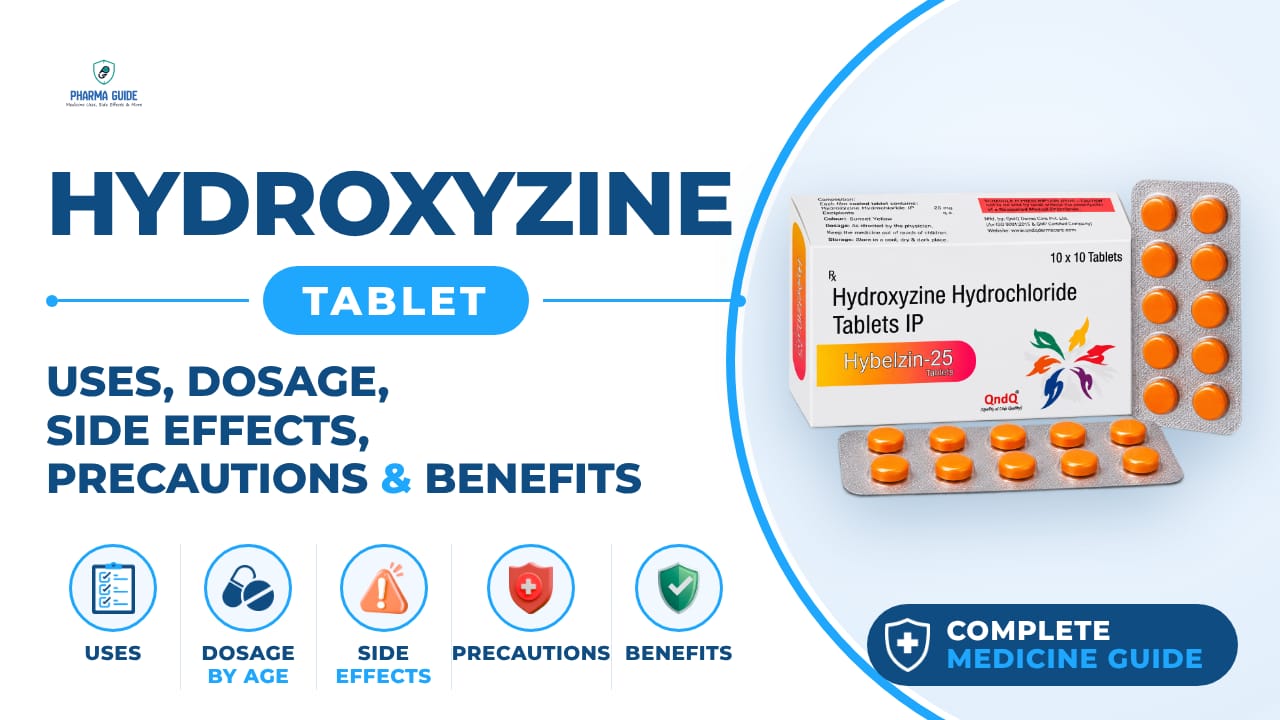
Hydroxyzine Tablet: Uses, Dosage, Side Effects, Precautions and Alternates
| Generic name | Hydroxyzine |
|---|---|
| Drug class | Antihistamine (also classed with anxiolytics, sedatives and hypnotics) |
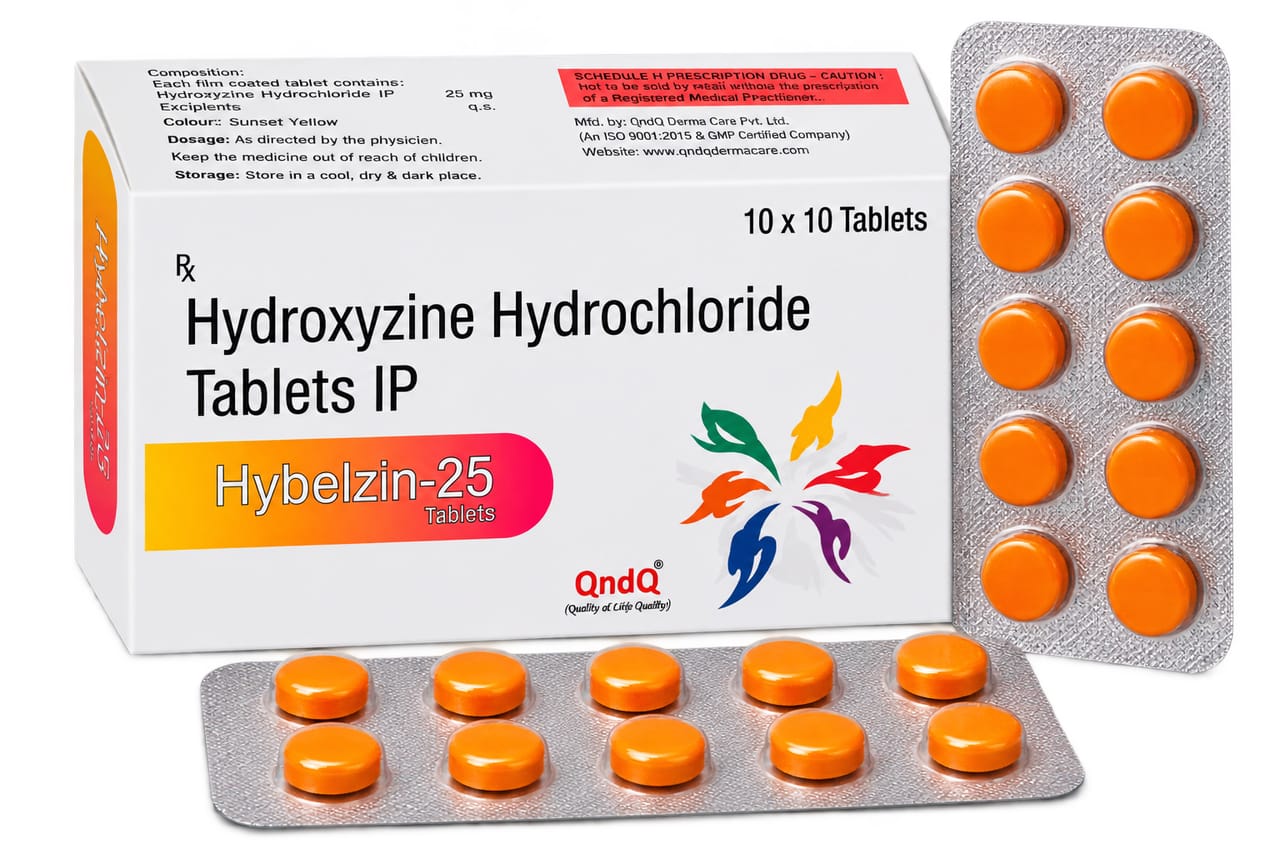
| Forms | Tablets, Capsules, Oral solution (liquid), Injection given into a muscle |
Quick overview
Hydroxyzine Tablet is a prescription antihistamine used to treat anxiety and tension, itching from allergic skin reactions, nausea and vomiting, and to provide sedation before and after general anesthesia or surgery. It works by blocking histamine in the body, producing a calming effect in the brain and relieving itching elsewhere. It is intended for short-term use and should be taken exactly as prescribed.
What is Hydroxyzine Tablet
Hydroxyzine is a prescription antihistamine medication. It is used to treat anxiety, tension, itching from allergic skin reactions, nausea and vomiting, and to provide sedation before and after general anesthesia or surgery.
Hydroxyzine Tablet uses
- Relief of anxiety and tension
- Sedation before and after surgery or medical procedures (premedication)
- Relief of itching caused by allergic skin conditions such as atopic dermatitis (eczema), contact dermatitis, and hives (urticaria)
- Nausea and vomiting
- It has also been used off-label for pain, skeletal muscle relaxation, and certain bladder disorders
Benefits of Hydroxyzine Tablet
- Provides a calming, sedative effect for anxiety and tension
- Relieves itching caused by allergic conditions
- Helps with relaxation before and after surgery
How Hydroxyzine Tablet works
Hydroxyzine works by blocking histamine, a natural chemical in the body. In the brain, this produces a calming, sedative effect that helps with anxiety, tension, and sedation before surgery. Around the rest of the body, blocking histamine helps relieve itching from allergic conditions such as hives and contact dermatitis.
Hydroxyzine Tablet dosage
Take it exactly as prescribed by your doctor and follow all directions on your prescription label. Do not take this medicine in larger or smaller amounts or for longer than recommended. If taking the liquid form, shake it well just before measuring a dose, and use a proper dosing syringe, dose-measuring spoon, or medicine cup rather than a regular kitchen spoon.
This medicine is meant for short-term use only; do not take it for longer than your doctor has prescribed. Call your doctor if your anxiety symptoms do not improve or get worse. Tablets may be taken with or without food. Do not crush, split, or chew the tablets; ask your doctor about a liquid form if you have trouble swallowing tablets. Do not give this medicine to a child without medical advice.
If you miss a dose, take it as soon as you remember, but skip it if it is almost time for your next dose; do not take extra medicine to make up for a missed dose.
| Age group | Dose |
|---|---|
| Under 6 years | 50 mg/day in divided doses* |
| 6 years & older | 50–100 mg/day in divided doses* |
| Adults | 25 mg, 3–4 times daily |
Available forms and strengths
- Tablets
- Capsules
- Oral solution (liquid)
- Injection given into a muscle
Side effects of Hydroxyzine Tablet
Common
- Drowsiness and sleepiness
- Headache
- Dry mouth
- Skin rash
- Dizziness
- Blurred vision
- Constipation
- Fatigue
- Confusion or trouble concentrating
- Muscle tremors
- Low blood pressure
- Nausea
- Weakness
- Hallucinations (less common)
Serious
- Signs of an allergic reaction: hives, difficulty breathing, swelling of the face, lips, tongue, or throat
- Severe skin reaction with sudden skin redness or a rash that spreads with white or yellow pustules, blistering, or peeling
- Fast or pounding heartbeats
- Headache with chest pain
- Severe dizziness or fainting
- Seizures (convulsions)
- Severe pain, tissue damage, or gangrene at the injection site (if given by injection)
- Unexplained fainting or a fluttering feeling in the chest (heart rhythm changes)
- Tremors, confusion, or restless muscle movements in the eyes, tongue, jaw, or neck
Warnings and precautions
- Hydroxyzine should not be used during pregnancy, especially in the first or second trimester, because it may harm the unborn baby or cause birth defects. Talk to your doctor before using it if you are pregnant.
- It is not known whether hydroxyzine passes into breast milk, and you should not breastfeed while using this medicine.
- People with kidney problems may need a lower dose because the body uses the kidneys to break down hydroxyzine, which can raise the risk of side effects. Talk to your doctor if you have kidney problems.
- People with liver problems may need a lower dose because the body uses the liver to break down hydroxyzine, which can raise the risk of side effects. Talk to your doctor if you have liver problems.
- Drinking alcohol while taking hydroxyzine can make side effects stronger, including dizziness, fatigue, drowsiness, and vision problems.
- This medicine may affect your thinking or reactions, so be careful if you drive or do anything that requires you to be alert until you know how it affects you.
- Hydroxyzine may cause birth defects. Talk to your doctor before using it if you are pregnant or breastfeeding.
- Hydroxyzine can cause a serious heart problem, especially if used with certain other medicines. Tell your doctor about all medicines you take.
- Older adults may be more likely to experience drowsiness and confusion from this medicine.
- Older adults should avoid taking hydroxyzine if possible, due to a higher risk of side effects such as confusion, constipation, and dry mouth. If needed, a lower dose and closer monitoring are recommended.
- This medicine is for short-term use only, generally not studied for longer than 4 months.
- Do not use hydroxyzine if you have long QT syndrome, are allergic to cetirizine or levocetirizine, or are in the first trimester of pregnancy.
- Tell your doctor if you have digestive tract blockage, bladder obstruction or urination problems, glaucoma, heart disease or slow heartbeats, a personal or family history of long QT syndrome, an electrolyte imbalance, or if you recently had a heart attack.
- Do not give this medicine to a child without medical advice.
Storage
- Store at room temperature between 68°F to 77°F (20°C to 25°C) in a tightly sealed container away from light
- Avoid storing this medication in areas where it could get damp or wet, such as bathrooms
- If you have unused medication that has passed its expiration date, ask your pharmacist how to correctly dispose of it
- Dispose of unused medicine safely to prevent others, including children and pets, from taking it by accident
When to see a doctor
- Get emergency medical help if you have signs of an allergic reaction such as hives, difficult breathing, or swelling of the face, lips, tongue, or throat.
- Stop taking this medicine and call your doctor right away if you have sudden skin redness or a rash that spreads and causes white or yellow pustules, blistering, or peeling.
- Stop using hydroxyzine and call your doctor at once if you have fast or pounding heartbeats, headache with chest pain, severe dizziness or fainting, or a seizure.
- Stop using this medicine and call your doctor at once if you have serious side effects such as tremors, confusion, seizures, or restless muscle movements in your eyes, tongue, jaw, or neck.
- If you think you have taken too much of this medicine, seek emergency medical attention right away. Overdose symptoms may include severe drowsiness, nausea, vomiting, uncontrolled muscle movements, or seizures.
- Urgent care is needed for signs of a serious reaction, including difficulty breathing, swelling of the lips or tongue, fainting, chest palpitations, seizures, or a severe rash.
Alternatives
- Sertraline
- Citalopram
- Escitalopram
- Fluoxetine
- Fluvoxamine
- Paroxetine
- Alprazolam
- Clonazepam
- Buspirone
- Diazepam
- Dexmedetomidine
- Midazolam
- Propofol
- Diphenhydramine
- Loratadine
- Corticosteroids and topical treatments
- Vistaril
- Hyzine
Watch the video
FAQs
What is Hydroxyzine Tablet used for?
It treats anxiety and tension, itching from allergic skin reactions, nausea and vomiting, and provides sedation before and after general anesthesia or surgery.
How does Hydroxyzine Tablet work?
It blocks histamine in the body, producing a calming effect in the brain for anxiety and sedation, and relieving itching elsewhere in the body.
What is the adult dosage of Hydroxyzine Tablet?
The typical adult dose is 25 mg taken 3 to 4 times daily, as prescribed by a doctor.
What are the common side effects of Hydroxyzine Tablet?
Common side effects include drowsiness, headache, dry mouth, skin rash, dizziness, blurred vision, constipation, fatigue, confusion, muscle tremors, low blood pressure, nausea, and weakness.
Can Hydroxyzine Tablet be used during pregnancy?
No, it should not be used during pregnancy, especially in the first or second trimester, because it may harm the unborn baby or cause birth defects.
General information, not medical advice
Your prescriber and the leaflet in your pack know your situation. This page does not.
- Follow your prescriber and the leaflet
- Don't start, stop, or change a dose on your own
- Doses and warnings differ by country and product
Sources
Video
Related medicines

Injectafer Injection: Uses, Dosage, Side Effects, Precautions and Alternates
Iron products
Injectafer (ferric carboxymaltose) treats iron deficiency anemia and heart failure-related iron deficiency via IV. Learn uses, dosage, side effects, and

Gliclazide Tablet: Uses, Dosage, Side Effects, Precautions and Alternates
Sulfonylurea (hypoglycemic/antidiabetic agent)
Gliclazide Tablet is a sulfonylurea for type 2 diabetes that boosts insulin release. Learn about dosage, side effects, warnings, and precautions.