
Safety
General information, not medical advice
Your prescriber and the leaflet in your pack know your situation. This page does not.
- Follow your prescriber and the leaflet
- Don't start, stop, or change a dose on your own
- Doses and warnings differ by country and product
Hysingla ER Tablet: Uses, Dosage, Side Effects, Precautions and Alternates
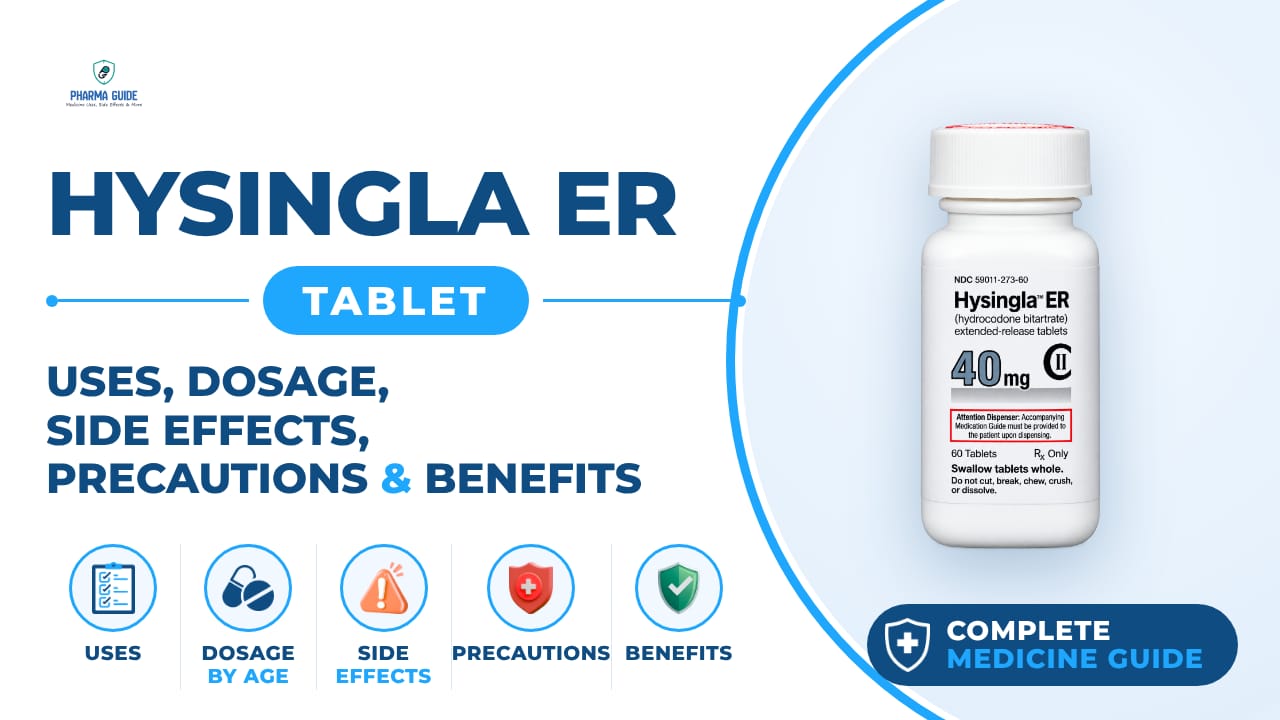
| Generic name | Hydrocodone bitartrate |
|---|---|
| Drug class | Opioid (opioid analgesic) |
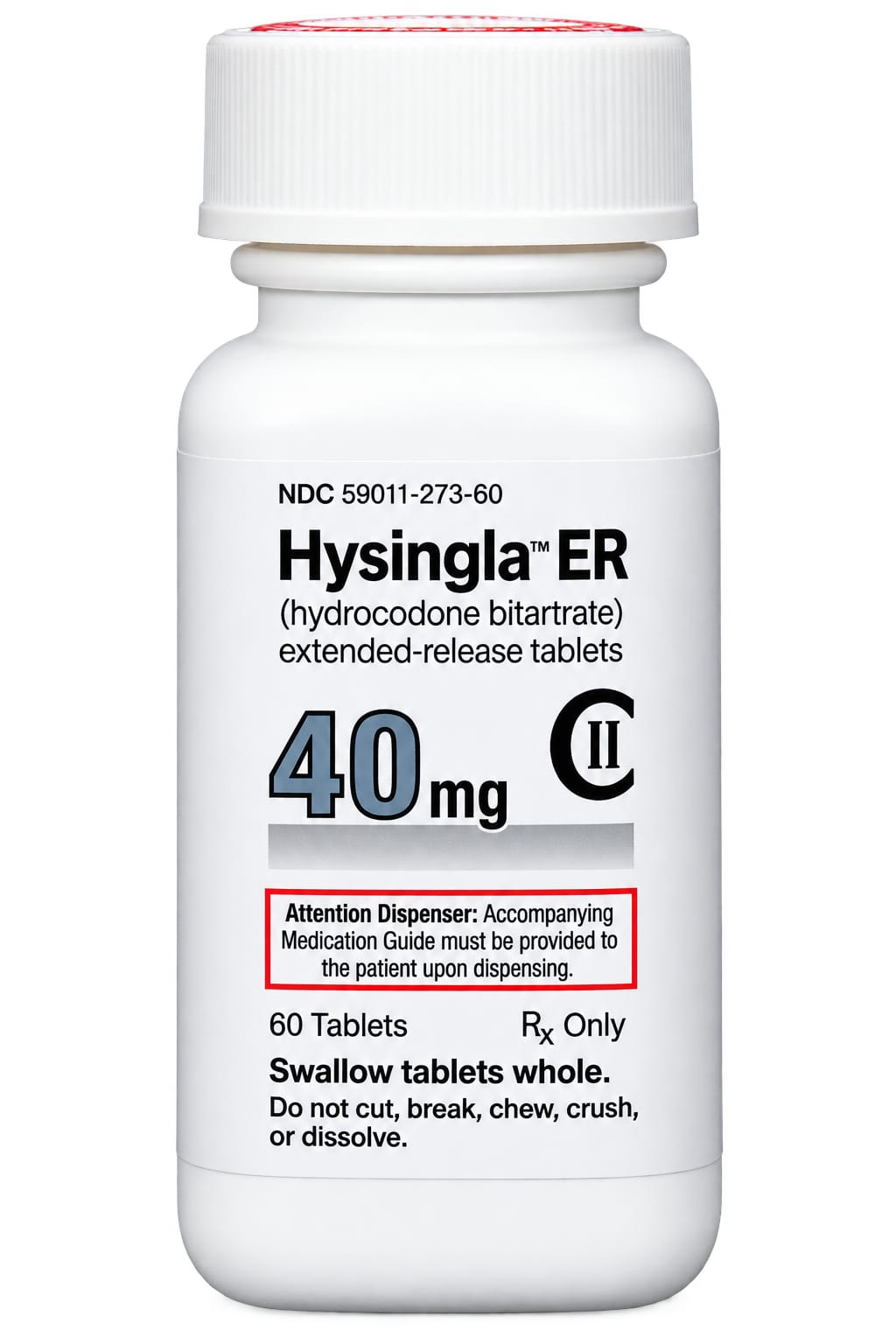
| Forms | Oral extended-release tablet (20 mg, 30 mg, 40 mg, 60 mg, 80 mg, 100 mg, 120 mg) |
Quick overview
Hysingla ER Tablet contains hydrocodone bitartrate, an opioid analgesic. It is a long-acting, extended-release medicine used for severe, ongoing pain that requires daily opioid treatment when other non-opioid pain medicines do not work well enough or cannot be tolerated. It is taken on a regular schedule and is not meant to be used only when needed. It carries serious risks, including overdose, addiction, and life-threatening breathing problems.
What is Hysingla ER Tablet
Hysingla ER is a long-acting, extended-release opioid pain medicine. It is used for severe, ongoing pain that needs daily opioid treatment, when other pain medicines that are not opioids do not work well enough or cannot be tolerated. It is not meant to be taken only when needed.
Hysingla ER Tablet uses
- Management of severe and persistent (chronic) pain that requires an extended treatment period with a daily opioid pain medicine, when other non-opioid pain medicines do not treat the pain well enough or cannot be tolerated
Benefits of Hysingla ER Tablet
- Provides long-lasting relief of severe, persistent pain that requires an opioid analgesic.
- Helps reduce continuous pain intensity when other treatment options are inadequate or not tolerated.
- Provides around-the-clock pain control through its extended-release formulation.
- May improve comfort and daily functioning when severe chronic pain is appropriately controlled.
- Is intended for patients who require daily, long-term opioid treatment, rather than occasional as-needed pain relief.
How Hysingla ER Tablet works
Hysingla ER is an opioid. It attaches to certain opioid receptors in the brain and spinal cord, which changes how the body reacts to and feels pain.
Hysingla ER Tablet dosage
Take this medicine on a regular schedule as directed by your doctor, not as needed for sudden pain. Take it by mouth once daily, about 24 hours apart, at the same time each day. Take one tablet at a time if your dose is more than one tablet. Do not pre-soak, lick, or wet the tablet before placing it in your mouth, since this may make it harder to swallow or cause choking.
Swallow the tablet whole with enough water to make sure you completely swallow it; do not cut, break, chew, crush, dissolve, snort, or inject it. You may take it with or without food; taking it with food may help if you feel nauseous. Do not change your dose or take more than your prescribed amount without talking to your healthcare provider.
If you miss a dose, skip it and take your next dose at your usual time; do not double up to catch up. Do not stop taking this medicine suddenly without talking to your healthcare provider, since stopping suddenly can cause withdrawal symptoms.
| Age group | Dose |
|---|---|
| Under 18 years | Safety and effectiveness not established |
| 18–64 years – Opioid-naïve | Usually 20 mg once daily when extended-release opioid therapy is appropriate |
| Opioid-tolerant adults | Dose must be individualized based on the previous opioid regimen |
| 65+ years | Start at the lowest appropriate dose and titrate cautiously |
| Kidney/liver impairment | A lower starting dose may be required; monitor closely |
Available forms and strengths
- Oral extended-release tablet: 20 mg, 30 mg, 40 mg, 60 mg, 80 mg, 100 mg, 120 mg
Side effects of Hysingla ER Tablet
Common
- Constipation
- Nausea
- Sleepiness
- Vomiting
- Tiredness
- Headache
- Dizziness
- Abdominal pain
Serious
- Trouble breathing or shortness of breath
- Fast heartbeat or chest pain
- Swelling of the face, tongue, or throat
- Extreme drowsiness
- Light-headedness when changing positions or feeling faint
- Agitation
- High body temperature
- Trouble walking
- Stiff muscles
- Mental changes such as confusion
- Bluish-colored lips, fingers, or toes
- Slow or irregular heartbeat
- Signs of an allergic reaction such as itchy, red rash (hives), swelling of lips, tongue, throat, face, or eyes
Warnings and precautions
- This medicine can put you at risk for overdose and death, even if taken exactly as prescribed. It also carries a risk of opioid addiction, abuse, and misuse that can lead to death.
- Serious or life-threatening breathing problems that can lead to death may occur when starting this medicine, when the dose is changed, or if too much is taken.
- Taking this medicine with other opioids, benzodiazepines, gabapentinoids, alcohol, or other central nervous system depressants can cause severe drowsiness, decreased awareness, breathing problems, coma, and death.
- Never give this medicine to anyone else, as it could cause their death. Selling or giving it away is against the law.
- This medicine has a high potential for abuse and is a controlled substance with risk of addiction and misuse, which can lead to life-threatening side effects like dangerously slow breathing and overdose.
- This medicine should not be taken if you have severe asthma, trouble breathing, other lung problems, or a bowel blockage or narrowing of the stomach or intestines.
- Taking too much or too often than prescribed can lead to an accidental overdose.
- Using this medicine for a long time during pregnancy can cause withdrawal symptoms in the newborn baby that could be life-threatening if not recognized and treated. Breastfeeding is not recommended during treatment with this medicine, as it may harm the baby.
- Tell your healthcare provider if you have a history of kidney problems or liver problems before taking this medicine.
- Do not drink alcohol or use products containing alcohol while taking this medicine, as this may cause you to overdose and die.
- Do not drive or operate heavy machinery until you know how this medicine affects you, as it can make you sleepy, dizzy, or lightheaded.
Storage
- Store at 20–25°C (68–77°F) at controlled room temperature.
- Keep in a cool, dry place away from excessive heat and moisture.
- Keep tablets in the original, tightly closed container.
- Protect from direct light and avoid hot or humid storage areas.
- Store securely to prevent accidental ingestion, misuse, or unauthorized access.
- Keep out of reach and sight of children and pets.
When to see a doctor
- Get emergency help or call for emergency services right away if you take too much of this medicine (overdose).
- Get emergency medical help right away if you have trouble breathing or shortness of breath, fast heartbeat or chest pain, swelling of the face, tongue, or throat, extreme drowsiness, light-headedness when changing positions or feeling faint, agitation, high body temperature, trouble walking, stiff muscles, or mental changes such as confusion.
- Seek emergency medical attention right away if you suspect an overdose. Symptoms may include severe drowsiness, pinpoint pupils, slow breathing, or no breathing.
- Give naloxone right away and get emergency help if you have trouble breathing or notice bluish-colored lips, fingers, or toes.
- Get medical help right away if you have a seizure while taking this medicine.
- Call your prescriber if you have a pounding heartbeat, trouble breathing, chest pain, or lightheadedness while taking this medicine, as these could be signs of heart rhythm problems.
Alternatives
- Morphine Extended-Release
- MS Contin
- Xtampza ER
- Zohydro ER
Watch the video
FAQs
What is Hysingla ER Tablet used for?
It is used for managing severe and persistent chronic pain that requires an extended treatment period with a daily opioid pain medicine, when other non-opioid medicines do not work well enough or cannot be tolerated.
How should I take Hysingla ER Tablet?
Take it by mouth once daily, about 24 hours apart, at the same time each day, on a regular schedule rather than as needed. Swallow the tablet whole with water; do not cut, break, chew, crush, dissolve, snort, or inject it.
What should I do if I miss a dose of Hysingla ER Tablet?
If you miss a dose, skip it and take your next dose at your usual time. Do not double up to catch up.
What are the serious risks of Hysingla ER Tablet?
It carries risks of overdose and death even when taken as prescribed, opioid addiction and misuse, and serious or life-threatening breathing problems, especially when starting the medicine, changing the dose, or taking too much.
Can I drink alcohol while taking Hysingla ER Tablet?
No, you should not drink alcohol or use products containing alcohol while taking this medicine, as it may cause you to overdose and die.
General information, not medical advice
Your prescriber and the leaflet in your pack know your situation. This page does not.
- Follow your prescriber and the leaflet
- Don't start, stop, or change a dose on your own
- Doses and warnings differ by country and product
Sources
- Hysingla ER Product Label
- Drugs.com - Hysingla ER
- Healio - Hysingla ER
- GoodRx - Hydrocodone ER (Hysingla ER)
- PatientsLikeMe - Hysingla ER
Video
Related medicines

Injectafer Injection: Uses, Dosage, Side Effects, Precautions and Alternates
Iron products
Injectafer (ferric carboxymaltose) treats iron deficiency anemia and heart failure-related iron deficiency via IV. Learn uses, dosage, side effects, and

Gliclazide Tablet: Uses, Dosage, Side Effects, Precautions and Alternates
Sulfonylurea (hypoglycemic/antidiabetic agent)
Gliclazide Tablet is a sulfonylurea for type 2 diabetes that boosts insulin release. Learn about dosage, side effects, warnings, and precautions.