
Safety
General information, not medical advice
Your prescriber and the leaflet in your pack know your situation. This page does not.
- Follow your prescriber and the leaflet
- Don't start, stop, or change a dose on your own
- Doses and warnings differ by country and product
Ibrance Capsule: Uses, Dosage, Side Effects, Precautions and Alternates
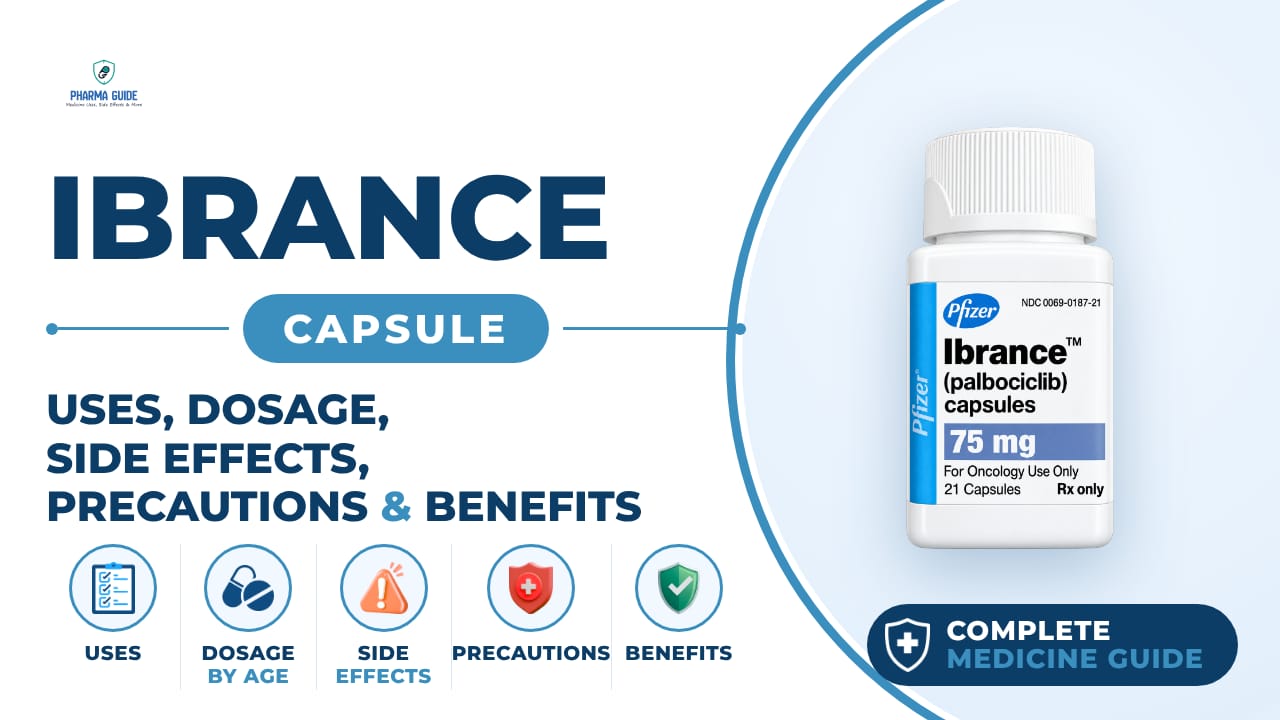
| Generic name | palbociclib |
|---|---|
| Drug class | Antineoplastic agent, protein kinase inhibitor (CDK4/6 inhibitor) |
| Forms | Hard capsule (75 mg, 100 mg, 125 mg), Film-coated tablet (75 mg, 100 mg, 125 mg) |
Quick overview
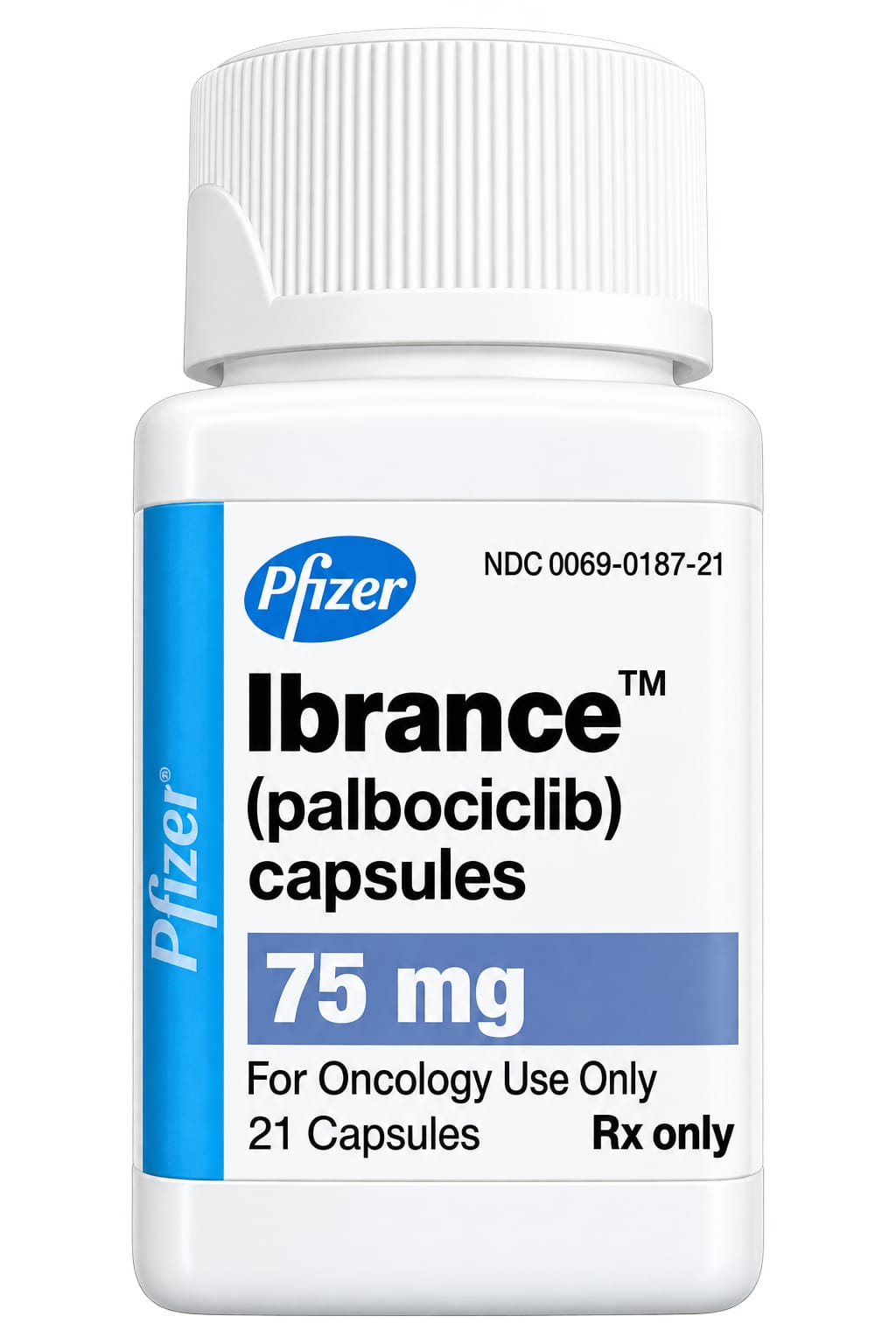
Ibrance Capsule contains the active substance palbociclib, an antineoplastic agent that works as a protein kinase inhibitor (CDK4/6 inhibitor). It is taken by mouth together with hormone therapy to treat certain types of hormone receptor-positive, HER2-negative advanced breast cancer. Ibrance works by blocking proteins that cancer cells need to grow and divide, helping slow the progression of the disease.
What is Ibrance Capsule
IBRANCE is an anticancer medicine that contains the active substance palbociclib. It comes as capsules or tablets taken by mouth and is used together with hormone therapy to treat certain types of advanced breast cancer.
Ibrance Capsule uses
- Treats hormone receptor (HR)-positive, HER2-negative breast cancer that is locally advanced or has spread to other parts of the body (metastatic), in combination with an aromatase inhibitor
- Treats the same type of breast cancer in combination with fulvestrant in women who have already had hormone therapy before
Benefits of Ibrance Capsule
- Breast Cancer Treatment: Used for certain hormone-receptor-positive, HER2-negative advanced or metastatic breast cancers
- CDK4/6 Inhibition: Helps slow cancer-cell growth by blocking CDK4/6 activity
- Combination Therapy: Used with appropriate endocrine therapy or other approved cancer treatments
- Targeted Treatment: Specifically interferes with pathways involved in cancer-cell division
How Ibrance Capsule works
Palbociclib blocks two proteins called cyclin-dependent kinase 4 and 6 (CDK4/6), which cancer cells need to grow and divide. By blocking these proteins, the medicine stops cancer cells from multiplying and slows the progression of the cancer.
Ibrance Capsule dosage
Take Ibrance once a day at about the same time every day. Capsules should be taken with food, preferably a meal, to help the medicine work consistently. Swallow capsules whole; do not chew, crush, open, or split them before swallowing. Do not take a capsule if it is broken, cracked, or otherwise not intact.
Avoid grapefruit and grapefruit juice while taking this medicine. Avoid products containing St. John's Wort while taking this medicine.
If you miss a dose or vomit after taking a dose, do not take an extra dose that day; take your next dose at the usual scheduled time. Continue taking the medicine for as long as your doctor says it is helping, unless you are told to stop.
No dose adjustment is needed based on age for patients 65 years and older. This medicine is not used in children or adolescents under 18 years of age.
| Age group | Dose |
|---|---|
| Under 18 Years | Use only under specialist oncology supervision |
| 18–64 Years | 125 mg once daily for 21 days, followed by 7 days off |
| Older Adults (65+ Years) | 125 mg once daily for 21 days, followed by 7 days off, with adjustments based on tolerance and medical condition |
Available forms and strengths
- Hard capsule (75 mg, 100 mg, 125 mg)
- Film-coated tablet (75 mg, 100 mg, 125 mg)
Side effects of Ibrance Capsule
Common
- Infections
- Low white blood cell counts (neutropenia, leukopenia)
- Low red blood cell counts (anemia)
- Low platelet counts (thrombocytopenia)
- Feeling of tiredness (fatigue)
- Decreased appetite
- Nausea, vomiting, diarrhoea
- Inflammation of the mouth and lips (stomatitis)
- Rash
- Hair loss (alopecia)
- Weakness (asthenia)
- Fever
- Abnormalities in liver blood tests (ALT/AST increased)
- Dry skin
- Altered sense of taste (dysgeusia)
- Blurred vision, increased tearing, dry eye
- Nosebleed
- Redness, pain, peeling, swelling and blistering of palms of hands and/or soles of feet
Serious
- Severe low white blood cell counts (neutropenia) with fever, which can lead to serious infections
- Severe, life-threatening, or fatal inflammation of the lungs (interstitial lung disease/pneumonitis)
- Blood clots in the veins (deep vein thrombosis, pulmonary embolism)
- Febrile neutropenia (fever with low white blood cell count)
- Cutaneous lupus erythematosus (skin inflammation with red scaly patches, joint pain, fever)
- Erythema multiforme (skin reaction with target-shaped red spots or patches)
- Rhabdomyolysis (muscle breakdown), including fatal cases, when taken with certain statins
Warnings and precautions
- This medicine can lower white blood cell counts, which may increase the risk of serious infections. Blood tests will be done regularly to monitor this.
- Severe, life-threatening, or fatal lung inflammation can occur with this medicine when combined with hormone therapy.
- This medicine can cause blood clots in the veins, which can be serious.
- Avoid taking this medicine with St. John's Wort, as it can reduce how well the medicine works.
- Avoid grapefruit and grapefruit juice while taking this medicine, as it can increase the amount of the medicine in your blood and increase side effects.
- This medicine may reduce fertility in men. Men who wish to have children in the future may want to consider sperm preservation before starting treatment.
- This medicine should not be used during pregnancy because it may harm the unborn baby. Women who can become pregnant should use effective birth control during treatment and for a period of time after finishing treatment.
- Breastfeeding is not recommended while taking this medicine because it is not known whether it passes into breast milk.
- This medicine should be used carefully in people with moderate or severe kidney problems, with close monitoring by a doctor.
- This medicine should be used carefully in people with moderate or severe liver problems, with close monitoring by a doctor. A lower dose is recommended for people with severe liver impairment.
- This medicine has only a small effect on the ability to drive or use machines, but it can cause tiredness, so be careful when driving or operating machinery if you feel unusually tired.
Storage
- Keep out of the sight and reach of children
- Do not use after the expiry date shown on the pack
- Capsules do not require any special storage conditions
- Tablets do not require special temperature storage conditions but should be kept in the original blister package to protect them from moisture
- Do not use if the pack is damaged or shows signs of tampering
- Do not throw away medicines via wastewater or household waste; ask your pharmacist how to dispose of medicines no longer needed
When to see a doctor
- Get medical help right away if you have fever, chills, weakness, shortness of breath, bleeding, or bruise easily, as these could be signs of a serious blood disorder.
- Get medical help right away if you have difficulty breathing, a dry cough, or chest pain, as these could be signs of lung inflammation.
- Get medical help right away if you have a painful swollen leg, chest pain, shortness of breath, rapid breathing, or rapid heart rate, as these can be signs of a blood clot in the vein.
- Tell your doctor right away if you experience any episodes of fever, as this could indicate an infection.
Alternatives
- Ribociclib
- Abemaciclib
- Fulvestrant
Watch the video
FAQs
What is Ibrance Capsule used for?
Ibrance is used with hormone therapy, such as an aromatase inhibitor or fulvestrant, to treat hormone receptor-positive, HER2-negative breast cancer that is locally advanced or has spread to other parts of the body.
How should Ibrance Capsule be taken?
Ibrance should be taken once a day at about the same time, with food, preferably a meal. Capsules must be swallowed whole and should not be chewed, crushed, opened, or split, and broken or cracked capsules should not be taken.
What should be avoided while taking Ibrance Capsule?
Grapefruit and grapefruit juice should be avoided because they can increase the amount of medicine in the blood and increase side effects. Products containing St. John's Wort should also be avoided as they can reduce how well the medicine works.
What are the serious side effects of Ibrance Capsule?
Serious side effects include severe low white blood cell counts with fever, life-threatening lung inflammation, blood clots in the veins, febrile neutropenia, cutaneous lupus erythematosus, erythema multiforme, and rhabdomyolysis when taken with certain statins.
What is the usual dose of Ibrance Capsule for adults?
The usual dose for adults is 125 mg once daily for 21 days, followed by 7 days off, with no dose adjustment needed based on age for patients 65 years and older.
General information, not medical advice
Your prescriber and the leaflet in your pack know your situation. This page does not.
- Follow your prescriber and the leaflet
- Don't start, stop, or change a dose on your own
- Doses and warnings differ by country and product
Sources
Video
Related medicines

Injectafer Injection: Uses, Dosage, Side Effects, Precautions and Alternates
Iron products
Injectafer (ferric carboxymaltose) treats iron deficiency anemia and heart failure-related iron deficiency via IV. Learn uses, dosage, side effects, and

Gliclazide Tablet: Uses, Dosage, Side Effects, Precautions and Alternates
Sulfonylurea (hypoglycemic/antidiabetic agent)
Gliclazide Tablet is a sulfonylurea for type 2 diabetes that boosts insulin release. Learn about dosage, side effects, warnings, and precautions.