
Safety
General information, not medical advice
Your prescriber and the leaflet in your pack know your situation. This page does not.
- Follow your prescriber and the leaflet
- Don't start, stop, or change a dose on your own
- Doses and warnings differ by country and product
Ibrexafungerp Tablet: Uses, Dosage, Side Effects, Precautions and Alternates
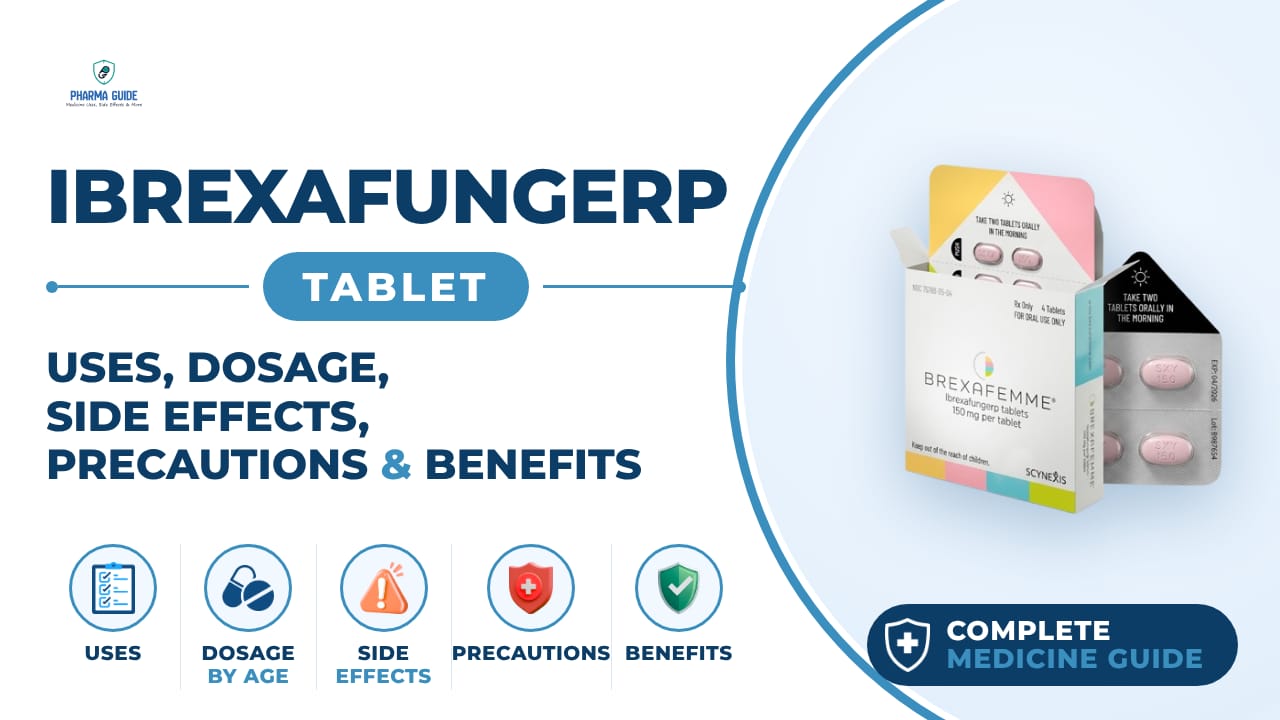
| Generic name | Ibrexafungerp |
|---|---|
| Drug class | Triterpenoid antifungal (miscellaneous antifungal) |
| Forms | Tablet (150 mg) |

Quick overview
Ibrexafungerp Tablet, sold as Brexafemme, is a prescription triterpenoid antifungal used to treat vaginal yeast infections and to help reduce repeat infections in women and girls who have started their periods. It is taken as a short, one-day course of tablets. This medicine must not be used during pregnancy due to the risk of serious harm to an unborn baby.
What is Ibrexafungerp Tablet
Brexafemme is a prescription antifungal tablet used to treat vaginal yeast infections and reduce repeat infections in women and girls who have started their periods. Its generic name is ibrexafungerp, and it belongs to the triterpenoid antifungal (miscellaneous antifungal) drug class.
Ibrexafungerp Tablet uses
- Treatment of vulvovaginal candidiasis (VVC), a vaginal yeast infection
- Reduction in the incidence of recurrent vulvovaginal candidiasis (RVVC) in adult and post-menarchal pediatric females
Benefits of Ibrexafungerp Tablet
- Treats vaginal yeast infections caused by Candida species
- Can lower the chance of repeat yeast infections when used monthly for 6 months
- Taken as a short one-day course of tablets rather than a longer treatment
- Works against many Candida species, including some that resist other antifungal drugs
How Ibrexafungerp Tablet works
Ibrexafungerp blocks an enzyme called glucan synthase, which the fungus needs to build its cell wall. Without a proper cell wall, the fungus cannot survive.
Ibrexafungerp Tablet dosage
Take the tablets by mouth with or without food. Each dose is two tablets, taken about 12 hours apart (for example, morning and evening). If the first dose is taken in the morning, take the second dose that same evening; if the first dose is taken in the afternoon or evening, take the second dose the next morning.
For treating a yeast infection, the full course is just one day of treatment (two doses). For reducing repeat infections, this one-day, two-dose treatment is repeated once a month for six months.
Take the medicine exactly as your healthcare provider tells you. If your symptoms do not improve or get worse, call your doctor. Talk to your doctor about any restrictions on food or beverages (including grapefruit) while taking this medicine.
| Age group | Dose |
|---|---|
| Under 18 years | Not recommended |
| 18–64 years | 600 mg, once/day |
| 65+ years | 600 mg, once/day |
Available forms and strengths
- Tablet (150 mg)
Side effects of Ibrexafungerp Tablet
Common
- Diarrhea (loose stools)
- Nausea
- Abdominal (stomach) pain
- Dizziness
- Vomiting
- Headache
- Urinary tract infection
- Fatigue (unusual tiredness)
- Painful menstrual periods
- Gas (flatulence)
- Back pain
- Elevated liver enzymes (transaminases)
- Vaginal bleeding
- Rash or hypersensitivity reaction
Serious
- Signs of an allergic reaction: hives, difficulty breathing, swelling of the face, lips, tongue, or throat
- Severe dizziness
- Trouble breathing
Warnings and precautions
- This medicine can cause serious harm to an unborn baby, so it must not be used during pregnancy. Your doctor may test you for pregnancy before starting treatment and before each monthly dose, and you should use effective birth control during treatment and for 4 days after your last dose.
- Do not take this medicine if you are allergic to ibrexafungerp.
- Certain other medicines, such as strong CYP3A inhibitors (like ketoconazole or itraconazole), can raise the levels of this drug in your body, so your dose may need to be lowered. Strong or moderate CYP3A inducers (like rifampin, carbamazepine, phenytoin, or St. John's Wort) can lower the drug's levels and should be avoided while taking this medicine.
- This medicine has not been shown to be safe or effective in girls who have not yet started their periods.
- Pregnancy: This medicine must not be used during pregnancy because it may seriously harm the unborn baby.
- Women who can become pregnant may need a pregnancy test before starting and before each monthly dose, and should use effective birth control during treatment and for 4 days after the last dose.
- Breastfeeding: It isn't known if this medicine passes into breast milk or how it might affect a nursing baby. Talk with your doctor to decide whether to take this medicine or breastfeed.
- Liver: No dose change is needed for people with mild or moderate liver problems. It hasn't been studied in people with severe liver impairment.
- Alcohol: It isn't known how alcohol interacts with this medicine. Ask your doctor about drinking alcohol while taking it.
Storage
- Store BREXAFEMME tablets at 20°C to 25°C (68°F to 77°F). Brief exposure to 15°C to 30°C (59°F to 86°F) permitted (see USP Controlled Room Temperature).
- BREXAFEMME is supplied in child resistant packaging.
- Keep BREXAFEMME and all medicines out of reach of children.
- Keep this medication in the container it came in, tightly closed, and out of reach of children. Store it at room temperature and away from excess heat and moisture (not in the bathroom).
- Dispose of unneeded medications in a way so that pets, children, and other people cannot take them. Do not flush this medication down the toilet. Use a medicine take-back program.
When to see a doctor
- Get emergency medical help right away if you have signs of a serious allergic reaction, such as hives, trouble breathing, or swelling of your face, lips, tongue, or throat.
- Tell your doctor right away if you become pregnant or think you might be pregnant while taking this medicine.
- If you take too much of this medicine, get emergency medical help or contact your local poison control center right away.
- Call your doctor if your symptoms do not improve or get worse while on treatment.
Alternatives
- Clotrimazole
- Terconazole
- Miconazole
Watch the video
FAQs
What is Ibrexafungerp Tablet used for?
It is used to treat vaginal yeast infections (vulvovaginal candidiasis) and to help reduce repeat infections in women and girls who have started their periods.
How is Ibrexafungerp Tablet taken?
Each dose is two tablets taken about 12 hours apart, with or without food. For treating a yeast infection, the full course is one day of treatment. For reducing repeat infections, this one-day course is repeated once a month for six months.
Can Ibrexafungerp Tablet be used during pregnancy?
No, this medicine must not be used during pregnancy because it may seriously harm the unborn baby. A pregnancy test may be done before starting and before each monthly dose, and effective birth control should be used during treatment and for 4 days after the last dose.
What are the common side effects of Ibrexafungerp Tablet?
Common side effects include diarrhea, nausea, abdominal pain, dizziness, vomiting, headache, urinary tract infection, fatigue, painful menstrual periods, gas, back pain, elevated liver enzymes, vaginal bleeding, and rash.
How does Ibrexafungerp Tablet work?
It blocks an enzyme called glucan synthase, which the fungus needs to build its cell wall, so without a proper cell wall the fungus cannot survive.
General information, not medical advice
Your prescriber and the leaflet in your pack know your situation. This page does not.
- Follow your prescriber and the leaflet
- Don't start, stop, or change a dose on your own
- Doses and warnings differ by country and product
Sources
Video
Related medicines

Injectafer Injection: Uses, Dosage, Side Effects, Precautions and Alternates
Iron products
Injectafer (ferric carboxymaltose) treats iron deficiency anemia and heart failure-related iron deficiency via IV. Learn uses, dosage, side effects, and

Gliclazide Tablet: Uses, Dosage, Side Effects, Precautions and Alternates
Sulfonylurea (hypoglycemic/antidiabetic agent)
Gliclazide Tablet is a sulfonylurea for type 2 diabetes that boosts insulin release. Learn about dosage, side effects, warnings, and precautions.