
Safety
General information, not medical advice
Your prescriber and the leaflet in your pack know your situation. This page does not.
- Follow your prescriber and the leaflet
- Don't start, stop, or change a dose on your own
- Doses and warnings differ by country and product
Ibuprofen Syrup: Uses, Dosage, Side Effects, Precautions and Alternates
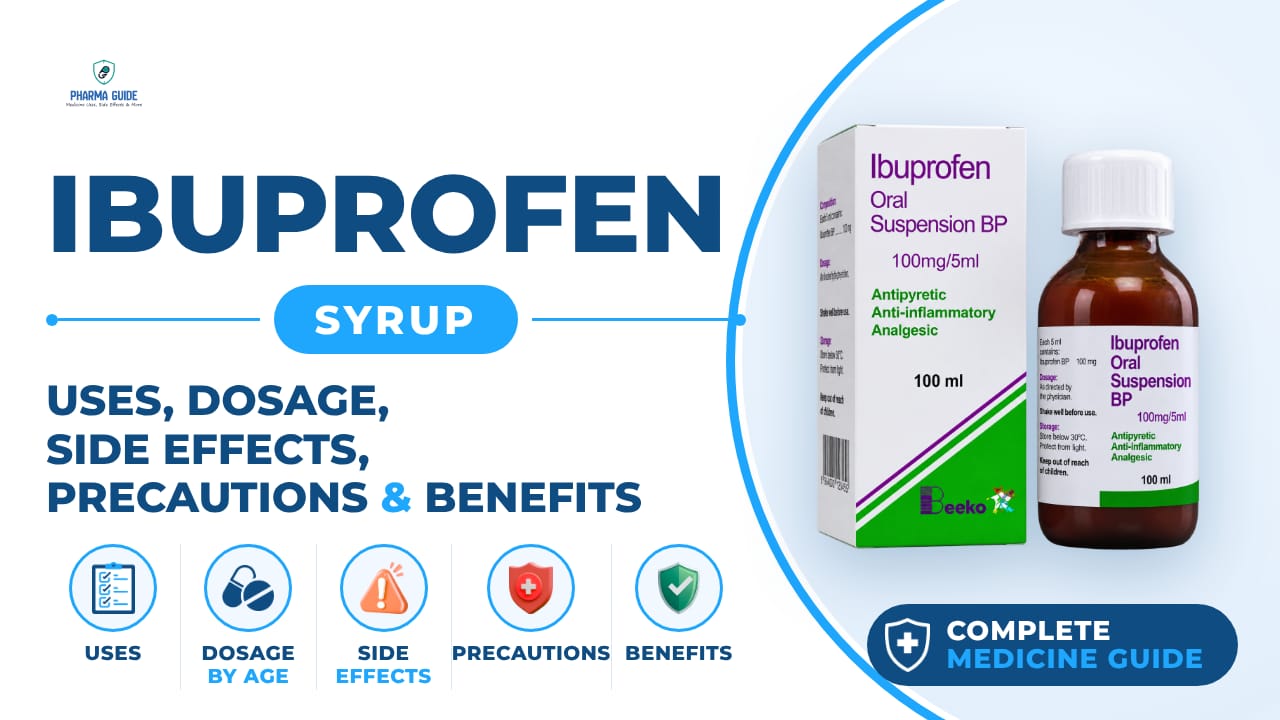
| Generic name | Ibuprofen |
|---|---|
| Drug class | Nonsteroidal anti-inflammatory drug (NSAID); Analgesic/Antipyretic |
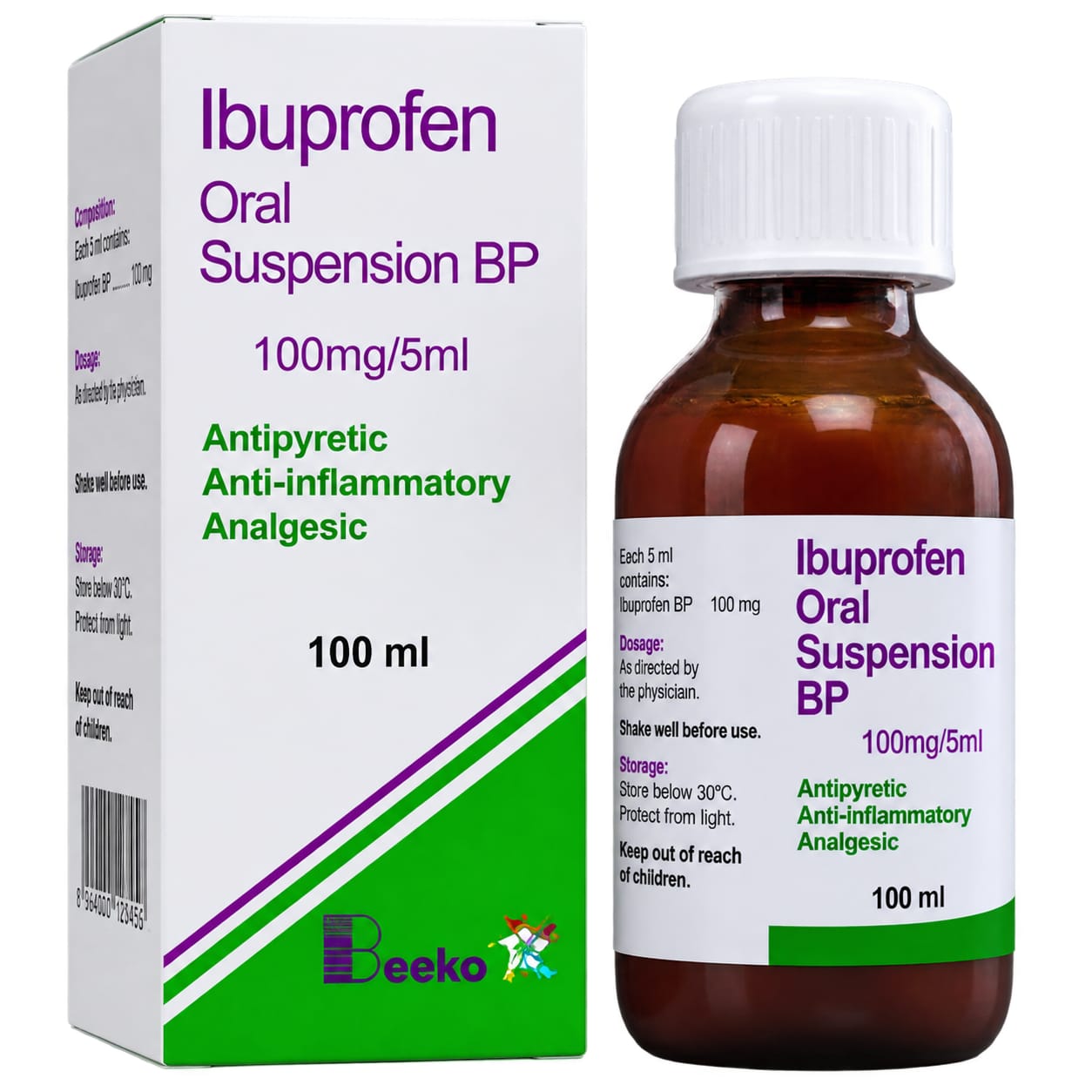
| Forms | Oral suspension (100 mg / 5 mL) |
Quick overview
Ibuprofen Syrup is a liquid nonsteroidal anti-inflammatory drug (NSAID) made for use in children. It is used to reduce fever and give temporary relief of minor aches and pains, including headache, toothache, sore throat, and earache. It works by blocking substances in the body called prostaglandins that cause pain, fever, and inflammation. Dosing depends on age and weight, and the medicine should be used at the lowest effective dose for the shortest time.
What is Ibuprofen Syrup
Ibuprofen Oral Suspension is a liquid medicine belonging to a group of medicines called non-steroidal anti-inflammatory drugs (NSAIDs). It is used to reduce fever and give temporary relief of minor aches and pains. This liquid form is made for use in children.
Ibuprofen Syrup uses
- Temporary relief of fever
- Temporary relief of minor aches and pains in muscles, bones and joints
- Headache
- Toothache (dental pain)
- Sore throat
- Earache
- Aches and fever due to the common cold or flu
- Aches and fever due to immunizations
- Body aches, sprains and strains
Benefits of Ibuprofen Syrup
- Provides up to 8 hours of relief from fever
- Gives temporary relief of mild to moderate pain
- Reduces fever in children
How Ibuprofen Syrup works
Ibuprofen works by blocking the production of substances in the body called prostaglandins, which are involved in causing pain, fever and inflammation.
Ibuprofen Syrup dosage
Shake the suspension well before use. Use only the enclosed measuring cup or a measured teaspoon to dose this product. Do not use any other dosing device. Measure the dose with the dosage cup provided and make sure the complete dose is taken.
If stomach upset occurs, the medicine can be given with food or milk. If stomach upset persists, talk to your doctor. This product does not contain directions or complete warnings for adult use; it is intended for use in children. Use the lowest effective dose for the shortest time.
If you miss a dose, take it as soon as you remember. If it is almost time for the next dose, skip the missed dose. Do not take two doses at the same time.
| Age group | Dose |
|---|---|
| Under 3 months | Only if prescribed by a doctor |
| 3–5 months | 5–10 mg/kg per dose every 6–8 hours, only with medical advice |
| 6 months–11 years | 5–10 mg/kg per dose every 6–8 hours as needed |
| 12–17 years | 200–400 mg every 4–6 hours as needed |
| Adults | 200–400 mg every 4–6 hours as needed |
Available forms and strengths
- Oral suspension (100 mg / 5 mL)
Side effects of Ibuprofen Syrup
Common
- Dizziness
- Nausea
- Vomiting
- Heartburn
- Indigestion
- Diarrhea or constipation
- Bloating
- Fluid retention
- Headache
- Decreased appetite
- Skin rash or itching
Serious
- Blurred or reduced vision
- Changes in colour vision
- Ringing or buzzing in the ears
- Blood in urine or stool
- Swelling of the mouth, throat and extremities
- Difficulty breathing
- Chest pain
- Abdominal pain
- Severe skin rash
- Weight gain or fluid retention
- Bruising
- Signs of stomach bleeding
- Signs of liver problems such as jaundice
Warnings and precautions
- This medicine must not be used during the third trimester of pregnancy. It is not recommended during pregnancy, and caution is needed when trying to conceive or during the first and second trimesters. Using NSAIDs at around 20 weeks or later may harm the unborn baby's kidneys and reduce amniotic fluid. Talk to your doctor before using it if pregnant.
- The amount of ibuprofen passing into breast milk is considered very small, but the absolute safety has not been determined. Nursing mothers should consult a doctor before use.
- Do not use if there is serious or severely impaired kidney disease. Use with great caution in people with impaired kidney function; those with heart failure, liver problems, taking diuretics, or the elderly are at greatest risk of kidney problems. Stop use immediately if you have difficulty or pain when urinating.
- Do not use if there is significant liver impairment or active liver disease. If liver problems develop, such as jaundice, the medicine should be stopped.
- The chance of stomach bleeding is higher in people who have 3 or more alcoholic drinks every day while using this product.
- Some people may feel drowsy, dizzy, have vertigo, insomnia or depression while taking ibuprofen. If this happens, take care when doing activities that need alertness.
- Long-term continuous use may increase the risk of heart attack or stroke.
- This medicine may cause stomach or intestinal ulcers, bleeding or perforation, which can be serious and sometimes fatal, and can happen at any time without warning.
- Use with caution in people with heart failure, high blood pressure or other conditions that can cause fluid build-up in the body.
- Do not use for fever for more than 3 days or pain for more than 5 days unless directed by a doctor. Use the lowest effective dose for the shortest time.
- Do not use with other NSAIDs, including ASA, because there is no added benefit and there is a risk of extra side effects.
- Stop use immediately if you have difficulty or pain when urinating.
Storage
- Avoid high humidity and excessive heat (40°C, 104°F).
- Preserve in well-closed containers.
- Do not allow the liquid medicine to freeze.
- Keep this and all other medicines out of the reach of children.
When to see a doctor
- Stop use and get immediate medical help if there is swelling of the mouth, throat or extremities, difficulty breathing, chest pain, abdominal pain, a severe skin rash, weight gain or fluid retention, bruising, or blood in the urine or stool.
- If a severe allergic reaction happens with symptoms such as hives, facial swelling, wheezing, shock, skin reddening, rash or blisters, stop use and seek medical help right away.
- See a doctor if there is no relief within 24 hours, redness or swelling appears in the painful area, or any vision problems develop.
- Stop use and ask a doctor if there are signs of stomach bleeding, pain lasts more than 5 days, fever lasts more than 3 days, a sore throat is severe or lasts more than 2 days or occurs with fever, headache, rash, nausea or vomiting, or any new or unusual symptoms appear.
- If you think a child or another person has taken too much, contact a healthcare professional, hospital emergency department, or your local poison control center right away, even if there are no symptoms.
- Seek medical advice if there is sudden or long-lasting abdominal pain with loss of appetite and/or jaundice and/or new onset of itching.
Alternatives
- Paracetamol (Acetaminophen) Syrup
- Naproxen Suspension
- Diclofenac Suspension
- Mefenamic Acid Suspension
- Ketoprofen Suspension
Watch the video
FAQs
What is Ibuprofen Syrup used for?
It is used for temporary relief of fever and minor aches and pains, including headache, toothache, sore throat, earache, body aches, sprains and strains, and aches and fever due to colds, flu, or immunizations.
How does Ibuprofen Syrup work?
It works by blocking the production of substances in the body called prostaglandins, which are involved in causing pain, fever and inflammation.
How should Ibuprofen Syrup be given to a child?
Shake well before use and measure the dose with the enclosed measuring cup or a measured teaspoon only. Dosing depends on age and weight, for example 5-10 mg/kg per dose every 6-8 hours for children 6 months to 11 years, using the lowest effective dose for the shortest time.
What are the common side effects of Ibuprofen Syrup?
Common side effects include dizziness, nausea, vomiting, heartburn, indigestion, diarrhea or constipation, bloating, fluid retention, headache, decreased appetite, and skin rash or itching.
How long can Ibuprofen Syrup be used for fever or pain?
Do not use for fever for more than 3 days or for pain for more than 5 days unless directed by a doctor.
General information, not medical advice
Your prescriber and the leaflet in your pack know your situation. This page does not.
- Follow your prescriber and the leaflet
- Don't start, stop, or change a dose on your own
- Doses and warnings differ by country and product
Sources
Video
Related medicines
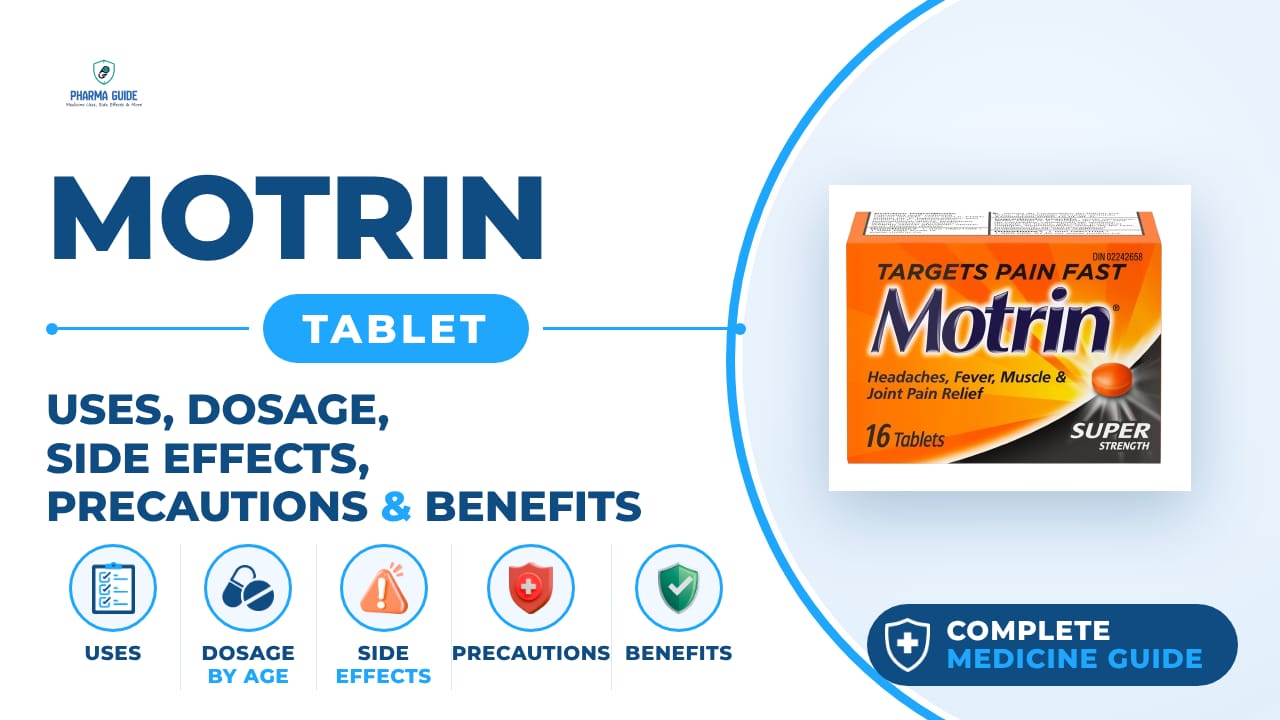
Motrin Tablet: Uses, Dosage, Side Effects, Precautions and Alternates
Nonsteroidal anti-inflammatory drug (NSAID); analgesic, antipyretic
Motrin Tablet contains ibuprofen, an NSAID that relieves pain, inflammation, and fever from headache, toothache, arthritis, and menstrual cramps.

Injectafer Injection: Uses, Dosage, Side Effects, Precautions and Alternates
Iron products
Injectafer (ferric carboxymaltose) treats iron deficiency anemia and heart failure-related iron deficiency via IV. Learn uses, dosage, side effects, and