
Safety
General information, not medical advice
Your prescriber and the leaflet in your pack know your situation. This page does not.
- Follow your prescriber and the leaflet
- Don't start, stop, or change a dose on your own
- Doses and warnings differ by country and product
Motrin Tablet: Uses, Dosage, Side Effects, Precautions and Alternates
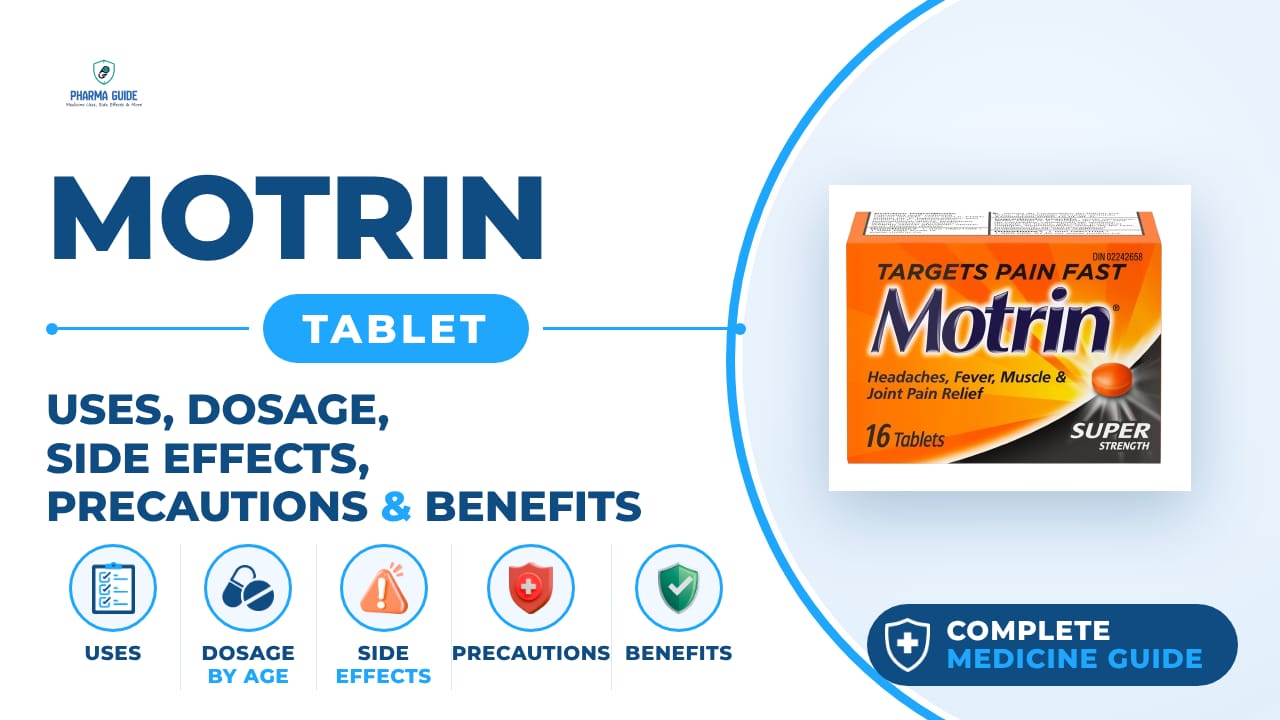
| Generic name | Ibuprofen |
|---|---|
| Drug class | Nonsteroidal anti-inflammatory drug (NSAID); analgesic, antipyretic |
| Forms | Tablet (200 mg, 400 mg), Capsule, Oral suspension/liquid, Injection |

Quick overview
Motrin Tablet contains ibuprofen, a nonsteroidal anti-inflammatory drug (NSAID) used to reduce fever and relieve pain and inflammation from conditions such as headache, toothache, back pain, arthritis, menstrual cramps, and minor injuries. It works by blocking the body's production of prostaglandins, substances that cause pain, swelling, and fever. It is available in tablet form at 200 mg and 400 mg strengths, among other forms.
What is Motrin Tablet
Motrin (ibuprofen) is a nonsteroidal anti-inflammatory drug (NSAID). It is used to reduce fever and to treat pain or inflammation caused by many conditions such as headache, toothache, back pain, arthritis, menstrual cramps, or minor injury.
Motrin Tablet uses
- Headache, including mild to moderate migraine and tension headache
- Menstrual cramps (period pain)
- Toothache and dental pain
- Pain and inflammation from arthritis
- Muscle strains, sprains and athletic overexertion
- Minor aches and pains in muscles, bones and joints
- Back pain
- Aches and pain due to the common cold and flu
- Reducing fever
Benefits of Motrin Tablet
- Provides fast and effective relief of many types of pain
- Reduces fever
- Long-lasting relief for up to 8 hours for fever and up to 6 hours for pain
How Motrin Tablet works
Ibuprofen belongs to a group of medicines called NSAIDs. It works by blocking the body's production of natural substances called prostaglandins, which cause pain, inflammation, swelling and fever.
Motrin Tablet dosage
Take by mouth with a full glass of water. Take with food or milk if you get mild stomach upset with use. The single oral dose may be taken every 4 to 6 hours as needed. Do not lie down for at least 10 minutes after taking this medicine. Use the lowest dose that relieves your symptoms for the shortest time needed. Do not take for pain for more than 5 days in a row or for fever for more than 3 days unless directed by a doctor. Do not take this product together with ASA, other ibuprofen-containing products, or any other pain or fever medicine. Children's formulations are available to treat children under 12 years of age.
| Age group | Dose |
|---|---|
| Under 12 years | Not recommended for 200 mg tablets |
| 12–17 years | 1–2 tablets (200–400 mg) every 4–6 hours as needed; maximum 6 tablets (1,200 mg) in 24 hours |
| 18 years and older | 1–2 tablets (200–400 mg) every 4–6 hours as needed; maximum 6 tablets (1,200 mg) in 24 hours |
Available forms and strengths
- Tablet (200 mg, 400 mg)
- Capsule
- Oral suspension/liquid
- Injection
Side effects of Motrin Tablet
Common
- Nausea, vomiting, gas
- Heartburn, bloating or constipation
- Diarrhea
- Dizziness
- Headache
- Minor skin rash or itching
- Drowsiness
- Nervousness or irritability
Serious
- Signs of stomach or intestinal bleeding: bloody or tarry stools, vomiting blood or vomit that looks like coffee grounds
- Signs of a heart attack or stroke: chest pain spreading to jaw or shoulder, sudden numbness or weakness on one side, slurred speech, shortness of breath
- Severe allergic reaction: hives, difficulty breathing, swelling of the face, mouth or throat
- Severe skin reaction such as Stevens-Johnson syndrome (rash with blistering and peeling, fever, sore throat, burning eyes)
- Changes in vision, blurred or reduced vision, colour vision changes
- Ringing in the ears or hearing loss
- Swelling or rapid weight gain (fluid retention)
- Fast, irregular heartbeat
- Liver problems such as jaundice (yellowing of skin or eyes), upper stomach pain, dark urine
- Kidney problems such as little or no urinating, swelling in feet or ankles
- Low red blood cells (anemia): pale skin, feeling light-headed or short of breath
- Bruising
Warnings and precautions
- Do not take Motrin during pregnancy unless your doctor tells you to. Taking an NSAID during the later part of pregnancy can cause serious heart or kidney problems in the unborn baby.
- Ibuprofen passes into breast milk at low levels. Nursing mothers should consult a doctor before using ibuprofen.
- Talk to your doctor before using this medicine if you have kidney disease. Ibuprofen can reduce kidney function and cause fluid retention, and should not be used in severe kidney disease.
- Talk to your doctor before using this medicine if you have liver disease. It should not be used if you have significant liver impairment or active liver disease.
- Avoid drinking alcohol while taking this medicine because it may increase your risk of stomach bleeding.
- This medicine may cause drowsiness, dizziness, or blurred vision. Use caution when driving or doing activities that require alertness.
- This medicine can increase your risk of a fatal heart attack or stroke. Do not use it just before or after heart bypass surgery.
- Ibuprofen may cause stomach or intestinal bleeding, which can be fatal and can happen without warning, especially in older adults.
- Do not take more than the recommended dose. An overdose can damage your stomach or intestines.
- Do not use this product if you take daily low-dose ASA without first talking to a doctor or pharmacist, as ibuprofen may interfere with ASA's protective benefits.
- Use caution in people prone to gastrointestinal irritation, including those with a history of peptic ulcer.
Storage
- Store away from heat and direct light.
- Store at room temperature away from moisture.
- Keep this medication out of the reach of children.
- Do not store in the bathroom.
- Properly discard this product when it is expired or no longer needed; consult your pharmacist or local waste disposal company.
When to see a doctor
- Get emergency medical help if you have signs of an allergic reaction such as hives, difficult breathing, or swelling in your face or throat, or a severe skin reaction.
- Get emergency medical help if you have signs of a heart attack or stroke, such as chest pain, sudden numbness or weakness on one side of the body, slurred speech, leg swelling, or feeling short of breath.
- Stop using the medicine and call your doctor at once if you have vision changes, shortness of breath, swelling or rapid weight gain, a skin rash, signs of stomach bleeding, liver problems, anemia, or kidney problems.
- In case of overdose, even if there are no symptoms, contact a doctor or your local poison control center at once.
Alternatives
- Advil
- IBU
- Nuprin
- Advil Liqui-Gels
- Acetaminophen
Watch the video
FAQs
What is Motrin Tablet used for?
Motrin Tablet is used to relieve pain and inflammation from headache, toothache, back pain, arthritis, menstrual cramps, muscle strains, and minor injuries, and to reduce fever.
How does Motrin Tablet work?
Motrin contains ibuprofen, an NSAID that works by blocking the body's production of prostaglandins, substances that cause pain, inflammation, swelling, and fever.
What is the dosage of Motrin Tablet for adults?
Adults 18 years and older may take 1–2 tablets (200–400 mg) every 4 to 6 hours as needed, up to a maximum of 6 tablets (1,200 mg) in 24 hours.
What are the common side effects of Motrin Tablet?
Common side effects include nausea, vomiting, gas, heartburn, bloating, constipation, diarrhea, dizziness, headache, minor skin rash or itching, drowsiness, and nervousness or irritability.
Can I take Motrin Tablet during pregnancy?
Motrin should not be taken during pregnancy unless directed by a doctor, as taking an NSAID during the later part of pregnancy can cause serious heart or kidney problems in the unborn baby.
General information, not medical advice
Your prescriber and the leaflet in your pack know your situation. This page does not.
- Follow your prescriber and the leaflet
- Don't start, stop, or change a dose on your own
- Doses and warnings differ by country and product
Sources
- Product Monograph, MOTRIN IB, McNeil Consumer Healthcare, Date of Revision September 20, 2012 (https://pdf.hres.ca/dpd_pm/00017699.PDF)
- Drugs.com - Motrin IB (https://www.drugs.com/motrin.html)
- Healio - Motrin (https://www.healio.com/clinical-guidance/drugs/motrin)
Video
Related medicines
Ibuprofen Syrup: Uses, Dosage, Side Effects, Precautions and Alternates
Nonsteroidal anti-inflammatory drug (NSAID); Analgesic/Antipyretic
Ibuprofen Syrup is an NSAID liquid for children that relieves fever, headache, toothache, and sore throat. Learn dosage, side effects, and precautions.

Injectafer Injection: Uses, Dosage, Side Effects, Precautions and Alternates
Iron products
Injectafer (ferric carboxymaltose) treats iron deficiency anemia and heart failure-related iron deficiency via IV. Learn uses, dosage, side effects, and