
Safety
General information, not medical advice
Your prescriber and the leaflet in your pack know your situation. This page does not.
- Follow your prescriber and the leaflet
- Don't start, stop, or change a dose on your own
- Doses and warnings differ by country and product
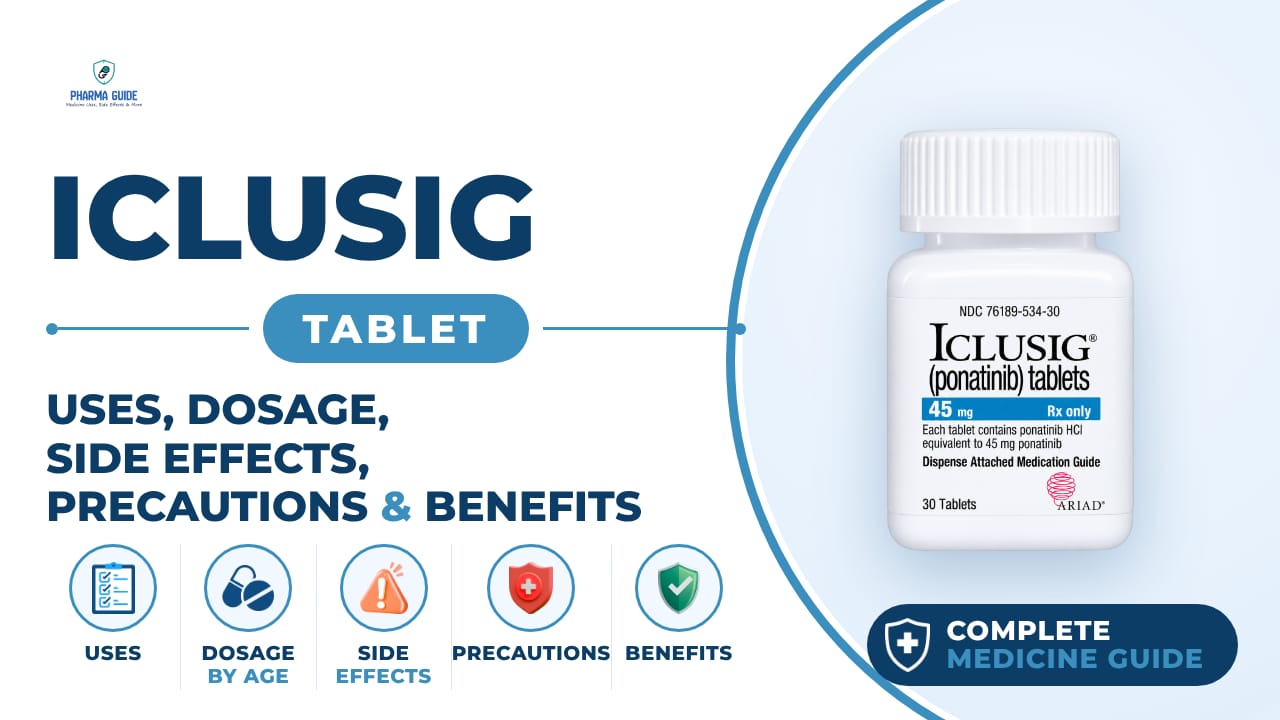
Iclusig Tablet: Uses, Dosage, Side Effects, Precautions and Alternates
| Generic name | ponatinib |
|---|---|
| Drug class | BCR-ABL tyrosine kinase inhibitor (TKI) |
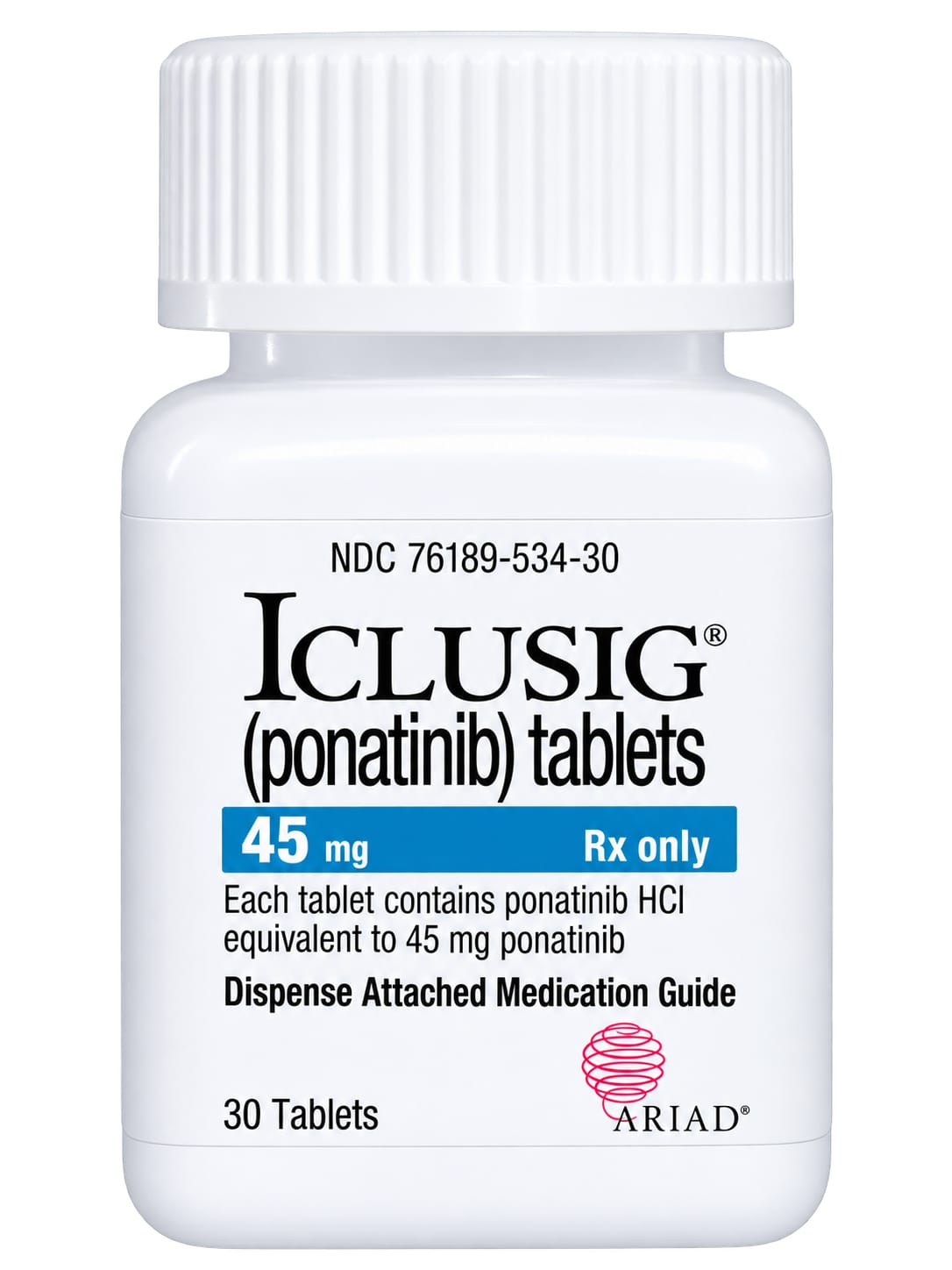
| Forms | Tablet (10 mg, 15 mg, 30 mg, 45 mg) |
Quick overview
Iclusig Tablet (ponatinib) is a prescription BCR-ABL tyrosine kinase inhibitor used to treat certain blood cancers in adults, including chronic myeloid leukemia (CML) and Philadelphia chromosome-positive acute lymphoblastic leukemia (Ph+ ALL), especially when other similar medicines have not worked or could not be tolerated. It works by blocking a protein that cancer cells need to grow, causing them to stop growing and die. It is taken once a day and carries serious warnings related to blood clots, heart problems, and liver damage.
What is Iclusig Tablet
Iclusig is a prescription cancer medicine that comes as a tablet you swallow. It is used to treat certain blood cancers in adults, including chronic myeloid leukemia (CML) and Philadelphia chromosome-positive acute lymphoblastic leukemia (Ph+ ALL), especially when other similar medicines have not worked or could not be tolerated.
Iclusig Tablet uses
- Treats chronic phase, accelerated phase, or blast phase chronic myeloid leukemia (CML) in adults who have tried other kinase inhibitor medicines that did not work or caused severe side effects
- Treats Philadelphia chromosome-positive acute lymphoblastic leukemia (Ph+ ALL) in adults who cannot take other kinase inhibitor medicines or whose disease has returned
- Treats CML or Ph+ ALL with a specific gene change called the T315I mutation, which makes cancer resistant to most other treatments
- Can be combined with a reduced-intensity chemotherapy plan for adults newly diagnosed with Ph+ ALL
- Not meant for people newly diagnosed with chronic phase CML
Benefits of Iclusig Tablet
- Can work against the T315I gene mutation, which makes leukemia resistant to most other treatments
- May be used when other kinase inhibitor medicines have stopped working or caused severe side effects
How Iclusig Tablet works
Iclusig blocks a protein called tyrosine kinase that cancer cells need to grow and divide. By blocking this protein, the medicine causes cancer cells to stop growing and eventually die.
Iclusig Tablet dosage
Iclusig is taken once a day, with or without food. Swallow the tablet whole; do not crush, chew, split, or dissolve it. Try to take your dose at the same time each day. Do not stop taking it or change your dose without your doctor's advice. If you need surgery, tell your surgeon ahead of time, since you may need to stop taking it for a period before and after the procedure. Avoid grapefruit and grapefruit juice while taking this medicine.
Use exactly as prescribed by your doctor or pharmacist.
Available forms and strengths
- Tablet (10 mg, 15 mg, 30 mg, 45 mg)
Side effects of Iclusig Tablet
Common
- Skin rash or dry skin
- Joint, muscle, back, bone, or stomach pain
- Pain in arms, legs, hands, or feet
- Tiredness and headache
- Constipation, nausea, vomiting, or diarrhea
- Fever and chills
- High blood pressure
- Mouth sores or blisters
- Loss of appetite and weight loss
- Dizziness
- Upper respiratory infections such as the common cold
- Cough or shortness of breath
- Muscle spasms
- Swelling in the feet, legs, hands, or arms
- Hair loss
- Trouble sleeping
Serious
- Blood clots or blockages in arteries or veins that can cause heart attack, stroke, or organ damage
- Heart failure or abnormal heart rhythms
- Liver damage or liver failure
- Severe bleeding, including internal bleeding
- Inflammation of the pancreas (pancreatitis)
- Severe fluid retention (edema)
- Nerve damage (peripheral or cranial neuropathy) causing weakness, tingling, burning, or numbness
- Eye problems, including vision loss or blindness
- Low blood cell counts leading to infection, bruising, or bleeding
- Tumor lysis syndrome from fast breakdown of cancer cells
- A rare brain condition called posterior reversible encephalopathy syndrome (PRES)
- Slowed wound healing
- Holes or tears in the stomach or intestines
- Severe allergic reaction
- High blood pressure that becomes severe
Warnings and precautions
- This medicine can cause blockages in arteries that may lead to a fatal heart attack or stroke, even in people without risk factors.
- It can cause blood clots in veins that may lead to organ damage or a lack of oxygen.
- It can cause new or worsening heart failure, which has been fatal in some cases.
- It can cause serious liver damage and liver failure, which has been fatal in some cases.
- Avoid grapefruit and grapefruit juice, since they can raise the amount of this medicine in your body and increase the risk of side effects.
- If you need surgery, tell your surgeon ahead of time, as you may need to stop this medicine for about a week beforehand.
- This medicine is not recommended during pregnancy because it may harm an unborn baby. A pregnancy test is usually done before starting treatment, and effective birth control should be used during treatment and for several weeks after the last dose.
- Breastfeeding is not recommended during treatment and for a period after the last dose, since it is not known if the medicine passes into breast milk.
- Kidney function and overall clinical status should be monitored during treatment.
- Tell your doctor if you have liver disease, since this medicine can cause serious liver damage or liver failure in some people.
- There is no known direct interaction between this medicine and alcohol, but both can harm the liver and pancreas on their own, so heavy drinking may raise the risk of these problems and of common side effects like headache, tiredness, nausea, and diarrhea. Alcohol is best limited or avoided, particularly if liver tests are abnormal.
Storage
- Store at room temperature, between 68 F and 77 F (20 C and 25 C)
- Can be exposed to temperatures between 59 F and 86 F (15 C and 30 C) for shorter periods, such as during transport
- Store in a cool, dry place, away from moisture and heat
- Keep in the original child-resistant container, out of the reach of children
When to see a doctor
- Get emergency help right away for chest pain spreading to the jaw or shoulder, shortness of breath, dizziness, severe stomach pain, leg swelling, sudden numbness or weakness, severe headache, or vision or speech problems.
- Call your doctor right away for signs of liver problems, such as upper stomach pain with loss of appetite, dark urine, unusual bruising, or yellowing of the skin or eyes.
- Get emergency help for signs of an allergic reaction, such as hives, trouble breathing, or swelling of the face, lips, tongue, or throat.
- Call your doctor right away for signs of severe bleeding, such as nosebleeds, bloody or tarry stools, pink or brown urine, heavy periods, or coughing up blood or vomit that looks like coffee grounds.
- Seek emergency medical attention if you think you have taken too much of this medicine.
Alternatives
- Bosutinib
- Nilotinib
- Dasatinib
- Asciminib
Watch the video
FAQs
What is Iclusig Tablet used for?
Iclusig treats chronic myeloid leukemia (CML) and Philadelphia chromosome-positive acute lymphoblastic leukemia (Ph+ ALL) in adults, especially when other kinase inhibitor medicines have not worked or could not be tolerated, including cases with the T315I gene mutation.
How is Iclusig Tablet taken?
Iclusig is taken once a day, with or without food. The tablet should be swallowed whole without crushing, chewing, splitting, or dissolving it, and taken at the same time each day as prescribed.
What are the serious side effects of Iclusig Tablet?
Serious side effects include blood clots or blockages in arteries or veins, heart failure or abnormal heart rhythms, liver damage or failure, severe bleeding, pancreatitis, severe fluid retention, nerve damage, eye problems including vision loss, and low blood cell counts.
Can I drink grapefruit juice while taking Iclusig Tablet?
No, grapefruit and grapefruit juice should be avoided while taking Iclusig, since they can raise the amount of the medicine in your body and increase the risk of side effects.
What are the alternatives to Iclusig Tablet?
Alternatives mentioned include bosutinib, nilotinib, dasatinib, and asciminib.
General information, not medical advice
Your prescriber and the leaflet in your pack know your situation. This page does not.
- Follow your prescriber and the leaflet
- Don't start, stop, or change a dose on your own
- Doses and warnings differ by country and product
Sources
Video
Related medicines

Injectafer Injection: Uses, Dosage, Side Effects, Precautions and Alternates
Iron products
Injectafer (ferric carboxymaltose) treats iron deficiency anemia and heart failure-related iron deficiency via IV. Learn uses, dosage, side effects, and

Gliclazide Tablet: Uses, Dosage, Side Effects, Precautions and Alternates
Sulfonylurea (hypoglycemic/antidiabetic agent)
Gliclazide Tablet is a sulfonylurea for type 2 diabetes that boosts insulin release. Learn about dosage, side effects, warnings, and precautions.