
Safety
General information, not medical advice
Your prescriber and the leaflet in your pack know your situation. This page does not.
- Follow your prescriber and the leaflet
- Don't start, stop, or change a dose on your own
- Doses and warnings differ by country and product
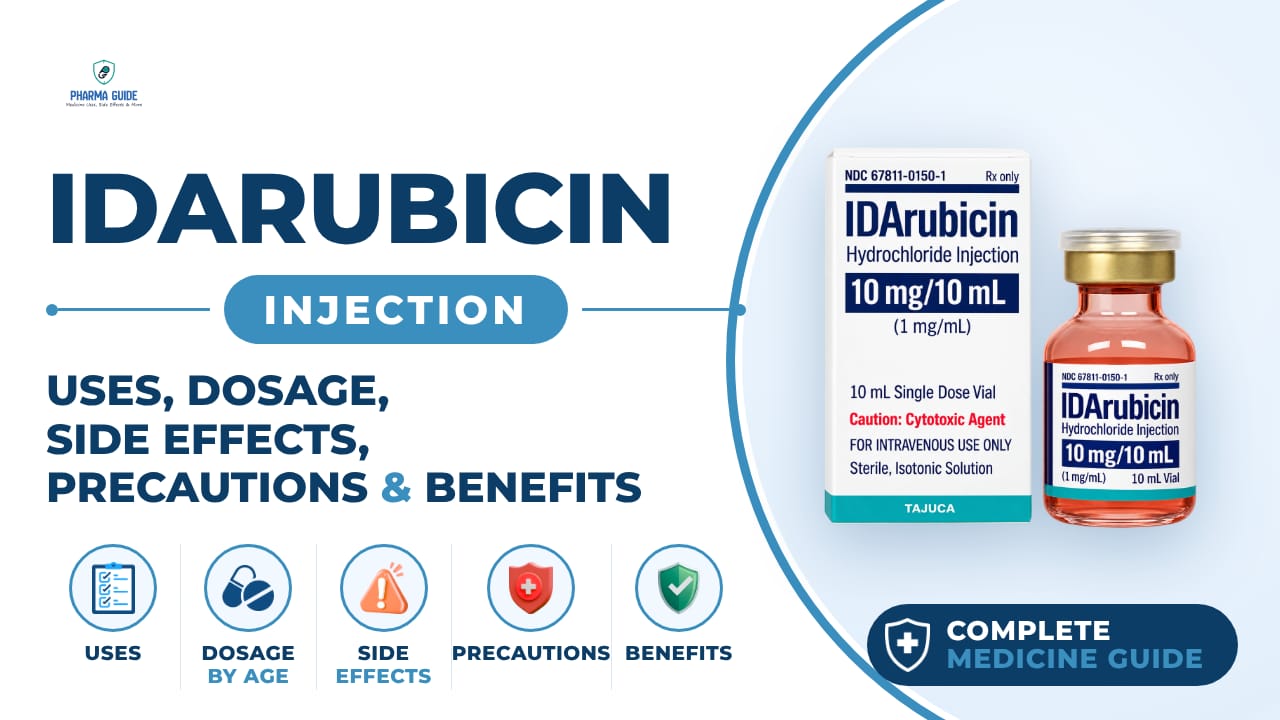
Idarubicin Injection: Uses, Dosage, Side Effects, Precautions and Alternates
| Generic name | Idarubicin |
|---|---|
| Drug class | Anthracycline (antineoplastic/antibiotic antineoplastic) |
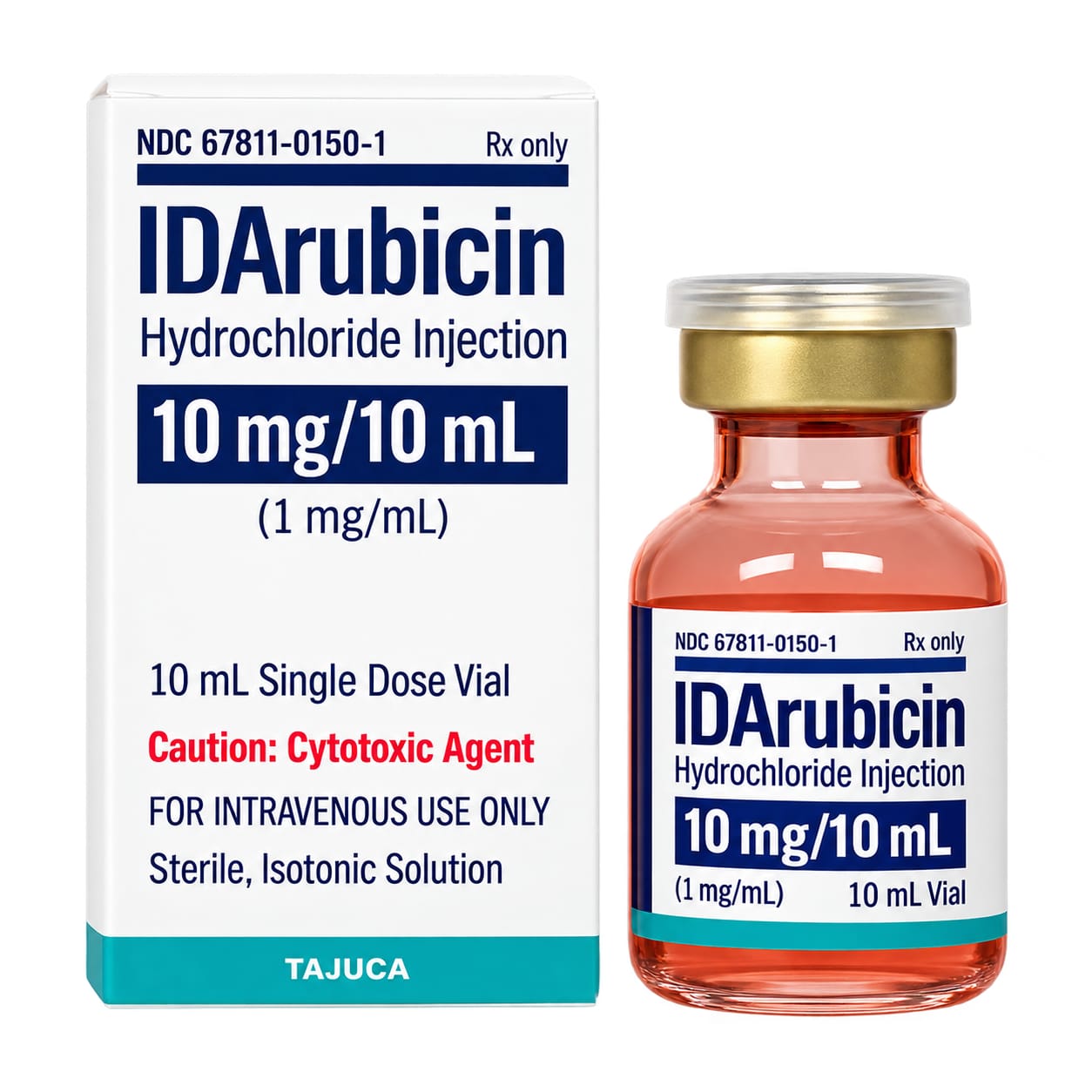
| Forms | Solution for intravenous injection |
Quick overview
Idarubicin Injection, known generically as idarubicin, is a prescription chemotherapy medicine belonging to the anthracycline class. It is given into a vein, usually combined with other chemotherapy drugs, to treat acute myeloid leukemia (AML) in adults. It works by slowing and eventually stopping the growth of leukemia cells. It is administered by a trained health professional in a hospital or cancer treatment center.
What is Idarubicin Injection
Idarubicin injection is a prescription chemotherapy medicine given into a vein. It is used with other cancer medicines to treat acute myeloid leukemia (AML), a fast-growing cancer of the white blood cells.
Idarubicin Injection uses
- Treats acute myeloid leukemia (AML) in adults, usually combined with other chemotherapy drugs
Benefits of Idarubicin Injection
- Targets and destroys rapidly dividing leukemia cells in the blood and bone marrow, which helps the body return to producing healthy blood cells
How Idarubicin Injection works
Idarubicin belongs to a group of medicines called anthracyclines. It works by slowing or stopping the growth of cancer cells, eventually destroying them.
Idarubicin Injection dosage
This medicine is given by a nurse or other trained health professional in a hospital or cancer treatment center. It is given through a tube placed in a vein, injected slowly so the IV line stays in place for a short time each day for three days in a row. It is often given along with other cancer medicines; if you take some of those by mouth, work with your doctor to time them correctly.
Your doctor may want you to drink extra fluids during treatment to help your kidneys keep working well. This medicine often causes nausea and vomiting, but it is important to continue treatment even if you feel sick — ask your doctor for ways to ease these effects. Unless your doctor tells you otherwise, continue your normal diet.
If you miss a scheduled dose or appointment, call your doctor, home health caregiver, or treatment clinic for instructions.
Use exactly as prescribed by your doctor or pharmacist.
Available forms and strengths
- Solution for intravenous injection
Side effects of Idarubicin Injection
Common
- Nausea and vomiting
- Diarrhea
- Mouth and throat sores
- Stomach pain or cramps
- Headache
- Hair loss (thinning or complete loss of hair on scalp and body)
- Cracked lips
- Difficulty swallowing
- Harmless red or pink coloring of urine and other body fluids for up to 48 hours after treatment
- Pain, redness, or swelling at the injection site
Serious
- Signs of heart problems: chest pain or discomfort, fast or irregular heartbeat, swelling of the feet and lower legs, trouble breathing, or sudden weight gain
- Signs of low blood cell counts: fever, chills, sore throat, unusual tiredness, easy bruising or bleeding, black tarry stools, blood in urine or stool, pinpoint red spots on the skin
- Severe allergic reaction: hives, rash, itching, swelling of the face, tongue, or throat, trouble breathing, dizziness, or fainting
- Tissue damage if the medicine leaks out of the vein: redness, pain, swelling, blisters, or sores at the injection site
- Signs of tumor lysis syndrome: decreased or changed urine output, joint pain or swelling, lower back or side pain, rapid weight gain, swelling of the feet or legs, unusual tiredness
- Signs of a second cancer developing later: unusual bleeding or bruising, swollen glands, persistent sores or ulcers in the mouth, unexplained fever or tiredness
Warnings and precautions
- This medicine can cause serious or life-threatening heart problems at any time during treatment or even months to years later. Your doctor will test your heart before and during treatment.
- This medicine severely lowers blood cell counts, which raises the risk of dangerous infections, anemia, and bleeding.
- If the medicine leaks out of the vein during the infusion, it can cause severe damage to the surrounding tissue, so it must only be given into a vein, never into a muscle or under the skin.
- This medicine may increase the risk of developing other cancers later, including a different type of leukemia.
- Some men and women who use this medicine have become unable to have children.
- This medicine can harm an unborn baby. It can also cause birth defects if the father is using it when his partner becomes pregnant. Effective birth control is needed during treatment and for several months after the last dose for both men and women.
- It is not known whether this medicine passes into breast milk or if it is safe for a nursing baby. You should not breastfeed during treatment and for a couple of weeks after the final dose.
- This medicine should be used carefully if you have kidney disease, because your body may clear the drug more slowly, increasing its effects.
- This medicine should be used carefully if you have liver disease, because your body may clear the drug more slowly, increasing its effects. Dose reductions may be needed for people with impaired liver function.
- Ask your healthcare professional about using alcohol with this medicine, since interactions may occur.
Storage
- Temperature: Keep vials under refrigeration at 2°C to 8°C. Do not freeze the injection.
- Light Protection: Protect the medication from light by keeping it inside its original carton until the time of use.
- Handling: Idarubicin is a cytotoxic and hazardous drug; special institutional handling, preparation, and disposal procedures must be followed.
When to see a doctor
- Call your doctor right away if you have shortness of breath, cough, trouble breathing, swelling of the face, hands, feet, ankles, or lower legs, weight gain of more than 5 pounds in a day, dizziness, fainting, or a fast, irregular, or pounding heartbeat.
- Call your doctor immediately if you notice pain, itching, redness, swelling, blisters, or sores where the medicine was injected, since it may have leaked outside the vein.
- Get emergency medical help right away if you have signs of a serious allergic reaction, such as hives, difficulty breathing, or swelling of the face, lips, tongue, or throat.
- Call your doctor right away if you notice signs of a low blood cell count, such as fever, chills, tiredness, mouth sores, skin sores, easy bruising, unusual bleeding, pale skin, cold hands and feet, or feeling light-headed or short of breath.
- Seek medical attention right away if you have chest pain, irregular heartbeats, shortness of breath, swelling, or rapid weight gain.
Alternatives
- Vyxeos
- Cytarabine-based regimens
- Mitoxantrone
- Daunorubicin
Watch the video
FAQs
What is Idarubicin Injection used for?
It is a prescription chemotherapy medicine used, usually combined with other chemotherapy drugs, to treat acute myeloid leukemia (AML) in adults.
How is Idarubicin Injection given?
It is given by a nurse or trained health professional in a hospital or cancer treatment center, injected slowly through a tube placed in a vein for a short time each day for three days in a row.
What are the common side effects of Idarubicin Injection?
Common side effects include nausea and vomiting, diarrhea, mouth and throat sores, stomach pain, headache, hair loss, cracked lips, difficulty swallowing, harmless red or pink urine, and injection site pain, redness, or swelling.
What are the serious risks of Idarubicin Injection?
Serious risks include heart problems, severely low blood cell counts, severe allergic reactions, tissue damage if the medicine leaks out of the vein, tumor lysis syndrome, and the possible development of a second cancer later.
How should Idarubicin Injection be stored?
Vials should be kept refrigerated at 2°C to 8°C, not frozen, and protected from light by keeping them in their original carton until use.
General information, not medical advice
Your prescriber and the leaflet in your pack know your situation. This page does not.
- Follow your prescriber and the leaflet
- Don't start, stop, or change a dose on your own
- Doses and warnings differ by country and product
Sources
Video
Related medicines

Injectafer Injection: Uses, Dosage, Side Effects, Precautions and Alternates
Iron products
Injectafer (ferric carboxymaltose) treats iron deficiency anemia and heart failure-related iron deficiency via IV. Learn uses, dosage, side effects, and

Gliclazide Tablet: Uses, Dosage, Side Effects, Precautions and Alternates
Sulfonylurea (hypoglycemic/antidiabetic agent)
Gliclazide Tablet is a sulfonylurea for type 2 diabetes that boosts insulin release. Learn about dosage, side effects, warnings, and precautions.