
Safety
General information, not medical advice
Your prescriber and the leaflet in your pack know your situation. This page does not.
- Follow your prescriber and the leaflet
- Don't start, stop, or change a dose on your own
- Doses and warnings differ by country and product
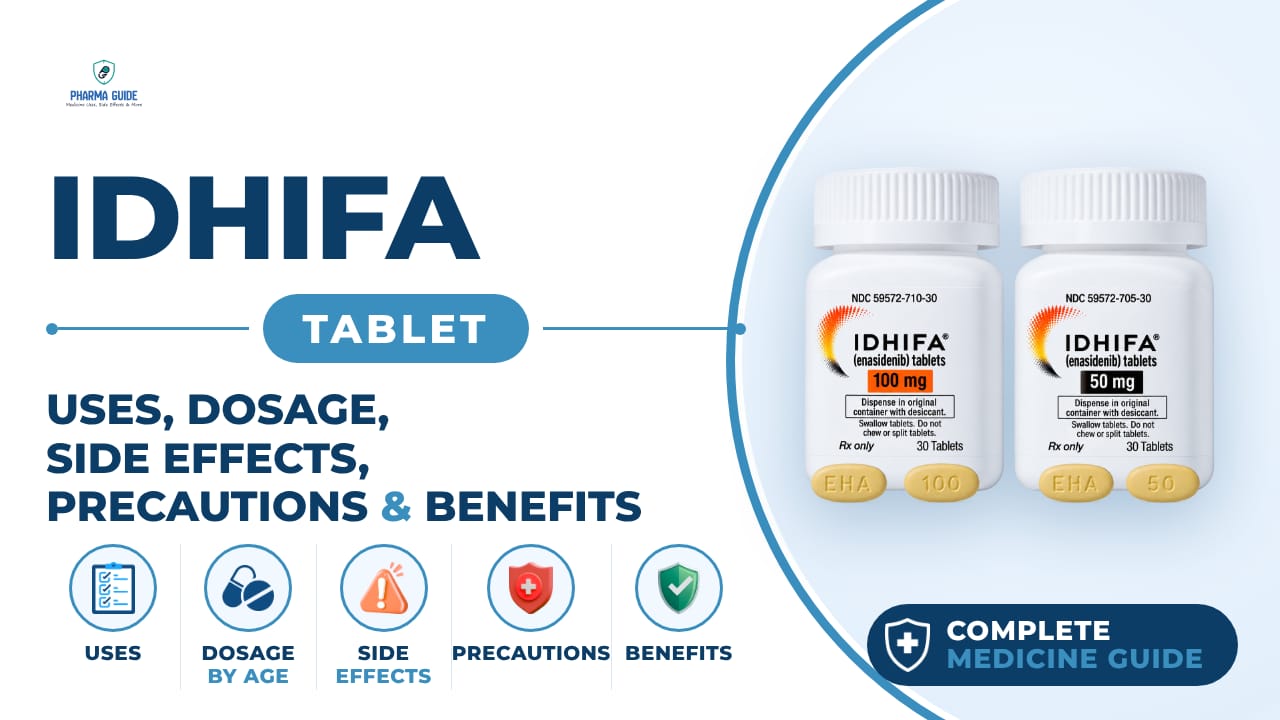
Idhifa Tablet: Uses, Dosage, Side Effects, Precautions and Alternates
| Generic name | enasidenib |
|---|---|
| Drug class | IDH2 inhibitor (isocitrate dehydrogenase-2 inhibitor); listed elsewhere as miscellaneous antineoplastics |
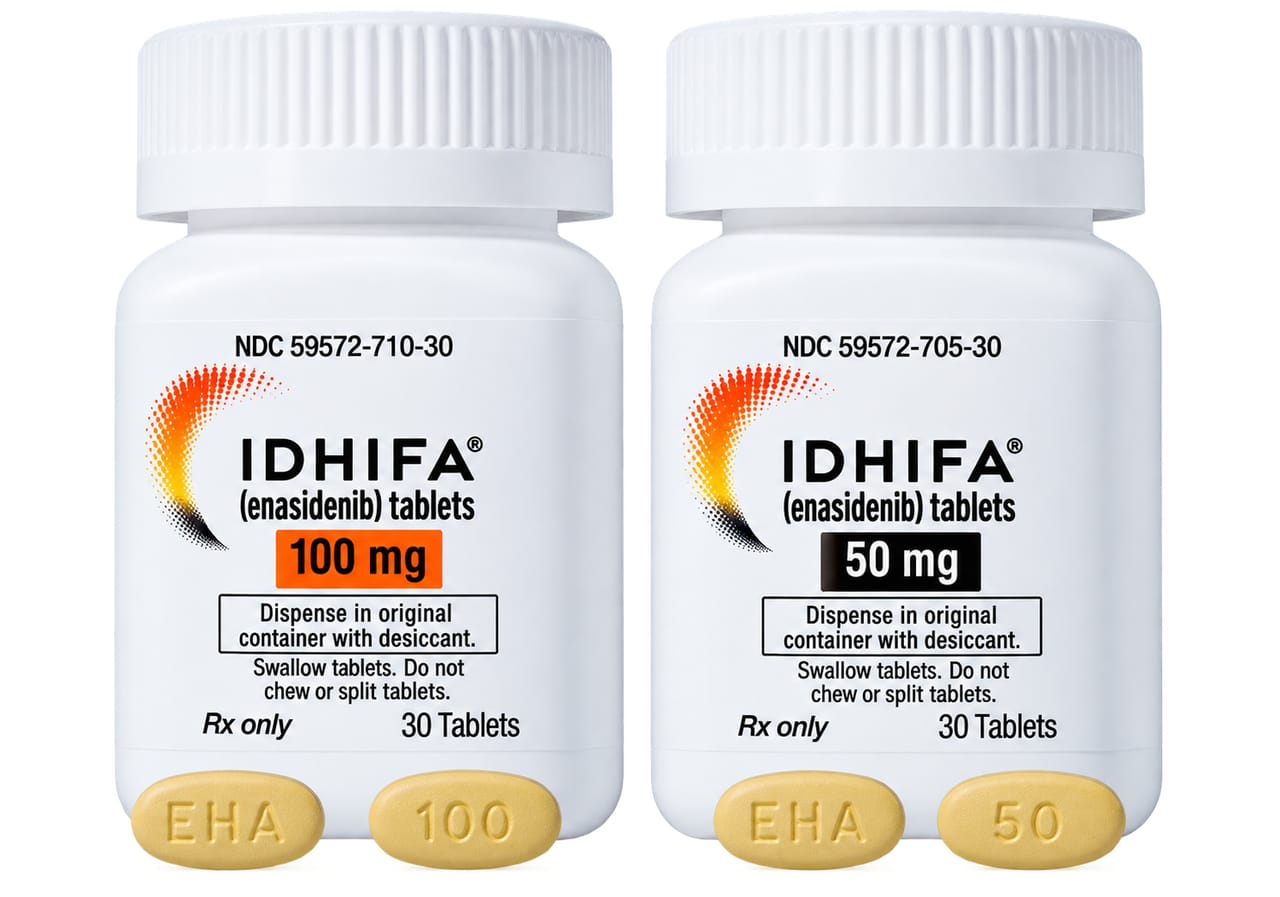
| Forms | Tablets (50 mg), Tablets (100 mg) |
Quick overview
Idhifa Tablet (enasidenib) is a prescription cancer medicine belonging to the IDH2 inhibitor class, used to treat adults with relapsed or refractory acute myeloid leukemia (AML) that has a specific IDH2 gene mutation. It works by blocking the abnormal IDH2 protein so that leukemia cells can mature normally instead of building up in the bone marrow. It is taken once daily by mouth, and treatment is usually continued long-term with regular monitoring for side effects.
What is Idhifa Tablet
Idhifa is a prescription cancer medicine used to treat adults with a type of blood cancer called acute myeloid leukemia (AML) that has a specific gene change called an IDH2 mutation, and whose disease has come back or has not responded to earlier treatment. The generic name is enasidenib, and it belongs to the IDH2 inhibitor (isocitrate dehydrogenase-2 inhibitor) drug class, also listed elsewhere as a miscellaneous antineoplastic.
Idhifa Tablet uses
- Treatment of relapsed or refractory acute myeloid leukemia (AML) in adults with an isocitrate dehydrogenase-2 (IDH2) mutation as detected by an FDA-approved test
Benefits of Idhifa Tablet
- Can help some patients with relapsed or refractory AML reach complete or partial remission of their leukemia
- Can help patients who depended on blood or platelet transfusions become independent of transfusions
- Provides an oral targeted-treatment option
How Idhifa Tablet works
Idhifa blocks the activity of the mutated IDH2 protein in the abnormal young blood cells. This allows those cells to mature into normal, fully functioning blood cells instead of building up in the bone marrow.
Idhifa Tablet dosage
Take this medicine once a day at the same time each day. Swallow the tablet whole with a full glass (8 ounces) of water; do not chew, split, or crush it. It can be taken with or without food. Treatment is usually continued until the disease gets worse or side effects become unacceptable, with a minimum of about 6 months recommended to allow time to see if it is working.
If you miss a dose or vomit after taking a dose, take the dose as soon as possible that same day, then return to your normal schedule the next day; do not take two doses to make up for a missed one. Your doctor will do blood tests before starting treatment and regularly during the first few months to check for side effects.
| Age group | Dose |
|---|---|
| Under 18 years | Safety and effectiveness have not been established |
| 18–64 years | 100 mg once daily |
| 65–74 years | 100 mg once daily |
Available forms and strengths
- Tablets (50 mg)
- Tablets (100 mg)
Side effects of Idhifa Tablet
Common
- Nausea
- Vomiting
- Diarrhea
- Decreased appetite
- Elevated bilirubin (jaundice, yellowing of skin or eyes)
- Changes in taste
Serious
- Differentiation syndrome (fever, cough, trouble breathing, rapid weight gain, swelling, bone pain, swollen lymph nodes)
- Tumor lysis syndrome (confusion, tiredness, nausea, vomiting, diarrhea, muscle cramps, tingling, irregular heartbeat, seizures)
- Noninfectious leukocytosis (high white blood cell count)
- Severe liver-related changes (dark urine, clay-colored stools, jaundice)
- Allergic reaction (hives, difficulty breathing, swelling of face, lips, tongue, or throat)
Warnings and precautions
- Idhifa can cause a serious and potentially fatal blood cell condition called differentiation syndrome, which can occur as early as 1 day to as late as 5 months after starting treatment. Watch for fever, cough, trouble breathing, rapid weight gain, swelling, or bone pain, and get medical help right away if these occur.
- Idhifa can harm an unborn baby, so effective contraception is needed during treatment and for 2 months afterward for both men and women.
- Idhifa may reduce the effectiveness of hormonal birth control methods like pills, patches, and vaginal rings, so a non-hormonal method should be used instead.
- Avoid taking certain other medicines together with Idhifa unless your doctor says it's okay, because Idhifa can change how strongly those drugs act in your body.
- Idhifa can harm an unborn baby.
- If you can become pregnant, you will need a pregnancy test before starting treatment, and you should use effective non-hormonal birth control during treatment and for 2 months after your last dose. Men should also use effective birth control during this time.
- It is not known if Idhifa passes into breast milk. Women should not breastfeed during treatment and for 2 months after the last dose.
- Overall kidney function should be reviewed during oncology treatment. Bilirubin and other laboratory values require monitoring during treatment.
- Idhifa does not directly interact with alcohol, but drinking too much alcohol is not healthy, and it may worsen side effects such as nausea, vomiting, and diarrhea. Ask your doctor if it is safe for you to drink alcohol during treatment.
- Fatigue, dizziness, or weakness may make driving unsafe.
Storage
- Store at room temperature between 68°F to 77°F (20°C to 25°C)
- Keep in the original container
- Keep the container tightly closed with the desiccant canister inside to protect the tablets from moisture
- Keep out of the reach of children
When to see a doctor
- Get emergency medical care right away if you develop fever, cough, trouble breathing or breathing faster than usual, feeling dizzy or faint, rapid weight gain (more than 10 pounds in a week), swelling in your arms, legs, hands, feet, neck, groin, or underarm area, bone pain, or swollen lymph nodes — these can be signs of differentiation syndrome.
- Tell your healthcare provider right away about any changes in skin or eye color, which could signal elevated bilirubin or a liver problem.
- Call your doctor at once if you have dark urine, clay-colored stools, yellowing of the skin or eyes, severe or ongoing vomiting or diarrhea, or signs of tumor cell breakdown such as tiredness, weakness, muscle cramps, nausea, vomiting, diarrhea, irregular heart rate, decreased urination, or tingling in hands, feet, or around the mouth.
- Seek emergency help if you notice signs of a severe allergic reaction, such as hives, trouble breathing, or swelling of the face, lips, tongue, or throat.
Alternatives
- Azacitidine
- Decitabine
- Venetoclax-based regimens
Watch the video
FAQs
What is Idhifa Tablet used for?
Idhifa is used to treat relapsed or refractory acute myeloid leukemia (AML) in adults who have a specific IDH2 gene mutation detected by an FDA-approved test.
How does Idhifa Tablet work?
Idhifa blocks the activity of the mutated IDH2 protein in abnormal young blood cells, allowing them to mature into normal, fully functioning blood cells instead of building up in the bone marrow.
What is the dosage of Idhifa Tablet?
The typical dose for adults aged 18 to 74 is 100 mg taken once daily. Tablets should be swallowed whole with a full glass of water and can be taken with or without food.
What are the serious side effects of Idhifa Tablet?
Serious side effects include differentiation syndrome, tumor lysis syndrome, noninfectious leukocytosis, severe liver-related changes, and allergic reactions.
What precautions should be taken while using Idhifa Tablet?
Idhifa can harm an unborn baby, so effective non-hormonal contraception is needed during treatment and for 2 months afterward. It may reduce the effectiveness of hormonal birth control, and women should not breastfeed during treatment and for 2 months after the last dose.
General information, not medical advice
Your prescriber and the leaflet in your pack know your situation. This page does not.
- Follow your prescriber and the leaflet
- Don't start, stop, or change a dose on your own
- Doses and warnings differ by country and product
Sources
Video
Related medicines

Injectafer Injection: Uses, Dosage, Side Effects, Precautions and Alternates
Iron products
Injectafer (ferric carboxymaltose) treats iron deficiency anemia and heart failure-related iron deficiency via IV. Learn uses, dosage, side effects, and

Gliclazide Tablet: Uses, Dosage, Side Effects, Precautions and Alternates
Sulfonylurea (hypoglycemic/antidiabetic agent)
Gliclazide Tablet is a sulfonylurea for type 2 diabetes that boosts insulin release. Learn about dosage, side effects, warnings, and precautions.