
Safety
General information, not medical advice
Your prescriber and the leaflet in your pack know your situation. This page does not.
- Follow your prescriber and the leaflet
- Don't start, stop, or change a dose on your own
- Doses and warnings differ by country and product
Ifosfamide Injection: Uses, Dosage, Side Effects, Precautions and Alternates
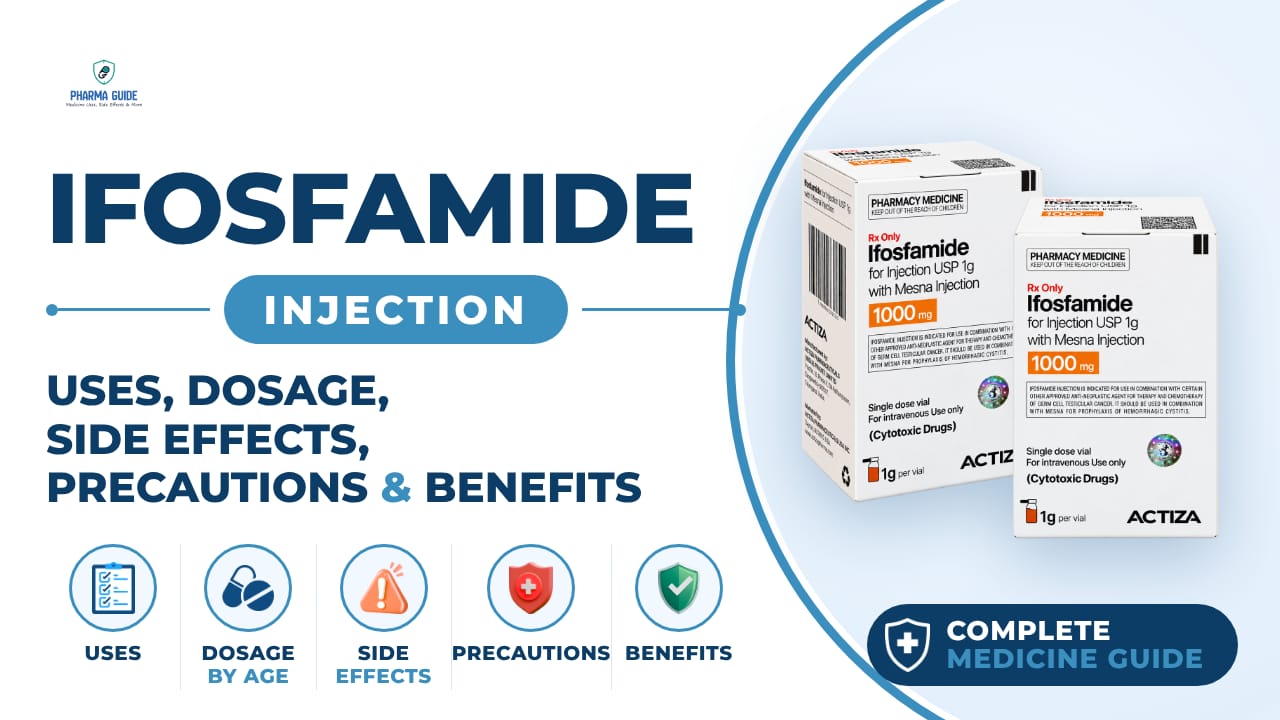
| Generic name | Ifosfamide |
|---|---|
| Drug class | Alkylating agent (chemotherapy drug); synthetic analog of cyclophosphamide |
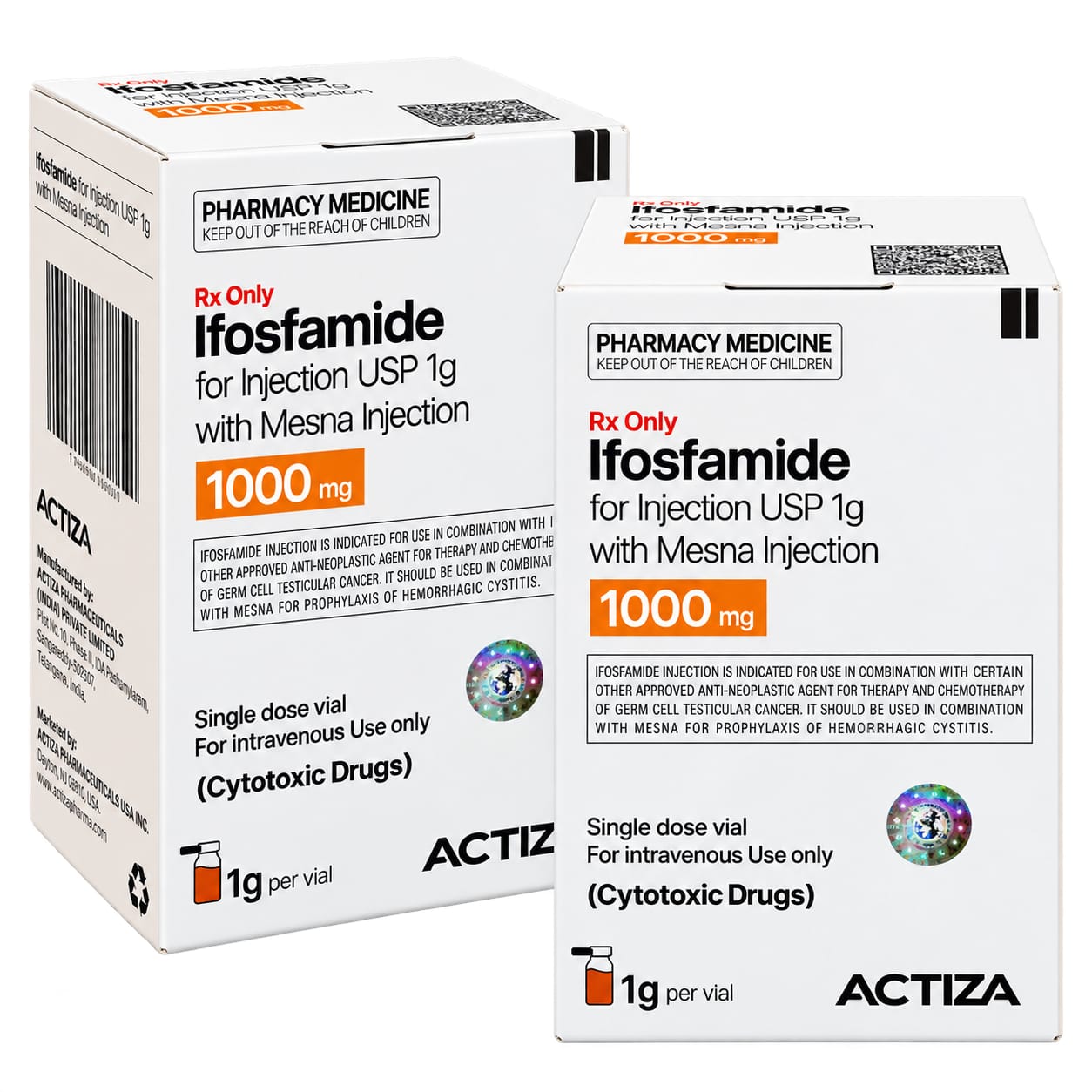
| Forms | Injection (powder in single-use vials) for intravenous infusion, available in 1 gram and 3 gram vial sizes |
Quick overview
Ifosfamide Injection is a chemotherapy drug given into a vein, used along with other anti-cancer medicines, usually together with a protective drug called mesna to lower the risk of bladder damage. It is used as part of third-line treatment for germ cell testicular cancer and in combination with mesna to help prevent a bladder condition called hemorrhagic cystitis. It can cause significant side effects, including bone marrow suppression, bladder bleeding, and nervous system effects, so it is given under close medical supervision.
What is Ifosfamide Injection
Ifosfamide Injection is a chemotherapy drug given into a vein. It is used along with other anti-cancer medicines, usually with a protective drug called mesna to lower the risk of bladder damage. Its generic name is ifosfamide, and it belongs to the alkylating agent class of chemotherapy drugs, a synthetic analog of cyclophosphamide.
Ifosfamide Injection uses
- Used in combination with certain other approved anti-cancer medicines for third-line (later-stage) treatment of germ cell testicular cancer
- Used together with mesna to help prevent a bladder condition called hemorrhagic cystitis
Benefits of Ifosfamide Injection
- In a clinical study of patients with testicular cancer who had already tried other treatments, those who received ifosfamide combination therapy were much more likely to become disease-free and lived longer on average than those treated with older regimens alone
- Treats certain testicular cancers
- Used in some sarcoma regimens
- Used in selected lymphoma and solid-tumor protocols
How Ifosfamide Injection works
Ifosfamide itself is inactive and must be changed by the liver into active forms. These active forms attach to and cross-link the DNA inside cancer cells, which stops the cells from making new DNA and proteins. This damage causes the cancer cells to die.
Ifosfamide Injection dosage
Ifosfamide Injection is given as a slow infusion into a vein lasting at least 30 minutes. It is given once a day for 5 days in a row, then repeated every 3 weeks or once blood counts have recovered. It must be given together with plenty of fluids (at least 2 liters of fluid by mouth or IV each day) to help protect the bladder. Mesna is given together with this medicine to reduce the risk of bladder bleeding/irritation. A urine test should be done before each dose to check for blood in the urine. Elderly patients may need more cautious dosing because of age-related changes in kidney, liver, or heart function.
| Age group | Dose |
|---|---|
| 18–64 years | Common regimens use 1,200–1,800 mg/m² IV daily for 3–5 days, depending on the cancer type and combination regimen |
Available forms and strengths
- Injection (powder in single-use vials) for intravenous infusion, available in 1 gram and 3 gram vial sizes
Side effects of Ifosfamide Injection
Common
- Hair loss (alopecia)
- Nausea and vomiting
- Low white blood cell count (leukopenia)
- Low red blood cell count (anemia)
- Blood in the urine (hematuria)
- Confusion, drowsiness, or other nervous system effects
- Infections
- Low platelet count (thrombocytopenia)
- Tiredness
- Loss of appetite
- Diarrhea
- Mouth sores (stomatitis)
- Vein irritation (phlebitis)
Serious
- Severe infections, including sepsis, which can be fatal
- Severe brain and nerve problems (encephalopathy) including confusion, hallucinations, seizures, or coma, which can be fatal
- Severe kidney damage or kidney failure
- Severe bladder bleeding (hemorrhagic cystitis) that may require a blood transfusion
- Heart rhythm problems, heart failure, or other heart damage, which can be fatal
- Lung damage such as interstitial pneumonitis or pulmonary fibrosis, which can be fatal
- Secondary cancers such as leukemia, lymphoma, thyroid cancer, or sarcoma occurring months to years later
- Liver veno-occlusive disease (blocked liver veins)
- Severe allergic (anaphylactic) reactions
- Infertility (temporary or permanent) in both men and women
- Severe skin reactions such as Stevens-Johnson syndrome or toxic epidermal necrolysis
Warnings and precautions
- This medicine can severely suppress your bone marrow, lowering blood cell counts and leading to serious, sometimes fatal, infections. Your blood counts will be checked regularly.
- Severe brain and nervous system problems (encephalopathy) can occur and may be fatal. Treatment may need to stop if this happens.
- This medicine can severely damage the kidneys, leading to kidney failure, and can cause severe bladder bleeding.
- Heart problems such as abnormal heart rhythms and heart failure can occur and may be fatal, especially in people with existing heart disease or those treated with other heart-affecting therapies.
- Serious lung problems, including scarring of the lungs and respiratory failure, can occur and have been fatal in some cases.
- New cancers, such as leukemia, can develop years after treatment with this medicine.
- This medicine can cause severe harm to an unborn baby. Effective birth control must be used during and for a period of time after treatment.
- Severe allergic reactions (anaphylaxis) have happened with this medicine.
- This medicine can interfere with normal wound healing.
- This medicine can seriously harm an unborn baby. Women should not become pregnant and men should not father a child while on treatment and for a period of time afterward. Tell your doctor right away if you or your partner becomes pregnant.
- This medicine passes into breast milk and could harm a nursing baby. You should not breastfeed during treatment.
- This medicine is removed from the body by the kidneys, so people with kidney problems may be at higher risk of side effects. Your doctor will monitor your kidney function closely and may need to adjust your dose.
- This medicine is processed by the liver and should be used carefully if you have liver problems, since your doctor may need to monitor you more closely.
- Drinking alcohol during treatment may make nausea and vomiting worse.
- This medicine can cause confusion, drowsiness, or other brain effects that may make it unsafe to drive or operate heavy machinery.
Storage
- Teva product: Refrigerate at 2° to 8°C (36° to 46°F)
- Baxter product: Store at controlled room temperature 20°C to 25°C (68°F to 77°F); protect from temperatures above 30°C (86°F)
- Once mixed (reconstituted) or further diluted, the solution should be refrigerated and used within 24 hours
- Always wear gloves when handling the vials or solution; if it touches skin, wash thoroughly with soap and water; if it touches mucous membranes, rinse with plenty of water
When to see a doctor
- Get medical help right away if you develop a fever or any signs of infection, since this medicine can severely weaken your immune system.
- Tell your doctor immediately if you notice confusion, extreme drowsiness, hallucinations, seizures, or difficulty staying awake.
- Seek help if you notice blood in your urine, pain or burning when urinating, or you are urinating less than usual.
- Report any chest pain, irregular heartbeat, shortness of breath, or swelling, as these could be signs of heart problems.
- Tell your doctor about new or worsening cough, shortness of breath, or difficulty breathing, which could indicate lung damage.
- Seek medical attention for mouth sores, and maintain good oral hygiene as advised by your care team.
- Report any new vision changes, blurred vision, or eye irritation to your doctor.
- Tell your doctor if you experience hearing loss, ringing in the ears, or dizziness/vertigo.
Alternatives
- Cyclophosphamide
- Etoposide
- Cisplatin
Watch the video
FAQs
What is Ifosfamide Injection used for?
It is used in combination with other anti-cancer medicines for third-line treatment of germ cell testicular cancer, and given together with mesna to help prevent a bladder condition called hemorrhagic cystitis.
Why is mesna given with Ifosfamide Injection?
Mesna is given together with ifosfamide to reduce the risk of bladder bleeding and irritation, helping prevent hemorrhagic cystitis.
How is Ifosfamide Injection given?
It is given as a slow intravenous infusion lasting at least 30 minutes, once a day for 5 days in a row, repeated every 3 weeks or once blood counts recover. It must be given with plenty of fluids to help protect the bladder.
What are the serious side effects of Ifosfamide Injection?
Serious side effects include severe infections, encephalopathy, kidney damage, severe bladder bleeding, heart problems, lung damage, secondary cancers, liver veno-occlusive disease, severe allergic reactions, infertility, and severe skin reactions.
Can Ifosfamide Injection affect fertility or pregnancy?
Yes, it can cause temporary or permanent infertility and can severely harm an unborn baby, so effective birth control must be used during and for a period after treatment.
General information, not medical advice
Your prescriber and the leaflet in your pack know your situation. This page does not.
- Follow your prescriber and the leaflet
- Don't start, stop, or change a dose on your own
- Doses and warnings differ by country and product
Sources
Video
Related medicines

Injectafer Injection: Uses, Dosage, Side Effects, Precautions and Alternates
Iron products
Injectafer (ferric carboxymaltose) treats iron deficiency anemia and heart failure-related iron deficiency via IV. Learn uses, dosage, side effects, and

Gliclazide Tablet: Uses, Dosage, Side Effects, Precautions and Alternates
Sulfonylurea (hypoglycemic/antidiabetic agent)
Gliclazide Tablet is a sulfonylurea for type 2 diabetes that boosts insulin release. Learn about dosage, side effects, warnings, and precautions.