
Safety
General information, not medical advice
Your prescriber and the leaflet in your pack know your situation. This page does not.
- Follow your prescriber and the leaflet
- Don't start, stop, or change a dose on your own
- Doses and warnings differ by country and product
Imatinib Tablet: Uses, Dosage, Side Effects, Precautions and Alternates
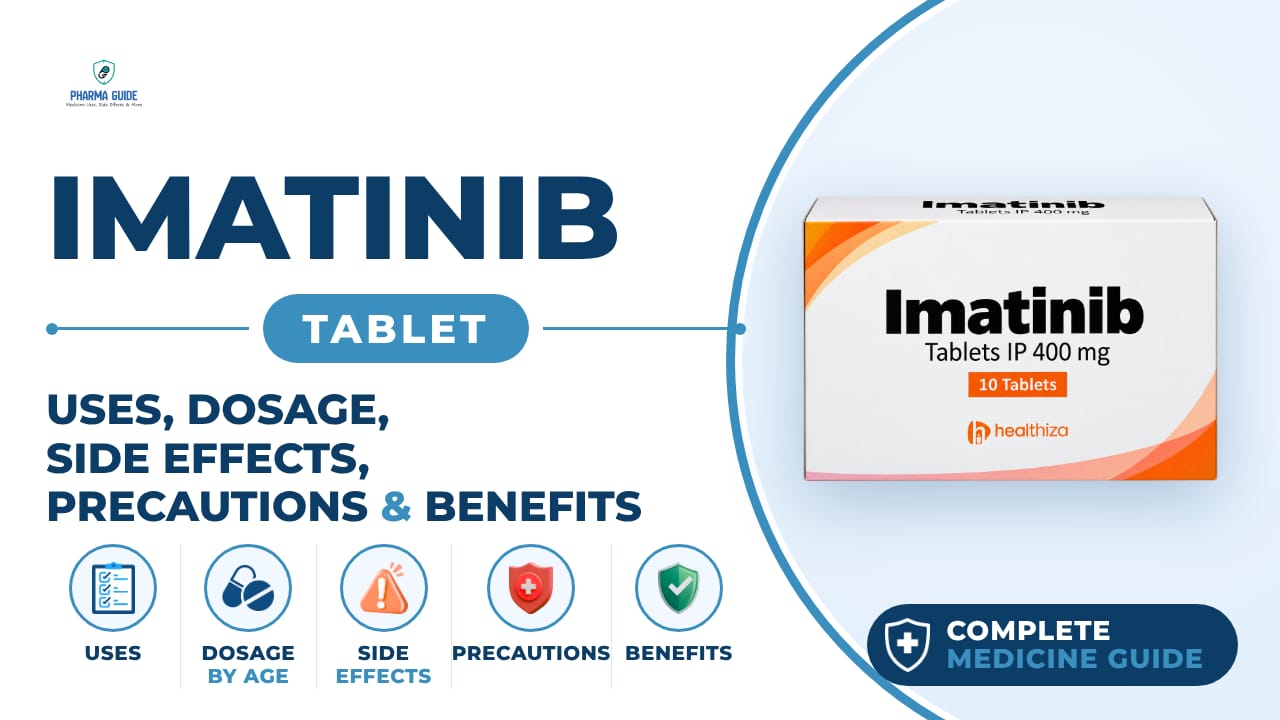
| Generic name | imatinib mesylate (imatinib mesilate) |
|---|---|
| Drug class | Tyrosine kinase inhibitor |
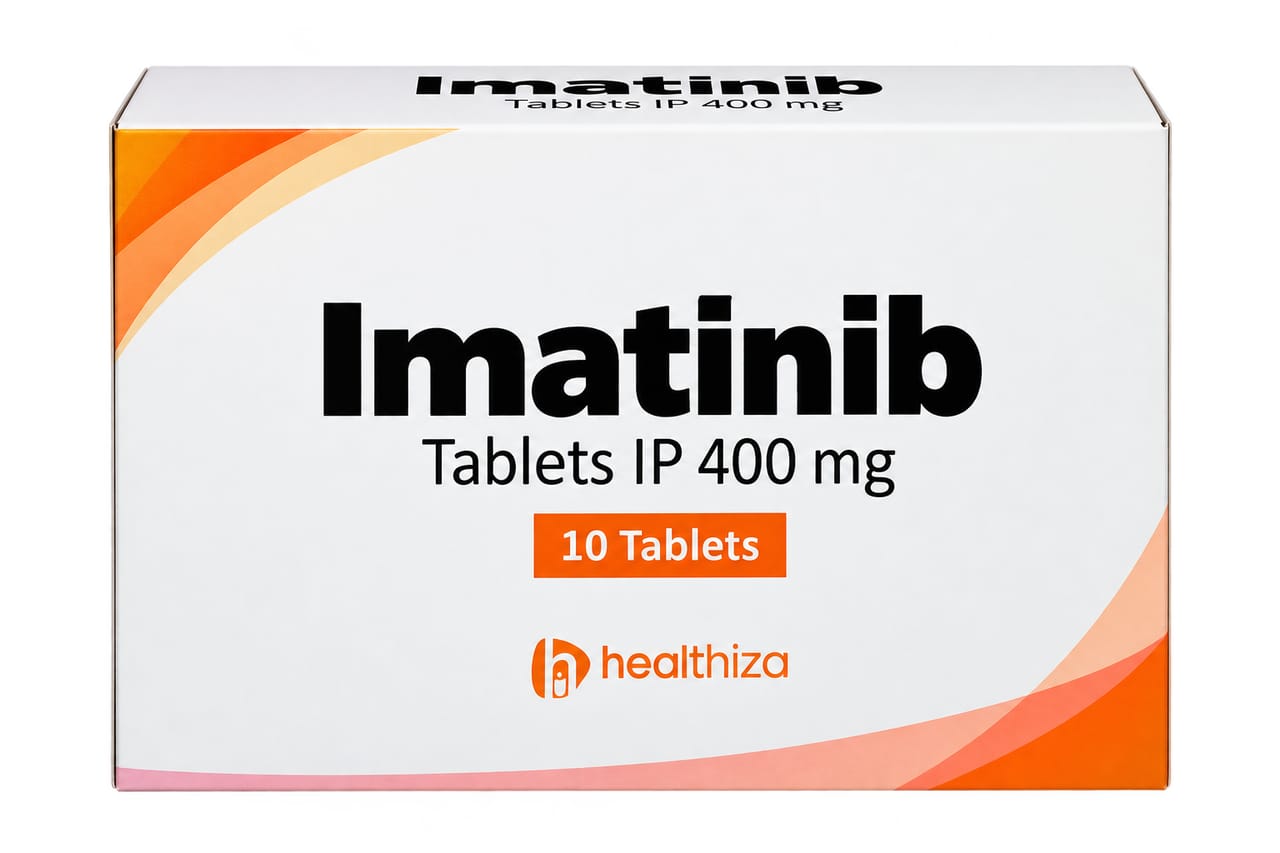
| Forms | Tablet, Capsule (100 mg and 400 mg), Oral solution (liquid) |
Quick overview
Imatinib Tablet (imatinib mesylate) is a tyrosine kinase inhibitor used to treat several types of blood cancers and other rare tumors in adults and some children. It works by blocking abnormal proteins that tell certain cancer cells to grow and spread. It is taken by mouth and is available as a tablet, capsule, and oral solution.
What is Imatinib Tablet
Imatinib is an oral cancer medicine that blocks abnormal proteins called tyrosine kinases that tell certain cancer cells to grow and spread. It is used to treat several types of blood cancers and other rare tumors in adults and some children.
Imatinib Tablet uses
- Chronic myeloid leukaemia (CML)
- Philadelphia chromosome-positive acute lymphoblastic leukaemia (Ph+ ALL)
- Myelodysplastic/myeloproliferative diseases (MDS/MPD)
- Hypereosinophilic syndrome (HES) and/or chronic eosinophilic leukaemia (CEL)
- Gastrointestinal stromal tumours (GIST)
- Dermatofibrosarcoma protuberans (DFSP)
- Aggressive systemic mastocytosis (ASM)
Benefits of Imatinib Tablet
- Helps slow or stop the growth and spread of cancer cells
- Can produce long-term disease control in chronic myeloid leukaemia
- Has become the standard of care for CML and GIST, changing the outlook for these diseases
How Imatinib Tablet works
Imatinib blocks abnormal proteins called tyrosine kinases that cancer cells need in order to grow and spread. By blocking these proteins, it helps slow or stop the growth of cancer cells.
Imatinib Tablet dosage
Take with a meal and a large glass of water to help avoid stomach upset. Take at around the same time every day. Swallow tablets whole; do not chew or crush them. If you cannot swallow the tablets, you can dissolve them in a glass of water or apple juice and drink the mixture right away. If handling a crushed or broken tablet, wear gloves and wash your hands right away afterward.
If your daily dose is high, your doctor may have you split it into a morning dose and an evening dose. If taking a liquid solution, use the provided measuring syringe and bottle adapter rather than a household spoon, and wear disposable gloves when handling it.
Keep taking this medicine every day for as long as your doctor tells you, even if you feel well. Do not stop taking it without talking to your doctor first. If you miss a dose, take it as soon as you remember, but skip it if it is almost time for your next dose; do not take a double dose. Children may be given the medicine once daily or split into two doses depending on their condition.
| Age group | Dose |
|---|---|
| Under 18 years | Not fixed |
| 18–60 years | 400 mg, 1 time/day |
| 60+ years | 400 mg, 1 time/day |
Available forms and strengths
- Tablet
- Capsule (100 mg and 400 mg)
- Oral solution (liquid)
Side effects of Imatinib Tablet
Common
- Fluid retention or swelling
- Nausea and vomiting
- Diarrhea
- Headache
- Loss of appetite
- Muscle cramps or joint/bone pain
- Skin rash
- Hair loss or thinning
- Weight gain or weight loss
- Fatigue or weakness
- Dizziness
- Mouth sores
- Altered sense of taste
- Heartburn or indigestion
- Trouble sleeping
- Abdominal pain
- Night sweats
Serious
- Severe fluid retention causing rapid weight gain, swelling, or trouble breathing
- Heart failure (shortness of breath, swelling, rapid weight gain, tiredness)
- Liver problems (yellowing of skin or eyes, dark urine, pain in upper right stomach, severe tiredness)
- Unusual bleeding or bruising, black or bloody stools, vomiting blood
- Serious skin reactions including blistering, peeling skin, or widespread rash with fever
- Low blood cell counts leading to infections, bleeding, or tiredness
- Tumor lysis syndrome (muscle cramps, weakness, irregular heartbeat, reduced urination)
- Kidney problems (decreased urination, sudden weight gain, swelling)
- Signs of bleeding or swelling in the brain (severe headache, weakness, difficulty speaking, loss of consciousness)
Warnings and precautions
- This medicine can cause severe fluid retention, which may lead to swelling, rapid weight gain, or serious problems such as fluid around the lungs or heart.
- This medicine can lower red blood cells, white blood cells, and platelets, raising the risk of tiredness, infections, and bleeding or bruising.
- This medicine can rarely cause heart failure or make existing heart problems worse, especially in older adults or those with a history of heart or kidney problems.
- This medicine can irritate the stomach and, in rare cases, cause a hole in the stomach or intestines.
- This medicine can rarely cause serious skin reactions, including Stevens-Johnson syndrome.
- This medicine may slow growth in children and teenagers, so doctors will monitor height and growth regularly.
- This medicine may cause the body to become more sensitive to the sun, so sun-exposed skin should be covered and sunscreen used.
- This medicine can rarely cause tumor lysis syndrome, a serious condition where cancer cells break down too quickly, especially in people with fast-growing cancers or a large amount of cancer in the body.
- This medicine could cause a past hepatitis B infection to become active again, which can be fatal in some cases, so doctors check for signs of this infection before starting treatment.
- Imatinib is not recommended during pregnancy as it may harm the baby. Women who could become pregnant should use effective birth control during treatment and for some time after the last dose. Tell your doctor right away if you become pregnant.
- Do not breastfeed while taking this medicine and for some time after your last dose, as it may harm the baby.
- Use with caution if you have kidney problems, since this medicine can increase in your blood and affect how well your kidneys work, especially with long-term use. Your doctor will monitor your kidney function.
- Use with caution if you have liver problems, since this medicine can increase in your blood. This medicine can also cause serious liver problems, so your doctor will check your liver function with blood tests before and during treatment.
- It is not known exactly how alcohol interacts with this medicine. It is best to ask your doctor before drinking alcohol, since both can affect your liver and may worsen side effects like nausea, dizziness, or tiredness.
- This medicine may cause dizziness, drowsiness, or blurred vision. Do not drive or operate machinery until you know how it affects you.
Storage
- Do not store above 30°C
- Store in the original package to protect from moisture
- Do not use any pack that is damaged or shows signs of tampering
- Keep this medicine out of the sight and reach of children
- Do not use this medicine after the expiry date
- Do not throw away medicines via wastewater or household waste; ask your pharmacist how to dispose of medicines you no longer use
- Store it at room temperature and away from excess heat and moisture (not in the bathroom)
When to see a doctor
- Get medical help right away if you notice swelling of the face, eyes, hands, feet, ankles, or lower legs, sudden weight gain, shortness of breath, or a fast, irregular, or pounding heartbeat.
- Get medical help right away if you have decreased urination or chest pain.
- Get medical help right away if you notice peeling, blistering, or shedding skin.
- Get medical help right away if you have yellowing of the skin or eyes, loss of appetite, fatigue, pain in the upper right part of the stomach, nausea, vomiting, or flu-like symptoms.
- Get medical help right away if you notice unusual bruising or bleeding, bloody or black or tarry stools, coughing up or vomiting blood or material that looks like coffee grounds, or a nosebleed.
- Get medical help right away if you have flu-like symptoms, sore throat, fever, chills, or other signs of infection.
- Get medical help right away if you have severe abdominal pain, blood in your vomit, stools, or urine, or black stools.
- Get medical help right away if you have severe headache, weakness or paralysis of limbs or face, difficulty speaking, or sudden loss of consciousness.
- If you suspect you have taken too much of this medicine, contact your doctor right away or seek urgent medical attention, and take the medicine pack with you.
- If someone has collapsed, had a seizure, has trouble breathing, or cannot be woken after taking too much of this medicine, get emergency medical help immediately.
Alternatives
- Dasatinib
- Nilotinib
- Ponatinib
Watch the video
FAQs
What is Imatinib Tablet used for?
It is used to treat chronic myeloid leukaemia, Ph+ ALL, MDS/MPD, hypereosinophilic syndrome, chronic eosinophilic leukaemia, gastrointestinal stromal tumours, dermatofibrosarcoma protuberans, and aggressive systemic mastocytosis.
How should I take Imatinib Tablet?
Take it with a meal and a large glass of water at around the same time every day. Swallow tablets whole without chewing or crushing them; if you cannot swallow them, dissolve in water or apple juice and drink immediately.
What is the usual dose of Imatinib Tablet for adults?
For adults aged 18 to 60 years and those over 60, the typical dose is 400 mg once a day. If the daily dose is high, your doctor may split it into a morning and evening dose.
What are the serious side effects of Imatinib Tablet?
Serious side effects include severe fluid retention, heart failure, liver problems, unusual bleeding or bruising, serious skin reactions, low blood cell counts, tumor lysis syndrome, kidney problems, and signs of bleeding or swelling in the brain.
Can I drink alcohol while taking Imatinib Tablet?
It is not known exactly how alcohol interacts with this medicine, so it is best to ask your doctor before drinking alcohol, since both can affect your liver and may worsen side effects like nausea, dizziness, or tiredness.
General information, not medical advice
Your prescriber and the leaflet in your pack know your situation. This page does not.
- Follow your prescriber and the leaflet
- Don't start, stop, or change a dose on your own
- Doses and warnings differ by country and product
Sources
Video
Related medicines

Injectafer Injection: Uses, Dosage, Side Effects, Precautions and Alternates
Iron products
Injectafer (ferric carboxymaltose) treats iron deficiency anemia and heart failure-related iron deficiency via IV. Learn uses, dosage, side effects, and

Gliclazide Tablet: Uses, Dosage, Side Effects, Precautions and Alternates
Sulfonylurea (hypoglycemic/antidiabetic agent)
Gliclazide Tablet is a sulfonylurea for type 2 diabetes that boosts insulin release. Learn about dosage, side effects, warnings, and precautions.