
Safety
General information, not medical advice
Your prescriber and the leaflet in your pack know your situation. This page does not.
- Follow your prescriber and the leaflet
- Don't start, stop, or change a dose on your own
- Doses and warnings differ by country and product
Imdur Tablet: Uses, Dosage, Side Effects, Precautions and Alternates
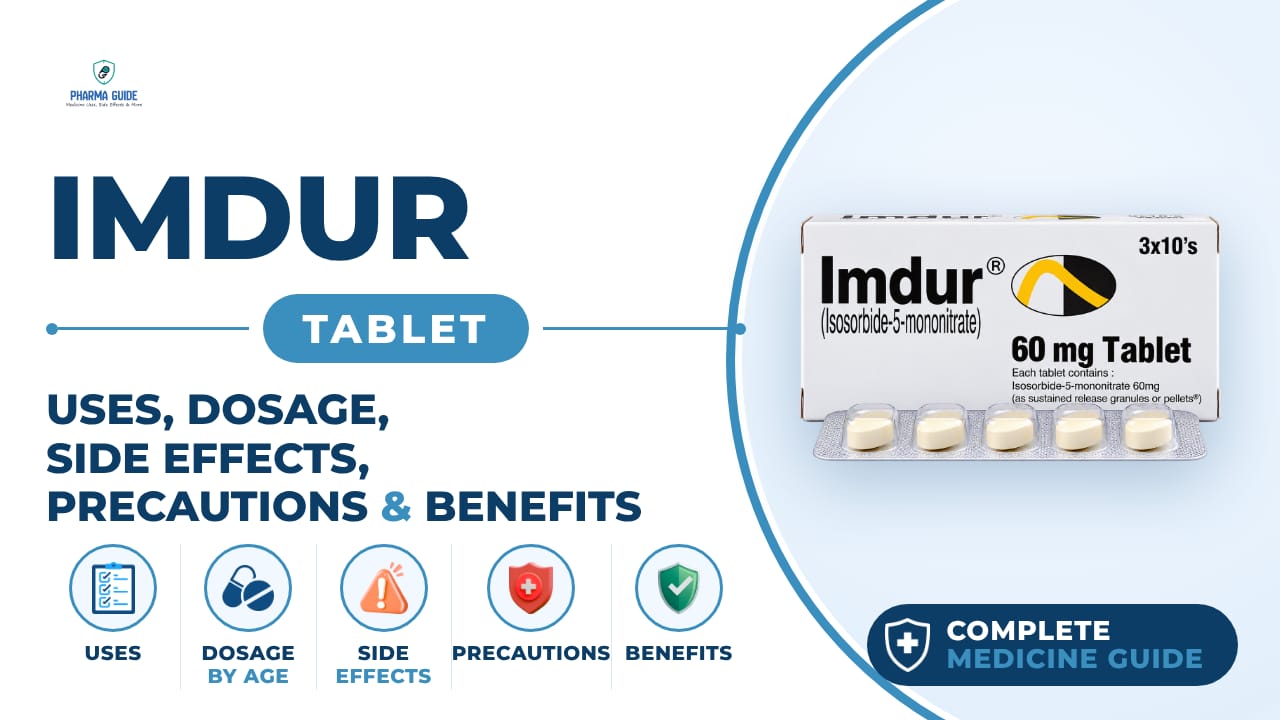
| Generic name | isosorbide mononitrate |
|---|---|
| Drug class | Antianginal agent |
| Forms | Extended-release (modified-release) tablet |
Quick overview
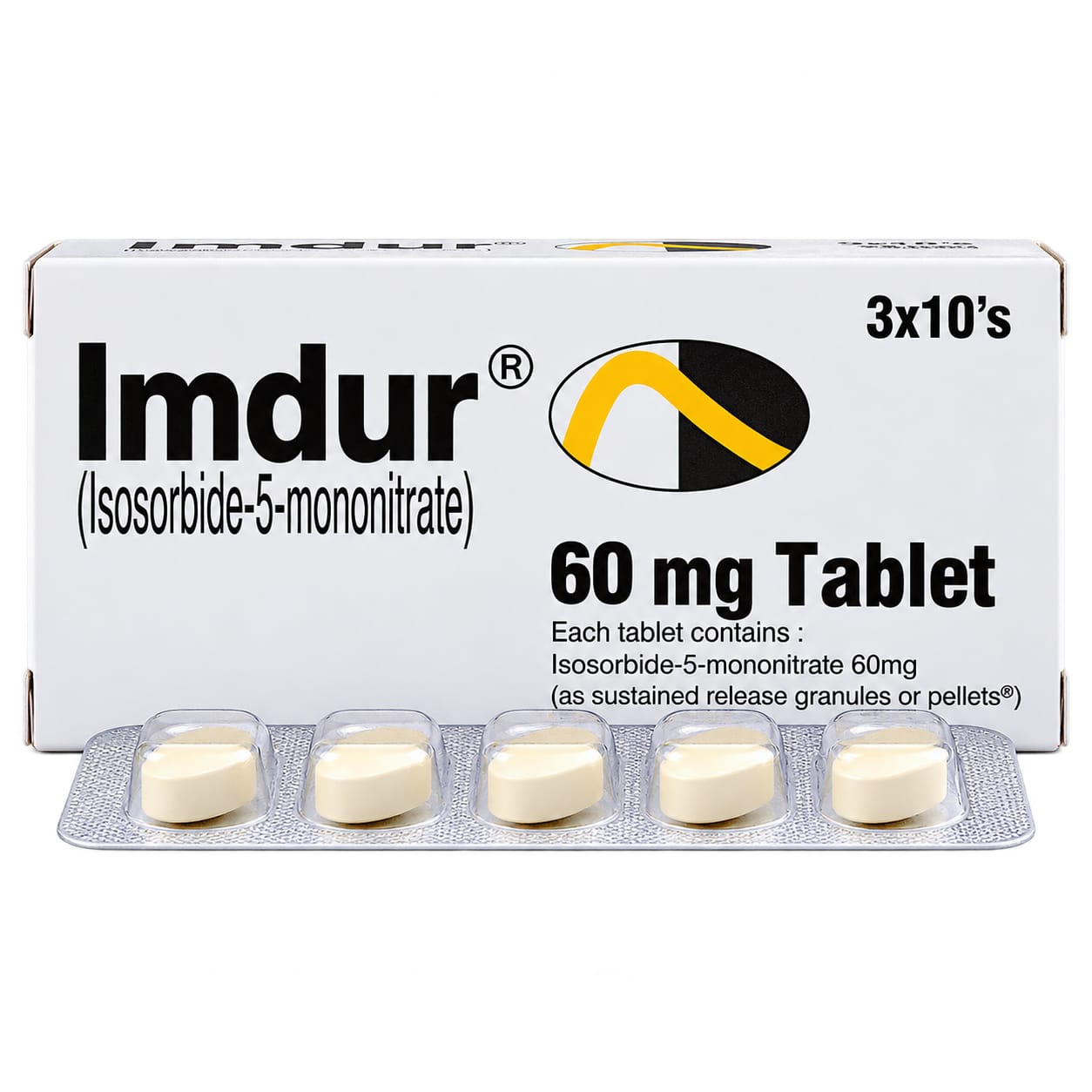
Imdur Tablet (isosorbide mononitrate) is a nitrate medicine belonging to the antianginal drug class. It is an extended-release tablet taken once a day to widen blood vessels and prevent angina attacks before they start. It does not treat an angina attack that has already begun.
What is Imdur Tablet
Imdur is a nitrate medicine that widens blood vessels, making it easier for blood to flow and easier for the heart to pump. It is an extended-release tablet taken once a day to prevent angina (chest pain) attacks before they start. It does not treat an angina attack that has already begun.
Imdur Tablet uses
- Prevention of angina attacks (chest pain) in people with chronic stable angina caused by coronary artery disease
Benefits of Imdur Tablet
- Helps prevent angina attacks by widening blood vessels so more blood and oxygen reach the heart
- Extended-release form provides effects for up to 12 hours with once-daily dosing
- Helps prevent angina (chest pain)
- Relaxes and widens blood vessels
- Reduces the workload on the heart
- Can reduce the frequency of angina attacks
- Provides extended, once-daily anti-anginal therapy
How Imdur Tablet works
Imdur relaxes the smooth muscle in blood vessel walls, which widens veins and arteries. This lowers the pressure the heart has to work against and increases blood flow, including to the heart's own blood vessels, reducing the chest pain of angina.
Imdur Tablet dosage
Take this medicine exactly as your doctor tells you, usually once a day in the morning. Try to rest or stay seated when you take this medicine because it may cause dizziness or fainting. Do not crush or chew the extended-release tablet; swallow it whole with half a glass of water or other liquid such as fruit juice or milk. The tablet can be broken in half along the scored line if needed, without crushing or crumbling it.
Take the medicine at about the same time every day, spaced 24 hours apart, to keep it working properly. If you take two tablets a day, take both together in the morning. You may notice what looks like the tablet shell in your stool; this is normal because the medicine has already been absorbed before the shell passes through.
Do not use this medicine to relieve a sudden angina attack that has already started; use the separate fast-acting medicine your doctor gave you for that. Do not stop taking this medicine suddenly, even to avoid headaches, without talking to your doctor. Use this medicine regularly and get your prescription refilled before you run out.
| Age group | Dose |
|---|---|
| Under 18 years | Safety and effectiveness are not established |
| 18–64 years | Usually 30–60 mg once daily in the morning |
| 65–74 years | Often starts at the lower end of the adult range, such as 30 mg once daily |
Available forms and strengths
- Extended-release (modified-release) tablet
Side effects of Imdur Tablet
Common
- Headache
- Flushing (warmth, redness, or tingly feeling)
- Dizziness
- Fatigue
- Nausea
- Vertigo
- Fainting
- Muscle tenderness or weakness not caused by exercise
- Poor appetite
- Vomiting
- Diarrhea
- Heartburn
- Rash
- Itching (pruritus)
Serious
- Signs of an allergic reaction: hives, difficulty breathing, swelling of the face, lips, tongue, or throat
- A light-headed feeling like you might pass out
- Worsening angina pain
- Fast or slow heart rate
- Pounding heartbeats or fluttering in the chest
- Severe low blood pressure (hypotension)
- Fast heart rate (tachycardia)
Warnings and precautions
- Do not take erectile dysfunction medicines (such as Viagra, Cialis, Levitra, Stendra, Staxyn, sildenafil, avanafil, tadalafil, vardenafil) or riociguat (Adempas) while taking this medicine, as combining them can cause a sudden, serious drop in blood pressure.
- Do not stop taking this medicine suddenly, as this could trigger a severe angina attack.
- This medicine can cause severe headaches, especially when you first start taking it. These usually ease over time. Do not stop the medicine because of headaches; ask your doctor before taking any headache medicine.
- This medicine is not meant for treating a sudden, ongoing angina attack; it only helps prevent future attacks.
- Call your doctor if you become sick with vomiting, diarrhea, or sweat more than usual, since prolonged illness can lead to dangerous changes in body salts that make this medicine riskier to use.
- An overdose of this medicine can be fatal, so seek emergency medical help right away if you think you have taken too much.
- It is not known whether this medicine could harm an unborn baby. Tell your doctor if you are pregnant or planning to become pregnant, and only use it if your doctor says it is safe.
- It is not known whether this medicine passes into breast milk or could affect a nursing baby. Tell your doctor if you are breastfeeding.
- Tell your doctor if you have kidney disease, so they can decide if this medicine is safe for you. Dosage adjustments are generally not needed for altered kidney function.
- Impaired liver function does not significantly change how this medicine works in the body, and dosage adjustments are generally not necessary, but tell your doctor about any liver problems.
- Avoid drinking alcohol while taking this medicine, as it can increase side effects like dizziness, drowsiness, light-headedness, or fainting.
- This medicine may affect your thinking or reactions and can cause dizziness or fainting, especially when you first start taking it. Be careful driving or operating machinery until you know how it affects you.
Storage
- Store at room temperature away from moisture, heat, and light
- Keep the bottle tightly closed when not in use
- Store at 15-30°C
- Keep IMDUR tablets in the blister pack until it is time to take them, since the tablets will not keep well once removed
- Keep in a cool dry place where the temperature stays below 30°C, away from moisture, heat, or sunlight; do not store in the bathroom, near a sink, in the car, or on window sills
- Do not transfer IMDUR to other containers
- Keep out of the reach of children
- If you no longer need the medicine or it is out of date, take it to a pharmacy for safe disposal
When to see a doctor
- Get emergency medical help right away if you notice signs of an allergic reaction, such as hives, trouble breathing, or swelling of the face, lips, tongue, or throat.
- Seek emergency medical attention right away if you have early signs of a heart attack, such as chest pain or pressure, pain spreading to your jaw or shoulder, sweating, or feeling generally unwell.
- Call your doctor right away if you feel like you might faint, have worsening angina pain, a fast or slow heartbeat, or pounding or fluttering in your chest.
- If you take too much of this medicine and get a severe throbbing headache, feel light-headed, dizzy, flushed, have cold sweats, nausea, or vomiting, lie down with your feet raised and have someone call your doctor immediately.
- Call your doctor right away if you keep getting angina attacks, or they happen more often, while taking this medicine.
Alternatives
- Nitroglycerin
- Isosorbide dinitrate
- Ranolazine
Watch the video
FAQs
What is Imdur Tablet used for?
Imdur Tablet is used to prevent angina attacks (chest pain) in people with chronic stable angina caused by coronary artery disease. It does not treat an angina attack that has already begun.
How does Imdur Tablet work?
Imdur relaxes the smooth muscle in blood vessel walls, widening veins and arteries. This lowers the pressure the heart has to work against and increases blood flow, including to the heart's own blood vessels, reducing the chest pain of angina.
How should I take Imdur Tablet?
Take it exactly as your doctor tells you, usually once a day in the morning. Swallow the extended-release tablet whole with liquid; do not crush or chew it, though it can be broken in half along the scored line if needed. Take it at about the same time every day.
Can Imdur Tablet be used to stop an angina attack in progress?
No, Imdur Tablet is not meant for treating a sudden, ongoing angina attack; it only helps prevent future attacks. A separate fast-acting medicine should be used for an attack that has already started.
What medicines should not be combined with Imdur Tablet?
Do not take erectile dysfunction medicines such as Viagra, Cialis, Levitra, Stendra, Staxyn, sildenafil, avanafil, tadalafil, or vardenafil, or riociguat (Adempas), while taking Imdur, as combining them can cause a sudden, serious drop in blood pressure.
General information, not medical advice
Your prescriber and the leaflet in your pack know your situation. This page does not.
- Follow your prescriber and the leaflet
- Don't start, stop, or change a dose on your own
- Doses and warnings differ by country and product
Sources
Video
Related medicines
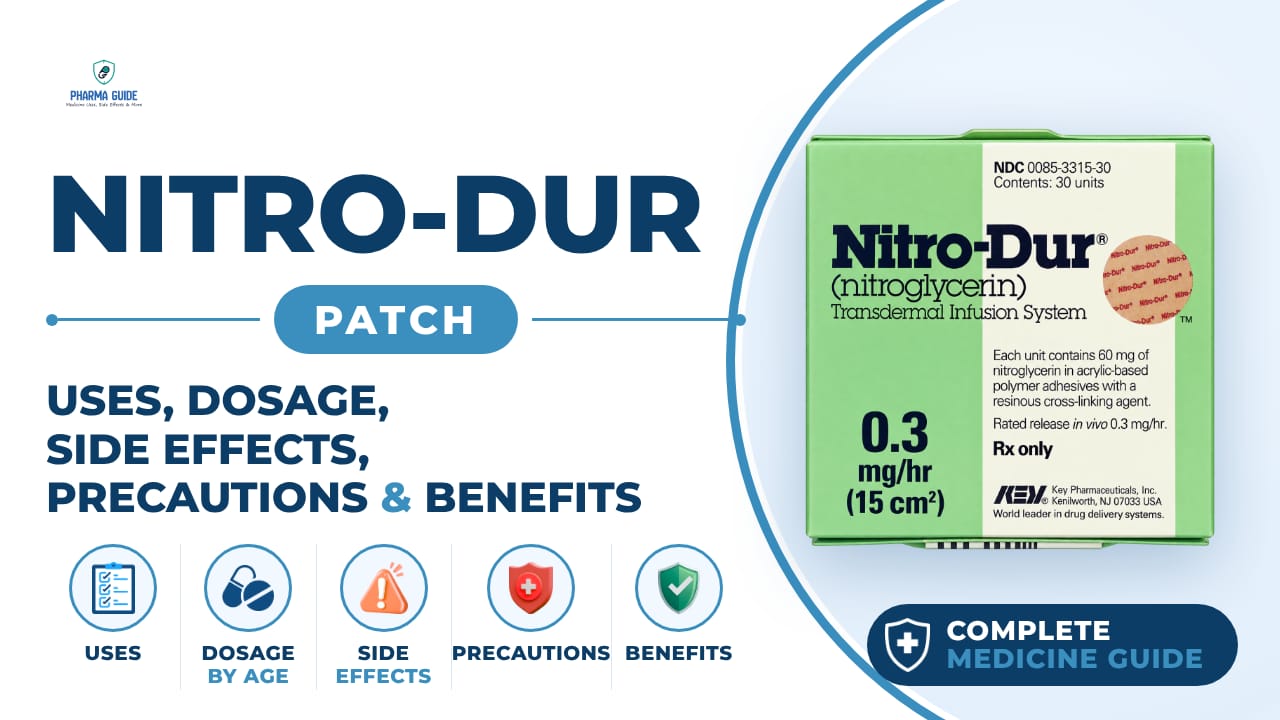
Nitro-Dur Patch: Uses, Dosage, Side Effects, Precautions and Alternates
Antianginal Agent
Nitro-Dur Patch delivers nitroglycerin through the skin to prevent angina in adults. Learn uses, dosage, side effects, warnings, and storage tips.

Injectafer Injection: Uses, Dosage, Side Effects, Precautions and Alternates
Iron products
Injectafer (ferric carboxymaltose) treats iron deficiency anemia and heart failure-related iron deficiency via IV. Learn uses, dosage, side effects, and