
Safety
General information, not medical advice
Your prescriber and the leaflet in your pack know your situation. This page does not.
- Follow your prescriber and the leaflet
- Don't start, stop, or change a dose on your own
- Doses and warnings differ by country and product
Nitro-Dur Patch: Uses, Dosage, Side Effects, Precautions and Alternates
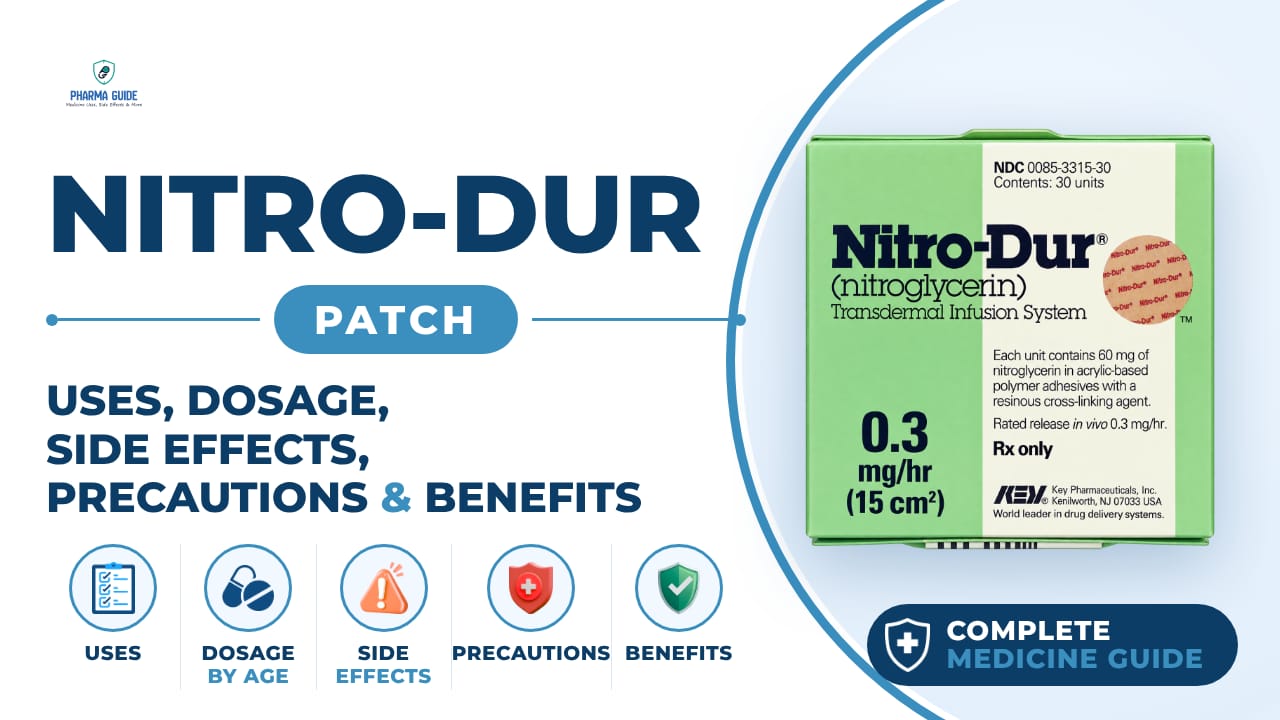
| Generic name | Nitroglycerin |
|---|---|
| Drug class | Antianginal Agent |
| Forms | Transdermal patch (0.2 mg/hour, 0.4 mg/hour, 0.6 mg/hour, 0.8 mg/hour; also 0.1 mg/hour and 0.3 mg/hour in some products) |
Quick overview
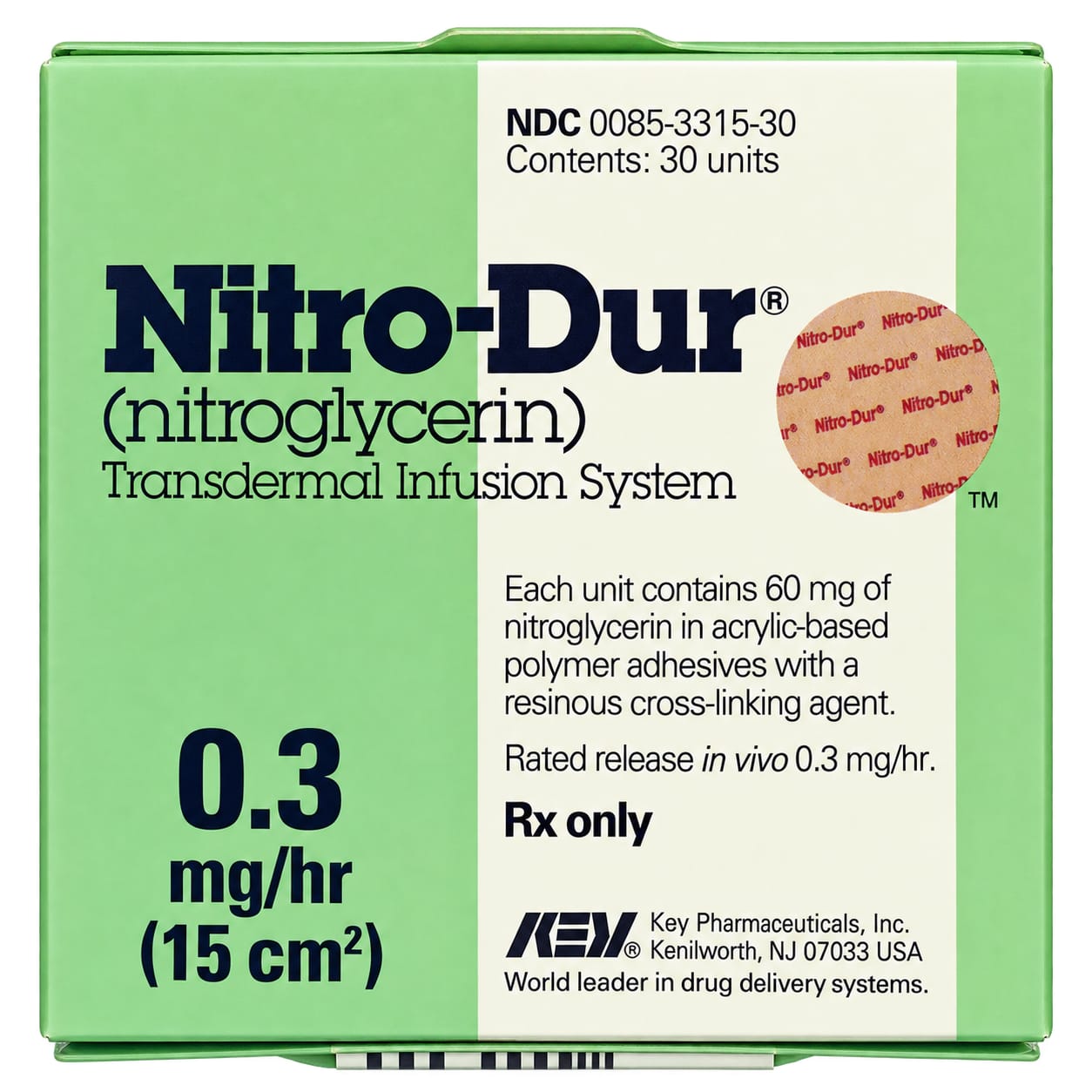
Nitro-Dur Patch contains nitroglycerin, a nitrate medicine classified as an antianginal agent. It is a skin patch that delivers nitroglycerin continuously through the skin into the bloodstream to help prevent angina (chest pain) in adults with coronary artery disease. It may be used along with other antianginal medicines such as beta-blockers and/or calcium channel blockers. It is not for treating a sudden angina attack.
What is Nitro-Dur Patch
Nitro-Dur is a skin patch that delivers nitroglycerin, a nitrate medicine, continuously through the skin into the bloodstream to help prevent angina (chest pain) in people with coronary artery disease.
Nitro-Dur Patch uses
- Used in adults to prevent angina (chest pain) caused by coronary artery disease
- Can be used along with other antianginal medicines such as beta-blockers and/or calcium channel blockers
Benefits of Nitro-Dur Patch
- Long-acting nitroglycerin can reduce how often chest pain happens
- Can also lessen how severe chest pain is
- A patch can feel convenient because it lasts longer than a pill
- Helps prevent angina (chest pain)
- Relaxes and widens blood vessels
- Reduces the workload on the heart
- Improves blood flow to the heart muscle
- Provides prolonged nitrate delivery through the skin
How Nitro-Dur Patch works
The nitroglycerin in the patch passes through the skin into the bloodstream. It relaxes blood vessels, especially veins, which reduces the amount of blood returning to the heart and lowers the heart's workload and oxygen needs, helping to prevent angina attacks.
Nitro-Dur Patch dosage
This patch is not for treating a sudden angina attack — use sublingual (under-the-tongue) nitroglycerin for that. Apply to a reasonably hair-free area of skin such as the arm or chest; avoid areas below the knee or elbow, skin folds, scar tissue, burns, or irritated skin. Wash your hands before and after applying the patch. Use a different application site each day. Showering is allowed while wearing the patch.
Do not cut the patch, use part of a patch, or wear more than one patch at a time. Do not reuse a patch once removed. Do not miss a day of therapy; if a dose is missed, apply it as soon as you remember. Follow the on/off schedule your doctor gives you, since wearing the patch all the time can make it stop working as well. Do not suddenly stop using the patch without talking to your doctor. If your doctor also prescribed under-the-tongue nitroglycerin tablets, sit down before taking one.
| Age group | Dose |
|---|---|
| Under 18 years | Safety and effectiveness are not established for routine use |
| 18–64 years | Common starting patch delivery rate: 0.2–0.4 mg/hour applied once daily; dose may be increased based on angina control |
Available forms and strengths
- Transdermal patch: 0.2 mg/hour, 0.4 mg/hour, 0.6 mg/hour, 0.8 mg/hour; also 0.1 mg/hour and 0.3 mg/hour in some products
Side effects of Nitro-Dur Patch
Common
- Headache
- Flushing of the face
- Nausea, vomiting
- Rash, redness, itching, or burning where the patch was applied
- Dizziness, lightheadedness, or fainting feeling, especially when standing up quickly
Serious
- Severe low blood pressure, especially on standing, which may cause fainting
- Increased or worsening angina (chest pain)
- Rebound high blood pressure after stopping the medicine
- Irregular, fast, or slow heartbeat
- Methemoglobinemia (a blood condition that reduces oxygen delivery), with symptoms like shortness of breath, blue or purple lips/fingers/toes, headache, fatigue, dizziness, or loss of consciousness
- Severe allergic reaction: rash, hives, swelling of face, lips, tongue, or throat, difficulty swallowing or breathing
- Heart attack symptoms: crushing chest pain spreading to arm or jaw, shortness of breath, nausea, vomiting
Warnings and precautions
- Never use this patch together with medicines for erectile dysfunction (like sildenafil, tadalafil, or vardenafil) or certain pulmonary hypertension medicines, as this combination can cause a dangerous drop in blood pressure.
- Do not use this patch if you are taking riociguat for certain lung blood pressure conditions, as it can cause dangerously low blood pressure.
- The patch must be removed before any cardioversion or defibrillation procedure or diathermy treatment, because it can be associated with burns or damage to the equipment.
- Stopping this medicine suddenly after long-term use can cause chest pain to come back more easily; your body can become tolerant to it over time.
- Do not use this medicine if you are allergic to nitroglycerin, other nitrates, or the adhesive in the patch.
- Even after use, there is enough nitroglycerin left in a discarded patch to be dangerous to children and pets, so it must be disposed of carefully.
- It isn't known if this medicine can harm an unborn baby. It should only be used in pregnancy if the potential benefit outweighs the risk, and only if clearly needed.
- It isn't known whether this medicine passes into breast milk. The benefits to the mother should be weighed against possible risks to the baby, and caution is advised.
- People with kidney disease should be treated carefully if an overdose occurs, since giving extra fluids can be risky for them; monitoring may be needed.
- No standard liver-specific adjustment is usually required; severe liver disease should be reviewed clinically.
- Drinking alcohol while using this medicine can increase the chance of dizziness, lightheadedness, and low blood pressure.
- This medicine can cause dizziness or fainting, which may affect your ability to drive or use machines safely, especially when you first start treatment or after a dose increase.
Storage
- Store between 15 to 30°C (59-86°F)
- Do not refrigerate
- Keep out of reach and sight of children
- After removal, discard the patch in a manner that prevents accidental use or swallowing by children or pets
When to see a doctor
- Get medical help right away for signs of a serious allergic reaction, such as rash, hives, swelling of the face, lips, tongue, or throat, or trouble swallowing or breathing.
- Seek immediate medical attention if you notice signs of increased methemoglobin levels, such as shortness of breath, blue or purple coloring of the lips, fingers, or toes, headache, fatigue, dizziness, or loss of consciousness.
- Get immediate medical help for an irregular, fast, or slow heartbeat.
- Get immediate medical help for symptoms of a heart attack, such as crushing chest pain that spreads to the arm or jaw, shortness of breath, nausea, or vomiting.
- If you think you have used too much of this medicine, remove the patch right away, wash the skin underneath, and contact your doctor, hospital emergency department, or regional poison control center immediately, even if you have no symptoms.
Alternatives
- Isosorbide mononitrate
- Isosorbide dinitrate
- Sublingual nitroglycerin for acute angina
Watch the video
FAQs
What is Nitro-Dur Patch used for?
It is used in adults to prevent angina (chest pain) caused by coronary artery disease and can be used along with other antianginal medicines such as beta-blockers and/or calcium channel blockers.
Can Nitro-Dur Patch treat a sudden angina attack?
No, it is not for treating a sudden angina attack. Sublingual (under-the-tongue) nitroglycerin should be used for that instead.
How should the Nitro-Dur Patch be applied?
Apply it to a reasonably hair-free area of skin such as the arm or chest, avoiding areas below the knee or elbow, skin folds, scar tissue, burns, or irritated skin. Use a different application site each day, and wash your hands before and after applying.
What are the common side effects of Nitro-Dur Patch?
Common side effects include headache, flushing of the face, nausea, vomiting, rash or irritation where the patch was applied, and dizziness or lightheadedness, especially when standing up quickly.
What medicines should not be combined with Nitro-Dur Patch?
It should never be used with erectile dysfunction medicines like sildenafil, tadalafil, or vardenafil, certain pulmonary hypertension medicines, or riociguat, as these combinations can cause a dangerous drop in blood pressure.
General information, not medical advice
Your prescriber and the leaflet in your pack know your situation. This page does not.
- Follow your prescriber and the leaflet
- Don't start, stop, or change a dose on your own
- Doses and warnings differ by country and product
Sources
Video
Related medicines
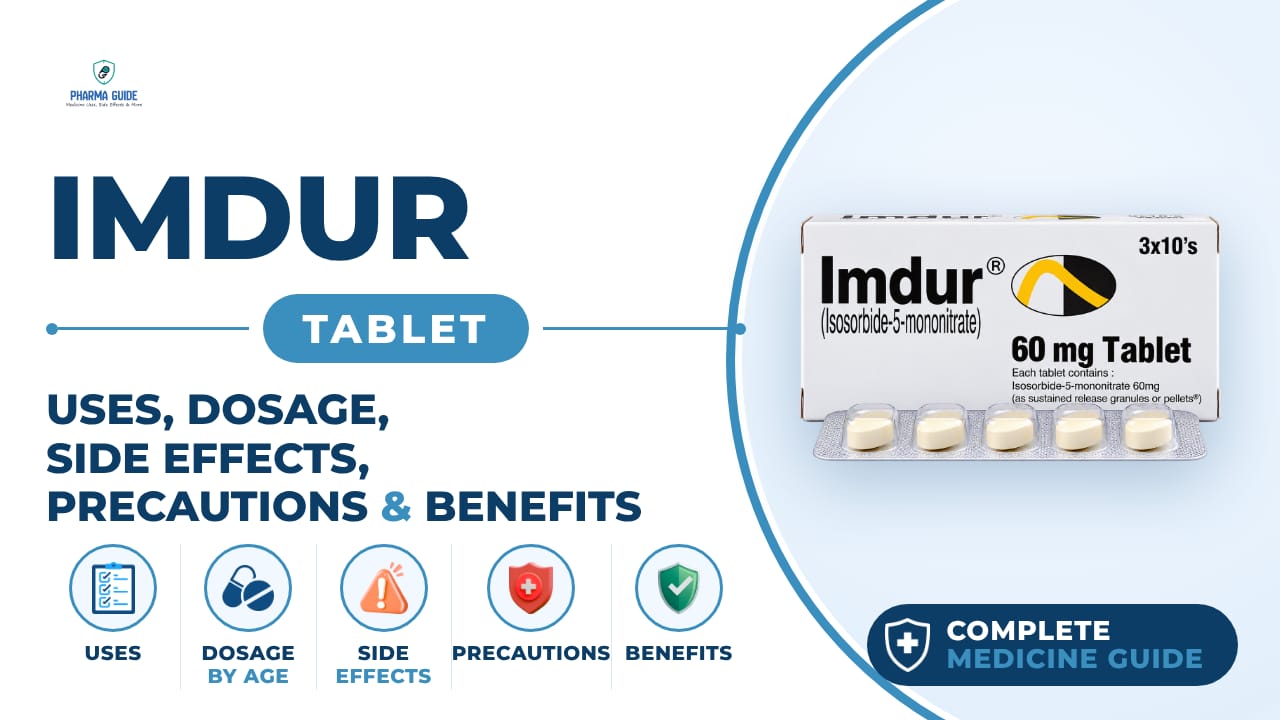
Imdur Tablet: Uses, Dosage, Side Effects, Precautions and Alternates
Antianginal agent
Imdur Tablet (isosorbide mononitrate) is a once-daily extended-release nitrate that prevents angina attacks by widening blood vessels. Learn dosage, side

Injectafer Injection: Uses, Dosage, Side Effects, Precautions and Alternates
Iron products
Injectafer (ferric carboxymaltose) treats iron deficiency anemia and heart failure-related iron deficiency via IV. Learn uses, dosage, side effects, and