
Safety
General information, not medical advice
Your prescriber and the leaflet in your pack know your situation. This page does not.
- Follow your prescriber and the leaflet
- Don't start, stop, or change a dose on your own
- Doses and warnings differ by country and product
Imipenem Injection: Uses, Dosage, Side Effects, Precautions and Alternates

| Generic name | Imipenem and Cilastatin |
|---|---|
| Drug class | Carbapenem antibiotic (with dehydropeptidase inhibitor) |
| Forms | Powder for injection (to be mixed with liquid for intravenous or intramuscular use) |
Quick overview
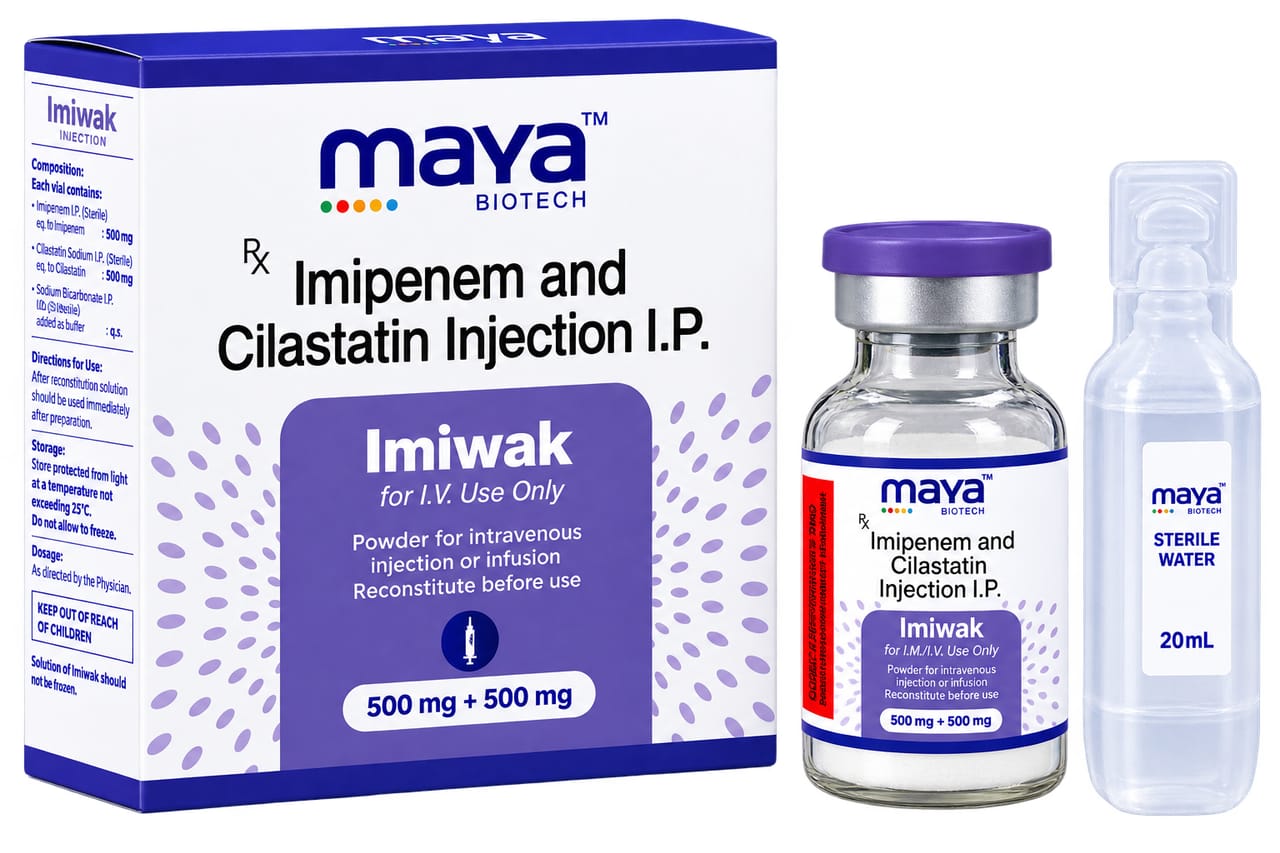
Imipenem and cilastatin injection is a combination antibiotic used to treat certain serious bacterial infections. Imipenem is a carbapenem antibiotic that kills bacteria, while cilastatin helps keep imipenem active in the body for longer. It is given by injection into a vein or muscle and is used for infections such as respiratory, urinary tract, and intra-abdominal infections, among others.
What is Imipenem Injection
Imipenem and cilastatin injection is a combination antibiotic medicine used to treat certain serious bacterial infections. Imipenem is a carbapenem antibiotic that kills bacteria, and cilastatin helps imipenem stay active in the body longer.
Imipenem Injection uses
- Lower respiratory tract infections
- Urinary tract infections
- Intra-abdominal infections
- Gynecological infections
- Bacterial septicemia (blood infection)
- Endocarditis caused by Staphylococcus aureus
- Bone and joint infections
- Skin and skin structure infections
- Fever in patients at high risk for infection due to low white blood cell counts
Benefits of Imipenem Injection
- Kills a wide range of bacteria causing serious infections
- Cilastatin helps keep imipenem active in the body for longer, improving its effectiveness
How Imipenem Injection works
Imipenem works by interfering with the bacteria's cell wall building process, which causes the bacteria to die. Cilastatin blocks a kidney enzyme that would otherwise break down imipenem, helping it stay active longer in the body.
Imipenem Injection dosage
This medicine is given into a vein (intravenous) or, in some cases, into a muscle; it must not be taken by mouth. When given into a vein, it is infused slowly over a period of time, and this is repeated at set intervals through the day. When given into a muscle, it is injected into the buttocks or thigh at set intervals.
The length of treatment depends on the type of infection; your doctor will tell you how long to use it. After your condition improves, your doctor may switch you to an antibiotic you take by mouth to finish treatment. You may receive this medicine in a hospital or you may be taught to give it to yourself at home.
You should begin to feel better in the first few days of treatment; call your doctor if symptoms do not improve or get worse. Continue using this medicine for the full length of treatment prescribed, even if you feel better, so the infection is fully treated and bacteria do not become resistant. Do not let anyone else use your medication.
| Age group | Dose |
|---|---|
| 1–4 weeks | 25 mg/kg every 8 hours |
| 4 weeks–3 months | 25 mg/kg every 6 hours |
| ≥3 months–17 years | 15–25 mg/kg every 6 hours |
| 18–64 years | 500 mg every 6 hours or 1 g every 8 hours |
| 65+ years | Adult dose; adjust for kidney function |
Available forms and strengths
- Powder for injection (to be mixed with liquid for intravenous or intramuscular use)
Side effects of Imipenem Injection
Common
- Nausea
- Vomiting
- Diarrhea
- Headache
- Redness, pain, or swelling at the injection site
- Rash
- Dizziness
- Sleepiness
- Fever
- Low blood pressure
- Itching, hives
Serious
- Severe diarrhea (watery or bloody stools), which may occur with or without fever and stomach cramps, and can happen up to 2 months or more after treatment
- Hives, itching, rash; difficulty breathing or swallowing
- Blisters on the skin, mouth, nose, and eyes
- Shedding of skin
- Confusion
- Seizures
Warnings and precautions
- This medicine is not generally recommended during pregnancy. It should be used only if the potential benefit justifies the potential risk to the mother and unborn baby. Tell your doctor if you are pregnant or planning to become pregnant.
- This medicine passes into breast milk. Women receiving this medicine should not breastfeed, as the breastfed baby may be affected.
- This medicine should be used with caution in people with kidney disease, as they have a higher risk of severe side effects such as seizures. Dose adjustments may be needed based on kidney function.
- It is not known how this medicine interacts with alcohol. Ask your doctor before drinking alcohol while using this medicine.
- Serious and sometimes fatal allergic (anaphylactic) reactions have been reported with antibiotics like this one, especially in people with a history of allergies to multiple substances. Tell your doctor about any past allergic reactions to antibiotics before starting treatment.
- This medicine can cause seizures and other nervous system effects such as confusion, especially in people with brain lesions, a history of seizures, or kidney problems, or if doses are higher than recommended.
- Taking this medicine with valproic acid or divalproex sodium (used for epilepsy, bipolar disorder, or other conditions) can lower valproic acid levels in the blood and has led to breakthrough seizures in some cases. Combining these medicines is generally not recommended.
- Antibiotic treatment can disturb the normal bacteria in the gut and allow a harmful bacteria called Clostridium difficile to grow, causing diarrhea that can range from mild to severe or life-threatening. This can happen even up to two months after finishing treatment.
- Using this medicine when it is not needed, or not finishing the full course, can lead to bacteria that resist treatment, meaning the medicine may not work in the future.
- This medicine is not recommended for treating meningitis.
Storage
- Keep this medication in the container it came in, tightly closed and out of reach of children.
- Store vials at room temperature and away from excess heat and moisture (not in the bathroom).
- Store prepared solution in the refrigerator for up to 24 hours or at room temperature for up to 4 hours.
- Keep all medication out of sight and reach of children as many containers are not child-resistant. Always lock safety caps.
- Dispose of unneeded medications in a way so that pets, children, and other people cannot take them. Do not flush this medication down the toilet. Use a medicine take-back program.
When to see a doctor
- Get emergency help right away if you have signs of a serious allergic reaction, such as severe rash with or without high fever, itching or hives, swelling of the face, lips, tongue, or other body parts, shortness of breath, wheezing, or trouble breathing.
- Call your doctor immediately or get emergency medical treatment if you have severe diarrhea (watery or bloody stools), which may occur with or without fever and stomach cramps, even up to 2 months after treatment ends.
- Get medical help right away if you have blisters on the skin, mouth, nose, or eyes, or if your skin starts shedding or peeling.
- Seek immediate medical attention if you experience confusion or seizures.
- If you think you have taken too much of this medicine, contact your healthcare professional, hospital emergency department, or regional poison control center immediately, even if you have no symptoms.
Alternatives
- Meropenem
- Ertapenem
- Doripenem
- Piperacillin + Tazobactam
- Cefepime
- Ceftazidime
- Ceftriaxone
Watch the video
FAQs
What is Imipenem injection used for?
It is used to treat serious bacterial infections including lower respiratory tract infections, urinary tract infections, intra-abdominal infections, gynecological infections, bacterial septicemia, endocarditis caused by Staphylococcus aureus, bone and joint infections, skin and skin structure infections, and fever in patients at high risk for infection due to low white blood cell counts.
How is Imipenem injection given?
This medicine is given into a vein (intravenous) or, in some cases, into a muscle; it must not be taken by mouth. When given into a vein, it is infused slowly over a period of time at set intervals, and when given into a muscle, it is injected into the buttocks or thigh at set intervals.
What are the common side effects of Imipenem injection?
Common side effects include nausea, vomiting, diarrhea, headache, redness, pain, or swelling at the injection site, rash, dizziness, sleepiness, fever, low blood pressure, and itching or hives.
Can Imipenem injection be used during pregnancy or breastfeeding?
This medicine is not generally recommended during pregnancy and should be used only if the potential benefit justifies the risk. It passes into breast milk, so women receiving this medicine should not breastfeed.
What precautions should be taken with Imipenem injection?
It should be used with caution in people with kidney disease due to a higher risk of seizures, should not be combined with valproic acid or divalproex sodium, and is not recommended for treating meningitis. It can also cause serious allergic reactions and Clostridium difficile-associated diarrhea.
General information, not medical advice
Your prescriber and the leaflet in your pack know your situation. This page does not.
- Follow your prescriber and the leaflet
- Don't start, stop, or change a dose on your own
- Doses and warnings differ by country and product
Sources
Video
Related medicines

Injectafer Injection: Uses, Dosage, Side Effects, Precautions and Alternates
Iron products
Injectafer (ferric carboxymaltose) treats iron deficiency anemia and heart failure-related iron deficiency via IV. Learn uses, dosage, side effects, and

Gliclazide Tablet: Uses, Dosage, Side Effects, Precautions and Alternates
Sulfonylurea (hypoglycemic/antidiabetic agent)
Gliclazide Tablet is a sulfonylurea for type 2 diabetes that boosts insulin release. Learn about dosage, side effects, warnings, and precautions.