
Safety
General information, not medical advice
Your prescriber and the leaflet in your pack know your situation. This page does not.
- Follow your prescriber and the leaflet
- Don't start, stop, or change a dose on your own
- Doses and warnings differ by country and product
Imiquimod Cream: Uses, Dosage, Side Effects, Precautions and Alternates
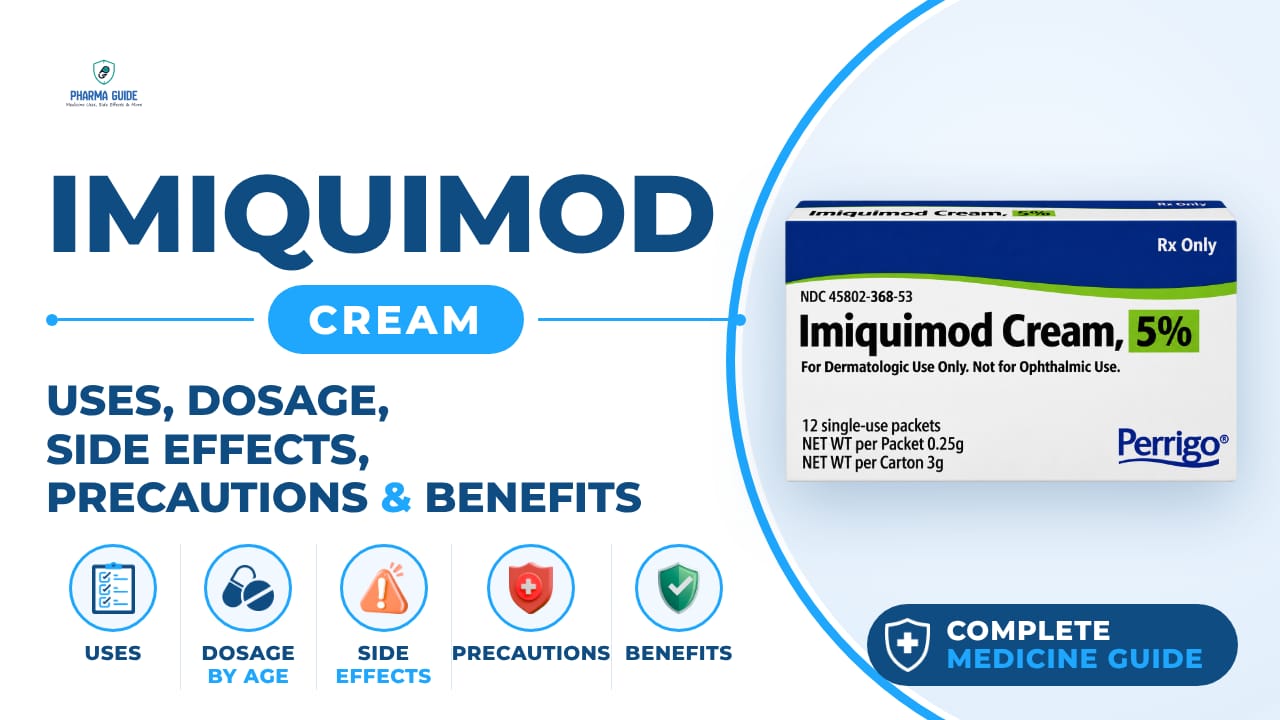
| Generic name | Imiquimod |
|---|---|
| Drug class | Topical anti-infective / immune response modifier |
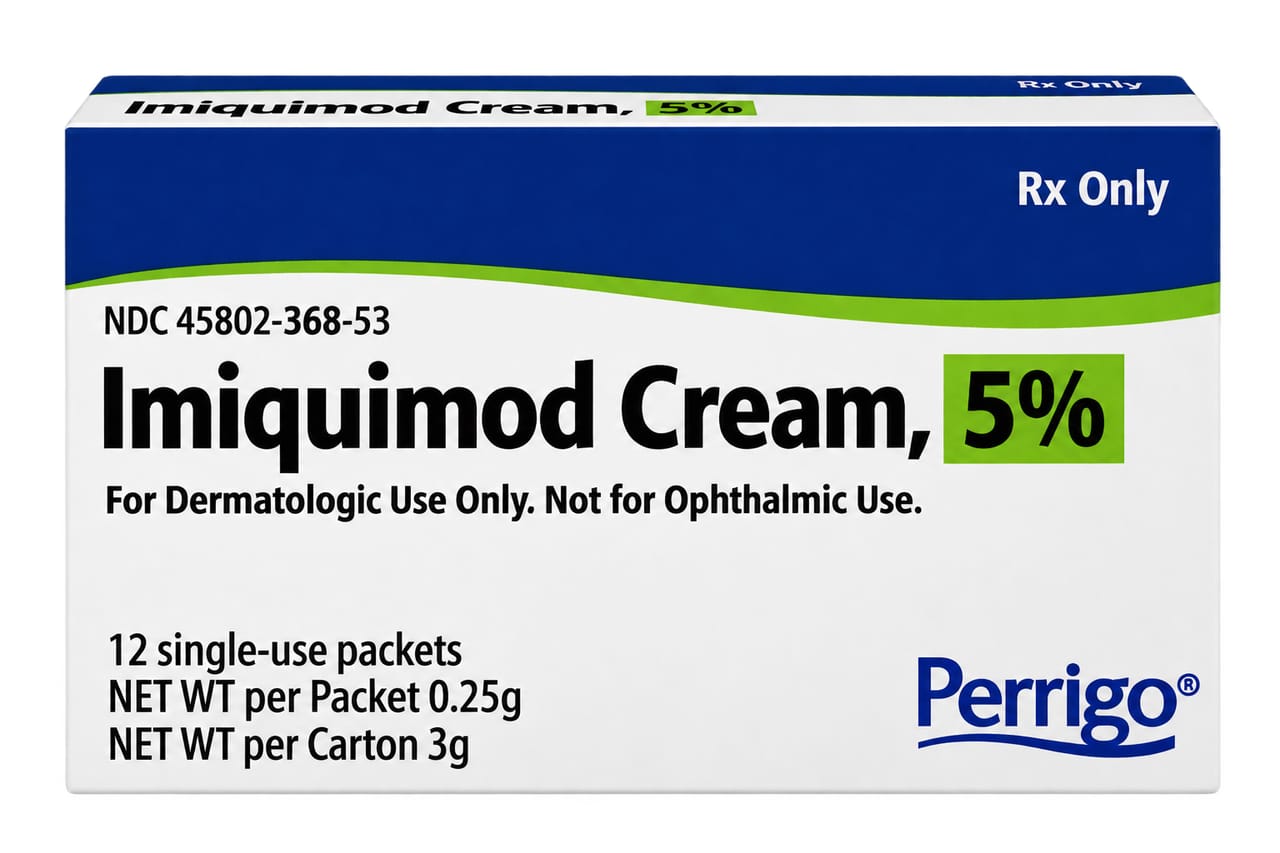
| Forms | Cream, 3.75%, in unit-dose packets (0.25 g each), Cream, 3.75%, in pump bottles (7.5 g, delivers no fewer than 28 actuations), 5% cream (available in the UK) |
Quick overview
Imiquimod Cream (generic name imiquimod) is a prescription topical anti-infective and immune response modifier applied to the skin. It is used to treat actinic keratosis on the face or balding scalp and external genital and anal warts, and in the UK the 5% strength also treats superficial basal cell carcinoma and genital viral warts. It works by activating the body's immune system to recognize and destroy abnormal skin cells. It is applied according to a specific schedule and can cause local skin reactions, so it should be used exactly as directed by a doctor or pharmacist.
What is Imiquimod Cream
Imiquimod cream is a prescription medicine applied to the skin. It is used to treat actinic keratosis (sun-damaged skin patches) on the face or balding scalp, and to treat external genital and anal warts.
Imiquimod Cream uses
- Treats actinic keratosis (clinically typical, visible, or palpable) on the face or balding scalp in adults with a normal immune system
- Treats external genital and perianal warts in people 12 years of age or older
- In the UK, the 5% strength is also used for a type of skin cancer called superficial basal cell carcinoma and for genital viral warts
Benefits of Imiquimod Cream
- Can clear or reduce actinic keratosis lesions
- Can lead to complete or partial clearance of genital warts in many patients
- May help stop some skin problems from coming back, though effects are not permanent for everyone
How Imiquimod Cream works
Imiquimod works by activating the body's immune system so it can recognize and destroy damaged or abnormal skin cells, rather than by attacking the virus or lesion directly.
Imiquimod Cream dosage
Imiquimod cream is for topical (skin) use only; do not use in or near the eyes, lips, nostrils, inside the anus, or inside the vagina. Wash your hands before and after applying the cream. Apply once a day, just before bedtime. Wash the treatment area with mild soap and water and let it dry before applying, then apply a thin layer and rub it in until it disappears.
Leave the cream on for about 8 hours, then wash it off with mild soap and water. Do not bathe, shower, or swim while the cream is on the skin. Do not cover the treated area with a tight bandage or dressing; cotton gauze or cotton underwear may be used if needed.
If a dose is missed, apply the next dose at the regular scheduled time; do not apply extra cream to make up for it. For actinic keratosis, apply for two weeks, stop for two weeks, then apply again for two more weeks. For genital or anal warts, continue treatment until warts clear or for up to the prescribed treatment period.
Uncircumcised men treating warts under the foreskin should pull back the foreskin and clean the area daily. Avoid sexual (genital, anal, oral) contact while the cream is on the skin, since it may weaken condoms and diaphragms. If cream gets in the mouth or eyes, rinse well with water right away. Priming is needed the first time a pump bottle is used, but not again during treatment.
| Age group | Dose |
|---|---|
| Under 12 years | Not established / not recommended |
| 12–17 years | Apply a thin layer once daily at bedtime, 3 times per week |
| 18–64 years | Apply a thin layer according to the prescribed schedule; frequency may range from 2–5 times per week |
| 65+ years | Same as adults; no routine age-based dose adjustment |
Available forms and strengths
- Cream, 3.75%, in unit-dose packets (0.25 g each)
- Cream, 3.75%, in pump bottles (7.5 g, delivers no fewer than 28 actuations)
- 5% cream (available in the UK)
Side effects of Imiquimod Cream
Common
- Skin redness, itching, burning, or bleeding at the treated area
- Flaking, scaling, dryness, or thickening of the skin
- Swelling, stinging, or pain at the treated area
- Blisters, scabs, or bumps on the skin
- Headache
- Tiredness
- Nausea
- Skin irritation
Serious
- Skin breakdown or sores with drainage, especially during the first week of treatment
- Flu-like symptoms such as nausea, fever, chills, tiredness, and muscle weakness or pain
- Severe swelling outside the vagina (vulvar swelling), which may cause difficulty passing urine
- Skin reactions that spread beyond the treatment area or affect daily activities
- Permanent lightening or darkening of skin color in the treated area
- Scarring or hair loss in the treated area
- Flare-up of autoimmune disease
- Signs of a severe allergic reaction, such as red spots that form a target-like ring, shortness of breath, burning or painful eyes, or mouth sores
Warnings and precautions
- Imiquimod cream can cause intense local skin reactions such as weeping or breakdown of the skin (erosion), which can happen after only a few applications. Severe swelling of the vulva may occur in women and can lead to difficulty passing urine.
- Flu-like symptoms can occur during treatment and may need a break in dosing. The cream can make skin more sensitive to sunburn. Avoid or limit sun and sunlamp exposure, and wear protective clothing.
- Imiquimod activates immune cells, so people with pre-existing autoimmune conditions should be monitored carefully while using it. Do not use imiquimod cream on skin that is broken, has an abrasion, cut, burn, rash, infection, or is otherwise not intact.
- Imiquimod cream may weaken condoms and vaginal diaphragms, so using them together is not recommended.
- For external use only. Do not swallow or use in the eyes, mouth, or vagina. Avoid contact with the eyes, lips, nostrils, and inside the anus. Rinse with water if accidental contact occurs. Do not apply to broken, irritated, burned, infected, or damaged skin. Allow previously treated skin to heal before use.
- May cause strong local reactions such as redness, swelling, burning, itching, scabbing, erosion, or skin weeping. Treatment may need to be temporarily interrupted if reactions are severe.
- Stop treatment and consult a doctor if lightening or loss of skin color (hypopigmentation) develops, as it can sometimes persist. Minimize sunlight and artificial UV exposure during treatment. Use sunscreen and protective clothing, and do not apply to sunburned skin until healed.
- Do not use other imiquimod-containing products on the same treatment area unless specifically directed. Keep out of reach of children and use only according to the prescribed treatment schedule.
- It is not known if imiquimod cream can harm an unborn baby. Tell your doctor if you are pregnant, plan to become pregnant, or become pregnant during treatment.
- It is not known if imiquimod passes into breast milk. If breastfeeding during treatment, avoid letting the treated skin touch your baby's mouth or eyes, and talk to your doctor about the best way to feed your baby.
Storage
- Store at room temperature, 68° to 77°F (20° to 25°C)
- Avoid freezing
- Store pump bottles upright
- Discard partially used packets and do not reuse them
- Discard pump bottles after completing a full treatment course
- Keep out of the reach and sight of children
- Dispose of unneeded medication safely so pets, children, and others cannot take it; do not flush down the toilet; use a medicine take-back program if available
When to see a doctor
- Stop using imiquimod cream right away and call your healthcare provider if you get skin reactions that affect your daily activities or that do not go away
- Tell your healthcare provider if you get flu-like symptoms such as tiredness, nausea, vomiting, fever, chills, muscle pain, and joint pain
- Stop using the cream and contact your healthcare professional immediately if you notice red spots that turn into a target-like ring, shortness of breath, burning or painful eyes, or mouth sores
- Call your doctor immediately if you have skin breakdown or sores with drainage, especially during the first week of treatment, or flu-like symptoms including nausea, fever, chills, tiredness, and muscle weakness or pain
- If someone swallows imiquimod cream, contact your local poison control center right away; if the person has collapsed or is not breathing, call emergency services
Alternatives
- 5-Fluorouracil (5-FU) cream
- Diclofenac topical gel
- Sinecatechins ointment
Watch the video
FAQs
How often should Imiquimod Cream be applied?
It is applied once a day, just before bedtime, according to the prescribed schedule, which may range from 2-5 times per week depending on the condition being treated.
How long should Imiquimod Cream be left on the skin?
Leave the cream on for about 8 hours, then wash it off with mild soap and water. Do not bathe, shower, or swim while the cream is on the skin.
What is the treatment schedule for actinic keratosis?
For actinic keratosis, apply for two weeks, stop for two weeks, then apply again for two more weeks.
Can Imiquimod Cream be used with condoms?
Imiquimod cream may weaken condoms and vaginal diaphragms, so using them together is not recommended, and sexual contact should be avoided while the cream is on the skin.
What serious side effects should prompt stopping Imiquimod Cream?
Stop using the cream and contact a healthcare provider if you notice skin breakdown or sores with drainage, flu-like symptoms, severe vulvar swelling, skin reactions that spread or affect daily activities, or signs of a severe allergic reaction such as target-like red spots, shortness of breath, or mouth sores.
General information, not medical advice
Your prescriber and the leaflet in your pack know your situation. This page does not.
- Follow your prescriber and the leaflet
- Don't start, stop, or change a dose on your own
- Doses and warnings differ by country and product
Sources
Video
Related medicines

Injectafer Injection: Uses, Dosage, Side Effects, Precautions and Alternates
Iron products
Injectafer (ferric carboxymaltose) treats iron deficiency anemia and heart failure-related iron deficiency via IV. Learn uses, dosage, side effects, and

Gliclazide Tablet: Uses, Dosage, Side Effects, Precautions and Alternates
Sulfonylurea (hypoglycemic/antidiabetic agent)
Gliclazide Tablet is a sulfonylurea for type 2 diabetes that boosts insulin release. Learn about dosage, side effects, warnings, and precautions.