
Safety
General information, not medical advice
Your prescriber and the leaflet in your pack know your situation. This page does not.
- Follow your prescriber and the leaflet
- Don't start, stop, or change a dose on your own
- Doses and warnings differ by country and product
Imodium Capsule: Uses, Dosage, Side Effects, Precautions and Alternates

| Generic name | Loperamide Hydrochloride |
|---|---|
| Drug class | Antidiarrheal |
| Forms | Capsule, Caplet, Chewable tablet, Rapidly dissolving tablet (Melts), Oral solution |
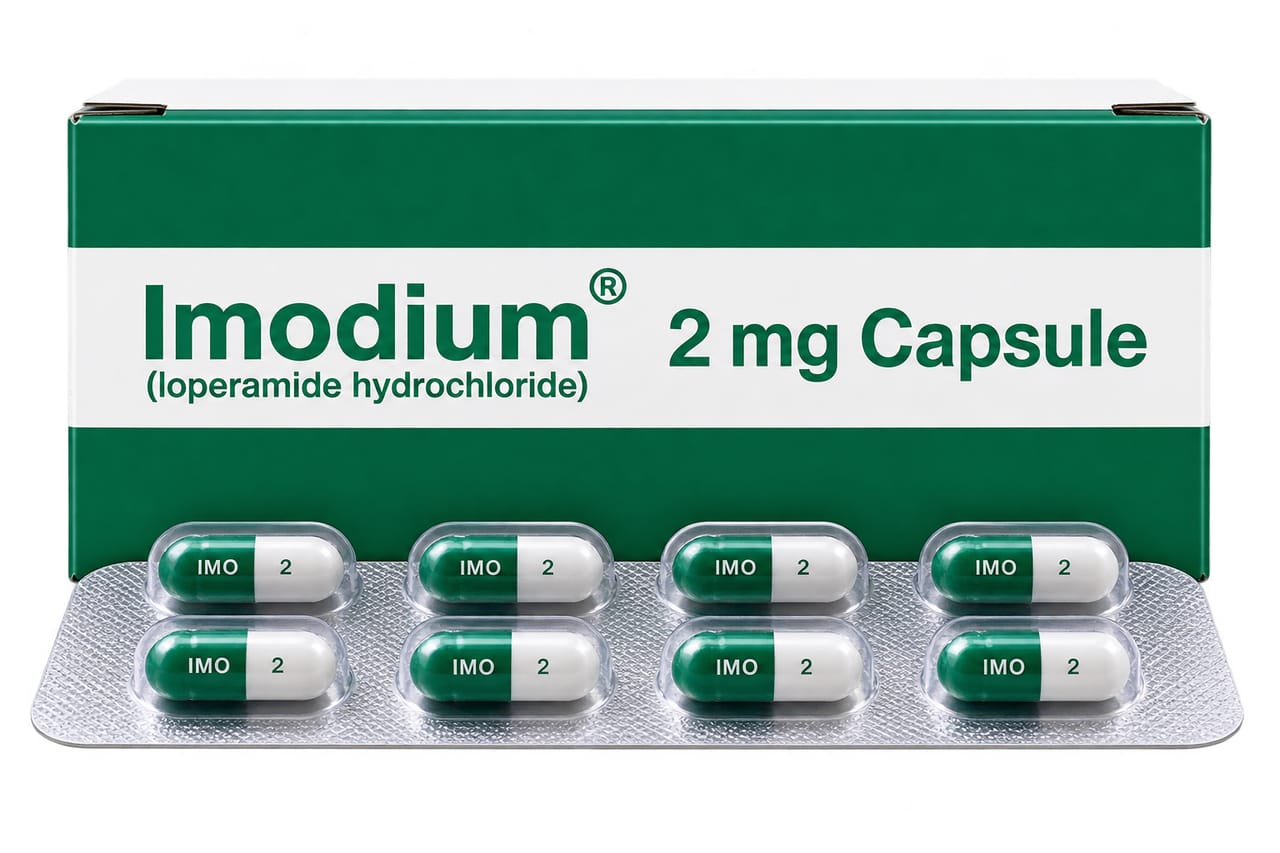
Quick overview
Imodium Capsule contains the active ingredient Loperamide Hydrochloride and belongs to the antidiarrheal class of medicines. It is used to treat acute and chronic diarrhea, including traveler's diarrhea, and works by slowing gut movement to make stools more solid and less frequent. It is generally not recommended for children under 12 years without medical advice, and certain conditions such as bloody diarrhea with fever require medical attention rather than self-treatment with this medicine.
What is Imodium Capsule
Imodium Capsule is an antidiarrheal medicine used to treat acute and chronic diarrhea and traveler's diarrhea.
Imodium Capsule uses
- Acute and chronic diarrhea
- Traveler's diarrhea
- Chemotherapy-induced diarrhea
- Reducing discharge in patients who have had an ileostomy
- Ongoing diarrhea in people with inflammatory bowel disease
Benefits of Imodium Capsule
- Makes the stools more solid and less frequent
- Helps the bowel absorb water and produce a more solid stool
- Usually stops diarrhea symptoms within 48 hours
How Imodium Capsule works
This medicine slows down the movement of the gut, which reduces the number of bowel movements and makes stools less watery. It also decreases the flow of electrolytes and fluid into the bowel.
Imodium Capsule dosage
Consider taking the capsule after eating. Avoid crushing or chewing the capsule; swallow it whole with some water. If you miss a dose, take it as early as possible, but if it is almost time for the next dose, skip the missed one and continue your regular schedule. Do not take a double dose to make up for a missed one. Follow the dosing instructions as your doctor advises.
Drink plenty of fluids to avoid dehydration while taking this medicine. Tell your doctor if your diarrhea does not improve after 2 days or if it continues after 10 days of treatment under a doctor's direction.
| Age group | Dose |
|---|---|
| Under 2 years | Do not use |
| 2–5 years | Doctor's advice required; capsule usually not appropriate |
| 6–11 years | Use only under medical advice; dosing depends on age and product |
| 12 years & older | 4 mg initially, then 2 mg after each loose stool |
| Adults | 4 mg initially, then 2 mg after each loose stool |
Available forms and strengths
- Capsule
- Caplet
- Chewable tablet
- Rapidly dissolving tablet (Melts)
- Oral solution
Side effects of Imodium Capsule
Common
- Dry mouth
- Flatulence
- Colic
- Feeling sick
- Tiredness
- Constipation or wind
- Abdominal cramp
- Nausea or vomiting
- Bad taste
- Headache
- Stomach pain
- Difficulty passing urine
- Dizziness or drowsiness
- Abdominal distension
- Itching of skin
Serious
- Asthma, wheezing, or shortness of breath
- Swelling of the face, lips, or tongue which may cause difficulty swallowing or breathing
- Sudden or severe blisters, itching, skin rash, hives
- Flaking or peeling of skin
- Loss of or depressed level of consciousness
- Anaphylaxis
- Angioedema
- Stevens-Johnson syndrome
- Toxic epidermal necrolysis
- Toxic megacolon
- Urinary retention
Warnings and precautions
- Tell your doctor if you are pregnant, planning to become pregnant, or become pregnant while taking this medicine. Do not take this medicine if you are breastfeeding.
- People with kidney failure should consult their doctor, as toxins may build up in the body and a lower dose may be needed. People with liver disease should talk to their doctor before taking this medicine, since drugs can build up in the body if the liver is not working properly. Tell your doctor if you regularly drink a lot of alcohol before taking this medicine.
- This medicine can cause tiredness, dizziness, or drowsiness, so be careful when driving or operating machinery.
- Do not take this medicine if you have severe diarrhea with blood in the stool or fever, as this may be a sign of dysentery.
- Do not take this medicine if you have inflammation of the lower bowels, such as ulcerative colitis or pseudomembranous colitis caused by antibiotic use.
- Do not take this medicine if you are constipated or need to avoid becoming constipated.
- If you have an allergy to this medicine or its ingredients, do not take it, as it can cause a life-threatening allergic reaction.
- People with abnormal heart rhythms or other heart conditions should only use this medicine under a doctor's advice, as it can worsen these conditions.
- If you have intestinal paralysis, use this medicine only with great caution and after consulting a doctor.
- If you have seizure issues, epilepsy, or a history of abnormal heart tracing (EKG), use this medicine with caution.
- Avoid this medicine if you have infectious diarrhea with fever, as it can make the infection worse.
- Do not give this medicine to children under 12 years of age.
- Do not take this medicine if you have AIDS, glaucoma, or bladder problems without consulting your doctor first.
- This medicine is not recommended in elderly patients with severe infectious gastroenteritis of unknown cause, and higher-than-recommended doses should be avoided in the elderly due to a higher risk of a serious heart rhythm problem.
Storage
- Store in a cool, dry place, and avoid refrigerating it
- Store it at room temperature (20–25 °C)
- Keep it away from heat, direct sunlight, and moisture
- Keep it away from children and pets
- Do not use the medicine once it has passed its expiration date
- Do not store in the bathroom or near a sink
- Do not leave medicines in the car or on window sills
- Keep medicines where children cannot reach them
When to see a doctor
Get medical help right away if you develop blood in the stool, fever, or uncomfortable fullness or swelling of the stomach. If diarrhea does not improve within 48 hours, stop taking the medicine and see your doctor.
Tell your doctor immediately and skip your next dose if you experience asthma, wheezing, shortness of breath, swelling of the face, lips or tongue, severe skin reactions, or loss of consciousness. If you think you have taken too much of this medicine, contact your doctor or poison control center right away, or go to the nearest hospital emergency department, even if you feel fine.
Watch for signs of dehydration such as extreme thirst, reduced urination, muscle cramps, weakness, or fainting, and tell your doctor right away if these occur.
Alternatives
- ORS
- Bismuth subsalicylate
- Racecadotril
Watch the video
FAQs
What is Imodium Capsule used for?
Imodium Capsule is used to treat acute and chronic diarrhea, traveler's diarrhea, chemotherapy-induced diarrhea, reducing discharge after an ileostomy, and ongoing diarrhea in people with inflammatory bowel disease.
How does Imodium Capsule work?
It slows down the movement of the gut, which reduces the number of bowel movements and makes stools less watery, while also decreasing the flow of electrolytes and fluid into the bowel.
What is the dosage of Imodium Capsule for adults?
Adults and those 12 years and older should take 4 mg initially, then 2 mg after each loose stool, following their doctor's advice.
Can children take Imodium Capsule?
No, this medicine should not be given to children under 12 years of age, and use in children under 2 years is not recommended at all.
What should I do if diarrhea does not improve with Imodium Capsule?
If diarrhea does not improve within 48 hours, stop taking the medicine and see your doctor; also tell your doctor if diarrhea continues after 10 days of treatment.
General information, not medical advice
Your prescriber and the leaflet in your pack know your situation. This page does not.
- Follow your prescriber and the leaflet
- Don't start, stop, or change a dose on your own
- Doses and warnings differ by country and product
Sources
Video
Related medicines

Loperamide Capsule: Uses, Dosage, Side Effects, Precautions and Alternates
Antidiarrheal
Loperamide Capsule treats short-term diarrhea and IBS-related diarrhea by slowing gut movement. Learn dosage, side effects, and safety warnings.

Injectafer Injection: Uses, Dosage, Side Effects, Precautions and Alternates
Iron products
Injectafer (ferric carboxymaltose) treats iron deficiency anemia and heart failure-related iron deficiency via IV. Learn uses, dosage, side effects, and